
[ad_1]
Everyone is waiting for the invasion. Analysts count Chinese warships. Generals war-game amphibious assault scenarios. Headlines ask the same question on rotation — when will China move? The entire Western conversation about Taiwan is built around a single dramatic image: People’s Liberation Army soldiers storming a beach.

That image is not wrong. But it is incomplete. And focusing on it exclusively means missing what is actually happening right now — today, while you read this — in the spaces between the headlines.
Beijing has a strategy for Taiwan. It has had one for decades. And the military option — the missiles, the aircraft carriers, the invasion fleet — is not the opening move. It is the last resort. The thing Beijing reaches for only if everything else has failed.
How Beijing Actually Thinks About Taiwan
To understand the strategy you first have to understand how Beijing frames the problem.
In Chinese strategic thinking Taiwan is not primarily a military challenge. It is a political one. The goal is not to destroy Taiwan — it is to absorb it. A bombed, blockaded, invaded Taiwan is a problem. A Taiwan that peacefully accepts reunification, or that gradually loses the will and the external support to resist, is a solution.
This distinction drives everything. It explains why Beijing has spent decades building tools of influence, coercion, and pressure that stop just short of open conflict. It explains why the military buildup — real, dramatic, and genuinely alarming — exists primarily as a backdrop to political pressure rather than an imminent operational plan.
The strategy has a name in Chinese strategic literature: “winning without fighting” — a concept drawn directly from Sun Tzu’s ancient military philosophy. The ideal outcome is not a war that China wins. It is a situation in which Taiwan concludes that resistance is futile and accommodation is inevitable.
China is Taiwan’s largest trading partner. In 2022 cross-strait trade totaled approximately $270 billion — nearly 30% of Taiwan’s total exports go to or through mainland China. This is not an accident. It is a structural dependency that Beijing has cultivated deliberately and is increasingly willing to use as leverage.
The pattern is consistent and well documented. When Taiwan’s political behavior displeases Beijing — a presidential visit to the United States, a foreign arms sale, a diplomatic contact that implies statehood — economic consequences follow. Not immediately and not always dramatically, but reliably.
Taiwanese pineapples were banned from Chinese markets in 2021 — officially over pest concerns, in practice over political signaling following Taiwan’s deepening security relationship with Washington. Taiwanese fish, grouper, and a range of agricultural products followed. The message was clear and deliberately calibrated: economic normality is contingent on political compliance.
The deeper economic weapon is subtler. Taiwanese businesses operating on the mainland — and there are thousands of them, employing millions of workers, representing decades of investment — exist in a permanent state of vulnerability. Their licenses can be reviewed. Their supply chains can be disrupted. Their access to Chinese consumers can be restricted. Every Taiwanese business with mainland exposure is simultaneously an economic asset and a political hostage.
This creates a constituency inside Taiwan — business communities, export industries, agricultural sectors — with a direct financial interest in not provoking Beijing. It is not corruption. It is structural dependency doing what structural dependency always does: generating pressure for accommodation from within.
Beijing’s influence operations inside Taiwan are among the most sophisticated and extensively documented of any country’s efforts anywhere in the world. They operate through multiple channels simultaneously — and understanding them requires abandoning the idea that influence means simply paying politicians or planting spies.
Media ownership and content is one of the primary vectors. Taiwanese media is fragmented, competitive, and chronically underfunded — making it structurally vulnerable to outside investment. Multiple Taiwanese media outlets have been found to have ownership or advertising relationships with mainland Chinese entities. Content that reflects Beijing’s framing of cross-strait issues — emphasizing the costs of resistance, the benefits of engagement, the dangers of American abandonment — circulates through these channels into mainstream Taiwanese political discourse.
Civic and community organizations provide another layer. Beijing has cultivated relationships with Taiwanese religious organizations, business associations, veterans groups, and local political networks — particularly in rural areas and among older populations with mainland family connections. These networks don’t necessarily advocate openly for Beijing. They simply exist as nodes of influence that can be activated when needed.
Political party financing is the most sensitive and least publicly documented channel. Taiwan’s prosecutors and intelligence services have documented multiple cases of mainland money flowing into Taiwanese political campaigns — particularly into parties and candidates who favor closer cross-strait relations. The amounts are often difficult to trace. The effect on political discourse is not.
The target of all this is not Taiwan’s government — which Beijing has largely written off as hostile. The target is Taiwan’s public opinion. Specifically, the 20–30% of the population that surveys consistently show is open to closer relations with the mainland under the right conditions. That constituency — older, more economically connected to China, more skeptical of American reliability — is Beijing’s primary audience inside Taiwan.
Taiwan is one of the most heavily targeted countries in the world for disinformation operations. By some measures it receives more coordinated inauthentic online activity than any comparable democracy.
The operations are sophisticated, persistent, and specifically calibrated to Taiwan’s political vulnerabilities.
The primary themes are consistent across platforms and campaigns: American military commitments to Taiwan are unreliable. Taiwan’s government is corrupt and incompetent. Independence means war and economic collapse. Cross-strait peace requires accommodation. The Taiwanese military cannot defend the island. Washington will abandon Taiwan the way it abandoned Afghanistan and Vietnam.
Some of this content is crude — obvious propaganda that sophisticated consumers immediately recognize. But the most effective operations don’t work by convincing people of Beijing’s position. They work by amplifying existing divisions, deepening existing cynicism, and making the political environment so saturated with conflicting claims that people disengage entirely.
A population that doesn’t know what to believe is easier to influence than a population that believes the wrong thing. Confusion and disengagement are the operational goals — not persuasion.
Taiwan’s government has developed some of the world’s most sophisticated responses to disinformation — a whole-of-society approach involving government agencies, civil society organizations, tech platforms, and media literacy education. The Taiwan FactCheck Center and government rapid-response teams work to identify and counter false narratives within hours of their appearance. It is genuinely impressive infrastructure.
It is also a permanent arms race against an adversary with essentially unlimited resources and no democratic constraints on its operations.
The military dimension of Beijing’s Taiwan strategy is real, dramatic, and genuinely alarming. But understanding it correctly requires seeing it as one instrument among many rather than the primary tool.
China’s military buildup over the past two decades has been extraordinary by any historical standard:
- The PLA Navy has grown to over 370 ships — the largest naval force in the world by number of vessels
- China has fielded the DF-21D and DF-26 anti-ship ballistic missiles — specifically designed to threaten American aircraft carriers operating in the Western Pacific
- The PLA Air Force conducts regular incursions into Taiwan’s Air Defense Identification Zone — over 1,700 recorded incursions in 2022 alone
- Chinese military exercises around Taiwan have grown in scale, frequency, and operational sophistication — the August 2022 exercises following Nancy Pelosi’s visit effectively simulated a full blockade of the island
This buildup serves multiple strategic purposes simultaneously. It demonstrates to Taiwan that military resistance would be costly. It demonstrates to the United States that intervention would be costly. It normalizes Chinese military activity around Taiwan so that exercises that would have been considered crisis-level ten years ago barely register in international media today. And it creates a permanent sense of military vulnerability that amplifies the effect of every other pressure tool in Beijing’s arsenal.
The gray zone operations — the median line crossings, the ADIZ incursions, the naval exercises — are not random provocations. They are a calibrated campaign to gradually shift the status quo by making each individual step small enough to avoid triggering a decisive response while the cumulative effect moves steadily in Beijing’s direction.
Given all of this — the economic leverage, the influence operations, the information warfare, the military pressure — why would Beijing ever choose the most costly, most uncertain, and most internationally damaging option of direct military force?
The honest answer is: it probably wouldn’t. Unless everything else failed.
An amphibious invasion of Taiwan would be one of the most complex military operations in history — significantly more difficult than the Normandy landings, against a heavily armed opponent, across 180 kilometers of open water, with the possibility of American military intervention. Chinese military planners are not naive about these difficulties. The PLA has never conducted a major combat operation. Its equipment is modern but untested. Its logistics for a sustained amphibious campaign are uncertain.
Beyond the military risks the economic consequences of an invasion would be catastrophic for China itself. Immediate Western sanctions would dwarf those imposed on Russia after the Ukraine invasion. Access to global financial systems, technology imports, and export markets would be severed or severely restricted. China’s export-dependent economy would face a shock it might not survive politically.
And there is the semiconductor question. A conflict that damaged or destroyed TSMC’s fabrication facilities — either through direct military action or through the disruption of the highly specialized supply chains they depend on — would be a global economic catastrophe from which China would not be exempt.
Beijing knows all of this. Which is why the preferred strategy is not invasion. It is exhaustion — wearing down Taiwan’s will to resist, eroding its international support, deepening its economic dependency, and waiting for a political moment when the costs of resistance finally seem to outweigh the costs of accommodation.
So when — if ever — does Beijing move militarily?
The most credible analyses point to a window rather than a date. The PLA’s military modernization program has explicit targets — most analysts believe China will have a credible military option for Taiwan by 2027, the centenary of the PLA’s founding, which Xi Jinping has publicly identified as a significant milestone.
But having a military option is not the same as using it. The more important timeline is political. Xi Jinping has staked his personal legacy on the Taiwan question in a way that no previous Chinese leader has done so explicitly. He has described reunification as essential to the “great rejuvenation of the Chinese nation” — his defining political project. This creates a personal incentive structure that is different from the institutional calculations of previous leaderships.
The risk is not that Beijing has a plan to invade Taiwan in 2027. The risk is that the combination of military capability, political pressure, economic coercion, and leadership incentives creates conditions in which miscalculation becomes increasingly likely — and in which a crisis that nobody intended to turn into a war does exactly that.
Taiwan is not a passive object in this story. It is an active democracy making its own strategic choices — and some of those choices are more sophisticated than outside observers typically credit.
The porcupine strategy — making Taiwan so costly to attack that the calculus never favors invasion — has driven defense procurement and planning for over a decade. Rather than trying to match China’s military buildup symmetrically — a competition Taiwan could never win — the strategy focuses on asymmetric capabilities: mobile missile systems, sea mines, drone swarms, coastal defense, and the kind of distributed resilience that makes a clean military victory impossible even if initial landings succeeded.
Taiwan’s civil defense infrastructure has been quietly rebuilt after years of neglect. Mandatory military training has been extended. Civilian emergency preparedness has been upgraded. The government has invested in communication systems designed to function after an attempted decapitation strike on command infrastructure.
And Taiwan’s semiconductor leverage — the fact that destroying TSMC damages everyone including China — is increasingly understood as a form of deterrence in its own right. The island that produces 92% of the world’s most advanced chips has a strategic interest that extends far beyond its own borders. Making the world understand and internalize that interest — so that Taiwan’s defense feels like a global necessity rather than a bilateral dispute — is perhaps Taiwan’s most important long-term strategic goal.
Beijing’s strategy for Taiwan is not a secret. It is hiding in plain sight — in the trade statistics, in the media ownership records, in the ADIZ incursion data, in the influence operation indictments, in the military exercise reports. The pieces are all there. Most people just aren’t looking at all of them at the same time.
The invasion scenario is real. The military threat is genuine. But the war for Taiwan is already being fought — in boardrooms, newsrooms, social media feeds, and village council meetings across the island. It has been going on for decades. And unlike a military conflict it has no clear beginning, no defined front line, and no moment of decisive resolution.
That is precisely the point.
Understanding how Taiwan — and the world — is responding to all of this: that is where we are going next.
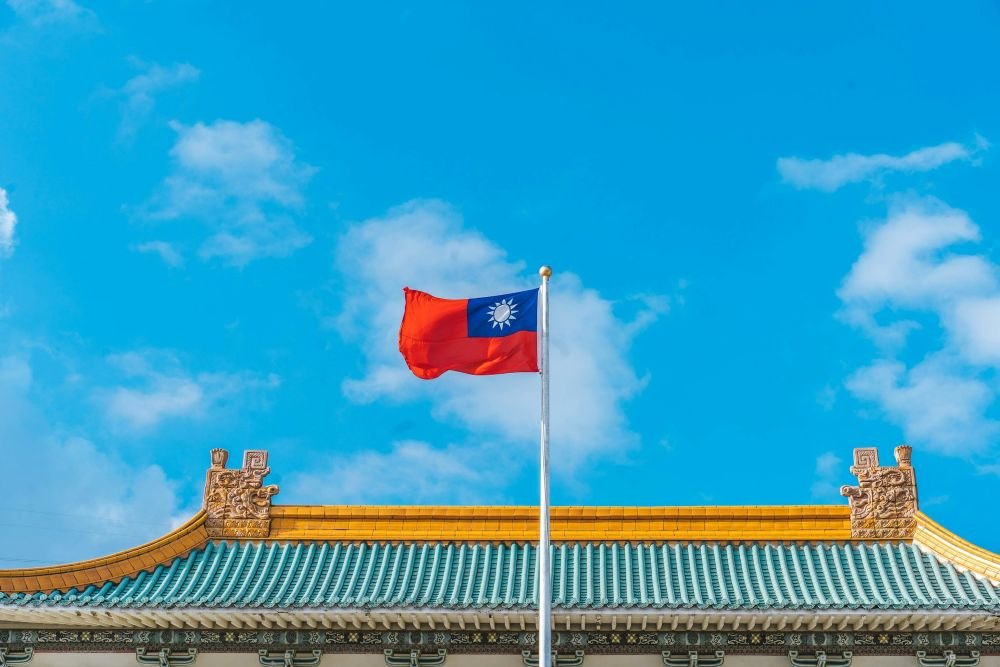
[Photo by Roméo A. on Unsplash]
Christian Kempo is an independent researcher and political analyst based in Taipei, specializing in Taiwan, cross-strait relations, and Indo-Pacific geopolitics. The views and opinions expressed in this article are those of the author.
[ad_2]
Source link

