
[ad_1]
Written by: Jagdish Reddy
Sources: This article is based on publicly available horticultural guidance from Penn State Extension and the Royal Horticultural Society.
Last Updated: May 2026

Orchid bud blast is one of the most frustrating things that can happen to a home grower. You watch those buds form for weeks — fat, promising, almost ready — and then they drop before a single one opens. No flowers, just empty stems and a little pile of buds on the windowsill.
The good news: orchid bud blast is almost always environmental, which means it’s fixable. Once you identify what triggered it, you can correct it, protect whatever buds remain, and get the plant back on track. This guide covers all 9 hidden causes and exactly what to do about each one.

The Biggest Mistake Most Orchid Owners Make
Most people assume watering is the problem — but in reality, sudden environmental changes like cold drafts or nearby ripening fruit are far more likely to cause orchid buds to fall off before blooming. Fixing the wrong issue wastes critical time and often makes bud blast worse. Diagnose first, then act.
Why Are Orchid Buds Falling Off Before Blooming?
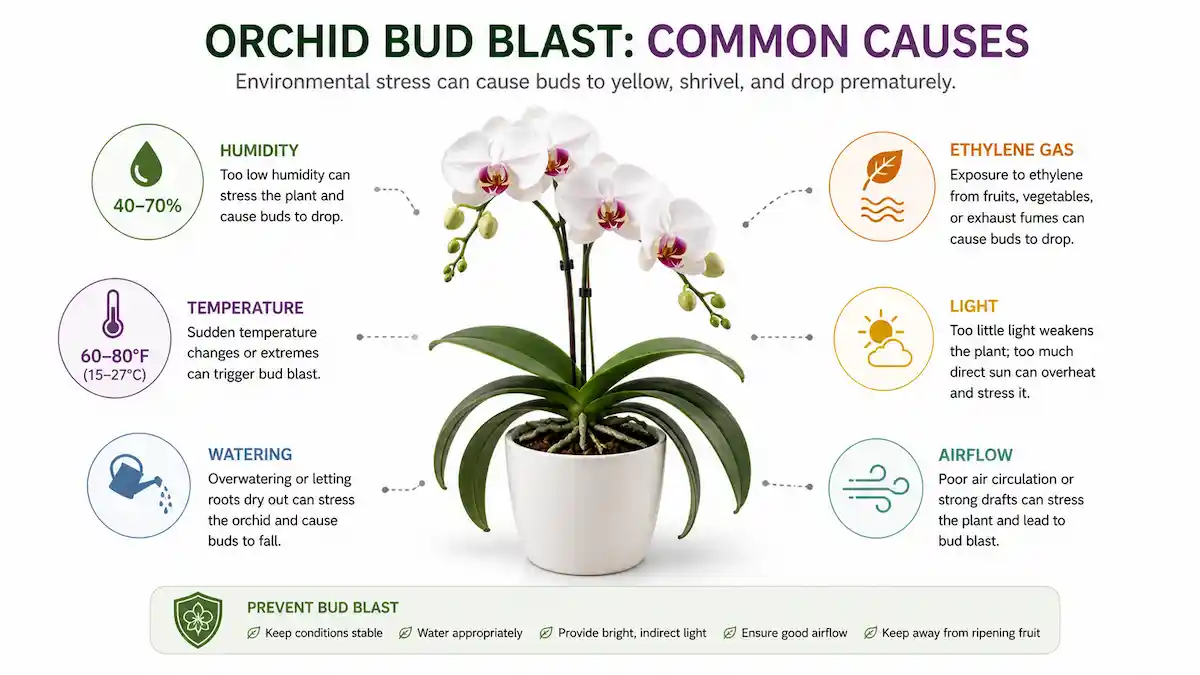
Orchid buds fall off before blooming due to environmental stress, most commonly low humidity, temperature changes, overwatering, or exposure to ethylene gas from ripening fruit. This condition is called orchid bud blast — it happens when the plant cannot sustain developing buds under unstable conditions. It most commonly affects Phalaenopsis orchids and is usually fully reversible once the stressor is identified and removed.
What Is Orchid Bud Blast? (And How to Spot It Fast)
Orchid bud blast is when immature flower buds drop before opening, triggered by environmental stress the plant can no longer sustain. Common causes include low humidity, sudden temperature swings, ethylene gas, overwatering, and being moved mid-cycle. Phalaenopsis (moth orchids) are the most prone, but Dendrobium and Oncidium orchids can also experience bud drop — though they tend to handle humidity fluctuations slightly better. The condition is not permanent: remove the stressor, correct the care, and the plant will recover.
Bud Blast vs. Natural Bud Drop — How to Tell the Difference
This visual comparison makes it easier to quickly identify whether your orchid is experiencing bud blast or natural blooming.

Not every dropped bud means something went wrong. Orchids naturally shed older flowers at the end of a bloom cycle — that’s entirely normal. True bud blast is different: buds fall before they open, often suddenly and in clusters, usually after something in the environment shifted. If unopened buds are dropping all at once, that’s bud blast. If fully opened flowers are fading one by one from the base of the spike upward, that’s natural senescence — no cause for concern.
| Bud Symptom | Most Likely Cause | Urgency |
|---|---|---|
| Yellow buds dropping | Low humidity or overwatering | High |
| Shriveled, wrinkled buds | Underwatering or very dry air | High |
| Green buds falling suddenly | Temperature shock, ethylene gas, or relocation | High |
| Black-tipped buds | Cold draft or fungal issue | Medium |
| Buds dropping from base upward | Natural bloom senescence — not bud blast | Normal |
Quick Diagnosis — Match Your Orchid’s Symptoms to a Cause
Before you touch anything, spend two minutes reading your plant. Yellow and soft buds point to humidity or watering. Phalaenopsis buds dropping suddenly while still green almost always means something environmental shifted — a draft, a fruit bowl moved nearby, a temperature dip overnight. Shriveled and papery means the roots are dehydrated. Use the table above to make your first call, then work through the nine causes below to confirm.
Orchid Bud Drop — Quick Causes at a Glance
| Symptom | Most Likely Cause | Immediate Fix |
|---|---|---|
| Yellow, soft buds dropping | Overwatering or low humidity | Check roots; add humidity tray |
| Wrinkled, papery buds | Underwatering or dry air | Deep soak roots; raise humidity |
| Green buds dropping suddenly | Temperature shock or ethylene gas | Remove ethylene sources; check for drafts |
| Black-tipped buds | Cold damage or fungal issue | Improve airflow; move away from cold |
| Buds dropping in clusters after a move | Relocation or repotting stress | Stabilise position; no more moving |
What Happened Before Your Orchid Buds Fell? (72-Hour Timeline Diagnosis)
Orchid bud drop rarely happens instantly. In most cases, the trigger occurs 24–72 hours before the buds actually fall — not at the moment you notice the problem. If your orchid buds are falling off before blooming today, think back to what changed 2–3 days ago: a window left open, a fruit bowl added to the counter, a watering day, or the plant moved to a new spot.
| Time Before Bud Drop | What Likely Happened | Hidden Trigger |
|---|---|---|
| 24 hours before | Buds fall while still green | Temperature shock or ethylene gas exposure |
| 48 hours before | Plant shows subtle stress signs | Drafts, relocation, or a watering mistake |
| 72 hours before | Root or moisture imbalance begins | Low humidity building up, or overwatering damage starting |
9 Hidden Causes of Orchid Bud Blast and How to Fix Each One
1. Low Humidity (Top Reason Orchid Buds Fall Off Before Blooming)
Snippet: Low humidity is the most common cause of orchid buds drying up and dropping before they open. Most homes run at 30–40% humidity — well below the 50–70% orchids need during budding. When air is too dry, developing buds can’t draw enough moisture to complete growth and simply abort.
Signs: buds yellow slowly and feel papery before dropping. Leaf edges may show slight wrinkling at the same time.
Fix: Place a humidity tray — a shallow tray of pebbles and water — under the pot, keeping the pot above the waterline. Grouping several plants together raises local humidity through combined transpiration. For serious cases, a small humidifier nearby is the most reliable fix. Avoid misting buds directly; water sitting on bud surfaces encourages rot.
Most indoor environments are too dry for orchids — and that alone can trigger bud drop.

2. Temperature Fluctuations and Cold Drafts (A Hidden Orchid Bud Drop Cause)
Orchids want consistency above almost everything else. Phalaenopsis do best between 65°F and 80°F (18°C–27°C) during budding. Even a single cold night near a drafty window can trigger bud blast — the frustrating part is that these cold spots are invisible. A windowsill that feels fine during the day can drop 10–15 degrees overnight in winter without anyone noticing.
Signs: green buds dropping suddenly with no other obvious cause, typically in the days following a temperature shift or season change.
Fix: Move plants away from exterior windows, AC vents, and doors. Check your chosen spot with a thermometer over a full 24-hour cycle before placing a budding orchid there. If a draft is unavoidable, pulling a curtain at night or shifting the pot 18 inches inward is usually enough.
3. Ethylene Gas Exposure (Why Orchid Buds Drop Suddenly While Still Green)
Ethylene is a natural plant hormone that signals ripening and aging — and in orchids, it causes premature bud drop even at very low concentrations. The sources aren’t obvious: a bowl of bananas, cut flowers going past their prime, a gas stove with a minor pilot leak, cigarette smoke — all produce enough ethylene to cause orchid bud blast. Cornell University’s horticulture extension confirms that orchid sensitivity to ethylene peaks during bud development, exactly when most gardeners bring plants home from stores. (Penn State Extension guide to orchids as houseplants)
Signs: green orchid buds dropping suddenly with no yellowing or shriveling, shortly after something nearby changed.
Fix: Keep orchids at least 6–8 feet from ripening fruit, aging cut flowers, gas appliances, and any combustion source. If you’ve just brought an orchid home from a supermarket, move it away from the kitchen immediately and let it settle a few days before placing it in its permanent spot.
Even a simple fruit bowl nearby can trigger sudden orchid bud drop.

4. Overwatering and Root Rot
When orchid roots sit in waterlogged medium too long, they suffocate, turn mushy, and lose the ability to deliver water and nutrients to the plant. The buds — the most energy-demanding structures — get dropped first. What makes this confusing is that overwatered orchids often look dehydrated at the top, because rotted roots can’t take up moisture even when it’s available.
Signs: orchid buds turning yellow and falling off; roots brown and mushy when you pull the pot and check.
Fix: Remove the pot and inspect the roots. Healthy roots are firm and silvery-green; rotted roots are brown, hollow, and collapse when touched. Trim damaged sections with sterile scissors, dust the cuts with cinnamon as a natural antifungal, and repot into fresh bark. Going forward, water only when roots turn silver — roughly every 7–10 days — and let the pot drain fully. Our guide to homemade orchid fertilizers and care covers root health in more detail.
When roots fail, buds are the first thing the plant sacrifices.

5. Underwatering and Dry Roots
The opposite problem causes the same result. When roots dry out completely, the plant enters conservation mode and sheds whatever isn’t essential — buds go first. Unlike the soft yellowing you see with overwatering, underwatered buds look shriveled and papery before they drop. This is one of the overlooked causes of orchid buds drying up before they open.
Signs: buds wrinkling and feeling dry to the touch; roots completely white and bone-dry when checked.
Fix: Water thoroughly when roots turn silver-white — soak until water runs freely from the drainage holes, then let it drain completely. Never leave the pot sitting in standing water. If the bark has become so dry that water beads off the surface rather than soaking in, submerge the whole pot in a basin of lukewarm water for 15 minutes before returning to normal watering.
6. Repotting or Moving the Plant During Budding
Orchids develop a positional orientation as buds form — stems angle toward the light source and the whole plant adjusts around it. Rotate the pot or move it to a new room, and the bud-bearing stems suddenly face the wrong direction. Add root disturbance from repotting and the conditions for orchid bud drop are set. Many orchids arrive from stores already mid-bud-blast — repeated handling and shipping stress is almost always the culprit.
Signs: buds dropping within days of moving, repotting, or bringing the plant home.
Fix: Never repot a budding orchid unless roots are actively rotting with no alternative. If you have to move the plant, keep it facing the same direction relative to the light and get it into a stable spot immediately. If you just brought a new orchid home, leave it completely alone for at least 4–6 weeks before considering repotting.
7. Insufficient or Harsh Light
Light fuels bud development. A dim corner doesn’t give the plant enough energy to push buds through to bloom — it quietly aborts them and redirects resources toward survival. At the other extreme, direct afternoon sun through a south-facing window generates enough heat to physically damage developing bud tissue from the outside in. Both extremes cause orchid bud blast, just by different routes.
Signs: with too little light, buds look healthy at first but slowly yellow and drop without ever swelling further. With too much direct sun, you may see pale bleaching or soft scalded patches on buds before they fall.
Fix: Phalaenopsis want bright indirect light — a few feet back from an east or west-facing window, or through a sheer curtain on a south-facing one. Moving from a dim spot to a brighter one should be done gradually over several days. If direct sun is the problem, a sheer curtain or an east-facing window usually solves it.
Orchids need bright indirect light — not darkness, not harsh direct sun.

8. Poor Air Circulation or Stagnant Air
In their natural habitat, orchids grow on tree branches with air moving constantly around roots, stems, and buds. In a still room — a warm bathroom shelf, a glass display cabinet, a tight windowsill alcove — stagnant air lets humidity pool unevenly, slows root drying between waterings, and makes it easy for fungal spores to settle on bud surfaces.
Signs: soft dark spots or faint grey fuzz on buds before they drop; potting medium staying wet far longer than usual. Fungal bud rot shows visible discolouration before the bud falls; stress-triggered blast from stagnant air usually doesn’t.
Fix: A small fan on the lowest setting — positioned to move air near the plant without blowing directly onto it — works well. Even aiming it at a nearby wall creates enough indirect circulation. Opening a window for an hour or two daily helps when temperatures allow. Avoid enclosed display cases or terrariums without active ventilation.
9. Fertilizer Burn or Nutrient Imbalance
Over-fertilizing during budding causes salt to build up in the growing medium, drawing moisture away from the roots through osmosis. The plant ends up dehydrated even when watering is correct, and the buds drop because they can’t get what they need. The symptoms mimic underwatering — shriveled buds, no obvious root rot, medium that seems moist enough.
High-nitrogen fertilizers make things worse during blooming by pushing leaf growth instead of flowers. Switching to natural fertilizers for indoor plants during the budding period reduces this risk considerably.
Fix: Flush the pot with plain room-temperature water — pour slowly until it runs clear from the bottom, and repeat two or three times. Stop all fertilizing until the bloom cycle ends. When you resume, use a balanced formula at half strength, no more than once every two weeks.
Which Orchid Problems Kill Buds Fastest? (Priority Ranking)
Not all causes of orchid bud blast act at the same speed. Some triggers cause phalaenopsis buds dropping within hours; others build up slowly over days or weeks. Use this priority system to identify the most urgent problem first — especially if buds are falling off before blooming right now.
| Priority | Cause | Speed of Damage |
|---|---|---|
| 🚨 Immediate | Ethylene gas, cold drafts | Within hours |
| ⚠️ Fast | Temperature fluctuations, relocation stress | 24–48 hours |
| ⏳ Moderate | Overwatering, underwatering | Several days |
| 🐢 Gradual | Low light, fertilizer imbalance | Weeks |
If orchid buds are dropping suddenly while still green, start with the high-priority causes — check for drafts, nearby fruit, and recent movement before anything else.
The 5-Point Environmental Audit — Find the Cause in 60 Seconds
When buds start dropping, run through this checklist before changing anything. It takes under a minute and usually makes the cause clear.
- Humidity: Is the room below 50%? A basic digital hygrometer costs a few dollars and gives you an immediate reading. Most homes in winter are drier than people expect.
- Temperature: Has anything changed in the last 48 hours — a new season, the AC switched on, a window left open overnight, or the plant moved to a new room?
- Ethylene sources: Is there ripening fruit, wilting cut flowers, or a gas appliance within 8 feet of the orchid? A banana bowl on a kitchen counter can reach an orchid on a nearby dining table.
- Roots: Pull the pot and look. Silver means dry and ready to water. Green means moist and fine. Brown and mushy means root rot. This one check rules out both watering extremes at once.
- Light: Has light intensity or direction changed recently? Seasonal sun angle shifts, moved furniture, or a curtain removed can all alter what the plant receives without anyone noticing.
Work through these five points and the culprit usually becomes clear. Act quickly — the RHS Phalaenopsis growing guide notes that correcting environmental stress within the first 24–48 hours of bud drop gives remaining buds the best chance of surviving.
If you’re still unsure what’s affecting your plant, the Plant Problem Finder can help you narrow down the diagnosis quickly.
Can You Still Save Orchid Buds After They Start Falling?
Once orchid bud drop begins, not all buds are lost — but timing is critical. The first 24 hours after bud drop starts is your best window to protect the buds still on the plant. Use this quick guide to see what can and can’t be saved.
| Bud Condition | Can It Be Saved? | What To Do |
|---|---|---|
| Firm, green buds | ✅ Yes | Fix environment immediately — humidity, temperature, airflow |
| Slightly yellow buds | ⚠️ Maybe | Increase humidity and stabilise conditions fast |
| Wrinkled or soft buds | ❌ Unlikely | Focus on saving remaining healthy buds |
| Already detached | ❌ No | Remove stress source and prevent further loss |
Orchid Bud Blast Recovery — What to Do After the Buds Fall
Should You Cut the Spike After Bud Blast?
Don’t cut it straight away. Leave the spike in place and watch it for several weeks. If it stays green and firm, it may push out new buds from a lower node — this happens more often than people expect, especially on Phalaenopsis. If the spike gradually turns yellow and then brown from the tip downward, trim just above the lowest healthy node (the small bump along the stem). If the entire spike goes brown, cut back to the base. Rushing to cut removes the plant’s best shot at a follow-up bloom on the same stem.
Will Your Orchid Rebloom After Bud Blast?
Yes — with consistent care, most orchids rebloom within 6–12 months. Phalaenopsis are particularly resilient; once recovered and rested, they’ll spike again. The most reliable way to trigger a new flower spike is a 4–6 week period of cooler nighttime temperatures — around 55–60°F (13–16°C) — while keeping daytime temps normal. Most healthy plants begin spiking within 8–12 weeks of that treatment, with blooms following 2–3 months after.
Post-Bud-Blast Care Routine
- Fix the problem immediately. Every day the stressor continues puts pressure on any buds still clinging on. Move the fruit bowl, add a humidity tray, pull the plant from the vent — act within 24 hours.
- Leave the spike and check it weekly. A green, firm spike can still produce new buds from lower nodes. Mark the node positions to track them. If it holds firm over 4–6 weeks, it’s worth keeping.
- Return to normal watering — no overcompensating. Water when roots turn silver, drain completely, wait until they dry before watering again. Consistency matters more than quantity right now.
- Hold off fertilizing for 2–3 weeks. The plant doesn’t need the extra load while recovering. When you resume, use a balanced formula at half strength and skip anything high-nitrogen until the next growth cycle.
- Pick one spot and leave it there. Find the best location available — good indirect light, stable temperature, 50–70% humidity — and don’t move the plant again until it’s actively growing.
How to Prevent Orchid Bud Blast — Year-Round Care Tips
Prevention is far easier than recovery. The most vulnerable window is the 4–6 weeks between bud emergence and full bloom — that’s when the plant is least forgiving of change.
What Not to Do Once Buds Appear
- Don’t move, rotate, or repot the plant.
- Don’t change the watering schedule suddenly.
- Don’t place it near ripening fruit or wilting cut flowers.
- Don’t fertilize with a high-nitrogen formula.
- Don’t let it sit near an AC vent, exterior window, or drafty door.
| Care Parameter | Ideal Range | Risk if Outside Range |
|---|---|---|
| Humidity | 50–70% | Bud drop, orchid buds drying up |
| Day temperature | 65–80°F (18–27°C) | Stress-triggered bud blast |
| Night temperature | 55–65°F (13–18°C) | Cold shock below 55°F |
| Light | Bright indirect, no direct sun | Energy deficit or heat damage to buds |
| Watering frequency | Every 7–10 days (when roots turn silver) | Root rot or dehydration |
| Fertilizer | Balanced, half-strength, every 2 weeks | Salt burn, nutrient imbalance |
If you prefer a gentler approach to orchid nutrition during the budding period, these DIY orchid fertilizer recipes carry far less risk of salt buildup than synthetic concentrates. For broader guidance on growing orchids across different stages — including what to do after recovery — this overview of orchid growing conditions and care is worth saving.
Frequently Asked Questions About Orchid Bud Blast
1. What causes orchid bud blast?
Orchid bud blast is caused by environmental stress during bud development — most commonly low humidity, temperature changes, ethylene gas from ripening fruit, overwatering, underwatering, or relocation. Any of these can cause orchid buds to fall off before blooming. Identifying the specific trigger is the fastest path to a fix.
2. Can orchids recover from bud blast?
Yes. Bud blast doesn’t damage the plant permanently. Once the trigger is removed and care is corrected, most orchids will produce a new flower spike and rebloom within 6–12 months. The plant is not broken — it just needs stable conditions restored.
3. Why are my orchid buds falling off before they open?
Orchid buds falling off before blooming is the defining sign of bud blast. Start by checking humidity (target: 50–70%), then look at drafts, ethylene sources, and watering. The bud’s appearance — yellow, shriveled, or green — tells you which cause to investigate first.
4. How do I stop orchid bud drop fast?
Run the 5-point audit immediately: check humidity, temperature changes, ethylene sources within 8 feet, root condition, and light. Fix the most likely cause within 24 hours. Firm green buds can still be saved if the stressor is removed quickly — that’s your best window.
5. Is orchid bud blast permanent?
No. Orchid bud blast is not permanent. The dropped buds won’t reattach, but the plant itself is unharmed. With corrected care and a proper rest period, most Phalaenopsis will produce a new spike and bloom again within 6–12 months.
6. Does ethylene gas cause orchid bud blast?
Yes — and more often than most gardeners realise. Ethylene from ripening fruit, aging flowers, gas appliances, and smoke triggers premature bud drop even at very low concentrations. Keep orchids at least 6–8 feet from all ethylene sources, especially during the budding stage.
7. Should I cut the spike after orchid bud blast?
Yes — and more often than most gardeners realise. Ethylene from ripening fruit, aging flowers, gas appliances, and smoke triggers premature bud drop even at very low concentrations. Keep orchids at least 6–8 feet from all ethylene sources, especially during the budding stage.
8. Is low humidity causing my orchid buds to fall?
Very possibly — low humidity is the single most common cause of orchid bud blast indoors. If your room runs below 50%, buds are under constant moisture stress. A humidity tray, grouping plants together, or a small humidifier nearby will usually resolve orchid bud drop within a few days.
Conclusion
Orchid bud blast is almost always preventable and always recoverable. Every cause covered here — from low humidity and cold drafts to ethylene exposure and fertilizer burn — comes down to one thing: an environmental shift the plant couldn’t handle at the worst possible moment. Your orchid isn’t broken. Something around it changed.
Run the 5-point audit, check the 72-hour timeline, and fix the most likely culprit. Don’t rush to cut the spike, don’t overwater out of guilt, and don’t move it again once it’s settled. Orchids are tougher than they get credit for — they just need a stable environment more than anything else.
Get the conditions right, and it will bloom again.
[ad_2]
Source link

