
[ad_1]
Written by: Jagdish Reddy
Sources: This article is based on publicly available horticultural guidance from University of Minnesota Extension and the Royal Horticultural Society.
Last Updated: April 2026

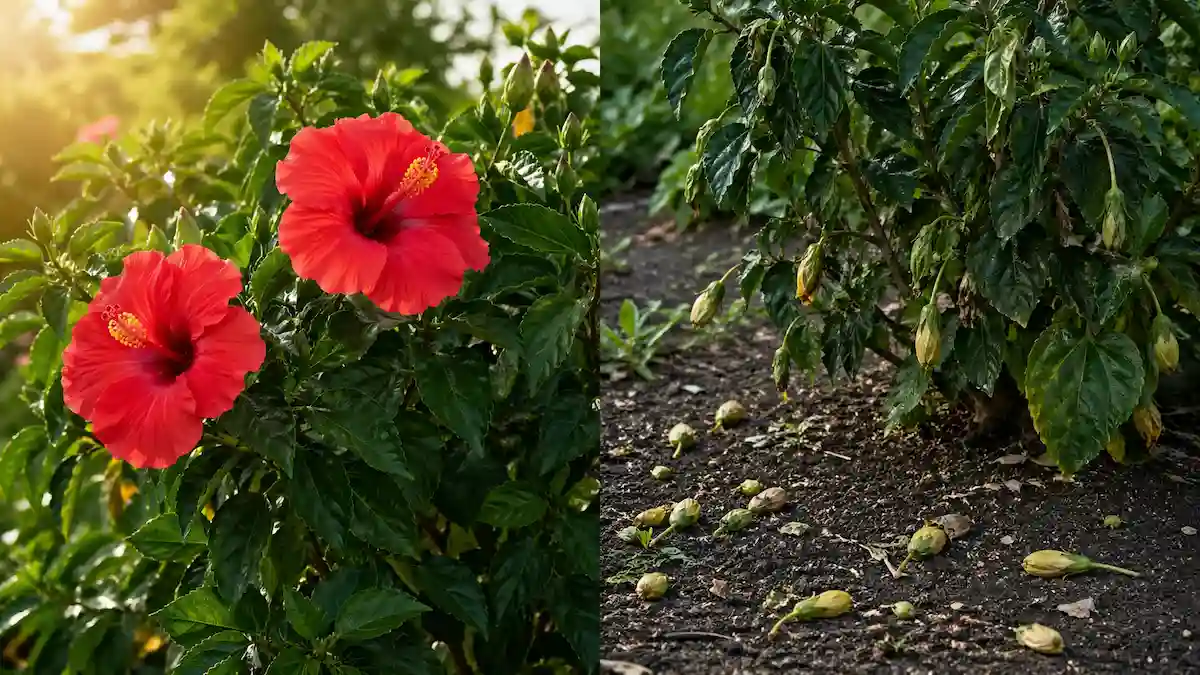
You checked on your hibiscus this morning and found buds on the ground — still closed, never opened, just dropped. If your hibiscus is dropping buds before blooming, you’re not alone, and the plant is almost certainly reacting to some kind of stress. The good news? Once you identify what triggered it, it’s usually fixable.
The plant reacts to stress — watering, temperature, light, or location changes — by shedding buds to conserve energy. Pests, nutrition issues, and root stress can also trigger this response. This guide covers every major cause with practical, step-by-step fixes. Whether you’ve got a potted plant on a windowsill or a shrub in the garden, you’ll find a clear path forward below.
Quick answer: Hibiscus buds drop before blooming due to environmental stress — most commonly overwatering, temperature changes, relocation, low light, or pests. The plant sheds buds to conserve energy when it detects a threat. Identifying and removing the stressor usually restores blooming within 2–4 weeks.
Quick Diagnosis: Why Is Your Hibiscus Dropping Buds Before Blooming?
Before diving into each cause, ask yourself these quick questions:
- Did you recently move the plant or change its location?
- Has your watering schedule changed — more or less than usual?
- Did temperatures drop (or spike) recently?
- Have you checked the undersides of leaves for pests?
- Was the plant recently repotted or transplanted?
- Is the plant in a pot that hasn’t been upsized in over a year?
Here’s a quick-reference summary:
| Cause | Key Symptom | Quick Fix |
|---|---|---|
| Overwatering | Yellowing leaves, soggy soil | Reduce watering, check drainage |
| Underwatering | Dry soil, wilting, crispy edges | Deep water consistently |
| Temperature stress | Bud drop after cold snap or heat wave | Move to stable warm spot |
| Relocation shock | Drop shortly after moving the plant | Keep still, stabilize conditions |
| Low light | Leggy growth, reduced budding | Move to brighter location |
| Pests | Sticky residue, webbing, speckling | Neem oil or insecticidal soap |
| Low humidity | Dry, curling leaves indoors | Pebble tray or humidifier |
| Nutrient imbalance | Lush foliage, no blooms | Switch to balanced fertilizer with potassium |
| Transplant/root bound | Drop after repotting or in old pot | Repot carefully, stabilize |
Still Not Sure? Diagnose It in 30 Seconds
Before reading further, run through this fast triage. Match your situation to the most likely culprit and jump straight to that section:
- Buds yellow and fall, soil is wet → Overwatering
- Buds shrivel and fall, soil is bone dry → Underwatering
- Drop happened right after moving the plant → Relocation shock
- Drop happened after a cold snap or bringing indoors → Temperature stress
- Buds look distorted or have webbing nearby → Pests (spider mites, thrips)
- Buds yellow and fall with no other symptoms → Gall midge
- Plant is in same pot for 2+ years, water runs straight through → Root bound
- Indoors in winter, heating on constantly → Low humidity
- Lush green growth but no blooms → Too much nitrogen
Got your answer? Jump to that section below.
Hibiscus Bud Drop Trigger Chain — The Hidden Root Cause Most Gardeners Miss
Many gardeners try to fix hibiscus bud drop by treating one symptom at a time. But in most cases, bud drop isn’t caused by a single issue — it’s the result of a chain reaction of stress inside the plant.
For example:
- Overwatering → roots lose oxygen → nutrient uptake drops → buds fall
- Low light → reduced energy production → plant can’t support buds → bud drop
- Relocation → stress + humidity change → weakened plant → pest attack → bud drop
How to Spot a Trigger Chain
If your hibiscus shows more than one symptom at once, you’re likely dealing with a root cause and its secondary effects — not two separate problems. Common combinations:
- Yellow leaves + bud drop → watering or root issue driving both
- Bud drop + sudden pest appearance → plant was weakened first, pests moved in after
- Bud drop after moving indoors → relocation, humidity change, and light loss hitting simultaneously
Fix the Root Cause First
Don’t try to fix everything at once — it compounds the stress. Instead:
- Identify the first change that happened (watering, moving, temperature shift)
- Correct that issue and stabilise the plant
- Wait 1–2 weeks before addressing secondary problems
Once the primary stress is resolved, many secondary symptoms — including bud drop — clear up on their own.
If your hibiscus dropped buds suddenly overnight, don’t guess — in most cases, one specific trigger is responsible, and identifying it correctly makes all the difference.
The most common cause of hibiscus bud drop is overwatering. Hibiscus loves moisture, but it cannot tolerate waterlogged roots — and overwatering is one of the primary reasons hibiscus drops buds before blooming. When soil stays soggy for too long, oxygen can’t reach the roots, which disrupts the entire plant’s ability to uptake nutrients and support developing buds.
How to Tell If You’re Overwatering
- Soil feels wet or compacted several days after watering
- Leaves are turning yellow — especially lower, older leaves
- The pot feels heavy and water pools in the saucer
- A musty or sour smell coming from the soil

How to Fix It — Step by Step
- Stop watering immediately and let the soil dry out.
- Lift the pot — if it’s very heavy, the soil is still too wet.
- Check that drainage holes aren’t blocked; clear them if needed.
- If root rot is suspected (black, mushy roots), unpot the plant, trim affected roots, and repot in fresh well-draining mix.
- Resume watering only when the top inch of soil feels dry to the touch.
Going forward, water deeply but let the soil breathe between sessions. In hot weather, outdoor hibiscus may need daily watering — but in cool or overcast conditions, that same routine causes root problems fast. The University of Minnesota Extension’s hibiscus guide advises keeping soil moist but never saturated, with drainage holes always clear.
Overwatering in brief: Waterlogged soil cuts off oxygen to hibiscus roots, blocking nutrient uptake and triggering bud drop. Stop watering, let the soil dry, and check drainage. Buds should stabilize within 1–2 weeks once roots recover.
Underwatering and Inconsistent Watering
The flip side of overwatering is equally damaging. Hibiscus is a thirsty plant — especially tropical varieties during the growing season. When it doesn’t get enough water, or gets it inconsistently, bud development stops and existing buds drop as the plant prioritizes survival over reproduction.
Signs Your Hibiscus Is Too Dry
- Soil pulling away from the edge of the pot
- Leaves looking dull, slightly curled, or drooping
- Buds shriveling before dropping
- Pot feels unusually light when lifted
One of the most overlooked problems is inconsistent watering — soaking the plant one day, then forgetting it for a week. Water when the top 1 inch of soil feels dry, consider a moisture meter if you’re unsure, and mulch outdoor plants to slow evaporation. Consistency is the goal, not volume.
Not sure how much water your hibiscus actually needs? Use our plant watering calculator to get a precise schedule based on your pot size, climate, and season.
Temperature Stress and Sudden Climate Changes
Hibiscus — especially tropical varieties — is extremely sensitive to temperature swings. A sudden cold draft, a late-season frost, or moving the plant from a warm room to a cool porch can trigger bud drop almost overnight.
Tropical hibiscus thrives between 60°F and 90°F (16°C–32°C). Temperatures below 50°F (10°C) cause real stress, and anything near freezing can be fatal for unprotected plants.

Protecting Your Plant Through Season Changes
- Bring potted tropical hibiscus indoors before temperatures drop below 55°F (13°C)
- Transition gradually — don’t go directly from outdoor heat to air-conditioned rooms
- Keep plants away from cold windows, air vents, and heating units indoors
- If a frost catches you off guard, cover outdoor plants overnight with frost cloth
Moving or Relocating Your Hibiscus — The “Move Penalty”
If your hibiscus dropped buds overnight without any obvious change in watering or temperature, this section is almost certainly why.

Here’s something many gardeners don’t realize: hibiscus is very sensitive to being moved. Even shifting a potted plant a few feet to a different light angle — or just turning it — can trigger premature bud drop. The plant has oriented itself to a specific light source, and when that changes, it recalibrates. During that adjustment period, buds often fall.
This “move penalty” is especially pronounced when bringing hibiscus indoors for winter. The shift in light intensity, temperature, and humidity all hit at once, and the plant’s buds pay the price.
Why Hibiscus Reacts So Strongly to Being Moved
Hibiscus buds are resource-intensive. When the plant suddenly has to redirect energy toward adapting to a new light angle or temperature zone, developing buds are treated as expendable. The plant essentially says: survival first, flowers later. This is an instinctive, self-protective response — not a sign of a dying plant.
Indoor vs. Outdoor Moves: What’s Worse?
Moving a hibiscus indoors is more disruptive than rearranging it outdoors. Outdoor moves typically only change light angle; indoor transitions simultaneously reduce light intensity, lower humidity, and often shift temperature — three stressors at once. Expect more significant and longer-lasting bud drop when moving tropical hibiscus from outdoors to inside.
How to Relocate Hibiscus Without Triggering Bud Drop
- Move the plant gradually — a few feet per day if possible rather than across the house in one go.
- Try to maintain a similar light level at the new location.
- Avoid moving a plant that’s actively in bud — wait until after the blooming cycle if you can.
- Once placed in its new spot, don’t keep rearranging it. Let it settle.
- Maintain the same watering schedule through the transition.
For more on proper hibiscus planting and placement, our hibiscus cultivation guide covers soil, spacing, and positioning in detail.
Low Light Conditions and Poor Sun Exposure
Hibiscus needs a lot of light. Without enough, it won’t support bud development — or it’ll form buds and then drop them when it can’t gather enough energy to open them. This is one of the most common issues for indoor hibiscus during winter months when natural light levels fall off sharply.
How Much Light Does Hibiscus Actually Need?
Hibiscus performs best with at least 6 hours of direct or bright indirect sunlight per day. Outdoor plants generally do fine in full sun. Indoor plants need a south- or west-facing window at minimum — and even then, supplemental grow lights may be necessary in winter.
Signs the Plant Isn’t Getting Enough Sun
- Long, leggy stems reaching toward the light source
- Sparse budding or buds that form and drop quickly
- Pale or dull leaf color
- Slow or stalled growth overall
Move to a brighter spot — new buds usually return within 1–2 weeks.
Pests That Cause Hibiscus Bud Drop
Several pests specifically target hibiscus buds — either by feeding on them directly or by stressing the plant so severely that buds falling early becomes inevitable.
Spider Mites
These tiny arachnids thrive in hot, dry conditions and feed on plant sap, leaving behind fine webbing and a mottled, tired-looking leaf surface. A severe spider mite infestation can cause significant bud drop and leaf loss. Check the undersides of leaves carefully — mites are barely visible to the naked eye but the webbing is a giveaway.
Aphids and Thrips
Aphids cluster on new growth and buds, sucking sap and leaving sticky honeydew residue. Thrips are even smaller and hide inside the buds themselves, causing them to drop before opening. If buds look distorted or dried out before falling, thrips are a likely suspect.
Gall Midges (Bud-Specific Pest)
The hibiscus gall midge is a sneaky one — it lays eggs inside developing buds, and the larvae feed from within, causing the bud to yellow and drop before it ever opens. If bud drop is persistent and you’re not seeing any other symptoms on the leaves, gall midge should be on your list. Remove and bin all fallen buds; don’t compost them or you’ll keep the cycle going. The Royal Horticultural Society’s hibiscus growing guide notes that flower buds and leaves dropping is one of the most common issues with hibiscus and is closely linked to environmental stress and pest activity.

How to Treat and Prevent Pest-Related Bud Drop
- Spray with neem oil solution (mixed per label instructions) every 7–10 days
- Use insecticidal soap for aphids and spider mites
- Blast undersides of leaves with water to dislodge mites and aphids
- For gall midge, collect and bin (not compost) all fallen buds to break the life cycle
- Improve airflow around the plant to reduce pest-friendly conditions
For a broader look at pest and disease control strategies, our hibiscus pest and disease guide covers integrated management approaches in depth.
Hibiscus Buds Turn Yellow Then Fall — What It Means
When hibiscus buds turn yellow before falling — rather than dropping green and firm — the cause is usually more specific. Yellow buds are the plant’s signal that something is actively interfering with bud development, not just causing general stress. It narrows the diagnosis considerably.
Why hibiscus buds turn yellow before dropping: Yellowing buds on hibiscus typically indicate gall midge larvae feeding inside the bud, overwatering causing root oxygen deprivation, or excess nitrogen diverting energy away from flowers. Yellow buds that fall without opening are the plant’s way of aborting a bud it can no longer sustain.
Yellow buds in brief: Hibiscus buds turning yellow before falling usually signal a specific internal problem — overwatering, pest infestation (especially gall midge or thrips), or excess nitrogen. Unlike green bud drop caused by general stress, yellowing means the plant is actively aborting a failing bud. Treat the root cause and yellowing should stop within 2–3 weeks.

Yellow Buds + No Pest Signs = Watering or Nutrition Problem
If the buds are yellowing uniformly with no visible pests, sticky residue, or webbing, look at watering first. Overwatering causes the same yellowing in buds as it does in leaves — the root system is under stress and can’t push sufficient nutrients into developing flowers. Excess nitrogen has a similar effect: the plant prioritises leaf production and yellows out buds it sees as a lower priority.
Yellow Buds + Visible Larvae or Webbing = Pest Problem
If you cut open a yellowing bud and find tiny maggots or larvae inside, that’s gall midge — one of the most targeted bud pests on hibiscus. Thrips hiding deep inside buds cause similar yellowing and premature drop. In both cases, the fix is sanitation first (remove all fallen buds), followed by a systemic neem oil application every 7 days for 3–4 weeks.
Yellow Buds in Winter = Light-Related Dormancy
Hibiscus buds turning yellow and falling in autumn and winter — particularly on indoor plants — often points to low light levels rather than pests or watering issues. As day length shortens, the plant can’t generate enough energy to sustain all its buds and starts shedding the most recently formed ones first. Move the plant closer to its brightest available light source and reduce feeding until spring.
When Are Your Hibiscus Buds Dropping? Timing Reveals the Real Cause
Bud drop isn’t always random. The timing of when buds fall can point directly to what’s stressing your hibiscus — often without needing to inspect roots or check for pests. Understanding when it happens gets you to the answer faster.

Buds Dropping in the Morning
If you find fresh buds on the ground first thing in the morning, the cause is usually overnight stress. Plants process and shed energy-costly growth at night when metabolic activity slows. Common overnight triggers include temperature drops, sudden humidity changes (especially if heating or cooling runs overnight), or soil that’s stayed too wet or too dry for too long. Check overnight temperatures and soil moisture levels first.
Buds Dropping During the Day
Bud drop during midday or afternoon typically points to active environmental stress. Extreme heat above 95°F (35°C) can cause buds to abort rapidly. Rapid moisture loss from underwatering on a hot day is another common trigger, as is pest activity — spider mites and thrips feed most aggressively in warm, bright conditions. If buds are falling while the plant is in strong sunlight, dehydration or heat stress is usually the first thing to check.
Buds Dropping Shortly After Watering
If buds consistently fall in the hours after watering, the soil isn’t draining properly. Waterlogging even temporarily stresses the root zone and can trigger bud drop within 12–24 hours. This is a strong signal of overwatering, compacted soil, or blocked drainage holes. Check that water is flowing freely through the pot and not pooling at the base.
Dry air is a real problem for hibiscus, especially indoors. When the air gets too dry (which happens fast in winter with the heating on), they struggle to keep developing buds hydrated. The result is bud drop that has nothing to do with watering or pests.
Best Methods to Raise Humidity
- Pebble tray: A shallow tray with pebbles and water beneath the pot releases humidity as the water evaporates — more effective than misting.
- Group plants together: Plants release moisture through transpiration, creating a more humid microclimate around each other.
- Room humidifier: The most reliable fix for serious indoor bud drop caused by dry air.
- Avoid misting: Only temporary relief, and can encourage fungal issues on buds and leaves.
Nutrient Imbalance and the Wrong Fertilizer
Not all fertilizer helps. The wrong product at the wrong time can actually push hibiscus to drop buds rather than set them. The most common mistake is reaching for a high-phosphorus “bloom booster.” Despite what the label suggests, hibiscus doesn’t handle high phosphorus well — excess amounts can damage the plant and undermine bud production over time.
The Nitrogen Trap
Too much nitrogen pushes the plant into lush vegetative growth — lots of leaves, very few flowers. If your hibiscus looks incredibly healthy and green but keeps dropping buds or refusing to set them, an overly nitrogen-heavy feed is worth suspecting. Cut back on nitrogen-rich fertilizers and give the plant a few weeks to shift its energy back toward blooming.
What Hibiscus Actually Needs
Hibiscus thrives on a fertilizer with a medium nitrogen, low phosphorus, and higher potassium ratio — something close to a 3:1:2 or similar NPK balance. Look for fertilizers that also include trace elements like magnesium, iron, and copper.
Fertilizer Routine to Support Buds
- Feed every two weeks during the growing season (spring through summer)
- Use a balanced fertilizer with moderate nitrogen and potassium, low phosphorus
- Stop fertilizing in winter — hibiscus doesn’t need feeding when growth slows
- If leaves show brown edges, hold fertilizer for 2 weeks and flush with plain water
For organic and homemade feeding approaches, our guide to increasing hibiscus flowering covers nutrient-rich organic options in detail.
Transplant Shock and Root-Bound Plants
Repotting always carries some risk of bud drop. Disturbing roots — even carefully — sends the plant into recovery mode, redirecting energy away from flowers and toward stabilizing its root system. This is usually temporary.
Root-bound plants are a separate issue. When roots have completely filled the pot, they can’t efficiently absorb water and nutrients — leading to chronic bud drop, yellowing, and stalled growth even with regular watering and feeding.
Signs of Root Bound Stress vs. Transplant Shock
- Root bound: Roots emerging from drainage holes, water runs straight through, soil dries very quickly, chronic bud drop in the same pot over time
- Transplant shock: Bud drop immediately after repotting, temporary wilting, plant recovers within 2–4 weeks with proper care
How to Repot Without Triggering Excessive Bud Drop
- Choose a new pot only 1–2 inches larger — too large holds excess moisture.
- Use a well-draining mix; add perlite if needed.
- Water the plant a day before repotting to reduce root stress.
- Handle roots gently — loosen compacted roots without tearing.
- Keep the plant in a stable, sheltered spot for 2–3 weeks after repotting.
- Hold off fertilizing for at least 4 weeks post-repot.
Tropical vs. Hardy Hibiscus — Does Type Matter?
The type of hibiscus you’re growing matters quite a bit here. Tropical hibiscus (Hibiscus rosa-sinensis) is significantly more prone to bud loss than hardy varieties. It evolved in consistently warm, humid conditions and reacts strongly to almost any environmental disruption. If you’re growing tropical hibiscus, nearly every cause listed in this article applies to you.
Hardy hibiscus — swamp rose mallow, rose of Sharon, and similar varieties — handle temperature swings and variable conditions far better. When they do drop buds, it’s usually triggered by something more severe: prolonged drought, waterlogging, or a significant pest infestation.
Seasonal Bud Drop — When It’s Completely Normal
One thing that trips up a lot of gardeners: some bud drop in autumn is perfectly normal for tropical hibiscus. As days shorten and light levels fall, the plant naturally slows its reproductive cycle. A few buds dropping in October or November doesn’t mean something is wrong.
Hibiscus Bud Drop by Season — Spring, Summer, and Winter
Spring: Bud drop in spring almost always has a correctable cause — most commonly a late cold snap, underwatering as temperatures rise, or pest activity ramping up with the warmth. Spring bud drop is not normal and should be investigated immediately.
Summer: Summer bud drop is usually heat or watering-related. Extreme heat above 95°F (35°C) can cause buds to abort, as can inconsistent watering during high-demand periods. Spider mites also peak in hot, dry summers and can cause significant bud drop if left unchecked.
Autumn/Winter: Some bud drop as days shorten is expected and normal for tropical hibiscus. However, sudden heavy drop — especially on indoor plants — points to low light, dry air from heating, or temperature shock from being brought indoors. Distinguish seasonal taper (gradual, a few buds) from stress drop (sudden, many buds at once).
Seasonal drop in brief: Spring and summer bud drop always has a fixable cause. Autumn bud drop can be normal for tropical hibiscus as days shorten — but sudden heavy drop in any season signals stress, not season. Use timing and severity together to diagnose accurately.
How Severe Is Your Hibiscus Bud Drop? (Quick Assessment)
Not all bud drop is equal. Before deciding how urgently to act, assess how much drop you’re actually seeing — the severity tells you as much as the symptoms.
Severity in brief: Hibiscus bud drop severity helps identify urgency. A few buds falling is normal or minor stress, while losing 30–50% indicates correctable issues like watering or light. Sudden total bud drop signals serious problems such as root rot, pests, or shock and requires immediate action.

Light Drop (1–5 buds) — Minor Stress or Normal
A small number of buds dropping occasionally is within normal range, especially during seasonal transitions, minor temperature fluctuations, or when the plant is otherwise healthy. If the rest of the plant looks good — green leaves, active growth, no pests — monitor for a week before intervening. Overreacting to light drop often introduces new stress.
Moderate Drop (30–50% of buds) — Correctable Stress
This level of drop signals a real but usually fixable problem. Watering inconsistency, low light, or a brief temperature shock are the most common culprits at this severity. Use the 30-second diagnosis checklist earlier in this article to identify the cause. Correct it consistently and the plant should stabilise within 2–4 weeks.
Severe Drop (All or Nearly All Buds) — Root, Pest, or Shock Issue
Sudden, total bud drop is a red flag. It usually points to root rot from prolonged overwatering, severe pest infestation (especially gall midge or thrips working through the bud set), significant transplant shock, or acute temperature damage. At this severity, inspect the roots immediately — if they’re black and mushy, root rot is the likely cause and needs urgent repotting. Don’t wait and hope with severe drop; find the cause and act.
How Long Until Your Hibiscus Starts Blooming Again?
One of the most common follow-up questions after fixing hibiscus bud drop: how long will it take to see flowers again? Here are realistic timelines for each scenario.
Recovery timeline at a glance: After correcting the stressor, hibiscus typically begins setting new buds within 2–6 weeks. Mild stress (brief relocation, one dry spell) resolves fastest. Severe stress (root rot, heavy pest infestation, transplant shock) takes longer — sometimes 6–10 weeks before new buds form and hold.

Recovery by Cause
- Watering correction (overwatering/underwatering): 2–3 weeks once the root zone stabilises and new growth resumes
- Relocation shock: 2–4 weeks once the plant settles in its new spot and stops being moved
- Temperature stress (no root/cell damage): 2–3 weeks after the plant returns to its ideal temperature range
- Pest treatment: 3–5 weeks — pests need to be fully cleared before the plant commits energy back to bud development
- Root rot recovery: 4–8 weeks after repotting into fresh soil, depending on root damage severity
- Root-bound repotting: 3–6 weeks after settling into the new pot with sufficient root space
- Nutrient correction: 3–5 weeks after switching to the right fertiliser balance
What to Watch For
The first positive sign isn’t new buds — it’s new leaf growth. When hibiscus starts pushing fresh leaves, it’s a signal the plant has stabilised and is redirecting energy upward again. Buds typically follow 1–2 weeks after new foliage appears. If the plant shows no new growth after 4–5 weeks despite corrected conditions, check the root zone — there may still be an unresolved issue at root level.
Don’t Intervene During Recovery
This is where most gardeners go wrong: they correct the original problem, then compound the stress by fertilising aggressively, moving the plant to “better light,” or repotting again to check on the roots. Resist the urge. Hibiscus recovery needs stability above all else. Fix the cause, maintain consistent care, and leave the plant alone.
FAQs — Hibiscus Dropping Buds Before Blooming
1. Why are my hibiscus buds falling off before they open?
Hibiscus buds fall before opening when the plant is under stress. The most common triggers are inconsistent watering (too much or too little), sudden temperature changes, relocation, low light, pest damage, or nutrient imbalance. Premature bud drop is a survival response — remove the stressor and the plant typically resumes normal budding within a few weeks.
2. How do I stop my hibiscus from dropping buds?
Start with the basics: consistent watering when the top inch of soil is dry, at least 6 hours of bright light, stable temperatures between 60°F–90°F, and avoiding unnecessary relocation. Check for pests weekly. Once conditions are stable and the plant is no longer stressed, bud drop should stop within one to two growth cycles.
3. Can overwatering cause hibiscus bud drop?
Yes — overwatering is one of the leading causes. Waterlogged soil suffocates roots, preventing nutrient uptake and triggering a stress response that causes the plant to shed its buds. Let the top inch of soil dry out between waterings, and ensure the pot has proper drainage holes. Yellowing lower leaves alongside bud drop usually confirm overwatering.
4. Does moving a hibiscus plant cause bud drop?
Yes. Hibiscus is highly sensitive to relocation. Even moving a pot a few feet to a different light angle can trigger bud drop as the plant adjusts. Moving indoors for winter is particularly disruptive. To minimize the impact, transition gradually, maintain stable watering, and avoid moving the plant while it’s actively setting or holding buds.
5. Why is my potted hibiscus dropping buds?
Potted hibiscus is more vulnerable to bud drop than ground-planted hibiscus because roots are confined, moisture fluctuates faster, and the plant is more affected by indoor conditions like low humidity and inconsistent light. Check for root binding, ensure good drainage, and boost humidity if growing indoors. Potted plants also need more frequent feeding during the growing season.
6. What pests cause hibiscus bud drop?
Spider mites, aphids, thrips, and hibiscus gall midges are the main culprits. Spider mites and aphids stress the plant generally, while thrips and gall midge larvae feed directly inside buds, causing them to drop before opening. Inspect leaf undersides and bud bases regularly. Treat with neem oil or insecticidal soap and remove fallen buds to prevent pest cycles from continuing.
7. How often should I water hibiscus to prevent bud drop?
Water when the top 1 inch of soil feels dry — this can mean daily in summer heat for outdoor plants, or every 2–3 days for indoor or shaded ones. Consistency matters more than frequency. Avoid both letting the plant dry out completely and keeping the soil constantly wet. A moisture meter can help take the guesswork out of timing.
8. Is it normal for hibiscus to drop buds in winter?
Some bud drop in autumn and winter is normal for tropical hibiscus. As light levels drop and temperatures cool, the plant naturally slows blooming. This is different from sudden heavy bud drop caused by cold damage or indoor stress. If your plant drops a few buds as days shorten, don’t panic — maintain basic care and it should resume blooming when conditions improve in spring.
Getting Your Hibiscus Back to Blooming
Hibiscus dropping buds before blooming is frustrating, but it’s almost never permanent. Use the diagnosis checklist at the top of this article to pinpoint what changed, correct it, and give the plant 2–4 weeks to stabilize before expecting new buds to hold.
The keys: consistent watering, stable temperatures, strong light, and leaving the plant in place once it’s settled.
For more in-depth hibiscus care resources including how to fix common plant problems and boost overall flowering, visit our complete hibiscus problem-solving guide.
[ad_2]
Source link

