
[ad_1]
Written by: Jagdish Reddy
Sources: This article is based on publicly available horticultural guidance from Michigan State University Extension and the Royal Horticultural Society.
Last Updated: April 2026


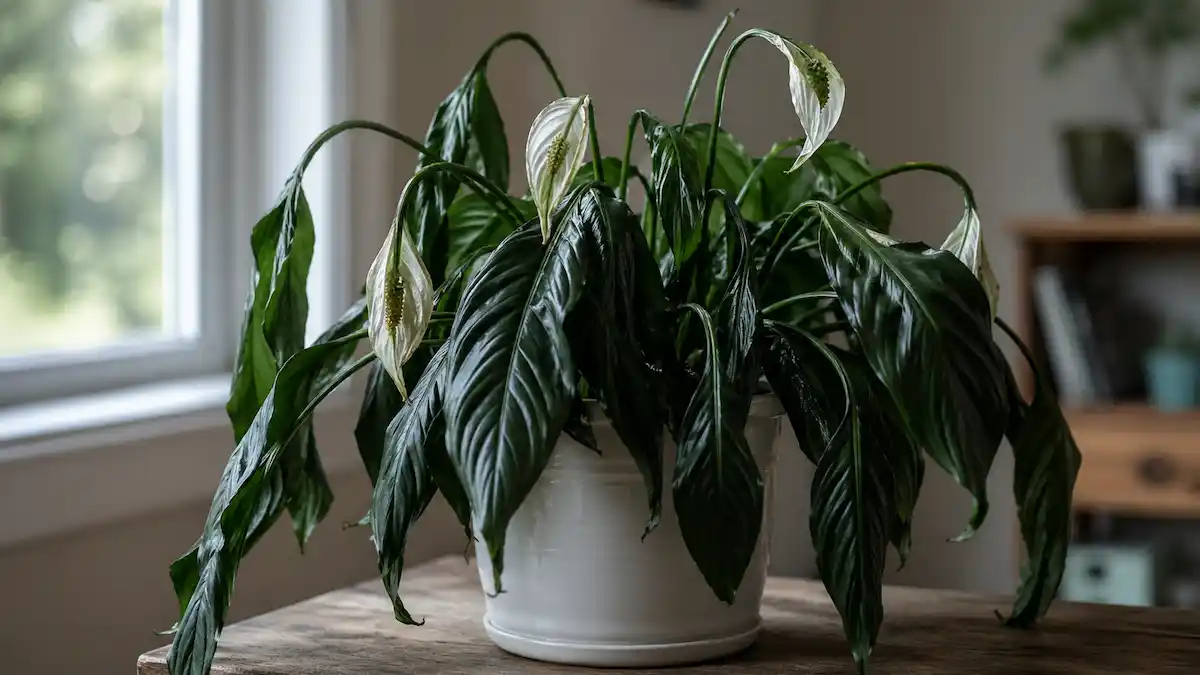
A peace lily drooping after watering is usually caused by overwatering, root rot, compacted soil, or poor water absorption — not underwatering. When soil is moist but leaves are limp, roots cannot take up water properly. Identifying the exact cause is key to fixing the problem quickly.
You just watered your peace lily. It’s still drooping. Here’s the surprising truth: most drooping peace lilies are suffering from too much water, not too little — the exact opposite of what most people assume.
When a peace lily drooping even after watering, something is either blocking water from reaching the roots, or the roots themselves are already damaged. Once you identify which of the 7 causes below applies, the fix is usually simple and fast.
Most people assume drooping means “needs more water” — but in reality, that’s often what makes the problem worse.
Overwatering defined: When soil stays wet too long, roots are deprived of oxygen, suffocate, and begin to rot — preventing water uptake even when moisture is present in the soil.
1. Overwatering and Root Rot — The #1 Reason Peace Lilies Stay Droopy
Overwatering is the most common reason a peace lily droops with moist soil. Waterlogged soil suffocates roots, triggering rot. Rotted roots cannot transport water to leaves — so the plant wilts despite wet soil. Check for mushy dark roots, yellowing leaves, and a musty smell from the pot.
When soil stays wet too long, oxygen is pushed out of the root zone. Roots suffocate, then rot — and a rotted root system can’t move water upward no matter how much you add.
How to tell if your peace lily is overwatered
Check the soil. If it’s been wet for more than a week, overwatering is likely. Signs include yellowing lower leaves, a musty smell from the pot, and dark, mushy roots when you unpot the plant.
How to fix overwatered peace lily — step by step
- Remove the plant from its pot and inspect the roots
- Trim any black or brown mushy roots with sterile scissors
- Let the root ball air dry for 1–2 hours
- Repot into fresh, well-draining potting mix
- Water only when the top inch of soil feels dry
Overwatered: yellow leaves, mushy roots, soggy soil, musty smell
Underwatered: crispy brown edges, bone-dry soil, lightweight pot
Recovery timeline: expect improvement in 2–4 weeks after repotting.
If your peace lily has also developed black or mushy roots alongside drooping, see the complete guide on how to fix lily plant problems with organic treatments for step-by-step root rot diagnosis and recovery.

The Royal Horticultural Society notes that peace lily roots rot quickly when compost stays damp for extended periods, and that the plant prefers rainwater over tap water — full care guidance is available at RHS: How to Grow Peace Lilies.
Root rot defined: A fungal condition caused by waterlogged soil that destroys roots and prevents water uptake — even when the soil around them remains visibly moist.
2. Peace Lily Drooping Even After Watering but Soil Is Wet — Compacted Soil Is Why
When potting mix becomes compacted or hydrophobic, water runs down the sides of the pot and out the drainage hole without soaking into the root zone. The plant stays dry even though you watered it. Bottom-watering for 20–30 minutes forces moisture back into the root ball.
You might notice water pooling briefly on the surface then draining unusually fast — a tell-tale sign. The roots are sitting in dry, compacted soil while the drainage hole runs clear.
Hydrophobic soil defined: Potting mix that has dried out so severely it repels water instead of absorbing it — causing water to channel around the root ball rather than through it.
How to fix compacted soil — bottom-watering method
- Place the pot in a tray or bowl of water
- Let it sit for 20–30 minutes so water is absorbed from the bottom
- Allow it to drain fully before returning to its spot
- Repeat 2–3 times until the full root ball feels evenly moist
If this keeps recurring, refresh the potting mix. Use a loose, well-draining blend with perlite to prevent future compaction.
Using the right potting mix prevents this from happening again — the top 17 potting soil mixes for lilies covers the best well-draining blends that keep roots aerated and water absorbing properly.

3. Root-Bound Pot
A root-bound peace lily has filled its pot with roots, leaving almost no soil to hold water. Water drains immediately without being absorbed, and the plant can’t stay hydrated. Check by looking at the drainage holes — if roots are circling or pushing out, it’s time to repot.
When a peace lily outgrows its pot, roots take up all available space. There’s simply not enough soil left to hold water where the roots can reach it.
How to check without fully unpotting
Tip the pot and look at the drainage hole. Roots circling the base or pushing through the hole confirm it’s root-bound. You can also slide the plant halfway out — a dense, tangled mass with little visible soil is a clear sign.
When to repot and what size pot to use
Choose a pot only 1–2 inches larger in diameter. Going too big creates excess wet soil and risks overwatering. Spring is the best time to repot for the smoothest recovery.

⚠️ Most people misdiagnose this and make it worse by watering more. If the soil is already moist and the plant is still drooping, stop watering and work through this list instead.
4. Fluoride and Chlorine in Tap Water — The Hidden Cause Most Guides Ignore
Peace lilies are unusually sensitive to fluoride added to municipal tap water. Over time, fluoride accumulates in the soil and damages root cells, reducing their ability to absorb water. This slow toxicity causes drooping, brown leaf tips, and gradual decline despite correct watering habits.
In many cases, fluoride buildup is the hidden cause most guides ignore entirely. The damage is cumulative — it builds quietly until the roots can no longer function properly. By the time symptoms appear, months of exposure have already occurred.
This is worth paying close attention to if you live in an area with heavily fluoridated municipal water and your peace lily seems to decline despite doing everything right.
Signs of fluoride toxicity
Brown leaf tips (not edges), general drooping despite normal care, and a slow decline that doesn’t respond to watering changes are the main indicators.
If you want to feed your plant without the risk of fluoride buildup, the guide on 20 DIY homemade fertilizer recipes for peace lilies covers safe organic alternatives made from kitchen ingredients.

How to switch to safer water
- Use filtered water, distilled water, or collected rainwater
- If using tap water, let it sit uncovered overnight to allow chlorine to dissipate
- Flush the soil every few months to wash out accumulated minerals
If you are unsure how often to water your peace lily based on your pot size and climate, use our plant watering calculator to get a personalised watering schedule and avoid the overwatering cycle that leads to fluoride and root damage.
Michigan State University Extension confirms that monocots like peace lilies are among the plants most susceptible to fluoride toxicity when irrigated with city water, with damage appearing as necrotic leaf tips that cannot be reversed once they develop — read their full guidance at MSU Extension: Fluoride Toxicity in Plants.
5. Peace Lily Leaves Drooping and Turning Yellow — Could Be Temperature Stress
Peace lilies are tropical plants that react badly to temperatures below 55°F (13°C). Cold air from vents, drafty windows, or exterior doors causes cell damage that leads to drooping and yellowing — even when soil moisture is perfect. Move the plant to a stable, draft-free spot between 65–85°F (18–29°C).
A plant sitting near an air conditioning vent or drafty window can droop and yellow repeatedly with no obvious cause. The soil looks fine, the light looks fine — but the cold air is doing quiet damage at the cellular level.
Ideal temperature range for peace lilies
Keep your peace lily between 65–85°F (18–29°C) year-round. Avoid cold windows in winter, AC vents in summer, and exterior doors that open frequently.

How to fix temperature stress
Move the plant away from cold air sources immediately. Recovery typically takes 1–2 weeks once it’s in a stable, warm location. Avoid placing it near exterior walls in winter.
6. Why Dry Indoor Air Causes Drooping Even With Perfect Watering
Peace lilies are native to humid tropical forests and need 40–60% relative humidity indoors. In dry air — especially during winter when heating runs constantly — leaves lose moisture faster than roots can replace it, causing drooping despite moist soil. A pebble tray or small humidifier resolves this quickly.
Central heating drops indoor humidity to 20–30% in winter — well below what peace lilies need. The plant is essentially dehydrating through its leaves even while the roots sit in moist soil.
Best ways to increase humidity quickly
- Place a pebble tray filled with water beneath the pot
- Group plants together to create a shared humidity microclimate
- Use a small humidifier near your plants
- Mist leaves lightly in the morning (not at night — invites fungal disease)
Aim for 40–60% relative humidity. A basic hygrometer costs very little and takes the guesswork out completely.
Once drooping is fixed and humidity is stable, your peace lily may start showing signs it wants to flower — our guide on why peace lilies stop blooming and how to force flowers explains exactly what triggers spathes.

7. Transplant and Repotting Stress
Drooping after repotting is normal transplant shock. Disturbing the root system temporarily reduces the plant’s ability to absorb water while it adjusts to new soil. Keep in bright indirect light, water lightly, and avoid fertilizing. Most peace lilies recover fully within 1–3 weeks.
If your peace lily started drooping immediately after being repotted or moved, transplant stress is almost certainly the cause. This is the plant’s normal response to root disturbance — not a sign something went wrong.
How long does transplant shock last?
Most peace lilies bounce back within 1–3 weeks. The key is restraint — resist the urge to water heavily or fertilize to “help” the plant recover faster. Both will make things worse.
Recovery tips after repotting
- Keep the plant out of direct sun for the first 2 weeks
- Water only when the top inch feels dry — resist over-compensating
- Do not fertilize for at least 4–6 weeks post-repot
Quick Diagnosis: Peace Lily Drooping Causes at a Glance
| Symptom | Most Likely Cause | Quick Fix |
|---|---|---|
| Soil moist, plant limp | Overwatering / root rot | Check roots, repot if rotted |
| Water pools on surface | Compacted / hydrophobic soil | Bottom-water for 30 minutes |
| Roots escaping drainage holes | Root-bound pot | Repot to next size up |
| Brown leaf tips + drooping | Fluoride/chlorine in tap water | Switch to filtered or rainwater |
| Drooping + yellowing leaves | Temperature shock / cold draft | Move away from cold air sources |
| Limp leaves in dry season | Low humidity | Mist, pebble tray, or humidifier |
| Drooping after recent repot | Transplant stress | Water lightly, keep in indirect light |
Peace Lily Drooping Common Questions Answered
1. Why is my peace lily drooping even though the soil is moist?
Moist soil with a drooping peace lily means roots cannot absorb water — caused by root rot, compacted soil, a root-bound pot, or fluoride damage. The problem is not how much water you’re adding; it’s whether roots can transport water upward to the leaves.
2. How do I know if my peace lily is overwatered or underwatered?
Overwatered peace lilies show yellowing leaves, soggy soil, and musty-smelling roots. Underwatered plants have crispy brown leaf edges, bone-dry soil, and a very light pot. Check soil moisture and inspect the roots before watering more.
3. How long does it take for a peace lily to perk up after watering?
If underwatering is the cause, a peace lily perks up within 1–6 hours of thorough watering. No improvement after 12–24 hours points to a different problem — overwatering, root rot, or compacted soil are the most likely culprits.
4. Why is my peace lily drooping after repotting?
Post-repot drooping is normal transplant shock. The root system is temporarily disrupted while adjusting to new soil. Keep in indirect light, water lightly, avoid fertilizing. Most peace lilies recover fully within 1–3 weeks.
5. Should I water my peace lily if the soil is already wet?
No — watering wet soil is the fastest route to root rot. Wait until the top inch feels dry. Use your finger or a moisture meter rather than judging by the surface appearance alone.
6. Peace lily drooping after watering but soil is wet — what’s wrong?
Wet soil with a drooping peace lily almost always means root rot or compacted soil. Roots are either damaged and can’t function, or water never properly reached them. Stop watering, unpot the plant, and inspect the roots immediately.
7. Why are my peace lily leaves drooping and turning yellow at the same time?
Drooping combined with yellowing usually points to overwatering or root rot. Yellow leaves mean the plant is struggling to photosynthesize — a sign the roots are damaged and can’t deliver nutrients and water to the foliage. Unpot the plant and check the roots immediately.
How to Diagnose and Fix a Drooping Peace Lily — Summary
When your peace lily droops after watering, the cause is almost always one of these seven: overwatering, compacted soil, a root-bound pot, fluoride in tap water, temperature stress, low humidity, or transplant shock. Adding more water is almost never the right answer.
Start with the diagnosis table above. Check soil moisture and root health first, then work through the list systematically. Pay special attention to fluoride buildup if you use tap water regularly — it’s the most overlooked cause and one of the hardest to spot without knowing what to look for.
Peace lilies droop dramatically to get your attention, but they bounce back just as dramatically once you give them what they actually need. In most cases, one targeted fix is all it takes.
[ad_2]
Source link

