
[ad_1]
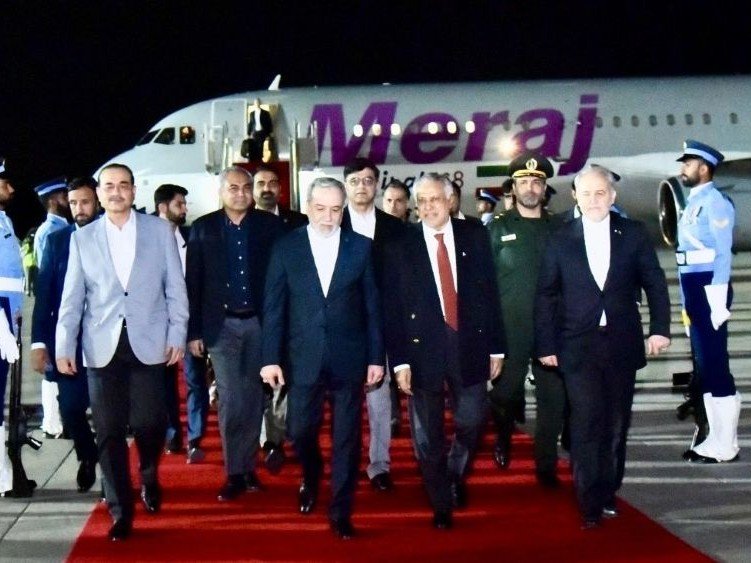
On 11 and 12 April 2026, as tensions in the Gulf edged closer to miscalculation than meaningful diplomacy, U.S. and Iranian officials met in Islamabad for more than twenty hours of closed-door talks. No agreement emerged from the discussions. However, that outcome does not fully capture the moment. What mattered was that a channel was created in Pakistan and, contrary to what many anticipated at the time, it did not close. In the weeks since, that channel has endured amid intensifying tensions in the Strait of Hormuz and a visibly reinforced American naval posture across the region. Formal negotiations have stalled over sanctions relief, maritime restrictions, and Iran’s nuclear file. Yet communication has continued through Islamabad, at times quietly and at times with pauses, but never to the point of breakdown. There have been moments where continuity appeared fragile amid the risk that the channel might simply stall out altogether. Yet Pakistan has, against expectation, managed to hold that line.

What defines Pakistan’s role in this moment is not negotiation itself, but the preservation of contact. The talks are currently suspended, but the channel remains active in a limited form. Pakistani officials continue to engage both the U.S. and Iran, relaying positions, clarifying ambiguities, and informally shaping the pace of exchanges. The result is a peculiar diplomatic moment: there is no formal process, yet communication has not collapsed. For now, that distinction matters. Despite heightened rhetoric and visible military signaling on both sides, Pakistan has kept the exchanges alive, including at moments when stepping back would have been easier. Islamabad has not simply hosted dialogue. It has helped ensure that it did not quietly dissipate.
This is more consequential than it first appears. In recent history, no state in South Asia or the Gulf has sustained such a central role in maintaining communication between adversaries of this scale during an active crisis. Pakistan has positioned itself as a venue where contact continues when direct engagement becomes politically inconvenient or too costly to sustain openly. It may appear procedural on its face, but its implications are not. At times, the difference between escalation and restraint turns on something far more basic: whether communication still exists.
Pakistan’s presence in this space is not without precedent. In 1971, Islamabad quietly facilitated one of the most consequential diplomatic openings of the 20th century, enabling Henry Kissinger’s secret visit to Beijing and laying the groundwork for engagement with Zhou Enlai, which ultimately led to the 1972 rapprochement between the U.S. and China. That episode demonstrated Pakistan’s ability to operate in politically sensitive circumstances where direct contact between adversaries was not possible. It also left behind an enduring institutional memory that influence can be exercised indirectly, particularly by enabling others to engage. Such precedents rarely dictate policy, but they do shape instinct, and that instinct appears to have surfaced again, even if not necessarily in the form of a formal doctrine. In hindsight, that pattern remains visible in Pakistan’s posture today.
More recently, Pakistan has made use of a geopolitical opening that developed in early May 2025. Between 7 and 10 May, a sharp military confrontation with India shifted perceptions of Pakistan’s strategic posture. Islamabad publicly asserted that it had downed multiple Indian aircraft. Irrespective of the degree to which those claims can be independently verified, they altered how Pakistan was being perceived in a short span of time. They contributed to a portrayal of restored deterrence and operational confidence. Perception moved quickly, and it held. That narrative extended beyond the immediate theatre and fed into a broader sense that Pakistan was acting with renewed confidence, even if the underlying realities were more complex than the narrative implied. That shift in perception mattered in its own right.
At around the same time, high-level engagement with U.S. President Donald Trump suggested positive movement in Pakistan–U.S. relations. Public remarks by President Trump, notably referring to Pakistan’s Chief of Army Staff, Field Marshal Asim Munir, as his “favorite field marshal”, drew attention. Alongside this, Pakistan signaled openness to emerging economic and technological alignments, including participation in digital finance initiatives linked to the U.S. These developments created a narrow but meaningful opening. Islamabad moved quickly to position itself as accessible and responsive at a point when Washington appeared more willing than usual to engage through flexible intermediaries. It recognized the opportunity early and stepped into it with a level of confidence that might not have been expected earlier.
Pakistan’s strategic geographic location also reinforced this shift. It sits at the intersection of South Asia, the Gulf, and Central Asia. It borders Iran, maintains deep ties with Saudi Arabia, and retains strategic ties with major powers. In times of crisis, this positioning becomes practical. Pakistan can operate across multiple theatres and connect actors who are otherwise separated by distance or political constraint. Geography, often treated as a constraint, has in Pakistan’s case operated as an enabling condition.
At the same time, this role is defined by constraint. Pakistan’s relationships and ties pull in different directions, and each comes with its own expectations. Its ties with Washington, Tehran, and Riyadh do not invariably align. Acting as an intermediary in this context requires constant adjustment rather than a fixed position. There is no stable balance here, only a shifting set of considerations that must be managed in real time, often without the benefit of clear guidance. It is not a comfortable position to hold, and it is not always sustainable without friction. Preserving access without signaling alignment calls for both restraint and caution.
The Iran dimension is particularly sensitive for Pakistan. It shares an approx.. 900-kilometre border with Iran, making any escalation an immediate security concern with direct consequences along a live frontier. Cross-border incidents, including militant activity, have underscored how fragile this boundary remains and how quickly tensions can spill over. There is also a significant internal dimension. Pakistan’s large Shia population means that developments involving Iran can resonate within the country, at times in ways that are difficult for policymakers to fully anticipate or contain. The implications are therefore immediate rather than distant, with little buffer between external developments and domestic impact.
Pakistan’s economic challenges only sharpen this challenge. It relies heavily on energy flows through the Strait of Hormuz, and disruptions are felt quickly across the domestic economy. The country’s recurring energy crises over the past illustrate how vulnerable it remains to external shocks. Rising fuel costs and pressure on foreign exchange reserves in Pakistan tend to follow instability in the Gulf. These vulnerabilities are well established, particularly during periods of price volatility. Preventing escalation for Pakistan is therefore tied closely to economic stability at home, in immediate terms rather than as a distant policy objective.
Pakistan’s relationship with Saudi Arabia adds another layer of complexity on top. Defence cooperation, economic dependence, and the presence of a large Pakistani workforce in the Saudi Arabia make that relationship central to Pakistan’s external posture. This relationship was recently further cemented through the Strategic Mutual Defence Agreement concluded in September 2025, which deepened existing security ties between the two countries. At the same time, remittances from Pakistani workers in Saudi Arabia remain among the largest sources of external inflow into Pakistan’s economy. Any instability in Saudi Arabia would be felt quickly, both economically and socially. Managing this relationship while sustaining engagement with Iran entails walking a diplomatic tightrope and requires constant balancing. There is limited room for error, and even minor slips in judgment can carry wider consequences.
Pakistan has also situated its efforts within a broader diplomatic framework by engaging with other regional actors, including Turkey, Egypt, and China. In April and May 2026, Pakistan’s Foreign Minister held consultations with counterparts from these countries, both bilaterally and on the sidelines of multilateral forums. These exchanges concentrated on aligning positions and supporting de-escalation. Pakistan also engaged in shuttle diplomacy, moving between capitals and relaying messages and assessments. That wider engagement has given Pakistan something useful: a degree of flexibility and political cover, enabling Pakistan to engage across competing actors without attracting the perception of alignment.
Pakistan’s approach lately has combined measured public messaging with quieter and more direct channels of engagement. Official statements have remained restrained, while less visible lines of communication have allowed for candid exchanges away from the spotlight. A notable feature of this effort has been its civil–military character. Both Prime Minister Shehbaz Sharif, and Chief of Army Staff Field Marshal Asim Munir, have engaged regional capitals, including Tehran and Riyadh, maintaining contact and picking up threads of discussion as they have emerged. During the Afghan peace process between 2018-2020, formal diplomacy was similarly reinforced by quieter facilitation between the U.S. and the Taliban, with Pakistan hosting meetings and maintaining back-channel communication between the parties. Pakistan now appears to be working on a similar logic: the timing and method of communication can shape how it is received, and in moments of tension, that distinction can carry real weight.
As a result, a gradual but important shift is also visible in Pakistan’s foreign policy posture. For much of its history, Pakistan’s external engagement has been determined by immediate security concerns. What is unfolding now points to a more deliberate effort to position Pakistan within ongoing geopolitical developments, even if the longer-term direction remains uncertain and unlikely to follow a linear path.
This shift must also be situated within the wider transformation taking place in the Gulf’s security architecture. The traditional model, built around a decades-old U.S. security umbrella anchored in Washington as the primary guarantor of regional stability, has begun to show visible signs of strain. While the U.S. remains present, its posture has become more selective and is increasingly being shaped by broader global priorities and competing strategic commitments. Historically, that role extended beyond crisis management to include deterrence, forward military presence and reassurance of regional allies. As that posture evolves, gaps have begun to emerge not only in crisis response but also in sustained diplomatic engagement, coordination among regional actors, and the day-to-day management of tensions. These are areas that depend on continuity rather than episodic intervention.
Sensing an opportunity, Pakistan is adjusting to this shifting landscape and moving, cautiously but deliberately, to occupy parts of that space. It is positioning itself as a complementary actor and one that can step in where larger powers, including the U.S., are either constrained or simply not willing to engage on a continuous basis. In doing so, Pakistan is trying to make practical use of its geography and its political relationships, offering something relatively simple but important i.e., the ability to keep lines of communication open between actors who cannot engage directly.
If sustained, this approach could move beyond ad hoc engagement into something more structured. Pakistan may begin to institutionalize its intermediary role, developing more consistent channels for crisis communication and embedding itself more firmly within regional diplomatic processes. For Pakistan, that would entail moving from situational facilitation to a steadier presence, one that is expected rather than improvised. Over time, similar methods could be applied in other theatres where direct engagement is constrained, allowing Pakistan to act as a connective tissue across otherwise fragmented diplomatic spaces.
Regardless of Pakistan’s evolving posture and its ambition to play a more active role, sustaining this approach will require constant rebalancing as it navigates competing pressures and adjusts to shifting regional dynamics. Even any perception of imbalance, whether accurate or not, could undermine the credibility on which this role is founded. This positioning carries risks and sensitivities because greater visibility brings closer scrutiny, and expectations tend to rise as relevance increases. Pakistan’s relationships with key actors impose natural limits, and managing them requires a steady and disciplined approach. Credibility in this space is built over time but can be unsettled quickly. Preserving trust will depend on Pakistan’s consistency and the ability to absorb competing pressures without reacting in ways that compromise access.
The significance of Pakistan’s role, and the direction its foreign policy may be taking, lies in what it has managed to sustain: continuity of communication between bitter adversaries at a time when direct engagement was not politically feasible. Since March, both sides have continued to heavily rely on Islamabad as a trusted channel. That reliance has given Pakistan a more consequential place within the process itself, even if that process rests on a fragile foundation. Acting as an intermediary under such conditions is difficult to hold and harder still to sustain.
What Pakistan has done – staying engaged when others stepped back, keeping lines open as positions hardened, and holding together a channel that could easily have collapsed under the weight of mistrust – offers a clearer indication of where its foreign policy may be heading. At least for now, it points to an approach defined less by formal doctrine and more by sustained engagement, access, continuity and trust. Whether this evolves into a more structured posture for Pakistan remains uncertain. For now, however, this is Pakistan’s moment: an ability to remain present in a volatile equation, to act with steadfastness under pressure, and to maintain contact without withdrawing prematurely.
[Photo by Ministry of Foreign Affairs – Pakistan / Twitter]
Hassan Aslam Shad is an international law practitioner and a geopolitical analyst. He is a graduate of Harvard Law School. The views and opinions expressed in this article are those of the author.
[ad_2]
Source link

