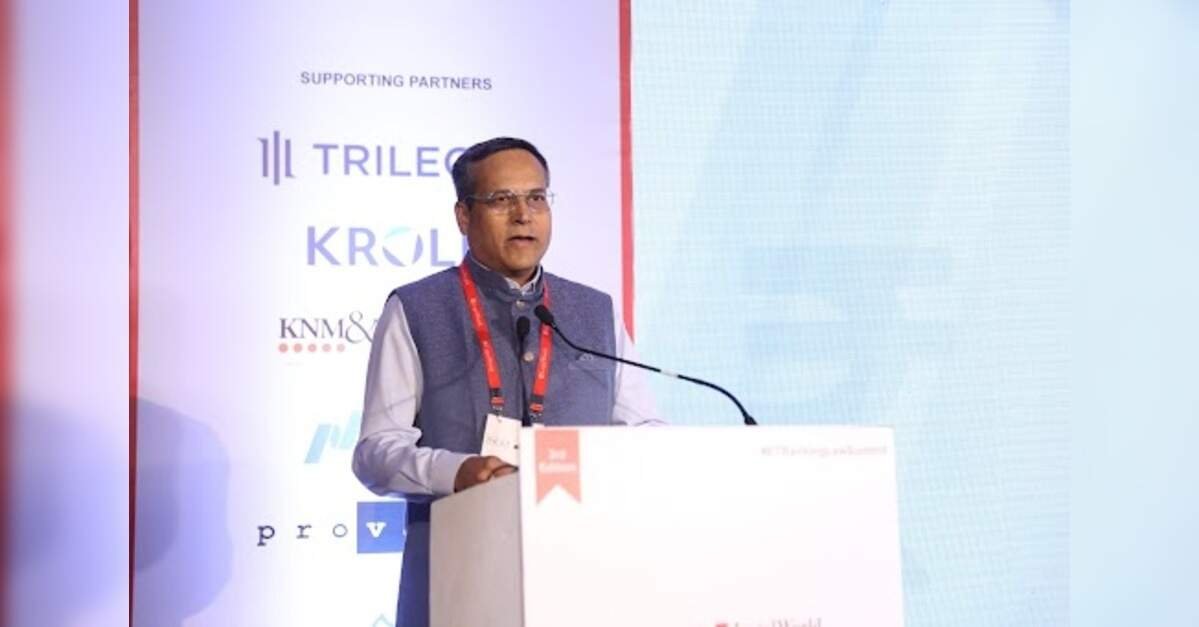


Global geopolitics is reshaping Indian banking and finance law by turning transaction assessment into a wider question of sanctions exposure, data control, cloud resilience and regulatory readiness, Nilanjan Sinha, General Counsel, ICICI Bank, said, while delivering the Chairperson address at ETLegalWorld’s Banking and Finance Law Summit 2026. The summit’s third edition focused on the reset underway in financial regulation, risk and resilience amid heightened regulatory scrutiny, geopolitical realignments and AI-led transformation.
Sinha said the first visible impact of geopolitics on banking law is the expanding role of sanctions in commercial decision-making. As global political objectives increasingly influence trade and financial flows, banks are being pushed to evaluate transactions through a more complex lens.
“It is not about whether it is just legally enforceable,” Sinha said, explaining that banks now need to examine whether a transaction is practically doable in a fragmented geopolitical environment.
“What became very central in the conversation is that every such bank should have what is called an exit architecture,” Sinha said, referring to the need for institutions to build systems that prevent over-dependence on foreign cloud infrastructure. The point matters because banking operations now depend heavily on digital infrastructure, and any service lockout can quickly become a business continuity and regulatory risk.
Another emerging area of concern, Sinha said, is the conflict between data localisation expectations and foreign laws governing access to data. He referred to the US Clarifying Lawful Overseas Use of Data Act, or CLOUD Act, and said it codifies the principle that jurisdiction follows control over data rather than only its physical location.
Sinha noted that countries such as China and Russia have taken legislative steps to address such conflicts, while India must continue assessing how best to deal with overseas jurisdictional claims over data.
At the same time, Sinha pointed to India’s efforts to reduce geopolitical dependency through domestic financial infrastructure and regulatory initiatives. He cited UPI’s growing global footprint, liquidity support measures such as the Emergency Credit Line Guarantee Scheme, regulatory changes around acquisition financing and lending to REITs and InvITs, and amendments relating to FCNR(B) deposits as examples of measures aimed at strengthening resilience.
The address also highlighted the changing role of in-house legal teams in Indian banking. Sinha said there was a time when only large companies had meaningful in-house legal departments, but the complexity of modern financial business has changed that model.
“Today, every bank, irrespective of size, every non-bank has a significant team,” he said. This shift matters because financial institutions now require senior legal capability not only for dispute management, but for daily business decisions involving regulation, technology, sanctions, capital flows and operational risk.
The third edition of ETLegalWorld’s Banking & Finance Law Summit unfolded in Mumbai yesterday, drawing together some of India’s leading banking lawyers, compliance officers, general counsels, and regulatory officials for an evening of rigorous dialogue and debate.

[ad_1]
Source link

