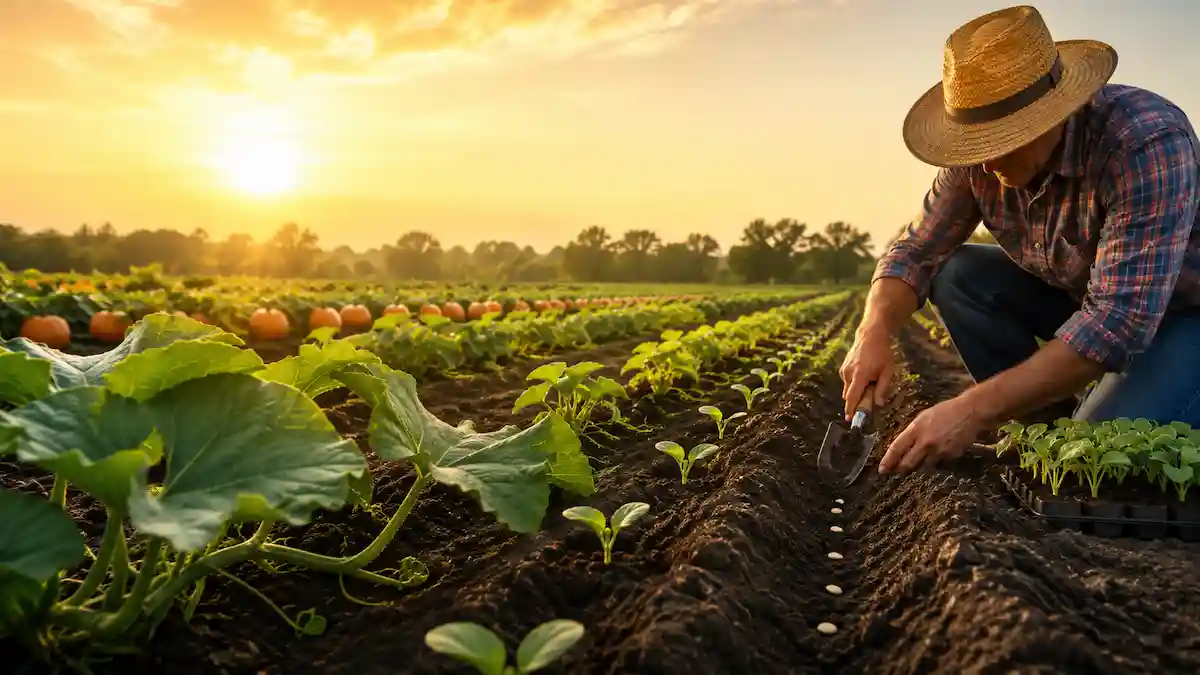

To successfully learn how to grow pumpkins from seed naturally, farmers must contend with much more than simply planting seeds and waiting. Understanding proper soil preparation, correct spacing and effective moisture management makes the difference between a bountiful harvest and disappointing crop failure. With quality seed sourcing, natural growing practices and the right knowledge, even beginners can cultivate a healthy, productive pumpkin patch.

Common Challenges When Planting Pumpkin Seeds
Poor germination rates frustrate even experienced farmers when spring weather brings cool temperatures alongside excessive moisture.

Phytophthora, Pythium and Rhizoctonia are water molds that affect seeds planted before germination when temperatures stay low, and moisture levels remain high. These organisms thrive in poorly drained soils, attacking slow-growing vegetation before it establishes a strong root system. Visible symptoms include yellowing or browning leaves, stem cankers at the soil line, and stunted or wilted growth despite adequate watering.
Another problem is compacted earth, which restricts both water drainage and air circulation around developing roots. Developing seedlings need a crumb-like consistency to grow, rather than decomposing organic matter that harbors diseases, which means that plant residue in the top four inches creates further obstacles. To give operations the best chance at a healthy emergence, addressing these foundational issues before planting is key.
Step-by-Step Guide to How to Grow Pumpkins from Seed
Successful pumpkin cultivation follows a logical sequence from variety selection through harvest. Each decision builds on the previous one, creating conditions that support vigorous plant development. Breaking the process into clear stages helps growers avoid common missteps.
Selecting the Right Pumpkin Varieties
Large carving pumpkins serve different markets than small decorative types or those bred specifically for pies, while some operations focus on white-skinned options that customers can paint for fall displays. Matching the cultivar to the intended market makes the difference between moving inventory quickly and watching it sit unsold.
Popular pumpkin types include the following:
- Large varieties: Autumn Gold, Connecticut Field and Spirit Hybrid produce pumpkins between 18 and 25 pounds, making them versatile options for carving and pies that satisfy both commercial and home gardeners.
- Miniature varieties: Jack Be Little, Wee-B-Little and Baby Bear produce fruits ranging from half a pound to about 1.5 pounds, with compact sizes perfect for individual decorations and table displays.
- Giant varieties: Big Max and Big Moon can produce individual fruits exceeding 200 pounds for competitive growers or roadside attractions.
- Lumina: This white-skinned variety weighs 8 to 14 pounds, providing enough canvas for painting projects while remaining manageable for growers targeting the craft market.
Preparing the Soil and Spacing
Soil temperature matters more than calendar dates when deciding planting time. Because pumpkins require warmer soil at 65° Fahrenheit for germination, rushing into cold ground wastes both seeds and time. Using a soil thermometer removes guesswork from this critical decision.

Heavier soils retain moisture better than sandy types, making them preferable for most operations. A slightly acidic pH between 6.0 and 6.5 optimizes nutrient availability throughout the growing season, providing plants with the minerals they need for vigorous growth.
Spacing depends largely on how aggressively the vines spread. Row spacing varies from 3 to 10 feet based on growth habit, while plants within each row need 36 to 60 inches apart, depending on whether the cultivar develops compact bushes or sprawling vines. Adequate room between plants promotes healthy development and simplifies management tasks throughout the growing season.
Managing Moisture and Disease
Drip irrigation or soaker hoses deliver water directly to the root zone while keeping foliage dry, whereas evening overhead watering leaves plants wet overnight. Consistency matters more than volume, as plants perform best with steady moisture rather than cycles of drought followed by heavy watering.
Once your seedlings are well established, providing balanced nutrition encourages vigorous vine growth and healthy fruit development. Learn how to make homemade fertilizer for pumpkins using simple, natural ingredients.

Regular monitoring helps catch issues before they escalate. If farmers must intervene to support the plant growth, removing affected leaves or applying appropriate treatments early often prevents minor setbacks from becoming total losses.
Where Is the Best Place to Buy Pumpkin Seeds Online?
Quality seeds form the foundation of successful pumpkin growing. Several established suppliers offer reliable germination rates, disease resistance and varieties suited to different growing conditions. Each brings particular strengths to the market.
- Harris Seeds
Harris Seeds maintains an in-house germination lab that regularly analyzes seed performance using testing procedures prescribed by the Association of Official Seed Analysts. Testing the latest cultivars from top plant seed producers through rigorous evaluation ensures germination rates exceed federal and state standards for both vegetable and ornamental selections.
Such testing gives farmers confidence that purchased seeds will perform as expected under appropriate conditions. Enhanced disease protection gets crops off to a healthy start, as treated seeds resist common soilborne pathogens that attack during the vulnerable germination period.
Quick order turnaround keeps operations on schedule during critical planting windows, while an extensive discount and terms program designed specifically for larger operations provides financial flexibility that helps farms manage cash flow during the growing season.
Key Features
- High germination rates verified through in-house testing
- Wide selection of vegetable and ornamental varieties
- Quick order processing and delivery
- Commercial grower discount and credit terms programs
- Johnny’s Selected Seeds
Award-winning bred varieties form the core of Johnny’s Selected Seeds’ extensive catalog. Open-pollinated heirlooms sit alongside disease-resistant hybrids in both organic and conventional options, creating diversity that serves commercial operations and backyard gardeners equally well.
Different end uses require different fruit characteristics. Growers seeking variety selection for carving jack-o’-lanterns, baking pies, roasting seeds and extracting oil can explore its comprehensive options, including ornamentals for traditional fall decorations alongside production cultivars.
Maturity dates, expected weights, edibility and spacing requirements also guide cultivar selection through detailed charts and resources. Bulk seed quantities accommodate commercial operations planting multiple acres, making it easier to source everything from a single supplier.
As one of the nine founding members of the original Safe Seed Pledge, the company is committed to not knowingly sell genetically modified selections. This appeals to producers targeting markets with specific production requirements.
Key Features
- Extensive variety selection for multiple market segments
- Comprehensive growing information and specifications
- Organic and conventional seed options available
- Original Safe Seed Pledge signatory
- Osborne Quality Seeds
Osborne Quality Seeds combines Safe Seed Pledge commitment with organic certification from the Washington State Department of Agriculture Organic Program. The product line contains no genetically manipulated organisms, genetically engineered products or biotech materials. Every hybrid selection sold comes exclusively from traditional plant breeding practices and meets the standards required by organic operations.
Third-party organic certification verifies that purchased seeds meet strict production standards. This matters significantly for farms maintaining their own organic status, as sourcing certified seed protects their certification while ensuring genetic purity. Many operations find that working with certified suppliers simplifies record-keeping and reduces audit complications.
Traditional breeding methods produce all hybrid offerings, allowing farms to access hybrid vigor and disease resistance without compromising their production philosophy. This approach satisfies operations serving markets concerned about production methods while still delivering the agronomic performance commercial growers need.
Key Features
- Safe Seed Pledge commitment
- Washington State Department of Agriculture organic certification
- No genetically engineered products
- Traditional breeding methods for all hybrids
- Gurney’s Seed and Nursery Co.
On-site trials and testing at a 20-acre research farm in Tipp City, Ohio, give Gurney’s Seed and Nursery Co. confidence that cultivars perform as advertised before reaching customers. A dedicated team conducts independent evaluations, catching underperformers before they enter the catalog while identifying standout performers worth promoting.
Throughout the year, horticulturalists visit plant breeders, universities, public gardens and trade shows in search of promising new introductions. Interesting candidates come back to the farm for field trials under real-world conditions.
Beyond evaluating outside cultivars, the company conducts its own plant breeding and selection work. This allows them to develop selections with specific characteristics their customers request rather than settling for what’s commercially available.
Safe Seed Pledge signatory status demonstrates a commitment to transparency about seed sources. This matters to operations needing to verify production methods for their own customers. Likewise, a full one-year guarantee on all nursery stock, trees, plants, seeds and merchandise backs up these quality claims with financial assurance.
Key Features
- On-site research farm testing new varieties
- Independent plant breeding program
- Full one-year product guarantee
- Safe Seed Pledge signatory
Selecting the Top Seed Suppliers
Germination rates topped the evaluation criteria since seeds must sprout reliably under appropriate conditions. Top suppliers should document their testing procedures through laboratory analysis, as objective data provides the confidence farmers need when investing in seed.
Cultivar selection also matters in distinguishing top sellers. Different operations need different pumpkin characteristics, whether growing for carving markets, pie production or ornamental sales. Companies offering both specialty and mainstream options serve broader market segments. Farmers able to source multiple cultivars from a single supplier simplifies ordering and account management during busy planting seasons.
Commercial grower support separates hobby-focused suppliers from those serving professional agricultural operations. Volume discounts, credit terms and bulk packaging address the practical needs of farms planting significant acreage. Otherwise, technical support and growing information help troubleshoot problems during the season without requiring growers to seek outside expertise.
Frequently Asked Questions
Common questions about pumpkin cultivation reflect the challenges growers face most frequently. These answers recap key concepts for quick reference.
How long does it take for pumpkin seeds to germinate?
Germination timing depends primarily on soil temperature rather than days in the ground. Warmer soil speeds up the process while cooler temperatures extend the timeline significantly. Cold, wet conditions also increase the risk of rot caused by soilborne pathogens before seeds sprout.
What is the best soil for growing pumpkins?
Heavier soils that retain moisture without becoming waterlogged provide ideal growing conditions. A slightly acidic pH between 6.0 and 6.5 optimizes nutrient availability throughout the growing season. Good drainage prevents the cool, wet conditions that favor damping-off diseases during germination.
How far apart should pumpkin plants be spaced?
Spacing requirements depend on the variety’s growth habit. Row spacing typically ranges from 3 to 10 feet, depending on how aggressively the vines spread, while in-row spacing between plants is 36 to 60 inches. Compact bush types require less space than sprawling vine varieties, so it’s important to check the specific cultivar’s characteristics before planting.
Reaping a Successful Pumpkin Harvest

Thoughtful variety selection, proper soil preparation and quality pumpkin seed sourcing create the foundation for productive growing. Addressing common challenges before they derail germination saves time and resources. With attention to these fundamental practices, even beginning growers can produce marketable crops.
After learning how to grow pumpkins from seed, the next step is ensuring successful fruit production. Explore these pollination strategies for maximum pumpkin yield to improve fruit set and increase your harvest.

