
[ad_1]
Water is becoming the defining governance failure of the climate era. Climate change has generated a dense web of institutions, agreements, and financing mechanisms – yet water, the medium through which most climate impacts are felt, remains ungoverned at scale. It is no longer just an environmental issue. Water constrains food systems, energy production, economic stability, and, increasingly, geopolitical relations. The institutions have not caught up.

The reason matters. Water underpins nearly every system a modern economy depends on. Agriculture accounts for roughly 70% of freshwater withdrawals. Energy systems, from hydropower to the cooling of thermal and nuclear plants, are similarly water-intensive. So are industrial production, urban infrastructure, and public health. No single ministry or agency spans all of these. When supply becomes scarce or unpredictable, the consequences cascade across sectors in ways that fragmented governance cannot contain.
The numbers are stark. Nearly four billion people experience severe water scarcity for at least part of the year. More than two billion live in water-stressed environments. Climate change is accelerating both trends, disrupting the hydrological cycle through glacier retreat, shifting precipitation, prolonged droughts, and more frequent floods. Glacier melt alone threatens the water and food security of up to two billion people. The consequences – crop losses, energy disruptions, infrastructure damage, population displacement – already cross borders and sectors. They will not stop doing so.
Yet governance has not kept pace. Unlike climate change, which is anchored in the UN Framework Convention on Climate Change and its associated mechanisms, water is governed through a patchwork of regional agreements, sector-specific initiatives, and loosely coordinated international bodies. There is no single platform capable of integrating water policy across its multiple dimensions. That structural gap is growing more consequential by the year.
This is beginning to change. At the Regional Ecological Summit in Astana in April, Kazakhstan’s President Kassym-Jomart Tokayev advanced a proposal to establish an International Water Organization under United Nations auspices. The initiative reflects a broader recognition that existing structures are no longer adequate to the scale and complexity of water-related challenges. It is a signal that the countries living closest to the consequences of water governance failure are no longer willing to wait for the problem to be taken seriously elsewhere.
Central Asia exemplifies what is at stake. The region depends on transboundary river systems, notably the Syr Darya and Amu Darya, that originate in the mountains of Kyrgyzstan and Tajikistan and flow through downstream Kazakhstan, Uzbekistan, and Turkmenistan. These systems are fed largely by glaciers in the Tien Shan and Pamir ranges. Those glaciers are retreating fast. Rising temperatures, inefficient irrigation, and growing demand compound the pressure. The result is a region where water availability is declining and becoming less predictable at the same time. This is not a temporary stress. It is a structural condition.
The region’s institutional record is instructive, and sobering. Bilateral arrangements and regional bodies, including the International Fund for Saving the Aral Sea, have historically managed these pressures. But coordination has repeatedly given way to national priorities, collective solutions sacrificed for short-term gain. The Aral Sea tells the story plainly: once one of the world’s largest inland bodies of water, it is now largely desiccated. The costs of that failure are still being borne by the communities around it. That Central Asia is now among the loudest voices calling for a new global institution is not incidental. It is what happens when a region has lived with governance failure long enough to know exactly what it costs.
President Tokayev’s proposal for an International Water Organization is an attempt to address that structural failure at a higher level. The model need not be invented from scratch. The International Energy Agency, established in 1974 to coordinate responses to oil supply disruptions, and the World Meteorological Organization, which underpins global climate data collection, show what sector-specific multilateral institutions can achieve when mandates are clear and membership is broad. Water has neither. An IWO could start by doing what no existing body does: aligning initiatives, improving data sharing, and linking water policy coherently to energy, agriculture, and climate adaptation.
Over time, it could build more consistent frameworks for managing transboundary systems and shore up countries with limited institutional capacity. The upcoming UN Water Conference in Abu Dhabi in December is the natural next moment, and the consultations launched in Astana could directly shape what emerges. The architecture is not yet defined. But the case for a dedicated UN-level platform is no longer easy to argue against.
Constraints exist and should not be minimised. New bodies risk deepening fragmentation if their mandates are poorly defined. Reform is slow and politically complex. Water, entangled as it is with agricultural subsidies, energy policy, and national security, is precisely the kind of issue over which states resist ceding authority. Even where political will exists, the financial architecture for meaningful reform remains underdeveloped. And governance ultimately depends on national implementation, which varies enormously in both capacity and commitment. None of this is trivial.
But the alternative is worse. A fragmented system ill-suited to current challenges does not hold the line – it accumulates costs. Those costs will not stay confined to environmental degradation. They will move through economies, societies, and political systems. Inaction is not a neutral choice. It is a decision to absorb consequences rather than prevent them.
Central Asia is not unique, but it is ahead. It is among the first regions where water stress, glacial retreat, transboundary tension, and institutional inadequacy are converging at scale and where the consequences of getting this wrong are already visible. Its experience is a preview, not an exception. The push for more coherent water governance is not a regional initiative. Water is no longer a local or technical issue. It is a question of global stability, and the world’s institutions need to start treating it as one.
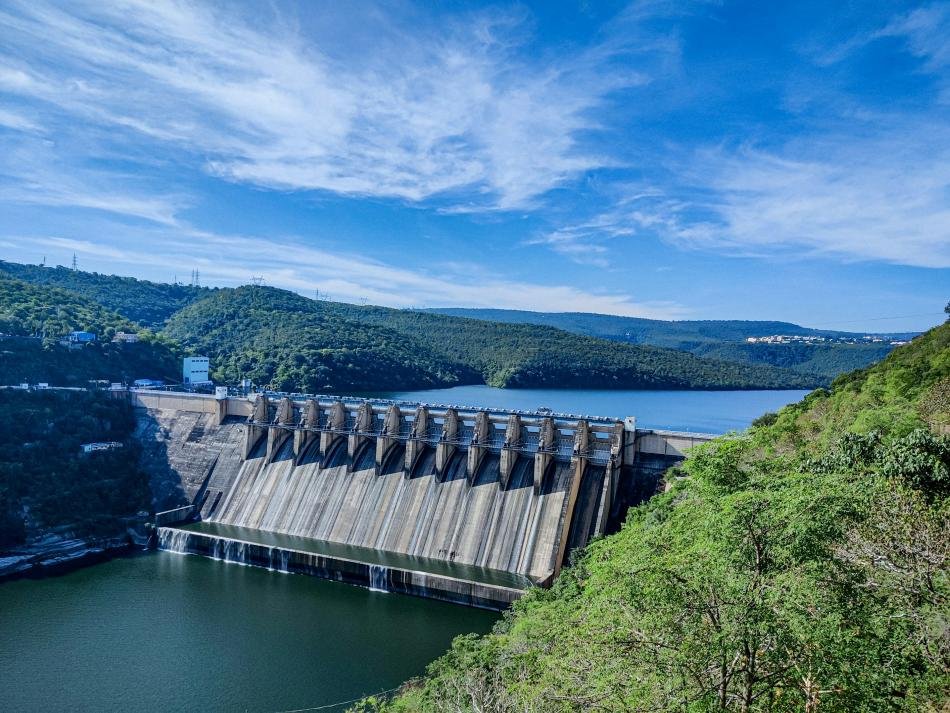
[Photo by Tejj on Unsplash]
Genevieve Donnellon-May is a Vasey Fellow at the Pacific Forum in the United States and a non-resident fellow at the Yokosuka Council on Asia-Pacific Studies (YCAPS) in Japan. Genevieve is also an associated fellow at the Institute for Security Development Policy in Sweden. The views and opinions expressed in this article are those of the author.
[ad_2]
Source link

