
Vinayak Kedia

Abstract: This piece assesses two key changes brought to §7 of the Transgender Persons (Protection of Rights) Act, 2019 by the 2026 amendment: an obligation to register for a transgender identity certificate post-medical procedures, and, removal of rights and entitlements for such persons. The author argues these amendments are violative of Articles 14 and 19 of the Constitution, and liable to be struck down.
Introduction

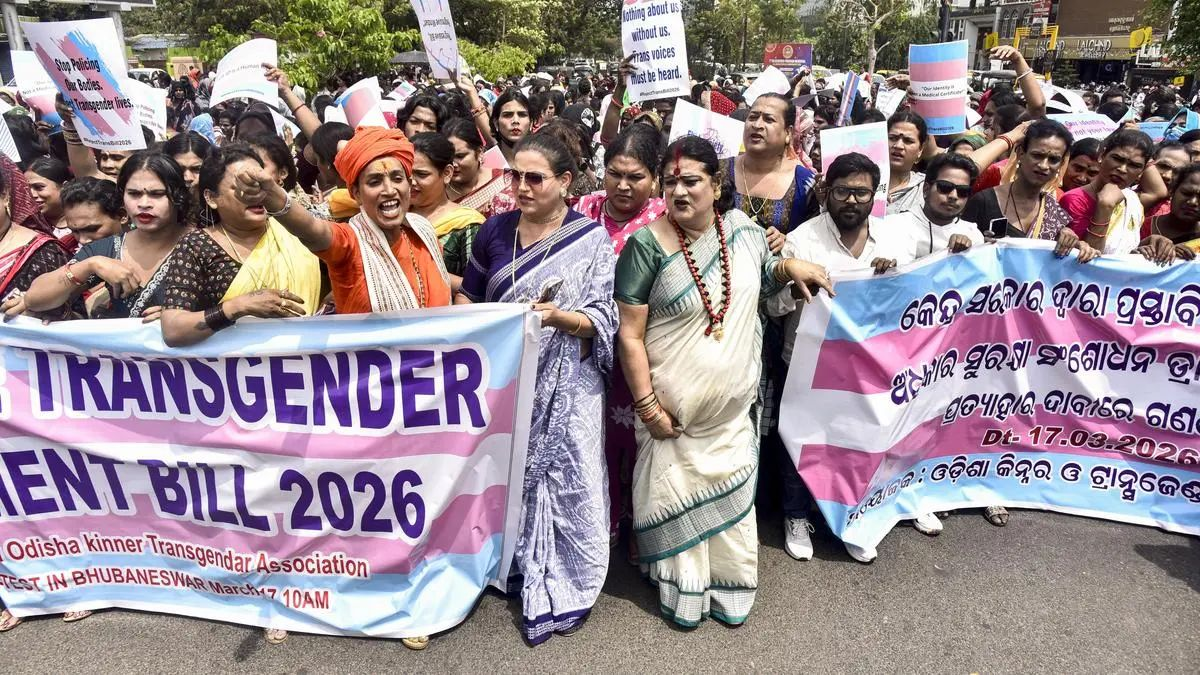
In March 2026, the Parliament passed the Transgender Persons (Protection of Rights) Amendment Act, 2026 (‘amendment’), amending the Transgender Persons (Protection of Rights) Act, 2019 (‘the Act’). The amendment has come under criticism from various quarters of civil society, and petitions challenging the amendment’s constitutional validity in light of principles laid down in NALSA v. Union of India (2014) and arts. 14, 19, and 21 are currently pending before the Supreme Court (‘SC’).
Most critiques of the amendment focus on issues of conflation between transgender and intersex persons; self-determination of gender identity; questions on personal autonomy; as well as the interplay of identity and government benefits. This piece argues that alongside the challenges presented above, changes to §7 of the Act by the amendment distinguishes those transgender persons who do not undergo surgery, who continue to be identified as ‘transgender,’ from those who have been granted certain certificates under §7, who are forced to revert to the male/female binary continuum, and denied benefits under the Act. This distinction violates arts. 14, 15 and 19 of the Constitution, and also renders many provisions of the Act infructuous. It is contended that if the amendment survives judicial scrutiny, the Act must be read down to provide agency to transgender persons, and restore the proviso to §7(3) of the Act, which retains benefits for those who undergo surgery.
To do so, the next section examines the law related to transgender persons, as it stood prior to the amendment, and the changes brought to §7, including mandatory registration for changing the gender from male-to-female or female-to-male. This, I argue, breaches the agency and privacy of transgender persons, while also denying protections and government benefits to transgender persons due to the deletion of the proviso to §7(3). I proceed to argue that such a denial fails the test of reasonable classification under arts. 14 and 15, as it unfairly distinguishes between those transgender persons who have acquired certificates under §§6 and 7. I also show failure in light of the proportionality test under art. 19, as the law requires transgender persons to fall within the male/female continuum, denying self-expression of gender identity.
Shifting Certificates: From Optional to Mandatory
The Act, as it stood prior to the amendment, permitted transgender persons to apply for a Transgender Identity Certificate (‘TIC’) under §6 of the Act, which would allow them to change their official name and gender on documents to ‘transgender’. After obtaining this certificate, if one underwent surgery or other procedures such as Hormone Replacement Therapy (‘HRT’), they could also choose to apply for a TIC under §7, to change their gender from ‘transgender’ to male, or female, accompanied by appropriate proof. Put simply, §7 allowed persons to change their gender from male-to-female or vice versa, if they so wished. Another provision of note was the proviso to §7(3), which read as follows:
“Provided that such change in gender and the issue of revised certificate under sub-section (2) shall not affect the rights and entitlements of such person under this Act.” (emphasis added)
In this regime, transgender persons who had not undergone surgery or HRT were entitled to change their gender to ‘transgender’, while those who had, could change their gender to ‘transgender’ or their binary gender, without losing benefits under the Act and other laws. This legislative framework codified the SC’s decision in NALSA, where a right to be identified as falling within the ‘third gender’ including transgender persons, hijras, eunuchs, and other gender-diverse communities was championed by the court (¶70, Radhakrishnan J., ¶129(1)). While NALSA has been criticised for othering many gender-diverse communities within one homogenous gender identity, it nevertheless maintained some recognition of being placed outside the binary gender continuum.
However, after the amendment, there is a shift in legal recognition of transgender persons. §2(k) defines ‘transgender person’ to include specific cultural communities such as hijras, kinnars, aravanis, jogtas, and intersex persons. Grant of a §6 TIC requires approval by a medical board, after which, such persons are entitled to change their gender in documents to ‘transgender’. However, if such persons undergo surgery, they are obligated to apply for a TIC under §7, such that their gender may be recognised as male or female. The proviso to §7(3) has also been deleted consciously, which indicates that the rights granted to transgender persons under the Act would be taken away from trans-men or trans-women who have undergone surgery. It is also notable that there is a general presumption that any amendment in law by Parliament is deliberate, and not mere surplusage (Shyam Sunder v. Ram Kumar (2001)). So, this piece assumes that the deletion of the proviso intends to take away rights and entitlements of persons holding §7 TICs.
Privacy, Binary Gender Classification, and More
The amendments to §7[A1] , including the obligation to apply for a TIC post-surgery, and deletion of the proviso guaranteeing continuation of rights, present various legal challenges. First, as mentioned above, NALSA explicitly recognised a right to identify oneself as being of the ‘third gender’, outside the gender continuum (¶70). There, the court also held that transgender persons were entitled to express their inherent personality in any way they so choose, including their own gender identity and sexual orientation (¶66). In fact, this was elevated to be a part of the right to equality under arts. 14 and 15 of the Constitution (¶76), which was later relied upon in Navtej Singh Johar v. Union of India (2018). However, the amendment, which requires a transgender person who has undergone surgery or other medical procedures to necessarily apply for a TIC violates this right, as it requires conforming to the gender continuum. Placing such a legal obligation, even if unaccompanied by a penalty, takes away a person’s agency, and requires one to be placed within the boundaries of the male/female divide. Take, for instance, a transgender person who undergoes surgery to alter their appearance, but continue to identify themselves as non-binary. [A2] [A3] [A4] Requiring such a person to express their gender as male or female in official documents would run afoul of the principles laid down in NALSA.
Second, mandatory application for a §7 TIC, along with deletion of the proviso to §7(3) would result in the denial of many benefits and rights to a section of transgender persons. After their medical procedure, such persons’ gender would show up as male or female in their official documents. In the absence of any legal provision which guarantees access to rights and entitlements under the Act, such as the proviso, administrators may refuse to provide rights to such persons. This includes access to various rights, guaranteed by the Act and judicial pronouncements, such as:[A5] [A6]
- the right against workplace discrimination; the right of residence and tenancy; the right of filing a criminal complaint, in case of harm, such as abuse, forced beggary, or other forms, as guaranteed by §§9, 12 and §18 of the Act.
- benefits under the government’s Support for Marginalized Individuals for Livelihood and Enterprise (‘SMILE’) scheme, such as shelter, rehabilitation, skill development and employment support;
- the right to reservation in jobs as a Socially and Educationally Backward Class (‘SEBC’), which was recognised in NALSA (¶¶60, 129(3)), and extended by various High Courts, as in Matam Gangabhavani v. State of Andhra Pradesh (2022) and Saratha v. The Member Secretary, Tamil Nadu Uniformed Services Recruitment Board (2022). This is also contrasted with horizontal reservation, that many have advocated for, and some states have implemented.
Apart from these practical consequences of this amendment to §7, one may also argue that taking away rights from those transgender persons who have undergone medical procedures, while retaining them for others may be hit by arts. 14 and 15. The amendment’s stated rationale, which is discussed in detail below, seeks to safeguard genuinely oppressed transgender classes only. However, even post-surgery, transgender persons would continue to fall within that category, unlike persons who identify themselves as transgender solely to gain access to benefits. The next section investigates this, along with a potential violation of the art. 19, and argues that such provisions in the amendment are unconstitutional.
Constitutionality of the §6/7 Distinction
This piece assesses the constitutionality of the amendment in light of arts. [A7] 14 and 19 separately. First, it considers the distinction between transgender persons with §6 TICs and those with §7 TICs. Second, it considers whether the mandatory reversion to a male/female binary under §7 is valid, considering the elevation of gender identity as part of the freedom of speech.
(In)equality Institutionalized, but no Reasonability in Sight
The amendment, by virtue of the deletion of the proviso to §7(3), effectively creates two classes of transgender persons: those with §6 TICs, who have benefits under the Act; and those with §7 TICs, who have no such benefits. Such a distinction would traditionally attract art. 14 of the Constitution, as it violates the principle of equality before the law. However, the SC has repeatedly asserted that a law that distinguishes between classes of persons may be valid, if it passes one of various tests, the most prominent being the reasonable classification test. This test assesses constitutionality on two prongs:
- Intelligible differentia: whether the classification created has a reasonable basis?
- Rational nexus: whether the classification is rationally related to the object of the law?
On the first prong, Budhan Chaudhary v. State of Bihar (1954) held that any classification which distinguishes persons that are grouped together from others left out of the group must be based on a valid difference. Put simply, the two classes must be distinguishable from one another, and not chosen by the state arbitrarily. Despite its shortcomings, the amendment is likely to survive this prong, since those transgender persons who have undergone medical procedures are clearly distinguishable from those who have not, such as culturally-identifiable transgenders. So, the amendment likely satisfies Prong I.
However, the second prong, which requires a rational nexus between the classification and the object of the law, is more substantive, than formalistic. Yet, even this requirement has shortcomings, as the state need not demonstrate whether the classification would actually achieve the object, or that it was the least-infringing method of achieving that measure (p. 15-16). Nevertheless, even this substantially lowered standard is not met by the amendment. The Statement of Objects & Reasons of the amendment justifies that protections and benefits of the Act must reach genuinely oppressed classes, and self-perceived identity would inherently result in misuse. So, the stated objective is to prevent extension of entitlements to those who do not fall within the category of ‘transgender persons.’ However, persons with §7 TICs would continue to fall under the definition given by §2(k). A mere subsequent medical procedure would not take such persons out of the category of ‘transgender person’, demonstrated by the fact that they continue to possess TICs. Therefore, the stated rationale of preventing misuse by persons who falsely alter their gender would not apply to such persons. Additionally, persons with §7 TICs would not be misusing protections, as they are required to undergo an onerous process of verification by a medical board and practitioner already.[A8] [A9] [A10]
One may also stretch the government’s argument to its maximum extent, that if a person has a §7 TIC, then post-surgery, they are entitled to protections that the law provides to male/female persons, thus allowing their exclusion in favor of other oppressed persons. However, even in this case, exclusion of persons with §7 TICs would still be irrational, considering the Act’s goal of protecting transgender persons. Transgender persons who undergo surgery continue to face discrimination, which is not extinguished by surgery. Regardless of whether persons with §7 TICs are comparatively less vulnerable, the Act’s safeguards are not distributed in a zero-sum framework. Extending statutory protection to §7 TIC holders would not reduce the protection available to §6 TIC holders. The exclusion therefore cannot be justified as a means of preserving benefits for more disadvantaged transgender persons. Rather, it withdraws protection from discrimination, violence, and other acts, from some transgender persons in favor of other transgender persons, despite the absence of any demonstrated necessity for such exclusion. Thus, the removal of the proviso to §7(3), which ensured equality between §§6 and 7 TIC holders would not satisfy Prong II, rendering it unconstitutional.
Sexual Orientation, Stifled (Disproportionately)
In NALSA, the SC recognised that freedom to choose one’s gender identity was a part of art. 19(1)(a), as it amounted to expression, holding that:
“Principles referred to above clearly indicate that the freedom of expression guaranteed under Article 19(1)(a) includes the freedom to express one’s chosen gender identity through varied ways and means by way of expression, speech, mannerism, clothing etc.” (¶65)
Yet, §7 of the Act, which forces transgender persons who have undergone medical procedures to apply for a TIC, changing their gender to male or female takes away this right of expression under art. 19(1)(a), and causes a reversion to the binary continuum that existed before. To determine whether this restriction on art. 19 can be upheld as reasonable, courts apply a test of proportionality (Modern Dental College & Research Centre v. State of Madhya Pradesh (2016), ¶58). The elements of this test, along with whether they are fulfilled in the amendment’s case are described below:
| Prong | Whether the amendment satisfies this prong? |
| 1. Legitimate Aim: whether the measure adopted has a legitimate goal? | Yes, since the state may argue that it aims to preserve benefits intended for transgender persons [A11] [A12] from those who have undergone surgery, who have other legal remedies. |
| 2. Rational Connection: Whether the measure is a suitable means of reaching that goal? | Yes, since refusing to identify those persons who have undergone surgery as ‘transgender’ would ensure that administrators do not grant them access to benefits intended for other recipients. |
| 3. Necessity: Whether the measure adopted creates the least amount of restriction possible on the fundamental right in question? | No, as removal of benefits may occur, without forcing transgender persons who have undergone surgery to identify as ‘male’ or ‘female’ in documents. This could be done while designing welfare schemes through separate eligibility criteria, such as by specifying that only those transgender persons who sign an affidavit that they have not attained any surgery are eligible. |
| 4. Proportionality stricto sensu: Whether the measure does not have a disproportionate impact on the right holder? | No, as there is a complete loss of bodily autonomy, gender identity, and dignity, which disproportionately affects transgender persons who undergo surgery, while only providing unproven administrative benefits. |
Assessed this way, the amendment’s forced reversion to the male/female binary, under §7 for those persons who have undergone surgery is unconstitutional, and liable to be struck down.
Conclusion: An Uphill Battle for Transgender Rights
The chequered experience of transgender rights in India, even before the enactment of the Amendment Act have already been a cause for concern. Despite this, NALSA made meaningful strides by recognising a framework of non-binary gender rights. However, the recent amendment reinforces the gender duopoly, by subjecting transgender persons to medical testing, and requiring certification as male/female. In doing so, it erases identities that do not conform to the traditional experiences of either of these genders, in stark violation of art. 19 and the host of jurisprudence related to proportionality. It also violates art. 14 of the Constitution, by distinguishing transgender persons who have undergone surgery, from those who have not, with no reasonable justification. While the amendment raises many questions, one can hope that §7, as it stood pre-amendment, is restored, lest the Act would truly become, dead-letter law.
Vinayak Kedia is a second-year B.A., LL.B. (Hons) student at National Law School of India University, Bengaluru and Observer at Law School Policy Review. He has a keen interest in constitutional law, criminal law, and allied subjects.

