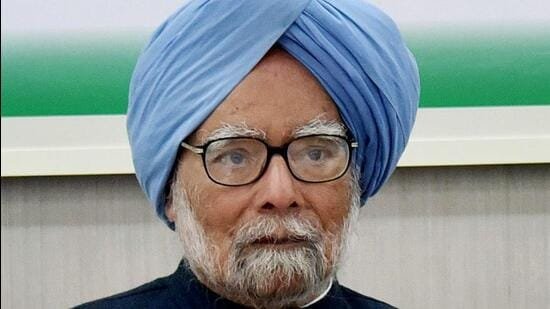

The Supreme Court on Wednesday formally exonerated former prime minister Manmohan Singh in a coal block allocation case, quashing the 2015 trial court order that had summoned him as an accused despite two Central Bureau Of Investigation (CBI) closure reports, and holding that there was “no cogent reason” to prosecute him.
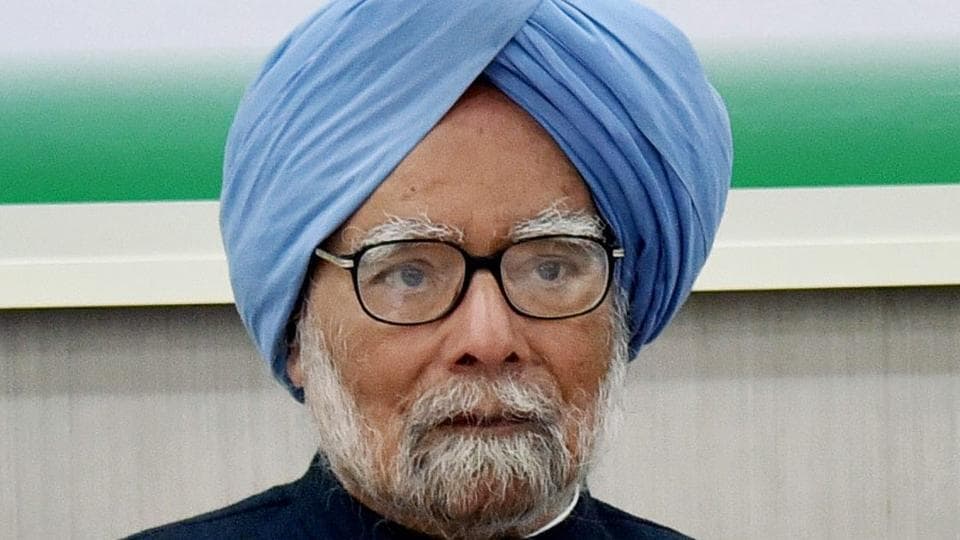
The order by a bench comprising Chief Justice of India Surya Kant and justices Joymalya Bagchi and V Mohana brings a posthumous legal vindication to Singh, who died in December 2024 while his appeal against the summoning order remained pending before the apex court for more than a decade.

Wednesday’s order not only closes the criminal proceedings against the late former PM but also expressly endorses the CBI’s conclusion that there was no material to prosecute him, bringing to an end one of the most politically significant criminal cases arising from the coal block allocation controversy during the UPA era.
Also Read: ‘Will commit suicide’: What Manmohan Singh told former CEC Quraishi during 2012 elections
While noting that the appeal had technically become infructuous owing to Singh’s demise, the bench said it was nevertheless necessary to examine the legality of the trial court’s decision because the former prime minister had been summoned despite the investigating agency twice concluding that no criminal case was made out against him.
“Having regard to the relevant parameters consistently laid down by this court on acceptance of reports of the investigating agency, we are satisfied that there was no cogent reason for the learned special judge to turn down the closure reports of the CBI and take cognisance,” held the bench.
Allowing the appeal, the court set aside the March 11, 2015 order of the special CBI court, accepted both closure reports filed by the CBI and directed that the matter be closed.
The bench observed that although Singh was no longer alive, the legality of the order summoning him warranted judicial scrutiny.
“Due to the unfortunate demise of the appellant, this appeal could be disposed of as infructuous. But with a view to consider the aspect of the learned special judge taking cognizance and summoning the appellant, we have gone through both closure reports filed by the CBI,” stated the order.
During the hearing, senior advocates Kapil Sibal and Abhishek Manu Singhvi, appearing for Singh’s legal representatives, urged the court to erase the adverse findings recorded by the trial court.
Sibal submitted that the trial judge had effectively imposed vicarious criminal liability on the former prime minister despite two closure reports exonerating him. “One of the cases concerns Dr Manmohan Singh. We want the adverse comments and remarks against him to go. The trial court has imposed vicarious liability on him and summoned him despite two closure reports for want of evidence,” he argued.
Singhvi said the remarks deserved to be “effaced” and that the exercise could be undertaken immediately.
Representing the CBI, senior advocate R S Cheema pointed out that the impugned order also involved other accused and raised issues concerning the constitutional validity of provisions of the Prevention of Corruption Act. He submitted that some legal issues may survive independently.
Singhvi clarified that Singh was seeking relief only in respect of the findings against him.
The bench noted that there was broad agreement between both sides on the impropriety of the trial court’s reasoning. “Both sides are ad idem that the judge had crossed limits in passing such an order. If persons are alive, we will look at it on another date…Misconduct also must have realistic limits,” observed the bench.
The controversy arose out of the allocation of the Talabira-II coal block in Odisha to Hindalco Industries in 2005, when Singh also held the coal portfolio.
After investigating the matter, the CBI filed two closure reports concluding that there was no evidence warranting prosecution of the former prime minister. However, special CBI judge Bharat Parashar (presently the SC secretary general) rejected the closure reports in March 2015, held that a prima facie case existed, and summoned Singh along with former coal secretary PC Parakh and some others as accused.
Singh immediately challenged the order before the Supreme Court. On April 1, 2015, the apex court stayed both the summoning order and all consequential proceedings, observing that the challenge required detailed consideration. The appeal, however, remained pending for over eleven years.
The trial court had reasoned that Singh’s approval for allocating the coal block to Hindalco, contrary to the recommendation of the screening committee, facilitated undue gains to the private company and caused loss to a public sector undertaking. Singh consistently maintained that the allocation was an administrative decision taken in accordance with the prevailing policy framework and involved no criminality.

