
[ad_1]

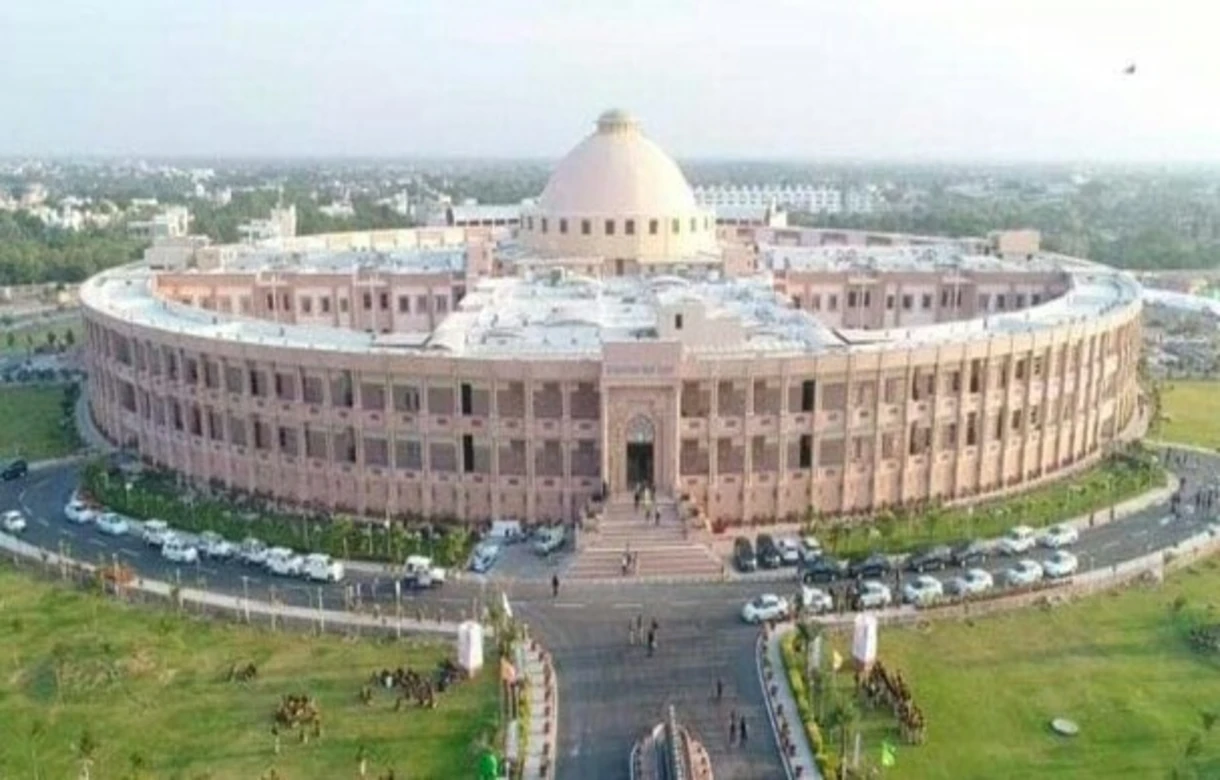
The Rajasthan High Court has held that police authorities cannot publicly shame arrested persons by circulating their photographs or videos on social media platforms, observing that such conduct amounts to an extra-legal form of punishment having no sanction under law and violates the constitutional protections guaranteed under Articles 14, 21 and 22 of the Constitution.
The judgment was delivered by Justice Farjand Ali at the Principal Seat of the High Court in Jodhpur while deciding a writ petition filed under Article 226 by 10 residents of Jaisalmer district who alleged that after their arrest in July 2025, police officials photographed and videographed them in humiliating circumstances and uploaded the content on official social media handles, thereby subjecting them to public humiliation and a virtual media trial before commencement of judicial proceedings.
The petitioners were arrested in connection with an FIR registered at Police Station Sadar, Jaisalmer, under Sections 170 and 126 of the Bharatiya Nagarik Suraksha Sanhita (BNSS), 2023. According to the plea, the arrested persons, including women and an elderly man aged 71 years, were made to sit outside the police station in degrading conditions while photographs and videos were recorded and circulated online.
Earlier, by an interim order passed in January 2026, the High Court had directed the immediate removal of the impugned content and sought compliance affidavits from the Superintendent of Police, Jaisalmer and the Commissioner of Police, Jodhpur. Pursuant to the Court’s intervention, the Additional Director General of Police, Crime Branch, Rajasthan issued a Standard Operating Procedure (SOP) prohibiting police officials from uploading or sharing photographs and videos of accused persons on social media or with media organisations. A subsequent circular was also issued by the Police Commissioner, Jodhpur, enforcing similar restrictions.
Appearing for the petitioners, counsel argued that public circulation of images of arrested persons amounted to arbitrary and extra-judicial punishment, undermined the presumption of innocence and violated the right to dignity and reputation protected under Article 21 of the Constitution. The Amicus Curiae assisting the Court submitted that the increasing practice of police-led media exposure required judicial regulation and enforceable safeguards.
The State did not seriously dispute the legal position and placed on record compliance reports confirming removal of the material and implementation of the SOPs.
While examining the issue, the High Court held that the police cannot assume the role of adjudicating guilt in the public domain. The Bench observed that determination of criminal culpability falls exclusively within the jurisdiction of constitutional courts and criminal courts and that executive authorities cannot prejudge accused persons through orchestrated publicity campaigns.
The Court characterised the practice as a “police-driven media trial” and observed that circulation of photographs, staged public parading and social media exposure of accused persons causes irreversible reputational injury, psychological trauma and permanent social stigma even in cases where the accused may ultimately be acquitted after trial.
The Bench further held that such actions reflected institutional overreach and abuse of statutory power incompatible with constitutional governance and the rule of law. Referring to the doctrine of constitutional morality and the principle of separation of powers, the Court observed that police authorities are vested only with investigative powers and maintenance of law and order and possess no authority to impose punishment outside the framework prescribed by criminal law.
The Court also relied upon several Supreme Court judgments, including D.K. Basu v. State of West Bengal, Sunil Batra v. Delhi Administration and State of Maharashtra v. Rajendra Jawanmal Gandhi, to reiterate that the right to dignity and reputation survives even after arrest and that media trials are fundamentally inconsistent with due process and fair trial guarantees.
The High Court held that punishments recognised under criminal law are exhaustively codified under the penal statutes and that no additional or informal penalty can be imposed through public humiliation or digital exposure. It observed that police-sponsored social media condemnation effectively operates as a form of punishment unknown to law.
Accordingly, the Court directed strict compliance with the SOPs and ordered that any violation by police personnel should invite proportionate disciplinary action. It further directed that no person having a clean antecedent record should be publicly paraded, disrobed or subjected to degrading treatment.
The Court also ordered that the SOPs and guidelines be prominently displayed at all police stations and uploaded on the official websites of the Police Department, Director General of Police and the Home Department in the form of mandatory “Do’s and Don’ts.”
In addition, the Bench directed that the basic human rights of every arrestee and every individual entering a police station must be protected at all times and that no person should be subjected to coercion, harassment, mishandling or degrading treatment during police interaction or custody.
[ad_2]
Source link

