
Introduction
“In the digital age, your face, your voice, and even your identity can be stolen without anyone ever touching you.”
Imagine opening your social media account one morning and finding a video of yourself promoting a cryptocurrency scam. The voice sounds exactly like yours, the facial expressions are indistinguishable from reality, and every gesture mirrors your personality. Friends believe it is genuine, companies assume you endorsed it, and by the time you prove it is fake, your reputation has already suffered irreparable damage.

This is no longer science fiction.
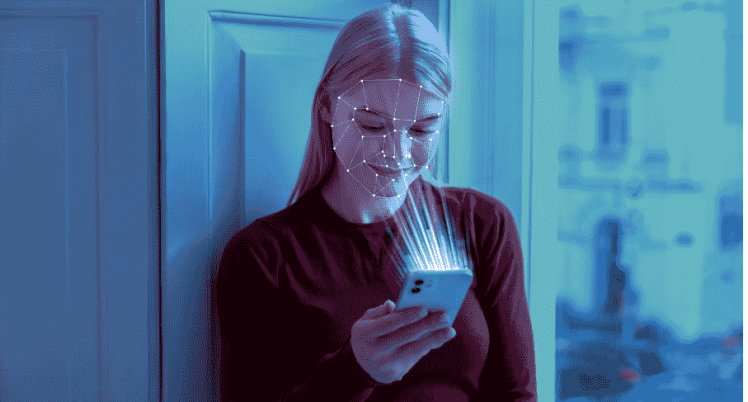
Artificial Intelligence (AI), particularly Generative AI and deepfake technology, has transformed the digital landscape by enabling the creation of hyper-realistic images, videos, voices, and avatars. While these innovations have revolutionized entertainment, education, healthcare, and business, they have simultaneously introduced one of the greatest legal challenges of the twenty-first century—digital identity theft.
Unlike conventional identity theft, where personal information such as passwords or financial credentials is stolen, AI-powered identity theft appropriates an individual’s face, voice, gestures, name, likeness, and personality, creating digital replicas capable of deceiving millions. Celebrities, influencers, politicians, journalists, and even ordinary citizens increasingly find themselves victims of AI-generated impersonation.
India, home to one of the world’s largest digital populations, has witnessed a surge in deepfake incidents. From manipulated videos of public figures to unauthorized AI-generated advertisements featuring celebrities, the misuse of digital identities has exposed significant gaps in the country’s legal framework. Although Indian courts have gradually recognized personality rights through judicial interpretation, the absence of comprehensive legislation specifically addressing AI-generated identity theft raises an important question:
Are India’s existing laws truly equipped to protect an individual’s digital identity in the era of Artificial Intelligence?
This article critically examines the evolution of personality rights in India, analyses recent judicial developments, evaluates the adequacy of existing legal protections against AI-driven identity theft, and proposes reforms necessary to safeguard digital identities in an increasingly AI-dominated world.
Understanding Personality Rights
Personality rights refer to an individual’s exclusive right to control the commercial and unauthorized use of their identity.
Unlike traditional intellectual property rights, personality rights protect attributes intrinsically linked to an individual, including:
- Name
- Photograph
- Voice
- Signature
- Image
- Facial features
- Nickname
- Catchphrases
- Gestures
- Digital avatar
- Overall public persona
The underlying philosophy is simple:
Every individual has the right to decide how their identity is used.
Although personality rights are commonly associated with celebrities due to their commercial value, these rights are not exclusive to famous personalities. Every individual possesses a legally protected identity deserving of dignity, privacy, and autonomy.
With AI capable of cloning a person’s appearance and voice within minutes, personality rights have become more significant than ever.
Artificial Intelligence and the Rise of Digital Identity Theft
Artificial Intelligence has fundamentally changed how identities are created and manipulated.
Modern AI models can generate:
- Hyper-realistic deepfake videos
- AI-generated voice clones
- Digital influencers
- Virtual brand ambassadors
- AI-generated interviews
- Fake legal statements
- Synthetic news broadcasts
- Digital twins
The danger lies not merely in technological sophistication but in accessibility.
Today, anyone with minimal technical knowledge can generate convincing fake videos using freely available AI software.
Consequently, digital identity theft has evolved into a multidimensional threat involving:
Financial Fraud
Fraudsters clone voices to deceive family members or business executives into transferring money.
Political Manipulation
Deepfake speeches can spread misinformation during elections.
Commercial Exploitation
Celebrities’ images are used without consent to advertise products.
Reputational Harm
Fake interviews or manipulated videos can permanently damage professional credibility.
Cybercrime
Synthetic identities are increasingly used for phishing, impersonation, and online scams.
The World Economic Forum has repeatedly identified AI-generated misinformation and synthetic media as major global risks, highlighting the urgent need for robust legal safeguards.
The Evolution of Personality Rights in India
Unlike the United States, which recognizes the “Right of Publicity” through state-specific legislation, India has no dedicated statute governing personality rights.
Instead, Indian jurisprudence has gradually developed these protections through constitutional principles and judicial precedents.
The foundation of personality rights primarily rests upon:
- Article 21 of the Constitution
- Right to Privacy
- Right to Dignity
- Passing Off
- Trademark principles
- Copyright law
- Common law doctrines
Indian courts have consistently held that an individual’s identity possesses both personal and commercial value deserving legal protection.
Constitutional Foundation
Article 21 – Right to Life and Personal Liberty
The Supreme Court has repeatedly interpreted Article 21 expansively to include:
- privacy,
- dignity,
- autonomy,
- informational self-determination.
In Justice K.S. Puttaswamy (Retd.) v. Union of India (2017), the Supreme Court unanimously recognized the Right to Privacy as a fundamental right.
The Court observed that informational privacy includes an individual’s control over personal information.
Although the judgment predates the widespread emergence of Generative AI, its reasoning provides a strong constitutional basis for protecting digital identities against unauthorized AI-generated replication.
In today’s context, unauthorized AI cloning of an individual’s face or voice directly interferes with informational privacy and personal autonomy.
Article 19(1)(a): Freedom of Speech and Expression
The debate surrounding personality rights also engages Article 19(1)(a), which guarantees freedom of speech and expression.
AI-generated artistic works, satire, parody, journalism, and creative expression often depict public figures.
Therefore, courts must carefully balance:
- freedom of expression,
- artistic creativity,
- commercial exploitation,
- privacy,
- reputation.
An overly restrictive interpretation of personality rights could stifle legitimate artistic and journalistic expression, whereas excessive freedom may facilitate identity theft and commercial misuse.
Landmark Judicial Developments
ICC Development (International) Ltd. v. Arvee Enterprises (2003)
This Delhi High Court decision is often regarded as one of India’s earliest judicial discussions on publicity rights.
The Court observed that while publicity rights protect commercial identity, they cannot prevent every reference to public personalities.
The judgment laid the conceptual foundation for subsequent personality rights jurisprudence.
Justice K.S. Puttaswamy v. Union of India (2017)
Although not directly concerning AI, the judgment transformed Indian privacy law.
The recognition of informational privacy now supports legal protection against unauthorized AI-generated identity replication.
The Court emphasized that individuals possess control over the dissemination and use of personal information.
Anil Kapoor v. Simply Life India & Others (2023)
One of India’s most significant AI-related personality rights decisions involved veteran actor Anil Kapoor.
The Delhi High Court granted an interim injunction restraining unauthorized commercial use of:
- his name,
- voice,
- image,
- likeness,
- signature expressions,
- and AI-generated representations.
The Court acknowledged that modern technologies, including AI, significantly increase the risk of personality exploitation.
Importantly, the judgment recognized that digital cloning could cause substantial reputational and commercial harm.
This decision represents one of India’s strongest judicial responses to AI-enabled identity misuse.
Amitabh Bachchan v. Rajat Nagi & Others
The Delhi High Court extended comprehensive personality rights protection to Amitabh Bachchan, restraining unauthorized commercial use of his:
- name,
- voice,
- image,
- likeness,
- personality.
The Court recognized that celebrity identity constitutes valuable intellectual and commercial property deserving judicial protection.
The judgment has become increasingly relevant in the era of AI-generated advertisements and synthetic endorsements.
Jackie Shroff v. The Peppy Store (2024)
The Delhi High Court restrained unauthorized commercial exploitation of actor Jackie Shroff’s personality, including his distinctive nickname “Bhidu”, photographs, voice, and other recognizable attributes.
The judgment demonstrated that personality rights extend beyond facial images to encompass unique characteristics that enable public identification.
This broader interpretation is particularly significant in the AI era, where systems can imitate not only appearances but also speech patterns, catchphrases, and mannerisms.
Recent Judicial Trend (2025–2026)
Indian courts have increasingly granted injunctions against AI-generated deepfakes and unauthorized digital impersonation of public figures. Courts have acknowledged that emerging technologies can be misused to create synthetic endorsements, misleading advertisements, and manipulated audiovisual content that can cause significant reputational and economic harm.
This evolving jurisprudence reflects a clear judicial trend: while India still lacks a comprehensive statutory framework for personality rights, the judiciary is actively adapting existing legal principles to address AI-related harms.
Current Legislative Framework
Although India has no standalone Personality Rights Act, several statutes offer partial protection.
Digital Personal Data Protection Act, 2023
The Act strengthens individuals’ rights over personal data and imposes obligations on data fiduciaries.
However, it primarily regulates the processing of personal data rather than AI-generated synthetic identities, leaving important questions unanswered regarding deepfakes and digital clones.
Information Technology Act, 2000
The IT Act addresses cyber offences such as identity theft, hacking, and unauthorized access to computer systems.
However, it was enacted long before the rise of generative AI and does not specifically regulate AI-generated impersonation, synthetic media, or deepfake technologies.
Trade Marks Act, 1999
Trademark law may protect names, logos, or distinctive commercial identifiers.
Yet it cannot comprehensively protect a person’s face, voice, personality, or AI-generated digital replica.
Copyright Act, 1957
Copyright protects original creative works but generally does not protect a person’s identity itself.
Consequently, an AI-generated image resembling a real individual may escape traditional copyright protection while still violating personality rights.
The Emerging Legal Challenge
The rapid evolution of AI has exposed a critical gap in India’s legal architecture. Existing laws were designed to address traditional forms of intellectual property infringement and cybercrime, not the sophisticated capabilities of generative AI to recreate human identities with startling realism.
As AI tools become more accessible and powerful, the law must evolve from merely reacting to individual disputes toward establishing a comprehensive framework that proactively safeguards personality rights in the digital age.
A Critical Analysis of India’s Legal Preparedness
Artificial Intelligence has fundamentally altered the concept of personality rights. Traditionally, identity theft involved forged signatures, stolen passwords, or fraudulent financial transactions. Today, AI can reproduce a person’s face, voice, expressions, gestures, and even conversational style with remarkable precision. This technological evolution has expanded the scope of identity theft from mere financial fraud to the unauthorized appropriation of one’s very personality.
India’s legal framework has undoubtedly evolved through judicial activism. Courts have progressively recognized personality rights as an extension of the constitutional rights to privacy, dignity, and autonomy. Nevertheless, this protection remains fragmented. Unlike copyright or trademark law, personality rights continue to exist primarily through judicial precedents rather than comprehensive legislation.
This judge-made approach presents several challenges. Judicial remedies are often reactive, available only after harm has occurred. Victims must approach constitutional courts, which is both time-consuming and expensive. Moreover, existing legal doctrines were developed before the emergence of generative AI and therefore fail to adequately address modern challenges such as voice cloning, digital avatars, AI-generated endorsements, and synthetic media.
Another concern is the absence of statutory definitions. Indian law does not clearly define “digital identity,” “synthetic media,” “deepfake,” or “AI-generated replica.” Consequently, courts must interpret these concepts on a case-by-case basis, resulting in uncertainty and inconsistent standards.
Furthermore, AI-generated identity theft frequently transcends national boundaries. A deepfake created in one jurisdiction may be uploaded to servers located in another country and viewed globally within minutes. India’s existing legal mechanisms struggle to address these cross-border complexities.
While judicial innovation has prevented a legal vacuum, relying solely upon constitutional interpretation cannot provide long-term certainty. Comprehensive legislative intervention has become indispensable.
Comparative Analysis: Learning from Global Jurisdictions
European Union
The European Union Artificial Intelligence Act represents one of the world’s first comprehensive AI regulatory frameworks.
Rather than regulating every AI application identically, the EU adopts a risk-based model, categorizing AI systems according to their potential impact on fundamental rights.
AI systems capable of influencing legal proceedings, biometric identification, or democratic processes are classified as high-risk and subjected to stringent compliance obligations, including:
- mandatory transparency,
- human oversight,
- algorithmic documentation,
- independent conformity assessments,
- cybersecurity requirements,
- continuous post-market monitoring.
Although the Act does not specifically legislate personality rights, its transparency obligations regarding AI-generated content provide valuable guidance for regulating digital identity theft.
India could adopt a similar approach by classifying AI-generated impersonation as a high-risk activity requiring enhanced safeguards.
United States
Unlike India, several American states recognize the Right of Publicity through legislation.
The right enables individuals to control the commercial exploitation of their:
- name,
- image,
- likeness,
- voice,
- signature,
- identity.
The decentralized nature of American law results in varying standards across states. Nevertheless, AI-generated impersonation has prompted renewed efforts to establish uniform federal protection.
The most significant development is the proposed NO FAKES Act, discussed below.
United Kingdom
The United Kingdom does not recognize an independent personality right.
Instead, individuals rely upon:
- passing off,
- breach of confidence,
- misuse of private information,
- trademark law,
- copyright,
- data protection legislation.
This fragmented approach resembles India’s current legal framework and demonstrates similar difficulties in addressing AI-generated identity theft comprehensively.
The NO FAKES Act: A Comparative Model for India
Recognizing the rapid increase in AI-generated impersonation, the United States introduced the Nurture Originals, Foster Art, and Keep Entertainment Safe (NO FAKES) Act.
The proposed legislation creates a federal right protecting individuals against unauthorized digital replicas generated through Artificial Intelligence.
Unlike copyright law, which protects creative expression, the NO FAKES Act protects identity itself.
It defines digital replicas broadly to include AI-generated reproductions of:
- voice,
- facial appearance,
- body movements,
- visual likeness,
- performances.
The Act allows victims to obtain injunctions and damages against those who knowingly create, distribute, or commercially exploit unauthorized digital replicas.
Importantly, it also balances personality rights with freedom of expression by preserving exceptions for:
- satire,
- parody,
- news reporting,
- documentaries,
- public interest journalism,
- historical works.
For India, the NO FAKES Act provides a valuable legislative blueprint. Rather than relying entirely upon constitutional litigation, Parliament could enact a dedicated Digital Personality Protection Act that:
- defines digital replicas,
- mandates informed consent,
- establishes licensing mechanisms,
- prescribes civil and criminal remedies,
- imposes obligations upon AI developers and online platforms.
Such legislation would significantly reduce legal uncertainty.
Advantages of Artificial Intelligence
Although much of the discussion surrounding AI focuses upon risks, responsible deployment offers remarkable opportunities.
Efficient Content Creation
AI has transformed filmmaking, advertising, gaming, education, and digital media by significantly reducing production costs while expanding creative possibilities.
Accessibility
Voice synthesis and digital avatars assist individuals with speech impairments, hearing disabilities, and language barriers.
AI therefore enhances accessibility while promoting inclusion.
Judicial Assistance
Artificial Intelligence can assist courts through:
- legal research,
- multilingual translation,
- document summarization,
- transcription,
- intelligent scheduling.
Properly regulated, AI can improve access to justice without replacing judicial discretion.
Economic Growth
India’s expanding AI ecosystem has the potential to generate employment, attract foreign investment, and strengthen the digital economy.
Legal certainty regarding personality rights will encourage ethical innovation.
Risks Associated with AI
The benefits of AI are accompanied by equally significant dangers.
Deepfakes
Hyper-realistic videos capable of depicting individuals saying or doing things they never actually did threaten democratic processes, journalism, and public trust.
Commercial Misappropriation
Celebrities increasingly become victims of unauthorized AI-generated advertisements promoting products they never endorsed.
Financial Fraud
Voice cloning enables cybercriminals to impersonate family members, corporate executives, and public officials.
Psychological Harm
Victims often experience anxiety, humiliation, reputational injury, and emotional distress.
Identity theft therefore affects not merely financial interests but human dignity itself.
Is a Human Voice ‘Property’ or a Fundamental Aspect of Personality?
Perhaps the most profound legal question emerging from AI technology concerns the legal nature of the human voice.
Should voice be regarded merely as commercially exploitable property?
Or does it constitute an inseparable aspect of individual personality deserving constitutional protection?
Traditional intellectual property law views commercially valuable attributes as economic assets capable of licensing and assignment.
However, AI voice cloning demonstrates that a person’s voice transcends commercial value.
Voice reflects:
- individuality,
- emotion,
- culture,
- identity,
- reputation.
The Delhi High Court’s decision in Anil Kapoor v. Simply Life India & Others (2023) recognized unauthorized imitation of voice as capable of violating personality rights.
Internationally, similar concerns have emerged following AI-generated reproductions of musicians’ voices without authorization.
Treating voice solely as property risks reducing identity to a commercial commodity.
Instead, Indian constitutional jurisprudence increasingly suggests that voice should be viewed as an extension of privacy, dignity, autonomy, and informational self-determination under Article 21.
Consequently, unauthorized voice cloning should attract remedies extending beyond financial compensation, including injunctions protecting personal autonomy itself.
The WIPO Conversation on Intellectual Property and Artificial Intelligence
The World Intellectual Property Organization (WIPO) has initiated extensive international discussions regarding Artificial Intelligence and intellectual property.
These conversations acknowledge that AI challenges conventional legal doctrines concerning ownership, authorship, originality, licensing, and identity.
Although WIPO has not yet developed binding international rules governing personality rights, its ongoing dialogue recognizes several emerging concerns:
- unauthorized training of AI models using protected identities,
- ownership of AI-generated outputs,
- consent-based licensing,
- cross-border enforcement,
- protection of performers and public personalities.
WIPO’s discussions reinforce the importance of developing harmonized international standards capable of addressing transnational AI-generated identity theft.
For India, active engagement with WIPO provides an opportunity to shape emerging global norms while ensuring that domestic legislation remains internationally compatible.
Posthumous Personality Rights in the Age of Artificial Intelligence
Artificial Intelligence has enabled the digital resurrection of deceased actors, musicians, athletes, and historical figures.
Films increasingly recreate deceased performers using AI-generated imagery and voice synthesis.
While these technologies preserve cultural heritage, they also generate difficult legal and ethical questions.
Should personality rights survive death?
Should family members control AI-generated recreations?
Can companies commercially exploit deceased personalities indefinitely?
Different jurisdictions provide different answers.
Several American states recognize posthumous publicity rights extending decades beyond death.
Indian law, however, remains largely silent.
This legislative vacuum creates uncertainty regarding AI-generated recreations of legendary actors, political leaders, and public personalities.
Future legislation should establish limited posthumous personality rights balancing:
- dignity,
- family interests,
- cultural preservation,
- artistic freedom,
- public interest.
Such protection would prevent exploitative commercial misuse while permitting historically valuable educational and cultural projects.
Liability of AI Developers and Digital Intermediaries
Perhaps the most significant unresolved question concerns legal responsibility.
When AI-generated identity theft occurs, who should bear liability?
The:
- developer,
- platform,
- user,
- cloud provider,
- or all of them?
Under the Information Technology Act, 2000, intermediaries currently receive safe harbour protection provided they comply with statutory due diligence obligations.
The Supreme Court in Shreya Singhal v. Union of India (2015) clarified that intermediaries are generally not required to proactively monitor user-generated content but must remove unlawful material after receiving legally valid notice.
However, generative AI complicates this framework.
Unlike passive intermediaries, AI companies actively design systems capable of generating synthetic identities.
Consequently, future legislation should distinguish between:
AI Developers
Responsible for:
- incorporating safety safeguards,
- implementing watermarking,
- reducing model misuse,
- conducting algorithmic audits.
Digital Platforms
Responsible for:
- prompt removal of verified deepfakes,
- transparency reporting,
- effective grievance redressal,
- repeat offender policies.
Users
Responsible for malicious creation, dissemination, extortion, fraud, or commercial exploitation using AI-generated identities.
India’s proposed Digital India legislation, expected to modernize the Information Technology Act, presents an opportunity to establish this shared responsibility framework while preserving innovation.
Recommendations
India should adopt a comprehensive and future-oriented regulatory framework.
- Enact a Dedicated Personality Rights Act
Recognizing personality rights independently from copyright and trademark law.
- Statutorily Define Digital Identity
Including:
- digital replicas,
- deepfakes,
- voice clones,
- AI-generated avatars,
- biometric identity.
- Mandatory Disclosure
Require AI-generated media depicting identifiable individuals to contain visible or embedded digital watermarking.
- Criminalize Malicious Deepfakes
Especially where involving:
- fraud,
- election manipulation,
- extortion,
- financial crime,
- sexual exploitation.
- Independent AI Regulatory Authority
Comprising judges, technologists, ethicists, psychologists, and policymakers.
- Judicial Training
Regular AI literacy programmes for judges, advocates, prosecutors, and investigators.
- International Cooperation
India should actively participate in WIPO and other international AI governance initiatives to facilitate cross-border enforcement.
Future Scope
The future of personality rights extends beyond protecting celebrities.
Ordinary citizens will increasingly license digital avatars for education, customer service, healthcare, entertainment, and the metaverse.
AI-generated virtual assistants may eventually represent individuals in commercial negotiations, educational platforms, and digital workplaces.
This evolution will require legal recognition of:
- informed consent,
- revocable licensing,
- digital inheritance,
- biometric autonomy,
- ethical AI governance.
India possesses an opportunity to emerge as a global leader by developing legislation that simultaneously protects innovation and human dignity.
Conclusion
Artificial Intelligence has transformed identity into one of the most valuable assets of the digital age. A person’s face, voice, likeness, and personality can now be replicated with extraordinary realism, creating opportunities for innovation while exposing individuals to unprecedented risks of exploitation. India’s judiciary has commendably responded through progressive recognition of personality rights as an extension of privacy, dignity, and autonomy. Landmark decisions involving Anil Kapoor, Amitabh Bachchan, and Jackie Shroff demonstrate the courts’ willingness to adapt traditional legal principles to emerging technologies.
However, judicial innovation alone cannot substitute for comprehensive legislative action. The absence of a dedicated statutory framework leaves significant uncertainties concerning AI-generated replicas, posthumous personality rights, intermediary liability, and cross-border enforcement. Comparative developments such as the EU AI Act, the NO FAKES Act, and WIPO’s ongoing AI discussions illustrate that jurisdictions worldwide are moving toward more specialized regulation. India must similarly transition from fragmented, case-by-case protection to a coherent legal regime that clearly defines digital identity, mandates informed consent, imposes shared accountability on AI developers and intermediaries, and safeguards both individual dignity and freedom of expression.
Ultimately, the challenge before India is not whether artificial intelligence should be embraced, but how it should be governed. A balanced legal framework—grounded in constitutional values, technological neutrality, and ethical innovation—can ensure that AI serves as a tool for human progress rather than a means of identity exploitation. In an era where algorithms can imitate almost every aspect of a person, the law must reaffirm a timeless principle: technology may replicate identity, but it must never diminish the dignity, autonomy, and individuality that define our humanity.
References
A. Constitutional Provisions
- Constitution of India, arts. 14, 19(1)(a), 21 and 300A.
B. Statutes
- Copyright Act, No. 14 of 1957 (India).
- Trade Marks Act, No. 47 of 1999 (India).
- Information Technology Act, No. 21 of 2000 (India).
- Information Technology (Intermediary Guidelines and Digital Media Ethics Code) Rules, 2021.
- Digital Personal Data Protection Act, No. 22 of 2023 (India).
C. Indian Case Laws
- R. Rajagopal v. State of Tamil Nadu, (1994) 6 SCC 632.
- ICC Development (International) Ltd. v. Arvee Enterprises, 2003 SCC OnLine Del 13.
- D.M. Entertainment Pvt. Ltd. v. Baby Gift House, 2010 SCC OnLine Del 2043.
- Titan Industries Ltd. v. Ramkumar Jewellers, 2012 SCC OnLine Del 2382.
- Shreya Singhal v. Union of India, (2015) 5 SCC 1.
- Justice K.S. Puttaswamy (Retd.) v. Union of India, (2017) 10 SCC 1.
- Amitabh Bachchan v. Rajat Nagi & Ors., CS(COMM) 819/2022, Delhi High Court.
- Anil Kapoor v. Simply Life India & Ors., CS(COMM) 652/2023, Delhi High Court.
- Jaikishan Kakubhai Saraf (Jackie Shroff) v. The Peppy Store & Ors., 2024 SCC OnLine Del 3664.
- Arijit Singh v. Codible Ventures LLP & Ors., Commercial IP Suit (L) No. 23443 of 2024, Bombay High Court.
D. International Legislation and Policy Documents
- European Parliament and Council, Regulation (EU) 2024/1689 Laying Down Harmonized Rules on Artificial Intelligence (Artificial Intelligence Act), 2024.
- United States Congress, Nurture Originals, Foster Art, and Keep Entertainment Safe (NO FAKES) Act, 2024 (Proposed Bill).
- UNESCO, Recommendation on the Ethics of Artificial Intelligence, 2021.
- OECD, Recommendation of the Council on Artificial Intelligence, 2019.
- World Intellectual Property Organization (WIPO), Revised Issues Paper on Intellectual Property Policy and Artificial Intelligence, WIPO/IP/AI/2/GE/20/1.
- World Intellectual Property Organization (WIPO), WIPO Conversation on Intellectual Property and Artificial Intelligence.
E. Government Reports and Policy Papers
- Ministry of Electronics and Information Technology (MeitY), IndiaAI Mission, Government of India.
- NITI Aayog, Responsible AI for All: Approach Document for India, 2021.
- Ministry of Electronics and Information Technology, Consultation Paper on the Digital India Act, Government of India.
- Ministry of Electronics and Information Technology, Consultation on Artificial Intelligence Governance Guidelines, Government of India.
F. Books
- J. Thomas McCarthy, The Rights of Publicity and Privacy (2nd ed., Thomson Reuters).
- P. Narayanan, Intellectual Property Law (Eastern Law House, latest ed.).
- Lionel Bently, Brad Sherman, Dev Gangjee & Phillip Johnson, Intellectual Property Law (Oxford University Press, latest ed.).
- Christopher Millard (ed.), The Cambridge Handbook of Artificial Intelligence (Cambridge University Press).
- Stuart Russell & Peter Norvig, Artificial Intelligence: A Modern Approach (4th ed., Pearson).
G. Journal Articles
- Samuel D. Warren & Louis D. Brandeis, “The Right to Privacy,” (1890) 4 Harvard Law Review 193.
- Melville B. Nimmer, “The Right of Publicity,” (1954) 19 Law and Contemporary Problems 203.
- Alejandro Barredo Arrieta et al., “Explainable Artificial Intelligence (XAI): Concepts, Taxonomies, Opportunities and Challenges toward Responsible AI,” (2020) 58 Information Fusion 82.
- Anna Jobin, Marcello Ienca & Effy Vayena, “The Global Landscape of AI Ethics Guidelines,” (2019) 1 Nature Machine Intelligence 389.
- Philipp Hacker, Andreas Engel & Marco Mauer, “Regulating ChatGPT and Other Large Generative AI Models,” (2023) Proceedings of the ACM Conference on Fairness, Accountability, and Transparency.
- Ryan Abbott, “Artificial Intelligence, Big Data and Intellectual Property: Protecting Computer-Generated Works,” World Intellectual Property Organization Journal.
H. Reports
- World Economic Forum, Global Risks Report 2025.
- World Economic Forum, Artificial Intelligence Governance Alliance Report.
- Stanford University, AI Index Report 2025.
- McKinsey Global Institute, The State of AI Report 2025.
I. Online Legal Databases and Articles
- SCC Online, Personality Rights and Artificial Intelligence.
- LiveLaw, “Delhi High Court Grants Protection to Anil Kapoor’s Personality Rights.”
- LiveLaw, “Delhi High Court Protects Amitabh Bachchan’s Personality Rights.”
- SCC Online Blog, “AI, Deepfakes and Personality Rights in India.”
- WIPO Magazine, Dipak G. Parmar, “AI Voice Cloning: How a Bollywood Veteran Set a Legal Precedent.”
- The Leaflet, “Artificial Intelligence and Personality Rights in India.”
- Bar and Bench, Coverage on AI, Deepfakes and Celebrity Personality Rights.

