
Introduction
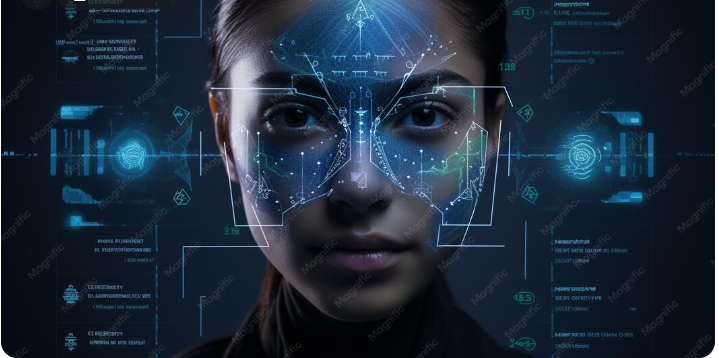
A face is supposed to belong to the person wearing it and so is a voice, a signature laugh, a particular way of saying a line that made a nation quote it back for years. But somewhere between a celebrity’s fame and the algorithms that now study every frame of their public life, that ownership has become a legal question rather than an obvious fact. An actor’s voice can now be cloned in seconds and their face can be pasted onto an advertisement they never shot, a product they never endorsed, a video they never consented to appear in. The person is real but no one knows where the image came from. And the law, only recently, has begun asking who gets to decide.
This is the terrain of personality rights ; the legal recognition that a person’s name, likeness, voice, and persona are not public property simply because that person is famous. It is a right built on a simple premise: fame does not forfeit ownership of oneself. As artificial intelligence makes impersonation cheaper and more convincing than ever, Indian courts have been forced to answer, case by case, what it actually means for a celebrity to own their own face.

What Are Personality Rights?
Personality rights refer to an individual’s right to control the commercial and non-commercial use of identifiable aspects of their identity like name, image, likeness, voice, signature, and even distinctive mannerisms or catchphrases. They are typically understood as comprising two related but distinct interests: the right of publicity, which protects the commercial value of a person’s identity from unauthorised exploitation, and the right to privacy, which protects against unwanted intrusion or exposure regardless of commercial gain.
Unlike jurisdictions such as the United States, where the right of publicity is often codified through specific state statutes, India has no standalone legislation for personality rights. Instead, the doctrine has developed almost entirely through judicial interpretation drawing on constitutional protections under Article 21 (right to life and personal liberty, encompassing dignity and privacy), common law remedies such as the tort of passing off, and elements of trademark and copyright law where a celebrity’s persona has been commercially misappropriated.
This judge-made character of Indian personality rights law is precisely why it has been able to respond, however unevenly, to threats that legislation has not yet caught up to including AI-generated impersonation.
The Legal Foundations
Constitutional Basis: Article 21
Indian courts have consistently rooted personality rights in the right to privacy and dignity guaranteed under Article 21, as affirmed in Justice K.S. Puttaswamy v. Union of India (2017), which recognised privacy as intrinsic to life and personal liberty. Since a person’s identity like their face, voice, and public persona is inseparable from their dignity and autonomy, courts have reasoned that unauthorised commercial or reputational exploitation of that identity is a constitutional harm, not merely a civil wrong.
This constitutional anchoring matters beyond symbolism. It means personality rights claims are not confined to the narrow, transactional logic of contract or trademark law where a claim typically depends on proving a specific commercial relationship or registered mark , but can instead draw on the broader, more flexible language of dignity and autonomy that Article 21 jurisprudence has developed over decades. This is part of why Indian courts were able to extend protection to AI-generated impersonation relatively quickly: the doctrinal foundation was never limited to any particular technology or medium in the first place.
The Tort of Passing Off
Since India lacks a dedicated statute, the common law tort of passing off has become the primary vehicle for protecting a celebrity’s commercial identity. Traditionally used to prevent one trader from misrepresenting their goods as those of another, passing off has been extended by Indian courts to prevent unauthorised use of a celebrity’s name or likeness in a manner that suggests endorsement, deceiving the public and unjustly benefiting the infringer from the celebrity’s goodwill.
To succeed in a passing-off claim, a claimant typically must establish three elements: goodwill or reputation attached to their identity, misrepresentation by the defendant likely to deceive the public into believing an association or endorsement exists, and damage , whether to reputation, commercial interest, or both flowing from that misrepresentation. Courts have applied this framework flexibly in the celebrity context, often inferring damage readily once goodwill and misrepresentation are established, recognising that unauthorised association with a celebrity’s persona is inherently commercially exploitative even without precise, quantifiable loss.
Trademark and Copyright Overlaps
Where a celebrity’s name, signature, or image has been registered as a trademark, the Trade Marks Act, 1999 offers an additional layer of protection. Similarly, unauthorised use of copyrighted photographs or performances can attract remedies under the Copyright Act, 1957 ; though these statutory routes address only narrow slices of the broader personality rights concern, leaving most protection to evolve through common law and constitutional doctrine.
Case Laws and Judicial Precedents
ICC Development (International) Ltd. v. Arvee Enterprises (2003) An early Indian judgment recognising publicity rights, the Delhi High Court held that the right of publicity vests in an individual, not in an event or organisation, and that unauthorised commercial exploitation of a person’s identity for profit is actionable and a foundational distinction that shaped how later courts approached celebrity-specific claims.
Titan Industries Ltd. v. Ramkumar Jewellers (2012) The Delhi High Court granted an injunction protecting actors Amitabh Bachchan and Jaya Bachchan’s endorsement, restraining a jewellery store from using their photograph in an advertisement without authorisation after the endorsement contract had lapsed. The Court held that the right of publicity is a person’s right to control commercial use of their identity, and that this right survives independent of any specific contractual relationship once misappropriation occurs.
D.M. Entertainment Pvt. Ltd. v. Baby Gift House (2010) The Delhi High Court restrained the unauthorised sale of dolls and merchandise mimicking singer Daler Mehndi’s likeness and persona, holding that celebrities possess a right against the unauthorised commercial appropriation of their identity, extending publicity rights beyond photographs to caricatures and imitative merchandise.
Anil Kapoor v. Simply Life India & Ors. (Delhi High Court, 2023) A landmark judgment for the AI era, the Delhi High Court granted a sweeping injunction protecting actor Anil Kapoor’s personality rights, restraining unauthorised use of his name, image, voice, and catchphrases including through AI tools, GIFs, and morphed or synthetically generated content. The Court explicitly acknowledged that emerging AI technologies pose novel threats to personality rights, extending protection to cover deepfakes and AI-based impersonation, not merely traditional photographic misuse.
Jaikishan Kakubhai Saraf (Jackie Shroff) v. The Peppy Store & Ors. (Delhi High Court, 2024) Building on the Anil Kapoor precedent, the Court protected actor Jackie Shroff’s persona against unauthorised commercial exploitation, including AI chatbots trained to mimic his voice and mannerisms, and merchandise using his image without consent. This judgment reinforced that Indian courts are willing to extend personality rights protection proactively to AI-specific misuse, rather than waiting for harm to be demonstrated case by case in traditional media.
Arun Jaitley v. Network Solutions Pvt. Ltd. (2011) While concerning domain name cybersquatting rather than AI, this Delhi High Court judgment recognised that a well-known individual’s name carries goodwill and reputation that can be misappropriated even outside traditional commercial endorsement contexts, broadening the conceptual scope of what counts as actionable identity misuse.
The AI Challenge: A New Frontier for an Old Right
Personality rights doctrine developed to address relatively straightforward misuse of an unauthorised photograph in an advertisement, a look-alike doll, a domain name trading on a celebrity’s fame. Generative AI complicates this considerably. A voice can now be cloned from a few seconds of audio. A face can be mapped onto video footage the person never appeared in. A chatbot can be trained to “speak” in a celebrity’s style, mannerisms, and catchphrases, creating an interactive impersonation far more immersive than any static image ever could be.
The Anil Kapoor and Jackie Shroff judgments represent Indian courts moving, proactively, to bring this new category of harm within existing personality rights doctrine rather than waiting for Parliament to legislate. This is significant because it means AI-specific impersonation is not treated as a legal novelty requiring an entirely new framework, but as a continuation of the same underlying harm unauthorised exploitation of identity that Indian courts have recognised for over two decades.
However, this judicially-driven protection has real limits. Injunctive relief of this kind is realistically accessible primarily to celebrities and public figures with the resources and legal standing to move courts quickly. Ordinary individuals whose likeness is misused through AI is a private citizen’s face used in a deepfake, for instance ; do not have the same commercial “goodwill” argument available to them, and must instead rely on the more fragmented protections discussed in relation to deepfakes generally: provisions under the IT Act, the Bharatiya Nyaya Sanhita, and the DPDP Act’s data protection framework, none of which were designed specifically around personality or publicity rights.
There is also a deeper conceptual question these cases have not fully resolved: does personality rights doctrine protect a person’s likeness itself, or only its commercial exploitation? Traditional passing-off analysis assumes some form of implied endorsement or commercial benefit to the infringer. But much AI-generated impersonation of a deepfake video created for harassment rather than profit, for instance involves no commercial transaction at all. The Anil Kapoor and Jackie Shroff injunctions were framed broadly enough to capture non-commercial misuse as well, suggesting Indian courts are, at least implicitly, moving toward treating personality rights as protecting dignity and identity directly, not merely commercial goodwill. Whether this expansive reading holds up as more cases reach the courts, including cases involving non-celebrities, remains to be seen.
Way Forward
India’s reliance on judge-made doctrine has allowed personality rights law to adapt relatively quickly to AI-era threats but this adaptability comes at the cost of predictability. Without codified legislation, the scope of protection, the standard for what counts as actionable misappropriation, and the remedies available all continue to be defined ad hoc, court by court, leaving considerable uncertainty for both celebrities seeking protection and platforms or advertisers trying to understand their obligations.
Comparative frameworks suggest a path forward. Several U.S. states, including California’s statutory right of publicity, offer codified protection with clearly defined elements and remedies, reducing litigation uncertainty. The European Union’s approach to biometric and likeness data under the GDPR, and now the AI Act’s transparency obligations for synthetic content, offers a complementary model treating a person’s likeness partly as protectable personal data, not only as a commercial asset.
India would benefit from a hybrid approach: codifying personality rights explicitly, potentially through amendment to the Trade Marks Act or a standalone provision, while linking biometric and likeness data protections to the DPDP Act’s existing framework. This would extend meaningful protection beyond celebrities with the resources to litigate, toward ordinary citizens whose faces and voices are increasingly vulnerable to the same technology.
Such codification would also help resolve the conceptual ambiguity current case law leaves open whether personality rights protect commercial goodwill, personal dignity, or both by allowing the legislature to define the right’s scope deliberately, rather than leaving courts to infer it, injunction by injunction, from facts specific to each celebrity’s case. A statute could also standardise remedies, ensuring that relief is not effectively rationed according to who can afford to reach the Delhi High Court first.
Conclusion
Personality rights in India tell a story of law arriving through necessity rather than design built case by case, out of passing off, constitutional privacy doctrine, and judicial willingness to recognise that fame does not mean forfeiting ownership of oneself. The Anil Kapoor and Jackie Shroff judgments show Indian courts adapting this doctrine impressively fast in the face of AI-driven impersonation, extending established principles to genuinely new harms without waiting for legislative permission.
In my view, this judicial responsiveness is commendable but insufficient as a long-term solution. Protection that depends on a celebrity’s ability to approach the Delhi High Court quickly is not protection that scales to the millions of ordinary people now equally vulnerable to AI-generated impersonation of their face and voice. Until India codifies personality rights and connects them meaningfully to its data protection framework, the right to one’s own identity will remain strongest for those who least need the law’s help to defend it, and weakest for those who need it most.

