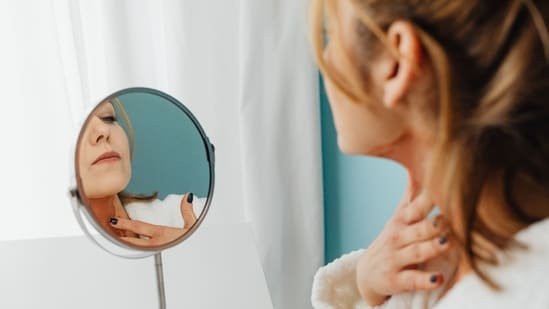

Keeping track of your health doesn’t always begin in a doctor’s clinic – it often starts with noticing changes in your own body. Since you’re the one most familiar with how your body looks and feels, you’re often the first to spot something unusual. Simple self-checks, such as examining your thyroid, won’t diagnose a medical condition, but they can help you identify changes early and bring them to your doctor’s attention before they become a bigger concern.
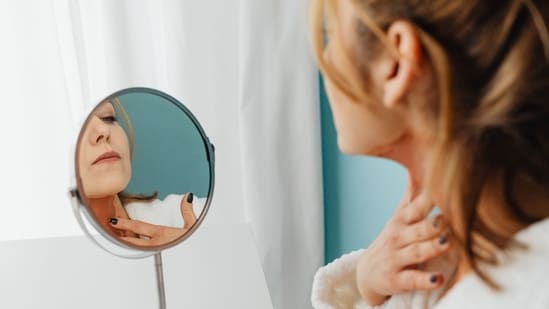

Dr Kunal Sood, an anaesthesiologist and interventional pain medicine physician, has shared a simple guide to examining your thyroid at home. In an Instagram video posted on July 14, he explains why monitoring your thyroid health is important and how regular self-checks can help you spot potential abnormalities early, prompting timely medical evaluation if needed.
Why check thyroid at home?
According to Dr Sood, performing a simple thyroid self-check at home can help you spot early signs of enlargement, lumps, nodules or other abnormalities. He notes that this is particularly important for women, who are more likely than men to develop thyroid disorders. While a self-examination cannot diagnose a thyroid condition, it can help you identify changes that should be discussed with your doctor for further evaluation.
He explains, “Checking your thyroid at home can help you notice early signs of enlargement or nodules. Especially important for women who are more likely to develop thyroid issues. While it won’t diagnose the condition, it is a simple way to spot changes worth mentioning to your doctor.”
Steps to check thyroid at home
Dr Sood outlines a simple, step-by-step method to examine your thyroid at home for any unusual changes or abnormalities. Here’s how to perform the self-check:
- Stand in front of a mirror and focus on the lower front of your neck, just above the collarbones.
- Tilt your head back slightly.
- Take a sip of water and swallow while watching for any bulges, lumps, or asymmetry.
- Repeat a few times to be sure you’re seeing the same thing consistently. If you notice anything unusual, like a new lump or visible swelling, follow up with a healthcare provider.
The physician also adds, “While many thyroid nodules are harmless, some may require further evaluation. If you have already been diagnosed with nodules, ask your doctor to show you where they are so you can monitor for changes in size, shape, or texture over time.”
Note to readers: This article is for informational purposes only and not a substitute for professional medical advice. It is based on user-generated content from social media. HT.com has not independently verified the claims and does not endorse them.
Dr Kunal Sood, MD, is a double board-certified physician in Anesthesiology and Interventional Pain Medicine. He did his residency and fellowship in anesthesiology at Wayne State University in Detroit, Michigan, followed by a one-year fellowship in interventional pain medicine. He later became the Medical Director of the office in Germantown, Maryland.

