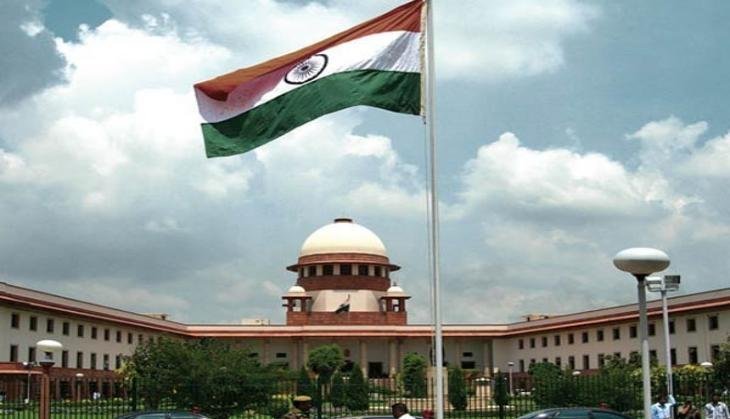


Supreme Court of India: Maintainability of Article 227 Revision against an Arbitral Tribunal’s Order Rejecting a Section 16 Application
In Manash Kamal Bezboruah v. M/S Bokahola Tea Company Private Limited & Ors., 2026 INSC 701, the Supreme Court decided the issue of whether the High Court was justified in entertaining a Revision Petition under Article 227 of the Constitution of India against an order of an Arbitral Tribunal rejecting applications filed by non-signatories seeking deletion of their names from the array of parties. While deciding this issue, the Court examined the scope of the “patent lack of inherent jurisdiction” test for invoking Article 227 supervisory jurisdiction during pendency of arbitral proceedings.

Factual Matrix
M/s Boloma Tea Company (Respondent No. 5) was constituted as a partnership firm on 19.09.1948. Through successive partnership deeds, the Appellant’s father, Late Indra Kamal, held a 25% share, and after his demise the Appellant obtained Government of India permission (being an IAS Officer) to become a sleeping partner. A fresh partnership deed dated 16.11.1976 allotted shares among the partners and contained an arbitration clause (Clause 5) providing that disputes would first be referred to the other partners and, if unresolved, to arbitration before a mutually agreed third party. M/s Bokahola Tea Company Pvt. Ltd. (Respondent No. 1), M/s Kasojan Tea Company Pvt. Ltd. (Respondent No. 2) and M/s Bokahola Investment Pvt. Ltd. (Respondent No. 3) were companies incorporated separately, and were not signatories to the partnership deed.
In July 2012, the Appellant instituted Title Suit No. 38 of 2012 before the Civil Judge (Senior Division), Jorhat, seeking rendition of accounts and reserving the right to claim losses arising from alleged mismanagement. An application under Section 8 of the Arbitration and Conciliation Act, 1996 filed by Respondent No. 7 was rejected by the Trial Court on 07.08.2014, relying on Sukanya Holdings (P) Ltd. v. Jayesh H. Pandya, (2003) 5 SCC 531, on the ground that several defendants, including Respondent Nos. 1 to 3, were non-signatories and the suit could not be split up. The High Court affirmed this on 01.11.2021. Respondent No. 7 then approached the Supreme Court, and by consent order dated 21.11.2024 in Civil Appeal No. 13188 of 2024, the Court referred all disputes to arbitration and appointed Justice (Retd.) B.P. Katakey as Sole Arbitrator. Respondent Nos. 1 to 3 were parties to that appeal and were served notice but did not contest it.
Pursuant to this, the Tribunal fixed the arbitration schedule, and the Appellant and Respondent Nos. 5 to 7 filed their Statement of Claim and Statement of Defence. Respondent Nos. 1 to 3 filed applications under Order VII Rule 11 read with Order I Rule 10(2) and Section 151 of the CPC before the Tribunal seeking deletion of their names, treated as applications under Section 16 of the Act. The Tribunal, vide order dated 09.06.2025, framed issues including maintainability of proceedings against non-signatories, and by order dated 04.08.2025 rejected the applications of Respondent Nos. 1 to 3, holding that the Supreme Court’s reference of all parties to arbitration left no scope for the Tribunal to reconsider whether non-signatories could be subjected to arbitration.
Aggrieved, Respondent Nos. 1 to 3 filed CRP/120/2025 under Article 227 before the High Court of Gauhati. The High Court, by interim order dated 02.09.2025, stayed the notices issued to Respondent Nos. 1 to 3 (while directing the arbitral proceedings to continue), and by order dated 28.01.2026, rejected the Appellant’s preliminary objection to maintainability of the revision petition, holding relying on Deep Industries Ltd. v. ONGC, (2020) 15 SCC 706 and Punjab State Power Corporation Ltd. v. Emta Coal Ltd., (2020) 17 SCC 93 that the Tribunal’s order suffered from a patent lack of inherent jurisdiction since the Supreme Court’s order had not discussed invoking the “Group of Companies” doctrine. The Appellant challenged both orders before the Supreme Court, which by order dated 16.02.2026 stayed the High Court’s orders and further proceedings before it, and by order dated 19.03.2026 exempted Respondent Nos. 1 to 3 from participating in the arbitral proceedings pending disposal.
Submissions on Behalf of the Appellant
The Appellant submitted that Respondent Nos. 1 to 3 are veritable parties to the disputes, evidenced by inter-party relations, commonality of subject matter, and their incorporation through borrowings from the partnership firm, relying on the Constitution Bench judgment in Cox and Kings Ltd. v. SAP India Pvt. Ltd., 2024 (4) SCC 1. It was contended that Respondent Nos. 1 to 3 are estopped from challenging the arbitral reference made by the consent order dated 21.11.2024, having chosen not to appear or object despite being served on multiple occasions, and that the High Court’s interference under Article 227 to stay the arbitral proceedings constitutes abuse of process. Relying on the 101st Report of the Law Commission of India, it was argued that the proper remedy against rejection of a Section 16 application is under Section 34 of the Act. Reliance was placed on Associate Builders v. Delhi Development Authority, (2015) 3 SCC 49, Punjab State Power Corpn. Ltd. (supra), and M/s Tarini Prasad Mohanty v. M/s Sunflag Iron and Steel Company Limited, 2026 INSC 566, to argue that patent lack of inherent jurisdiction must “stare one in the face” and that minimal interference at the interim stage is imperative. It was further argued that the High Court mechanically decided maintainability without giving specific reasoning as to perversity or inherent lack of jurisdiction.
Submissions on Behalf of Respondent Nos. 1 to 3
Respondent Nos. 1 to 3 submitted that the Appellant’s own prior stand that these Respondents were not parties to the arbitration agreement, as accepted by the High Court in the earlier revision petition relying on Sukanya Holdings (supra) belied any mutual intention to refer them to arbitration, and that the Appellant could not now approbate and reprobate by claiming they are veritable parties. It was contended that Respondent Nos. 1 to 3 do not fulfil the “veritable party” test laid down in Cox and Kings (supra), that the consent order dated 21.11.2024 was intended to bind only parties who consented, and that Respondent No. 7 had no authority or Board Resolution to consent on their behalf. It was argued that the Tribunal’s assumption of jurisdiction based on mere non-appearance before the Supreme Court fell within the narrow band of perversity justifying the High Court’s interference under Article 227, relying on Deep Industries (supra) and Punjab State Power Corporation Ltd. (supra).
Issue
Whether the High Court was justified in holding that a Revision Petition under Article 227 of the Constitution is maintainable against an order of the Arbitral Tribunal rejecting a Section 16 application by non-signatories seeking deletion from the array of parties.
Findings of the Supreme Court
The Court held that the Act is a Code in itself, with Section 5 restricting judicial intervention except as expressly contemplated, and Section 16 embodying the doctrine of kompetenz-kompetenz empowering the Arbitral Tribunal to rule on its own jurisdiction, with challenge ordinarily available under Section 34 upon conclusion of proceedings.
The Court held that while the High Courts’ supervisory jurisdiction under Article 227 forms part of the basic structure and cannot be excluded by legislation, and Section 5 cannot oust this constitutional jurisdiction, the Act was nonetheless enacted for expeditious resolution with minimal judicial interference. Relying on SBP & Co. v. Patel Engineering Ltd., (2005) 8 SCC 618, the Court reiterated that parties must ordinarily wait until the award is pronounced before challenging Tribunal orders, absent a right of appeal under Section 37. Relying on Deep Industries (supra), the Court held that Article 227 interference must be “extremely circumspect” and restricted to orders “patently lacking in inherent jurisdiction.” Relying on Punjab State Power Corpn. Ltd. (supra), the Court held that a patent lack of inherent jurisdiction “requires no argument whatsoever” and “the perversity of the order… must stare one in the face.” Relying on M/s Tarini Prasad Mohanty (supra), the Court held that the threshold for exercising writ jurisdiction under Articles 226/227 is higher given the Act’s statutory scheme, distinguishing “entertainability” from “maintainability.”
Applying these principles, the Court noted that the High Court, while passing the order dated 28.01.2026, had not recorded any specific finding as to perversity or patent lack of inherent jurisdiction in the Tribunal’s order dated 04.08.2025. The Court held that under Cox and Kings (supra), determination of whether a non-signatory is a veritable party is a complex inquiry left to the Arbitral Tribunal under Section 16, with the referral court’s role confined to a prima facie examination and accordingly the Tribunal possessed absolute competence to decide whether Respondent Nos. 1 to 3 were veritable parties, such that its order ought not to have been challenged by an Article 227 petition.
The Court further held that Respondent Nos. 1 to 3, having been parties to the earlier Civil Appeal before the Supreme Court and having failed to contest it or seek modification/review despite being served, could not now raise a dispute they could have raised earlier, observing that such practice “unnecessarily resulted in another round of litigation” and that “these types of practices must be avoided by parties to an arbitration proceedings.”
Accordingly, the Court held that the High Court was not justified in entertaining the Article 227 challenge and staying the arbitral proceedings, and that the remedy against rejection of a Section 16 application lies strictly under Section 34 after the final award. Both impugned orders of the High Court were set aside and the revision petition before the High Court was dismissed. The Court further directed the Tribunal to independently decide the status of Respondent Nos. 1 to 3 with respect to the arbitration proceedings, uninfluenced by its decision, and to complete the arbitration proceedings expeditiously in accordance with law.

