
[ad_1]

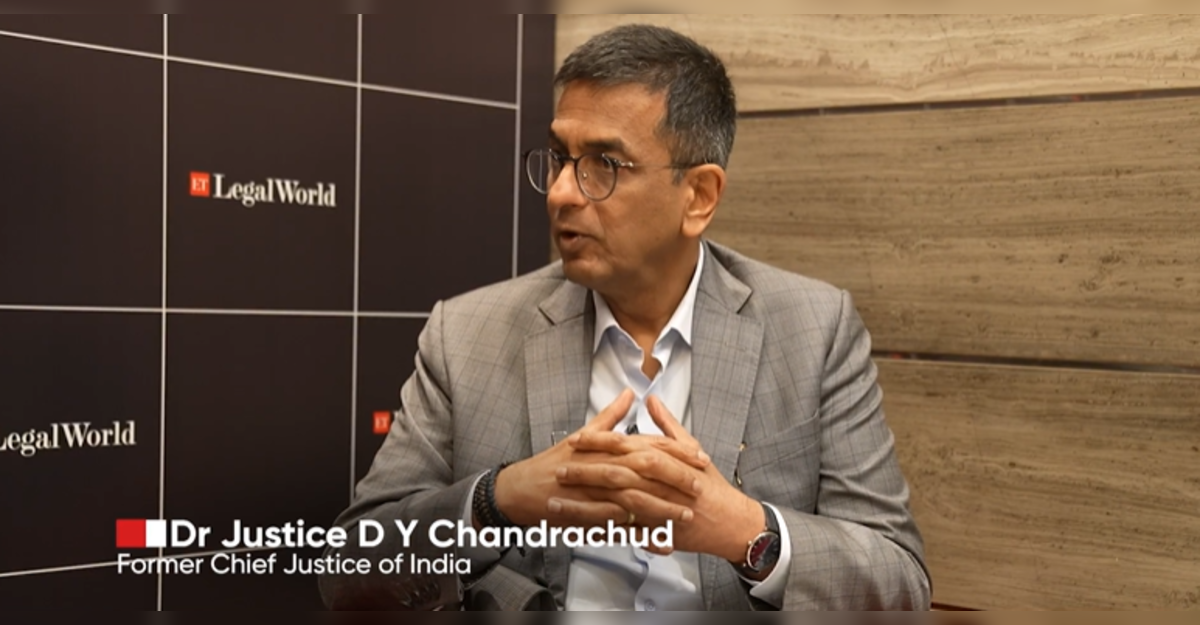
At the ETLegalWorld’s Global Legal Convention 2026, the former Chief Justice of India, Justice D.Y. Chandrachud discussed the importance of arbitration, as a process and that the government should reconsider its current stance on arbitration for public sector commercial disputes by balancing procedural safeguards with substantive reforms to build mutual trust and confidence in the process. He also talked about how the current gaps in the Insolvency and Bankruptcy Code 2016 (IBC) could be effectively addressed.
Watch Here: India’s Arbitration Future & IBC Challenges | Justice D Y Chandrachud | ET Global Legal Convention
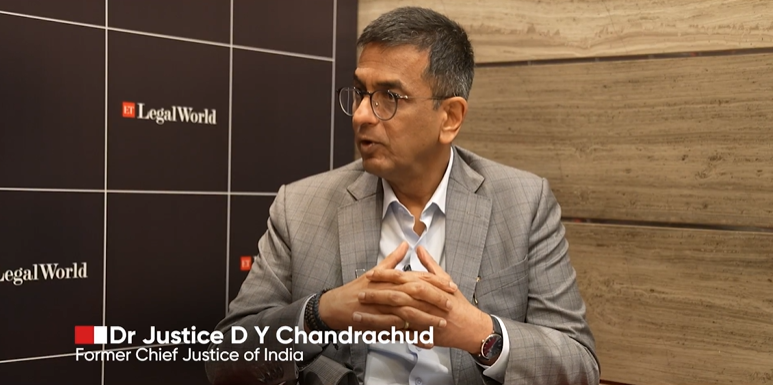
Manashvi Tripathi: India aspires to become a global arbitration hub, but we’ve seen in the last few years that the ministries are ditching arbitration in total and they’re moving towards mediation. What are your views on this?
Justice D.Y. Chandrachud: Arbitration and mediation are not contesting opponents. The relationship between arbitration and mediation must be regarded as complementary or in the nature of partnerships. Mediation is always the desired solution because if parties mediate and arrive at a mediated solution, it preserves relationships. It provides for a voluntary resolution of disputes, perhaps even before disputes reach a court or the arbitral process. So let’s be very clear that mediation is critically important to today’s times.
But equally, I think it’s important that we don’t lose sight of the value addition which arbitration brings to the development of the nation in a broader national context, because arbitration provides for flexibility, it provides for the efficacious resolution of commercial disputes, and therefore it promotes a sense of confidence in the investing community.
If we don’t allow for arbitration, that would be a huge deterrent to investment in India’s economic landscape, particularly in the domestic as well as in the foreign context. If we are going to leave investors who have disputes to the uncertain resolution that takes place in ordinary litigation, that would really act as a deterrent to investment in India both domestically and globally. Having said that, we must also address the concerns of the government because I’ve seen some of the orders that have been issued by the government.
You said ditching the arbitration process. Why is the government doing that? There have been concerns that arbitral awards have been disproportionate, and that the arbitral process has not been fair, and therefore the government has a serious lack of confidence in some of the arbitration tribunals which have been constituted in the past.
Now, part of the reason is the process that is followed by the government in picking out its own arbitrators.
I think it’s important for the government to also set its house in order so that people, men and women who are chosen to be arbitrators, truly are people who are persons of integrity, who have domain knowledge and experience, and that would foster the confidence of the government in the arbitral process itself.
Hence, while we speak of fostering the confidence of the business community, the government is the largest litigator, particularly in today’s context, when the government is entering into infrastructure in such a large way, whether it’s in terms of highways or ports, or electricity, it’s important to foster confidence of both sides.
I would really strongly urge the government to have a fresh look at whether arbitration should completely be disregarded in matters involving commercial disputes of public sector corporations or governments, whether state or the center, it’s important that the concerns of government and the public sector are duly factored in so that while we don’t completely or we don’t disassociate from arbitration, yet at the same time, both procedural and substantive steps are taken to promote the confidence of the litigating community in the arbitration process. And by the litigating community, I mean both the private sector and the public sector.
Manashvi Tripathi: Since the advent of IBC, what are the persistent gaps and challenges that you have seen? What, according to you, are the core weaknesses?
Justice D.Y. Chandrachud: There have been weaknesses that have emerged over a period of time since the enactment of the IBC. But let’s be very clear that the IBC is a very central point in terms of our legal regime for the resolution of corporate insolvencies.
The fact that parliament has stepped in repeatedly when there were deficiencies is an indicator of the fact that both government and the most important legislating body in the country, parliament, in that sense, which deals with central subjects, have stepped in to amend the act is a sign that when there are deficiencies, they will be taken care of.
Now, I appeared before the parliamentary committee, which is now looking at fresh amendments to the insolvency and bankruptcy code, such as by incorporating the clean slate principle or by providing for the overriding effect of resolution plans, even in regard to the claims of the revenue.
So several new amendments have been proposed to the IBC, which I believe would supplant some of the deficiencies that had emerged over a period of time. But having said that, it’s also important that we have the tribunals, which are the prime adjudicatory bodies that deal with the IBC, and their infrastructure is strengthened.
Their ability to deal with high-value commercial insolvencies is strengthened by having better training, by having better infrastructure, by having better support for the work of the tribunals. Because, unless the adjudicatory bodies are strengthened, there would be real problems in achieving the timelines for expeditious resolution of insolvencies.
This interaction was a part of the third edition of ETLegalWorld’s flagship event – Global Legal Convention 2026.
This year’s convention, themed “Law Goes Digital: The Rise of the Digital Lawyer”, brought together India’s top legal minds for a deep look at how digital technology is changing the profession on 13th and 14th March 2026 at the Four Seasons Hotel in Mumbai. This two‑day event combined keynotes, panel discussions, awards, and networking to tackle real‑world shifts.
Justice Chandrachud also delivered the keynote address, on the second day of the event, in which he said that the future of law lies in building accountable institutions that can sustain trust, resilience, and social balance amid rapid technological and economic change.

[ad_2]
Source link

