
[ad_1]
JANHIT ABHIYAN V. UNION OF INDIA

1. FACTS
A constitutional challenge to the Constitution (One Hundred and Third Amendment) Act, 2019 which added Articles 15(6)[1], The Janhit Abhiyan v. Union of India[2] case came about because of articles 15(6) and 16(6) of the Constitution of India. The Economically Weaker Sections (EWS) of citizens, which are people who are not already covered by the current SC/ST/OBC reservation framework, were given the power by these provisions to make special arrangements, like reservations in public jobs and schools, as long as they don’t go over 10% of the current reservations.
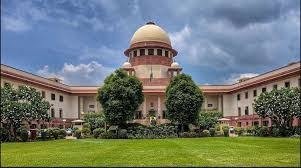
Janhit Abhiyan, a non-governmental organization, and other petitioners, such as Youth for Equality, challenged the Amendment in front of the Supreme Court of India[3]. The case was sent to a five-judge Constitution Bench because it was so important to the Constitution. The Constitution Bench[4] was made up of Chief Justice U.U. Lalit, Dinesh Maheshwari J., S. Ravindra Bhat J., Bela M. Trivedi J., and J.B. Pardiwala J. A 3-2 majority ruling on November 7, 2022, said that the Amendment was constitutional. The majority was made up of Justices Dinesh Maheshwari, Bela M. Trivedi, and J.B. Pardiwala. Justice S. Ravindra Bhat wrote the dissent, and Chief Justice U.U. Lalit agreed.
2. ISSUES RAISED
(i) Whether the Constitution (103rd Amendment) Act, 2019 violates the basic structure of the Constitution, particularly the principle of equality?
(ii) Whether economic criterion alone can constitute a valid basis for classification for the purposes of reservation under Articles 15 and 16?
(iii) Whether the exclusion of Scheduled Castes, Scheduled Tribes, and Other Backward Classes from the EWS reservation — despite their potential economic backwardness — violates the right to equality under Article 14 and Article 15(1)?
(iv) Whether the 50% ceiling on aggregate reservations, as laid down by the nine-judge Bench in Indra Sawhney v. Union of India forms part of the basic structure, and whether the 10% EWS quota — which breaches this ceiling — is constitutionally impermissible?
(v) Whether reservations in private unaided educational institutions under Article 15(6) constitute an impermissible infringement on institutional autonomy?
3. CONTENTIONS
The Constitution Bench set out the following main questions for decision: The petitioners asserted that the 103rd Amendment, by substantially altering the equality provisions in Articles 14, 15, and 16, contravenes the fundamental structure of the Constitution, as established in Kesavananda Bharati v. State of Kerala[5], AIR 1973 SC 1461 (thirteen-judge Constitution Bench), which formulated the basic structure doctrine. Even though members of SC/ST/OBC communities may be equally or more economically disadvantaged, their exclusion from EWS benefits has been described as caste-based discrimination and a violation of the anti-discrimination requirement. Reservation, as defined by the Constitution, was argued to be a solution for historical and social disadvantage rather than just economic deprivation.
Second, the petitioners heavily relied on Indra Sawhney’s authoritative ruling that the total amount of reservations should not often surpass 50%. The total would approach 60% if a 10% EWS quota were added to the current ~49.5% reservations, thus exceeding this constitutionally set ceiling and thereby undermining the fundamental framework.
Third, it was contended that reservations predicated solely on income are arbitrary and contravene Article 14, and that economic status constitutes an unstable and judicially unverifiable criterion, in contrast to the historical permanence of caste-based exclusion[6]. affirming that reservation must be associated with particular, constitutionally acknowledged criteria of backwardness. In response, the Union of India argued that Parliament’s plenary constituent power under Article 368 The Constitution of India, art. 368 power of Parliament to change the Constitution and procedure therefore allows revisions to address socioeconomic realities not covered by current laws. The government argued that EWS reservation promotes substantive equality and the Directive Principles under Part IV of the Constitution, and that the 50% ceiling is a judicial construct rather than an element of the fundamental framework.
4. RATIONALE
The Amendment was sustained by the majority. According to Justice Maheshwari, the EWS category represents a unique, non-overlapping class of beneficiaries not covered by any current reservation system, and economic backwardness is a constitutionally cognisable ground of disadvantage. Instead of fostering discrimination, he reasoned, this fills a real gap[7].
According to Justice Trivedi, the Directive Principles, in particular Articles 38[8] state must secure a social order for the advancement of welfare of the people and 46[9], An expanding understanding of affirmative action that takes economic marginalisation into account is supported by promotion of educational and economic interests of Scheduled Castes, Scheduled Tribes and other weaker sections. Since the Amendment promotes rather than weakens the constitutional purpose of welfare, she found no breach of the essential structure.
According to Justice Pardiwala, a constitutional amendment using constituent power might overturn the 50% ceiling in Indra Sawhney since it was a rule of judicial construction rather than a basic standard of constitutional identity[10].
The dissent turned down the Amendment for two reasons. First, it is unfair to deny EWS benefits to SC/ST/OBC groups, even if individual members are poor. This is against Articles 14, 15, and 16 because it uses a neutral criterion (income) to keep caste-based exclusion in place[11]. Second, the dissenters said again that the 50% limit in Indra Sawhney is important to the equality framework and that any changes to the Constitution that go against it will hurt the main framework set up in Kesavananda Bharati.
5. DEFECTS OF LAW
Despite its constitutional importance, the ruling is vulnerable to a number of analytical and doctrinal objections.
First, the majority’s justification for excluding SC/ST/OBC populations lacks analytical coherence. Although the EWS reservation is purportedly based on economic criteria, people who fall below the same income threshold are absolutely excluded from these communities. A forward-caste individual making less than ₹8 lakh annually is eligible; a Dalit individual making the same amount is not. This classification is not neutral; rather, it subtly favours caste identity while claiming to transcend it. This is hostile discrimination disguised under the pretext of economic neutrality, as the dissent properly points out. The exclusion of the poorest among the SC/ST/OBC populations… is a kind of hostile discrimination. Sociological evidence also shows that poverty and caste are still closely linked in India, making it particularly hard to defend the exclusion of SC/ST/OBC populations from economic schemes.
Second, the majority’s interpretation of the 50% ceiling is problematic from a jurisprudential standpoint. For thirty years, reservation jurisprudence has been regulated by the nine-judge Bench ruling known as Indra Sawhney[12]. Neither the majority in this case nor the Amendment itself provide a strong constitutional justification for allowing its violation. The basic structure concept, established in Kesavananda Bharati, loses its normative value as a restraint on constitutional modification if the amending power can evade a nine-judge Bench’s constitutional threshold without substantive explanation.
Third, the right of private, unassisted educational institutions is not given enough weight by the majority. Where the established position in T.M.A. Pai Foundation v. State of Karnataka[13] Article 19(1)(g) The Constitution of India, 19(1)(g) (right to practise any profession, or to carry on any) clearly establishes that the Amendment infringed upon an individual’s right to practise their chosen profession, the failure of the Supreme Court to address this issue undermines the ruling within the Constitution of India.
The EWS reservation for India was not significantly impacted by the M. Nagaraj v. Union of India[14] ruling that reservation for India must be based on data that demonstrates that there is a degree of backwardness and inadequate representation within the reservation policy to be established. The Supreme Court’s failure to investigate the means-testing component of the EWS reservation policy indicates a lack of legislative wisdom within the majority of the ruling.
6. INFERENCE
The ruling within the Janhit Abhiyan v. Union of India (2022) case expanded the definition of affirmative action within India’s constitutional framework. The Court indicates a partial decoupling of reservation from its historical foundations in class and caste-based disadvantage by maintaining economic criteria as a stand-alone basis for reservation.
The decision’s broader ramifications are concerning, though. A structural contradiction at the heart of the Amendment is shown by the exclusion of SC/ST/OBC communities from EWS benefits: if economic suffering is the real justification, there is no justification for leaving out similarly affected members of underdeveloped communities. This exclusion can only be interpreted as a politically driven attempt to give forward communities the advantages of reservations without upsetting the current system; this goal conflicts with the Constitution’s commitment to substantive equality.
The longevity of judicial thresholds under India’s basic structure theory is seriously called into question by the majority’s willingness to allow a constitutional modification that would violate the Indra Sawhney ceiling[15]. The protective framework that reserve jurisprudence has built over the course of seven decades may be undermined by future Parliaments using this precedent to support further extensions way beyond any rational limit.
Within this case, Justice Bhat provided a dissenting opinion that was concurred within by the Chief Justice of India, Lalit. Justice Bhat accurately noted that the criterion for selection within affirmative action programs was to be economic, yet ensuring that such a determination did not lead to exclusions of individuals along caste lines. The disagreement will probably be used as a scholarly anchor for assessing the boundaries of constituent power and as a reference for upcoming constitutional disputes.
The ruling within the affirmative action case for India does recognise the importance of making economic marginalisation an issue within the Indian Constitution. However, the ruling does not provide an adequate framework for resolving the conflict between the Constitution of India’s anti-discrimination clause, its equality code, and its limits on the number of individuals that can be reserved within its social groups. Thus, the long-term constitutional legacy of this ruling remains to be seen, but for now it only resolves a political dispute between India’s social groups.
Saranya Dharmalingam
Saveetha School of Law
[1] The Constitution of India, art. 15(6) (inserted by the Constitution (103rd Amendment) Act, 2019)
[2] Article 16(6) of the Indian Constitution (inserted by the Constitution (103rd Amendment) Act, 2019)
[3] Union of India v. Janhit Abhiyan, (2023) 2 SCC 1 (India)
[4] Ibid. CJI U.U. Lalit, Dinesh Maheshwari J., S. Ravindra Bhat J., Bela M. Trivedi J., and J.B. Pardiwala J.
[5] Kesavananda Bharati v. State of Kerala AIR 1973 SC 1461 (thirteen-judge Constitution Bench)
[6] State of Kerala v. N.M. Thomas, AIR 1976 SC 490
[7] Union of India v. Janhit Abhiyan, (2023) 2 SCC 1, ≈ 94 (Maheshwari J.
[8] The Constitution of India, art. 38
[9] The Constitution of India, art. 46
[10] Union of India v. Janhit Abhiyan, (2023) 2 SCC 1
[11] Janhit Abhiyan v. Union of India, (2023) 2 SCC 1
[12] Indra Sawhney v. Union of India, AIR 1993 SC 477
[13] T.M.A. Pai Foundation v. State of Karnataka, (2002) 8 SCC 481
[14] M. Nagaraj v. Union of India, (2006) 8 SCC 212
[15] Indra Sawhney v. Union of India, AIR 1993 SC 4771. FACTS
A constitutional challenge to the Constitution (One Hundred and Third Amendment) Act, 2019 which added Articles 15(6)[1], The Janhit Abhiyan v. Union of India[2] case came about because of articles 15(6) and 16(6) of the Constitution of India. The Economically Weaker Sections (EWS) of citizens, which are people who are not already covered by the current SC/ST/OBC reservation framework, were given the power by these provisions to make special arrangements, like reservations in public jobs and schools, as long as they don’t go over 10% of the current reservations.
Janhit Abhiyan, a non-governmental organization, and other petitioners, such as Youth for Equality, challenged the Amendment in front of the Supreme Court of India[3]. The case was sent to a five-judge Constitution Bench because it was so important to the Constitution. The Constitution Bench[4] was made up of Chief Justice U.U. Lalit, Dinesh Maheshwari J., S. Ravindra Bhat J., Bela M. Trivedi J., and J.B. Pardiwala J. A 3-2 majority ruling on November 7, 2022, said that the Amendment was constitutional. The majority was made up of Justices Dinesh Maheshwari, Bela M. Trivedi, and J.B. Pardiwala. Justice S. Ravindra Bhat wrote the dissent, and Chief Justice U.U. Lalit agreed.
2. ISSUES RAISED
(i) Whether the Constitution (103rd Amendment) Act, 2019 violates the basic structure of the Constitution, particularly the principle of equality?
(ii) Whether economic criterion alone can constitute a valid basis for classification for the purposes of reservation under Articles 15 and 16?
(iii) Whether the exclusion of Scheduled Castes, Scheduled Tribes, and Other Backward Classes from the EWS reservation — despite their potential economic backwardness — violates the right to equality under Article 14 and Article 15(1)?
(iv) Whether the 50% ceiling on aggregate reservations, as laid down by the nine-judge Bench in Indra Sawhney v. Union of India forms part of the basic structure, and whether the 10% EWS quota — which breaches this ceiling — is constitutionally impermissible?
(v) Whether reservations in private unaided educational institutions under Article 15(6) constitute an impermissible infringement on institutional autonomy?
3. CONTENTIONS
The Constitution Bench set out the following main questions for decision: The petitioners asserted that the 103rd Amendment, by substantially altering the equality provisions in Articles 14, 15, and 16, contravenes the fundamental structure of the Constitution, as established in Kesavananda Bharati v. State of Kerala[5], AIR 1973 SC 1461 (thirteen-judge Constitution Bench), which formulated the basic structure doctrine. Even though members of SC/ST/OBC communities may be equally or more economically disadvantaged, their exclusion from EWS benefits has been described as caste-based discrimination and a violation of the anti-discrimination requirement. Reservation, as defined by the Constitution, was argued to be a solution for historical and social disadvantage rather than just economic deprivation.
Second, the petitioners heavily relied on Indra Sawhney’s authoritative ruling that the total amount of reservations should not often surpass 50%. The total would approach 60% if a 10% EWS quota were added to the current ~49.5% reservations, thus exceeding this constitutionally set ceiling and thereby undermining the fundamental framework.
Third, it was contended that reservations predicated solely on income are arbitrary and contravene Article 14, and that economic status constitutes an unstable and judicially unverifiable criterion, in contrast to the historical permanence of caste-based exclusion[6]. affirming that reservation must be associated with particular, constitutionally acknowledged criteria of backwardness. In response, the Union of India argued that Parliament’s plenary constituent power under Article 368 The Constitution of India, art. 368 power of Parliament to change the Constitution and procedure therefore allows revisions to address socioeconomic realities not covered by current laws. The government argued that EWS reservation promotes substantive equality and the Directive Principles under Part IV of the Constitution, and that the 50% ceiling is a judicial construct rather than an element of the fundamental framework.
4. RATIONALE
The Amendment was sustained by the majority. According to Justice Maheshwari, the EWS category represents a unique, non-overlapping class of beneficiaries not covered by any current reservation system, and economic backwardness is a constitutionally cognisable ground of disadvantage. Instead of fostering discrimination, he reasoned, this fills a real gap[7].
According to Justice Trivedi, the Directive Principles, in particular Articles 38[8] state must secure a social order for the advancement of welfare of the people and 46[9], An expanding understanding of affirmative action that takes economic marginalisation into account is supported by promotion of educational and economic interests of Scheduled Castes, Scheduled Tribes and other weaker sections. Since the Amendment promotes rather than weakens the constitutional purpose of welfare, she found no breach of the essential structure.
According to Justice Pardiwala, a constitutional amendment using constituent power might overturn the 50% ceiling in Indra Sawhney since it was a rule of judicial construction rather than a basic standard of constitutional identity[10].
The dissent turned down the Amendment for two reasons. First, it is unfair to deny EWS benefits to SC/ST/OBC groups, even if individual members are poor. This is against Articles 14, 15, and 16 because it uses a neutral criterion (income) to keep caste-based exclusion in place[11]. Second, the dissenters said again that the 50% limit in Indra Sawhney is important to the equality framework and that any changes to the Constitution that go against it will hurt the main framework set up in Kesavananda Bharati.
5. DEFECTS OF LAW
Despite its constitutional importance, the ruling is vulnerable to a number of analytical and doctrinal objections.
First, the majority’s justification for excluding SC/ST/OBC populations lacks analytical coherence. Although the EWS reservation is purportedly based on economic criteria, people who fall below the same income threshold are absolutely excluded from these communities. A forward-caste individual making less than ₹8 lakh annually is eligible; a Dalit individual making the same amount is not. This classification is not neutral; rather, it subtly favours caste identity while claiming to transcend it. This is hostile discrimination disguised under the pretext of economic neutrality, as the dissent properly points out. The exclusion of the poorest among the SC/ST/OBC populations… is a kind of hostile discrimination. Sociological evidence also shows that poverty and caste are still closely linked in India, making it particularly hard to defend the exclusion of SC/ST/OBC populations from economic schemes.
Second, the majority’s interpretation of the 50% ceiling is problematic from a jurisprudential standpoint. For thirty years, reservation jurisprudence has been regulated by the nine-judge Bench ruling known as Indra Sawhney[12]. Neither the majority in this case nor the Amendment itself provide a strong constitutional justification for allowing its violation. The basic structure concept, established in Kesavananda Bharati, loses its normative value as a restraint on constitutional modification if the amending power can evade a nine-judge Bench’s constitutional threshold without substantive explanation.
Third, the right of private, unassisted educational institutions is not given enough weight by the majority. Where the established position in T.M.A. Pai Foundation v. State of Karnataka[13] Article 19(1)(g) The Constitution of India, 19(1)(g) (right to practise any profession, or to carry on any) clearly establishes that the Amendment infringed upon an individual’s right to practise their chosen profession, the failure of the Supreme Court to address this issue undermines the ruling within the Constitution of India.
The EWS reservation for India was not significantly impacted by the M. Nagaraj v. Union of India[14] ruling that reservation for India must be based on data that demonstrates that there is a degree of backwardness and inadequate representation within the reservation policy to be established. The Supreme Court’s failure to investigate the means-testing component of the EWS reservation policy indicates a lack of legislative wisdom within the majority of the ruling.
6. INFERENCE
The ruling within the Janhit Abhiyan v. Union of India (2022) case expanded the definition of affirmative action within India’s constitutional framework. The Court indicates a partial decoupling of reservation from its historical foundations in class and caste-based disadvantage by maintaining economic criteria as a stand-alone basis for reservation.
The decision’s broader ramifications are concerning, though. A structural contradiction at the heart of the Amendment is shown by the exclusion of SC/ST/OBC communities from EWS benefits: if economic suffering is the real justification, there is no justification for leaving out similarly affected members of underdeveloped communities. This exclusion can only be interpreted as a politically driven attempt to give forward communities the advantages of reservations without upsetting the current system; this goal conflicts with the Constitution’s commitment to substantive equality.
The longevity of judicial thresholds under India’s basic structure theory is seriously called into question by the majority’s willingness to allow a constitutional modification that would violate the Indra Sawhney ceiling[15]. The protective framework that reserve jurisprudence has built over the course of seven decades may be undermined by future Parliaments using this precedent to support further extensions way beyond any rational limit.
Within this case, Justice Bhat provided a dissenting opinion that was concurred within by the Chief Justice of India, Lalit. Justice Bhat accurately noted that the criterion for selection within affirmative action programs was to be economic, yet ensuring that such a determination did not lead to exclusions of individuals along caste lines. The disagreement will probably be used as a scholarly anchor for assessing the boundaries of constituent power and as a reference for upcoming constitutional disputes.
The ruling within the affirmative action case for India does recognise the importance of making economic marginalisation an issue within the Indian Constitution. However, the ruling does not provide an adequate framework for resolving the conflict between the Constitution of India’s anti-discrimination clause, its equality code, and its limits on the number of individuals that can be reserved within its social groups. Thus, the long-term constitutional legacy of this ruling remains to be seen, but for now it only resolves a political dispute between India’s social groups.
Saranya Dharmalingam
Saveetha School of Law
[1] The Constitution of India, art. 15(6) (inserted by the Constitution (103rd Amendment) Act, 2019)
[2] Article 16(6) of the Indian Constitution (inserted by the Constitution (103rd Amendment) Act, 2019)
[3] Union of India v. Janhit Abhiyan, (2023) 2 SCC 1 (India)
[4] Ibid. CJI U.U. Lalit, Dinesh Maheshwari J., S. Ravindra Bhat J., Bela M. Trivedi J., and J.B. Pardiwala J.
[5] Kesavananda Bharati v. State of Kerala AIR 1973 SC 1461 (thirteen-judge Constitution Bench)
[6] State of Kerala v. N.M. Thomas, AIR 1976 SC 490
[7] Union of India v. Janhit Abhiyan, (2023) 2 SCC 1, ≈ 94 (Maheshwari J.
[8] The Constitution of India, art. 38
[9] The Constitution of India, art. 46
[10] Union of India v. Janhit Abhiyan, (2023) 2 SCC 1
[11] Janhit Abhiyan v. Union of India, (2023) 2 SCC 1
[12] Indra Sawhney v. Union of India, AIR 1993 SC 477
[13] T.M.A. Pai Foundation v. State of Karnataka, (2002) 8 SCC 481
[14] M. Nagaraj v. Union of India, (2006) 8 SCC 212
[15] Indra Sawhney v. Union of India, AIR 1993 SC 477
[ad_2]
Source link

