

[ad_1]
Name
Anonymous
Name of the Organisation
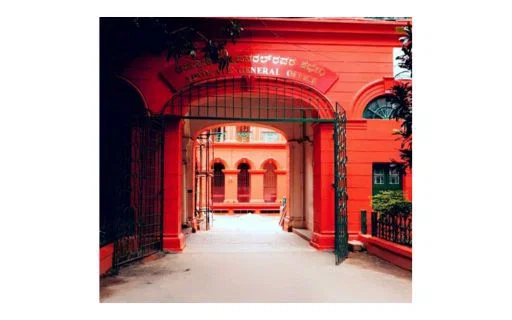
Advocate General Office, High Court Building, Dr Ambedkar Veedhi, Bengaluru, Karnataka 560001, India.
Duration of Internship
February 2026
How did you apply?
I came across the internship opportunity through a Google search and found the official application email address for the Office of the Advocate General, Karnataka.
I sent my application to internshipagkar[at]gmail.com, attaching my CV and a cover letter, along with a formal expression of interest stating that I wished to intern in February 2026.
I received a confirmation and was subsequently asked to report to the office on the designated date. The application process was simple and entirely email-based, with no online portal or formal registration required.
First-Day Formalities, Infrastructure, and First Impression
On the first day, I was informed through email itself to report by 9:00 AM.
Along with the hard copy of my CV and the letter of recommendation from my college, I also had to carry certain forms that they had shared in advance, like a confidential form, a COVID form, and a daily report task form. I made sure to get printouts of all of these and came fully prepared on day one itself.
Once we were all there, we had a small orientation where everyone introduced themselves, which college they were from, what they were studying, and all of that. Then we were briefed about the different advocates at the office and asked if we had any particular area of interest.
If someone wanted criminal law, they would be placed there; for civil law or writ petitions, there were different options, and they actually tried to place you based on what you wanted, which I thought was really nice.
The infrastructure was great, very well organized, and the people were genuinely friendly. I made a few friends that very first day itself. But honestly, my biggest impression was just how busy everyone was.
Advocates were literally running, bumping into each other, rushing to courtrooms, with everything happening at once. It was a lot to take in.
I was happy I got in through just a simple email with no complicated process, but standing there on day one, watching all of this, all I could think was that I really hoped I would manage to learn something before the month ended.
Main Tasks
My main task was going to court with the Additional Advocate General I was allotted under, whose name is Taranath Poojary. Every day started with getting the case details printout, the case status printout, and the daily order printout.
I would read about the cases, check the files, and make sure all the related files were taken to the court on time. I also used to check the online status of which case was being heard in which court at what time, so we were always updated.
Adv. Taranath Poojary used to brief us about the cases, explain the key issues, and ask us to do research or find precedents that could help in court. He never pressurized us at all. He always framed it as something for us to learn from, which made the environment very comfortable.
My co-intern and I used to sit in the High Court premises itself and search for relevant case precedents. If we found something useful, we would present it to him.
The law clerk at the office was also a huge help. He used to guide us on how to do proper legal research, how to read a case file correctly, and how to navigate through everything. That guidance made a big difference in how quickly I was able to settle into the work.
Whenever clients came in, we were allowed to sit and listen to what they had to say, understand the case, and observe how Sir handled them. Sometimes their assistants would brief us separately, tell us about the case background, give us updates, and guide us on how to assist further. It was a very hands-on experience in understanding client interaction.
One day, it was also mandatory to work in the printing section, where we helped with urgent printouts, maintained records, and assisted with documents that needed to be urgently dispatched from the court. That was a very different but useful experience.
Apart from all this, I attended a lot of court proceedings, observed arguments closely, prepared case files, assisted in identifying relevant precedents, and prepared legal documentation and chronologies. I got to understand how the State functions as a litigant and how constitutional law plays a role in almost every case.
Most of the matters my advocate handled were writ petitions. Some of the big cases I got to observe included the Chamundeshwari Temple of Mysore case and a case related to the Bangalore International Airport. It was a very enriching month overall.
Work Environment
The work environment was very strict and disciplined. There was a proper dress code that had to be followed every single day without fail. We were required to wear a white shirt, black pants, a blazer that had to be buttoned up, and proper shoes. Looking presentable was non-negotiable.
Punctuality was also taken very seriously, which was personally very demanding for me because my house is quite far from the High Court. I used to travel a lot every day just to make sure I was there on time.
The pace of work was extremely fast, and honestly, it was very hard to catch up initially. It took me nearly ten days to actually understand how the court works, where to go to get specific things done, and who the right people are for what.
The law clerks themselves were under so much work pressure that sometimes even they could not explain things properly. The Additional Advocate General was mostly busy with cases and court appearances. Everyone was always on the move.
But from my first day to my last day, one thing became very clear to me. Litigation is actually very demanding. It requires proper discipline, consistency, and the ability to show up and keep going every single day regardless of how overwhelming it feels. That was probably the biggest lesson this internship taught me.
Good Things about the Internship
One of the best things about this internship was how genuinely invested Adv. Taranath Poojary was in making sure we actually learned something. He used to always tell us to get books from the library, go through them, read the daily orders, and understand what each case was about.
Whenever we searched for precedents, he would ask us to bring three or four copies. He made sure that one copy went to him, two copies went to the law clerks working under his office, and we interns also got our own copies.
That way, we could sit and read through the cases ourselves, note down the next hearing dates, and stay updated on everything. It was a very thoughtful way of including us in the actual work.
I also got to help the law clerk prepare an Excel sheet of all the cases, their next dates, and a two-line summary of what each case was about. It was a small thing, but it genuinely helped him manage his work better, and I felt like I was actually contributing something useful.
Another great thing was that we had free access to SCC Online right there in the High Court premises. I learned how to use it properly during this internship. Whenever we had some free time, Adv. Poojary used to send the law clerk with us to the library to sit, discuss the cases, and explain things so we could understand them better.
Even when I made mistakes, he never made me feel bad about it. He would very politely point out what went wrong and help me understand how to correct it. He was kind and strict at the same time, which I think is the best kind of mentor.
I learned so much under his guidance, including how to check case status, daily orders, linked cases, trial court orders, and so much more. I also attended court proceedings whenever I had free time. I used to sit in Court Hall Number 11, where Justice Sandesh and another judge used to preside.
Most of the matters there were criminal cases, mostly involving murder, rape, dowry death, and POCSO cases. I found it very engaging because it was so much easier to follow.
Watching how evidence was taken, how advocates were questioned, and how arguments were made on these matters was brilliant. That was honestly one of the highlights of my entire internship experience.
Bad Things about the Internship
Honestly, the commute was the hardest part of this entire internship. Every single morning, I had to walk from my house to get an auto, then take a bus, then take the metro, and then change two metros to finally reach the High Court.
The metro at Majestic was always so incredibly crowded that I had to let two or three metros pass before I could even get in. There was no time to eat breakfast. I was just running every morning trying to reach on time. And since February was already getting hot, traveling in that heat every day was exhausting.
The food inside the High Court campus was also not great. The canteen used to get extremely crowded during the lunch break, which was only from 2:00 to 2:30 PM, barely half an hour. Once, I actually found a stone in my rice and dal while eating there, which was very off-putting.
The clerical work was another thing I genuinely did not enjoy. A lot of the time, interns were just asked to run errands, go get a stapler, go get this, go get that. It felt like a waste of time when I was there to actually learn law.
The law clerks were also under a lot of pressure themselves, so sometimes when I asked too many questions, they would get irritated.
Even the Additional Advocate General once told me not to keep disturbing the law clerks so much. I understood where he was coming from, but at the same time, I was only asking because I wanted to learn. That was my only intention every single day.
The strictness around the dress code was also very intense. One day, I came in wearing a white kurti with white pants instead of black pants, and one of the law clerks literally started yelling at me in front of everyone about how I should dress up and present myself.
It was embarrassing, and I felt it could have been handled much more politely. I understand that dress code matters in a professional environment, but yelling at someone in front of everyone just for one day is really not the right way to handle it.
Some of the law clerks also had a very biased attitude, which I noticed quite clearly. They were very warm and helpful towards interns from NLUs or from colleges outside Karnataka, like Delhi or Bombay. But towards interns from smaller local colleges like ours, they simply did not care.
They would not go out of their way to help, explain things, or even speak nicely. It felt very unfair because, at the end of the day, all of us were there to learn and putting in the same effort every day.
The attendance system was also very rigid. Every morning, we had to sign the attendance book by 9:30 AM sharp. If we were even slightly late, we were marked absent. In the evening, we had to sign out again, and if we tried to leave even a little early, they would not let us sign, saying we had to stay even if there was genuinely no work left to do that day.
The one-day leave policy was the most frustrating thing of all. I had an unexpected personal emergency and needed some days off. My Additional Advocate General was understanding and granted me leave, but the administrative staff was a completely different story.
I had to run back and forth requesting them, explaining every single detail of why, what, where, and when, even though it was something personal. Through all of this, the response I kept getting was, “We are fed up, every intern does this, we are tired of these requests.” I felt that was completely unfair.
I am not responsible for what every other intern does. I came there with full sincerity, and I even offered to compensate for the leave days, but they were still not okay with it. That attitude really bothered me.
On top of all of this, I spent around 12,000 to 13,000 rupees just on travel and food over the entire month, with zero stipend. Not a single rupee was paid. I worked every day, gave it my full effort, and still had to bear all the expenses myself.
For someone who lives far from the city in a more rural part of Bengaluru, that was a significant amount to spend on an unpaid internship.
Monthly Stipend
It was an unpaid internship.
Details about the accommodation and commuting to the Office
Commuting to the High Court every day was genuinely one of the most exhausting parts of this internship. Since it was unpaid, I had to ask my parents for money every single day for travel and food, which was uncomfortable and added to the overall stress.
My daily commute started with walking from home to get an auto, then taking a bus, and then getting on the metro. I used to board from Madavara, which is the starting point of the Green Line, travel till the midpoint where I had to get down and switch to the Purple Line towards Whitefield, and then finally get down at Cubbon Park station.
The metro in Bengaluru has gotten very expensive, and the crowds, especially at Majestic where you have to change lines, were overwhelming every single morning. There were days when I had to let two or three metros go before I could even get into one.
One way used to take at least one and a half hours. So, between the morning commute and coming back home in the evening, almost three hours of my day were just spent traveling. It was genuinely very hectic on top of an already demanding internship.
No accommodation was provided by the office, which is standard for most internships at government legal offices. Since I am based in Bengaluru itself, staying arrangements were not a concern for me, but the distance from my home to the High Court made every single day feel like a mini marathon before the actual work even began.
Over the course of the month, I ended up spending around 12,000 to 13,000 rupees on travel and food alone, with no financial support from the office whatsoever.
Anything else you’d like to share?
To be honest, the thing that kept me going through all the exhaustion and stress was the friends I made among the other interns. We used to go for lunch together every day and make it a point to try something new each time, different dishes, different places, different juices.
The pasta, chicken, tea, lemon water, we tried everything we could find around the High Court area. There is also a Nandini outlet inside the High Court campus, and I absolutely loved the banana cake there.
Food genuinely makes me happy, and those little lunch breaks with friends were the highlight of my day. It was our small way of unwinding in the middle of everything.
As for lessons learned, the biggest one was to be self-sufficient. No matter how much you expect people to guide you or help you, you cannot always count on that. People are busy, people have their own pressures, and sometimes they will show attitude or be biased without any real reason.
I also noticed how much politics exists even in a place like this. Interns who came through recommendations or who had connections were treated very differently from those of us who simply applied on our own. It was eye-opening in a way that no classroom could ever prepare you for.
I also once received a lecture from one of the law clerks about how to conduct myself in a professional setup, about having a stable mind and a composed attitude. While I understood what she was saying, I also saw that some people used interns to complete their own work under the guise of learning.
The free exploitation of students is something I genuinely disliked about the whole system. But at the end of it all, I came back every single day, I kept learning, I kept showing up, and that in itself felt like a win.
Share your internship experience here and get a chance to win Rs. 1500! Details here.
Disclaimer: Internship Experiences are opinions shared by individual law students are personal and subjective. Internship Experiences are NOT Lawctopus’ official views on the internship. We also do not edit internship experiences (except to enhance readability) to ensure that the intern’s voice remains intact.
Disclaimer: Organisations should not influence interns to write internship experiences on Lawctopus or make writing one mandatory for an internship certificate. These practices can lead to the organization getting blacklisted. In case of such instances, interns are requested to inform at contact@lawctopus.com
[ad_2]
Source link

