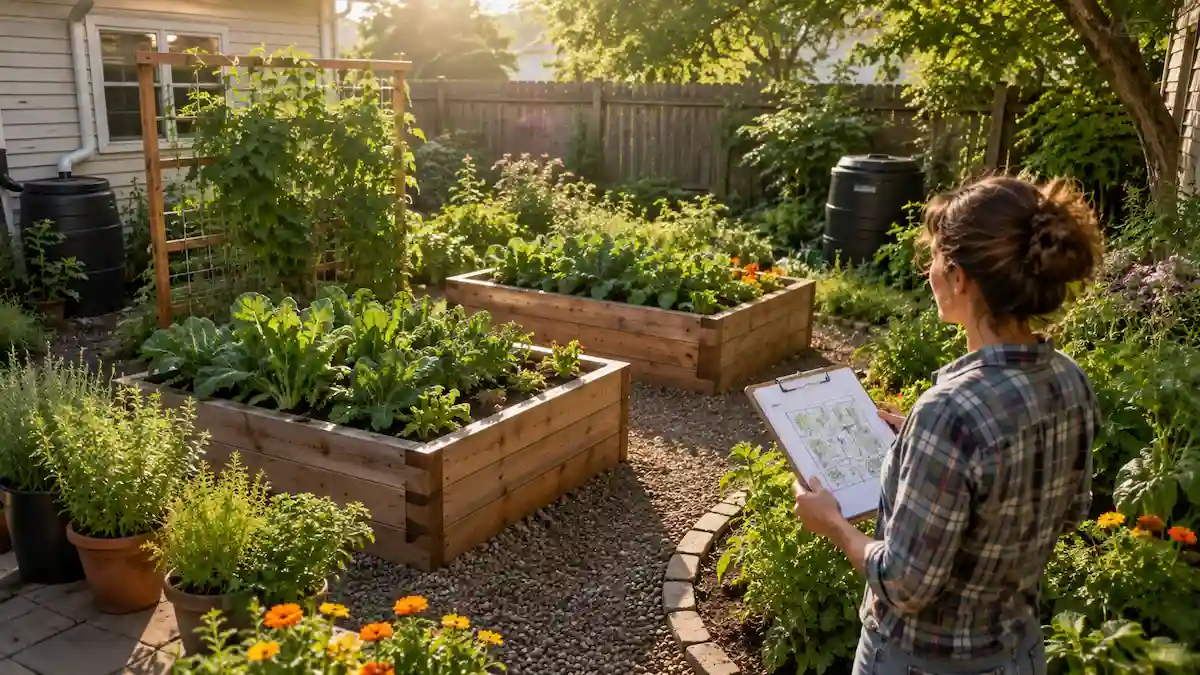

If you want to know how to plan a garden in a small backyard, the short answer is this. Pick a spot with enough sun, measure what you actually have to work with, decide what to grow, choose a layout that fits the space, and build your soil before you buy a single plant.
This guide walks through that process in order, from your first walk around the yard to your first weekend of planting. It’s written mainly with U.S. growing conditions and USDA hardiness zones in mind, though the planning steps apply almost anywhere.

Most small gardens fail for one avoidable reason. Someone buys plants first and figures out the layout later. This guide flips that order so your garden works from week one instead of fighting you all season.

Quick Answer
To plan a garden in a small backyard, choose a sunny location, measure your available space, decide what to grow, pick a layout that fits, prepare the soil, and set up watering before you plant anything.
Garden Planning Checklist
- Choose a location with enough sun
- Measure the space and note obstacles
- Check soil type and drainage
- Set your goals and budget
- Decide what to grow
- Pick a layout that fits your yard size
- Sketch a simple bed plan
- Prepare and test the soil
- Plan your watering setup
- Plant, then adjust as you learn
How Long Does Planning a Small Backyard Garden Take?
| Task | Time Needed |
|---|---|
| Measure yard | 20 minutes |
| Track sunlight | 1 day |
| Draw layout | 30 minutes |
| Soil test | 1 to 2 weeks |
| Final planning | 1 afternoon |
Before You Start: Set Your Garden Goals
Decide why you’re gardening before you decide what to plant. Fresh vegetables, cut flowers, herbs for cooking, or a mix of all three each lead to a different layout.
As a rough guide, one person eating vegetables regularly benefits from roughly 100 to 200 square feet of growing space. A household of four does well with two or three raised beds, not an entire yard.
| Household | Suggested Growing Space |
|---|---|
| 1 person | 50 to 100 sq ft |
| 2 people | 100 to 200 sq ft |
| Family of 4 | 200 to 400 sq ft |
Every yard also has its own microclimate. A spot near a brick wall runs warmer, a low corner stays wetter, and a gap between fences can funnel wind. Notice these before you commit to a layout.
If you rent, or your property has an HOA, check for rules on raised beds, fencing, or front-yard vegetable planting before you build anything permanent.
Why Planning Your Small Backyard Garden Is Worth the Time
Mistakes are much more noticeable in a small backyard, because every square foot matters. There is no extra corner to hide a mistake in, so every plant either earns its spot or wastes it.
Planning first solves the problems that sink most beginner gardens: overcrowding, poor sunlight, and goals that do not match the space available.
- Common space problems: shade from fences, narrow side yards, shared drainage with neighbors
- Planning benefit: fewer wasted plants, less wasted money, less wasted weekend labor
- Realistic goal setting: start with one bed or one season, not the whole yard at once
Which Garden Layout Should You Choose?
Use this quick decision path if you are still unsure between raised beds, containers, or in-ground planting.
- Is your native soil poor, rocky, or compacted? Choose a raised bed.
- Do you rent, or need to move your garden later? Choose containers.
- Do you want the highest possible harvest from a small footprint? Combine raised beds with vertical trellises.
- Is your existing soil already loose and well drained? An in-ground garden works fine and costs the least.
| Garden Type | Cost | Maintenance | Best For |
|---|---|---|---|
| Raised Bed | $$ | Low | Beginners |
| Container | $ | Medium | Patios and rentals |
| In-Ground | $ | Medium | Large yards with good soil |
Choose the Best Location for Your Backyard Garden
Choosing the right location gives every other planning decision a much better chance of succeeding.
| Factor | What to Check | Why It Matters |
|---|---|---|
| Sunlight | 6 to 8 hours of direct sun for most vegetables | Low light means weak, leggy plants and small harvests |
| Drainage | Water should not pool 1 hour after rain | Standing water rots roots quickly |
| Water access | Hose reach or rain barrel within 20 feet | Distant water sources get skipped in hot weeks |
| Wind and shade | Fences, trees, and buildings casting shadows | Strong wind dries soil fast and can snap stems |

Walk your yard at three points during the day, morning, noon, and late afternoon. Note where the sun actually lands, not where you assume it does. Most beginners overestimate their sun hours.
If wind is a problem, a fence panel, hedge, or row of tall plants on the windward side protects tender seedlings without blocking sunlight.
Evaluate Your Backyard Before You Design the Layout
Grab a tape measure before you grab a shovel. Write down the usable length and width of your planting area, not the whole yard.
Watch how sunlight moves across the space for a full day if you can. Check how water drains after rain. Note tree roots, fence lines, and utility boxes that will limit where beds can go.
Squeeze a handful of moist soil in your fist. If it crumbles apart, drainage is likely fine. If it stays packed like clay, plan on raised beds or heavy compost work before planting.
These checks (space, sun, soil, and obstacles) form the foundation every layout decision builds on.
Match Your Garden Plan to Your Backyard Size
A backyard garden planner works best when the layout matches the actual footprint you have, not a generic template. Here is how the decision usually breaks down by size.
| Backyard Size | Realistic Setup | Best Layout |
|---|---|---|
| Under 100 sq ft | 1 to 2 containers or one small raised bed | Containers or a single 4×4 raised bed |
| 100 to 300 sq ft | 2 to 4 raised beds with paths | Raised beds or square foot gardening |
| Typical suburban backyard | Often 300 to 600 sq ft usable | Raised beds plus a dedicated path system |
| Large yard, limited garden space | One dedicated growing zone, rest left open | Raised beds plus a small vertical section |
Choose raised beds over containers when your native soil is poor, compacted, or contaminated, or when you want more growing depth for root crops. Choose containers when you rent, garden on a patio or balcony, or want the flexibility to rearrange your layout each season.
Example: Planning a 10×12 Foot Backyard Garden
- Two 4×8 raised beds for vegetables
- One herb container near the kitchen door
- One trellis along the back fence for climbing beans
- A 30-inch path down the center for wheelbarrow access
- A compost bin tucked in the back corner
- A rain barrel at the downspout nearest the beds
This layout fills a 120 square foot yard without crowding, and leaves the two side edges open for a future third bed.

Choose Plants That Match Your Space, Climate, and Lifestyle
Grow food your household actually eats. A perfect tomato harvest is wasted if nobody in the house likes tomatoes.
| Category | Good Small-Space Picks | Notes |
|---|---|---|
| Vegetables | Bush beans, peppers, lettuce, cherry tomatoes | Choose compact or bush varieties, not sprawling ones |
| Herbs and small fruits | Basil, thyme, strawberries | Do well in containers or bed edges |
| Flowers | Marigolds, zinnias, calendula | Attract pollinators and deter some pests |
Group plants by family, not just by bed, so you can track rotation later. Nightshades (tomatoes, peppers, eggplant), brassicas (broccoli, cabbage, kale), and alliums (onions, garlic) each carry their own soil-borne pests if repeated in the same spot too often.
Check mature plant size before placing anything, not just seedling size. A zucchini plant that looks tiny in a 4 inch pot can spread 3 feet wide by midsummer.
A simple companion planting layout example: basil planted around the base of tomatoes, with marigolds along the bed edge to draw in pollinators and confuse some pest insects.
Keep perennial herbs like thyme, oregano, and chives in a fixed spot at the edge of the garden, since they come back every year and should not be disturbed by annual vegetable rotation.
Set a Realistic Budget Before You Begin
A small backyard garden can start for well under 100 dollars if you reuse containers and buy soil in bulk instead of small bags.
| Budget Priority | Approximate Cost | Worth It? |
|---|---|---|
| Soil and compost | Moderate | Yes, always |
| Basic hand tools | Low | Yes, buy once and keep |
| Raised bed kits | Higher | Optional, DIY saves money |
| Decorative extras | Varies | Skip in year one |
Spend your first dollars on soil quality. A cheap bed with great soil will always outproduce an expensive bed with poor soil.
Reuse what you already own before buying new. Old buckets, cracked pots, and scrap wood all work as containers or bed frames, and untreated pallets can be broken into a simple raised bed frame for close to nothing.
Choose a Garden Layout That Makes the Most of Your Space
The best layout depends on your yard, budget, and how much bending your back can handle. There is no single right answer for every garden.
| Layout Type | Best For | Downside |
|---|---|---|
| Raised beds | Poor native soil, easy access | Higher upfront cost |
| In-ground beds | Good existing soil, low budget | Harder on the back |
| Containers | Patios, rentals, flexibility | Needs more frequent watering |
| Vertical structures | Narrow yards, climbing crops | Needs sturdy support |
A standard raised bed runs 4 feet wide, so you can reach the center from either side without stepping on the soil. Keep paths between beds at least 24 to 36 inches wide, wider if you plan to use a wheelbarrow later. If your backyard is bigger than your current plan needs, leave room next to your first bed for future expansion instead of centering it in open space.

Orient rectangular beds north to south where possible. This helps prevent taller plants from shading shorter crops during the day, so every plant gets even light instead of one side sitting in permanent shade.
Pro Tip: Place taller crops such as tomatoes, corn, or trellised beans on the north side of the garden so they don’t shade shorter plants during the growing season.
Splitting your yard into a few clear garden zones, one for vegetables, one for herbs, one for flowers, makes watering and rotation easier to track. A simple garden journal or notebook noting what you planted where each season pays off the following year.
Raised beds are the most forgiving option for beginners because you control the soil completely from day one.
Draw a Simple Garden Plan Before You Start Planting
You do not need fancy software. Graph paper works fine, with each square representing one square foot of bed space.
Group plants by shared sunlight and water needs so you are not overwatering drought-tolerant herbs to satisfy thirsty vegetables next to them.
Leave spacing exactly as the seed packet says, even when the seedlings look tiny and the gaps feel wasteful.
Mark which plant family grew in each bed so next season you can rotate. Avoid planting tomatoes, peppers, or eggplant in the same spot two years running, since they share pests and diseases that build up in the soil.
Prepare Healthy Soil Before You Plant
Healthy soil does more for your garden than any tool or fertilizer you’ll buy later. It is also the one shortcut that is hardest to undo mid-season.

Start with a real soil test rather than guessing. A lab test through your local USDA Cooperative Extension office gives you actual numbers on pH and nutrients, similar to the process explained in this university soil testing guide.
Most vegetables want a pH between 6.0 and 7.0. If your test comes back outside that range, your extension office will tell you exactly how much lime or sulfur to add.
Soil recommendations vary by region. Your local Cooperative Extension office can provide soil testing and planting advice specific to your county.
Work in 2 to 3 inches of compost before planting, and repeat that at the start of each new season.
Select Plants That Match Your Climate and Growing Season
Find your USDA hardiness zone before buying seeds or starts. It is the fastest way to avoid planting something your winters or summers will kill anyway.
You can look up your exact zone on the official USDA Plant Hardiness Zone Map, which is based on average winter lows for your area.
Your zone gives you a general range, but your local last spring frost date and first fall frost date give you the exact planting window.
Mix cool-season crops like lettuce and peas with warm-season crops like tomatoes and peppers so something is always producing.
Beginners do best starting with forgiving crops: bush beans, radishes, zucchini, and leaf lettuce all tolerate minor mistakes better than finicky crops like celery or cauliflower.
Getting more from a small backyard usually comes from combining several space-saving methods instead of relying on just one.
- Grow vertically with trellises for beans, cucumbers, and small squash
- Use companion planting, such as basil next to tomatoes, to save space and deter pests
- Practice succession planting, replacing fast crops like radishes every few weeks
- Try square foot gardening to fit more variety into one bed without overcrowding

Using two or three of these methods together often produces much better results than relying on just one. A trellis alone might double your usable space, and adding succession planting on top of it can double your total harvest from the same bed over a season.
A cold frame or row cover extends your season on both ends, letting you start cool-season crops earlier in spring and keep them going later into fall without extra bed space.
| Tool Type | Examples | Priority |
|---|---|---|
| Hand tools | Trowel, hand fork, pruning snips | Essential |
| Watering gear | Watering can, hose, nozzle | Essential |
| Helpful extras | Kneeling pad, gloves, garden markers | Nice to have |
Buy fewer, sturdier tools rather than a large cheap set. A good trowel will outlast five flimsy ones.
Give tools a home before you start. A small bin, hook rack, or lidded tote near the garden keeps things dry and stops you from losing a trowel in the mulch every week.
Plan an Efficient Watering System from the Start
Group plants with similar water needs in the same bed. Succulents and lettuce should never share a watering schedule.
Soaker hoses cost less and suit odd-shaped beds. Drip irrigation with adjustable emitters gives more precise control if some plants need more water than others in the same bed. Both keep foliage dry, which reduces fungal disease compared with overhead watering.

Place your water source where reaching it takes seconds, not a walk across the yard. A rain barrel near your beds cuts your water bill, buffers you during hose restrictions, and is one of the simplest water conservation upgrades a small garden can make.
Plan for Wildlife, Pollinators, and Long-Term Sustainability
If deer, rabbits, or groundhogs are common in your area, plan fencing before you plant, not after the first bed gets eaten. A simple 3 to 4 foot fence stops most rabbits.
Decide where trellises will stand before you plant climbing crops underneath them. Moving a trellis after roots are established damages the plant.
Pick a compost bin location that is close enough to use daily but far enough from the house to avoid odor complaints, generally near the back of the growing area.

A small pollinator strip of native flowers along one edge of the garden brings in bees and beneficial insects, which improves fruit set on squash, cucumbers, and berries. Native plants also need less water once established than most ornamental imports.
Design a Garden That’s Easy to Maintain All Season
Paths should be wide enough for a wheelbarrow if you ever plan to expand, generally 24 to 36 inches.
Leave room to kneel, weed, and harvest without stepping on growing beds. Compacted soil from foot traffic undoes months of soil-building work in seconds.
Choose a few low-maintenance plants for your first season so you can learn your yard’s patterns before adding fussier crops later.
A Weekend-by-Weekend Planning Timeline
| Weekend | Tasks |
|---|---|
| Weekend 1 | Measure the yard, track sunlight, test soil |
| Weekend 2 | Build or mark beds, add compost and amendments |
| Weekend 3 | Set up watering, plant, and label beds |
Spreading the work across three weekends keeps each step manageable and gives soil amendments time to settle before anything goes in the ground.
Common Mistakes to Avoid When Planning a Small Backyard Garden
Nearly all of these problems can be avoided with a simple plan before you plant.
| Mistake | Why It Hurts | Fix |
|---|---|---|
| Overplanting | Competition for light, water, nutrients | Follow spacing charts exactly |
| Ignoring sunlight | Weak growth, low yields | Track sun hours before planting |
| Oversized plants | Outgrow small beds fast | Choose bush or dwarf varieties |
| No maintenance space | Beds get neglected | Plan paths before beds |
Before You Buy Plants: Final Checklist
- Confirmed your USDA hardiness zone and local frost dates
- Measured your beds and mapped spacing on paper
- Tested or amended your soil
- Chosen crops your household will actually eat
- Grouped plants by sun, water, and family
- Set up a watering plan before planting day
FAQs About Planning a Small Backyard Garden
How much space do I need to start a backyard garden?
A single 4×8 foot raised bed, about 32 square feet, is enough to grow a meaningful mix of vegetables for one or two people. Container gardens can start even smaller on a patio or balcony.
What vegetables grow best in a small backyard?
Bush beans, cherry tomatoes, peppers, lettuce, and zucchini all perform well in tight spaces. Pick compact or bush varieties over sprawling ones to save room.
Should I choose raised beds, containers, or in-ground planting?
Raised beds suit poor native soil and easy access. Containers suit patios and rentals. In-ground beds work well if your existing soil already drains and tests well.
How much does it cost to start a small backyard garden?
A basic setup with reused containers or a simple raised bed, quality soil, and hand tools can start under 100 dollars. Costs rise mainly with bed materials and irrigation upgrades.
Can I grow a productive garden in partial shade?
Yes, if you choose the right crops. Leafy greens, herbs like mint and parsley, and root vegetables tolerate partial shade far better than fruiting crops like tomatoes or peppers.
Can I plan a backyard garden in winter?
Yes, winter is a good time to plan. Use the quiet months to measure your space, order seeds, and get a soil test back before your local last frost date arrives.
How wide should garden paths be?
Aim for at least 18 to 24 inches for basic access, and 30 to 36 inches if you plan to move a wheelbarrow or garden cart through the space.
Final Thoughts on Planning a Productive Small Backyard Garden
A productive small backyard garden comes down to five decisions made in order: location, space, plant choice, layout, and soil.
Skip ahead and you will spend the season fixing avoidable problems. Follow the checklist above and your first harvest will teach you more than any single guide can, including this one.
Start small, keep notes on what worked, and expand your beds next season using what your own yard actually taught you. For your next bed, this mulch coverage chart can help you work out exactly how much mulch to buy once planting is done.
Disclaimer: Information on this site is for educational purposes only. Results vary by climate, soil, weather, and growing conditions. For region-specific advice, consult your local USDA Cooperative Extension Service before making major gardening or soil changes.

