
[ad_1]
Written by: Jagdish Reddy
Cross Reference Sources: NOAA National Centers for Environmental Information (NCEI), USDA Plant Hardiness Zone Map & Cooperative Extension Gardening Resources
Last Updated: May 2026

Your first and last frost dates by ZIP code are the two most useful numbers in vegetable gardening. They tell you when your growing season starts, when it ends, and exactly how long you have in between. You can find your average last frost date by ZIP code using NOAA climate data or a frost date calculator — either way takes under a minute.
Gardeners often search for the last frost date for their area before starting seeds indoors, and the first frost date for their area before wrapping up fall planting. Both dates matter equally.
Your last frost date helps determine when it’s safe to plant outside in spring. Your first frost date marks when that window closes in fall. Together, they define your frost-free growing season length — the framework behind every planting decision you’ll make.
Find Your Frost and Last Frost Dates by ZIP Code
Use the calculator below to instantly find your average last spring frost date and first fall frost date based on your location.
✓ Copied!
About This Frost Date Calculator
The Frost Date Calculator determines planting and harvesting windows based on the probability of the last spring frost and first autumn frost for a given location. It calculates safe transplanting dates for tender crops and the final outdoor harvest deadline for frost-sensitive vegetables, preventing both late-frost crop loss and premature season-end due to over-caution.
Formula Used
Safe Transplant Date = Last Frost Date + Crop Frost Tolerance Offset (days). Frost-tender crops: transplant 2 weeks after average last frost. Half-hardy crops: 1 week after. Hardy crops: 2–4 weeks before last frost. First-harvest deadline = First Autumn Frost Date.
Usage Tip
Use the 10% frost-probability date rather than the average last frost date for high-value crops — the average date means you have a 50% chance of a damaging frost, while the 10% date reduces that risk to 1 in 10 seasons.

Your frost dates determine when to start seeds indoors, transplant seedlings, and protect plants from late spring or early fall freezes.
Quick Answer
Average last frost dates and first frost dates by ZIP code are calculated using NOAA climate records from the most recent 30-year period (1991–2020). Gardeners use these freeze dates to determine safe planting windows, seed-starting schedules, and frost-free growing days. The last spring frost date marks when tender crops can go outdoors. The first fall frost date marks the end of the warm-season growing window. Can frost dates change? Yes — NOAA updates its Climate Normals every ten years, and the latest data reflects meaningful warming trends across much of the country.

What Is a Frost Date?
A frost date is the average calendar date when air temperatures drop to 32°F (0°C) in spring or fall, marking the beginning or end of the frost-free growing season. These dates are calculated from 30 years of historical temperature records, not forecasts. They reflect what’s historically typical for your area, not what will happen in any specific year.
- Last spring frost date: The average final date in spring when temperatures reach 32°F. After this point, tender plants can safely go outdoors.
- First fall frost date: The average first date in fall when temperatures drop back to 32°F, signaling the end of the warm-season growing window.
The gap between these two dates is your growing season length — the number of frost-free days you have to grow crops outdoors each year. Knowing this number is just as important as knowing the dates themselves.
How to Find Your First and Last Frost Dates by ZIP Code
There are four reliable places to look up local frost dates. Each one serves a slightly different need, from quick lookups to full probability data.
- Enter your ZIP code into a frost date calculator or lookup tool
- Find your average last spring frost date (shown at 50% probability by default)
- Find your average first fall frost date (same 50% probability baseline)
- Calculate your frost-free growing season by counting days between the two dates
- Plan vegetable planting dates and seed-starting schedules by counting backward from your last frost date
Agri Farming Frost Date Planting Planner
The fastest starting point for most home gardeners. Our Frost Date Planting Planner by ZIP Code gives you both your last spring frost and first fall frost dates instantly, then generates a full spring and fall garden planting dates schedule around them — no manual calculation needed.
NOAA’s National Centers for Environmental Information (NCEI)
The official U.S. government source for historical climate data. NOAA’s U.S. Climate Normals database draws from over 9,800 weather stations and includes freeze probability tables at 10%, 50%, and 90% levels. Search by city, ZIP code, or station name for the full probability picture at your location.
USDA Plant Hardiness Zone Map
Enter your ZIP code at the USDA Plant Hardiness Zone Map to find your hardiness zone. Zones are based on average minimum winter temperatures rather than frost timing directly, but they help confirm which frost date ranges apply to your region. The USDA updated this map in 2023 using 1991–2020 data — if you last checked in 2012 or earlier, your zone may have shifted.
State Cooperative Extension Offices
Land-grant university extension offices publish frost date tables and gardening calendars tuned to local counties and elevations. Cornell Cooperative Extension, for example, publishes planting charts for specific New York counties that include both frost dates and crop-by-crop planting windows. Search “[your state] cooperative extension frost dates” to find regional data. Particularly useful in states with complex terrain like Colorado, Tennessee, or California, where a single ZIP code lookup can miss significant elevation differences.
What Do 10%, 50%, and 90% Frost Probability Dates Mean?
When you use NOAA’s climate data or a detailed frost date calculator, you’ll often see three probability levels. Most basic tools show only the 50% date. Here’s what all three mean and which one to use.
| Probability Level | What It Means | Best Used For |
|---|---|---|
| 10% (earliest risk) | Frost rarely occurs this late. Only 1 in 10 years sees frost past this date. | Frost-tolerant crops: peas, kale, spinach |
| 50% (average date) | Frost is equally likely before or after this date. The standard “frost date.” | General planning baseline |
| 90% (safest date) | 9 out of 10 years, the last spring freeze has already passed by this date. | Tender transplants: tomatoes, peppers, basil |
For frost-sensitive crops, the 90% probability date is the one that matters most. It typically falls 2–3 weeks after the 50% average, but it dramatically reduces the risk of losing transplants to a surprise late cold snap. For cold-hardy crops that shrug off light frosts, the 50% or even 10% date lets you plant earlier and extend your harvest window at both ends.
Light Frost vs Hard Freeze: What Plants Can Survive?

What Is the Difference Between Frost and Freeze?
A frost occurs when surface temperatures drop low enough for ice crystals to form on exposed surfaces, typically around 32°F. A freeze happens when air temperatures stay at or below freezing long enough to damage plant tissue from the inside — not just the surface. Light frosts stress tender plants; hard freezes kill them. The National Weather Service uses both terms in its alerts, and knowing the difference helps you decide how quickly to act.
Not all cold events are equal. The temperature matters as much as the date, and different crops draw the line at different thresholds.
| Frost Type | Temperature Range | Plant Impact |
|---|---|---|
| Light frost | 29–32°F | Damages tender crops (basil, cucumbers, beans). Most vegetables survive. |
| Moderate freeze | 25–28°F | Damages most annual crops. Hardy brassicas like kale and cabbage usually survive. |
| Hard freeze | Below 24°F | Severe crop loss. Lethal to nearly all exposed annual vegetables. |
Frost dates are calculated at the 32°F threshold, but if your area regularly drops to 26–28°F during cold events, the damage potential is significantly higher than the date alone suggests. Check historical low temperature ranges for your location alongside the frost date itself.
Can You Plant Before the Last Frost Date?

Yes — for the right crops. Not every vegetable needs to wait until all frost risk passes. Cold-tolerant crops can and should go in the ground weeks ahead of your last frost date.
Direct sow 4–6 weeks before last frost: peas, spinach, carrots, radishes, beets, turnips, onion sets
Transplant 2–4 weeks before last frost: broccoli, cabbage, cauliflower, kale, lettuce, chard
Wait until after last frost (90% probability date for safety): tomatoes, peppers, eggplant, basil, beans, squash, cucumbers, melons, corn
Peas and spinach are among the most cold-tolerant vegetables — they handle light freezes without damage and actually grow better in cool soil. Getting them in as early as the ground can be worked adds weeks to your harvest. Hardy brassicas like broccoli tolerate light frosts but should not be exposed to multiple nights below 28°F without row cover protection.
Frost Dates vs Soil Temperature: When Is It Actually Safe to Plant?
Passing your last frost date doesn’t automatically mean your garden is ready. Soil temperature is a separate measurement and often lags behind air temperature by two to four weeks in spring. A sunny week after your last frost date doesn’t guarantee the ground has caught up.
Cold soil slows root development, delays germination, and can cause seeds to rot before they even sprout. Tomatoes, peppers, beans, cucumbers, and corn all struggle in chilly spring soil even when frost danger has technically passed.

| Crop | Minimum Soil Temp to Plant |
|---|---|
| Peas, Lettuce, Spinach | 40°F |
| Corn | 50°F |
| Beans, Cucumbers, Squash | 60°F |
| Tomatoes (transplants) | 60°F soil / 55°F nights |
| Peppers, Melons, Eggplant | 65°F |
Raised beds warm faster than in-ground gardens because they drain more efficiently and absorb heat more quickly. Black plastic mulch, landscape fabric, and row covers can also warm spring soil earlier and buy you an extra week or two beyond what the calendar suggests.
Experienced gardeners typically wait one to two weeks after the average last frost date before transplanting heat-loving crops — not because of frost risk, but because soil takes time to catch up. Frost-free air does not always mean planting-safe soil.
Beginner Mistake to Avoid
Many gardeners transplant tomatoes immediately after the average last frost date, but cold soil can still stunt growth and delay fruiting by weeks. Wait until nighttime temperatures consistently stay above 50–55°F and soil reaches at least 60°F for best results. A $5 soil thermometer saves a lot of frustration.
Using Your Frost Dates to Build a Planting Schedule
Once you have your dates, the next step is mapping out your garden planting dates by ZIP code into a real schedule. The framework is the same for everyone — only the calendar dates shift based on your region.

Spring Planting: Count Backward From Your Last Frost Date
Seed packets list how many weeks before the last frost to start seeds indoors. Use your last frost date as the anchor and count backward. If you’d prefer a crop-by-crop schedule built automatically, our planting planner by ZIP code does the math for you.
- 10–12 weeks before last frost: Start onions and leeks indoors
- 8–10 weeks before last frost: Start peppers and eggplant indoors
- 6–8 weeks before last frost: Start tomatoes indoors
- 4–6 weeks before last frost: Start brassicas indoors; direct sow peas and spinach outdoors
- 2–4 weeks before last frost: Direct sow kale, carrots, beets, radishes outdoors
- On or just after last frost: Transplant tomatoes, peppers, eggplant outdoors
- 1–2 weeks after last frost: Direct sow beans, squash, cucumbers, melons, corn
Fall Planting: Count Backward From Your First Frost Date
Take the days-to-maturity from your seed packet, add 14 days (growth slows as daylight shortens in late summer), then count backward from your first fall frost date to find your planting deadline.
Example: First fall frost October 15. Broccoli at 70 days to maturity. Add 14 days buffer = 84 days. Count back from October 15 = transplant or direct sow around July 23.
Cool-season crops like kale, spinach, carrots, and beets taste better after a light frost. Your first fall frost date isn’t a hard stop for these crops — for many of them, it marks the beginning of their best flavor.
Example Frost Season Timeline (Zone 5)
Here’s what a typical growing season looks like for a gardener with a last spring frost around May 10 and a first fall frost around October 10. Adjust the months for your location — the structure stays the same.
| Month | Action |
|---|---|
| February | Start onions and leeks indoors (12 weeks before last frost) |
| March | Start peppers and eggplant indoors (8–10 weeks before last frost) |
| Late March | Direct sow peas, spinach, and radishes outdoors |
| April | Start tomatoes indoors; transplant brassicas outdoors under row cover |
| May 10 | Average last spring frost — transplant tomatoes and peppers outdoors |
| Late May | Direct sow beans, squash, cucumbers, melons, and corn |
| June – September | Frost-free growing window — harvest warm-season crops |
| Late July | Sow fall broccoli, kale, and carrots for fall harvest |
| October 10 | Average first fall frost — protect or harvest remaining tender crops |
| October – November | Harvest frost-hardy greens; kale and carrots sweeten after frost |
Average Last Frost Date by State
These are broad statewide averages. Dates vary widely within large states based on elevation, coastal proximity, and local geography. Use a ZIP code lookup for your specific address.
| State | Average Last Spring Frost | Average First Fall Frost |
|---|---|---|
| Alabama | March 19 – April 3 | Oct 28 – Nov 14 |
| California (Northern) | March 1 – April 15 | Oct 15 – Nov 30 |
| California (Southern) | January – February | December or later |
| Colorado | April 15 – May 15 | Sept 25 – Oct 15 |
| Florida (North) | February 15 – March 15 | Nov 15 – Dec 1 |
| Florida (South) | Rare / January | Rare / December |
| Georgia | March 20 – April 5 | Oct 25 – Nov 15 |
| Illinois | April 15 – May 1 | Oct 10 – Nov 1 |
| Michigan | April 25 – May 15 | Sept 25 – Oct 20 |
| Minnesota | April 25 – May 15 | Sept 25 – Oct 15 |
| New York | April 8 – May 1 | Oct 15 – Nov 1 |
| North Carolina | March 15 – April 15 | Oct 20 – Nov 5 |
| Ohio | April 15 – May 1 | Oct 10 – Oct 28 |
| Oregon (West) | March 1 – April 1 | Nov 1 – Dec 1 |
| Pennsylvania | April 10 – May 1 | Oct 10 – Oct 30 |
| Tennessee | March 25 – April 20 | Oct 25 – Nov 10 |
| Texas (North) | March 1 – March 20 | Nov 1 – Nov 20 |
| Texas (South) | January – February | December or later |
| Washington (West) | March 1 – April 1 | Nov 1 – Dec 1 |
| Wisconsin | April 25 – May 15 | Oct 1 – Oct 20 |
Average Frost Dates by USDA Zone
If you know your hardiness zone but not your exact frost dates, this table gives you a working estimate. For your specific address, use our frost date lookup tool by ZIP code before finalizing transplant dates.
| USDA Zone | Last Spring Frost | First Fall Frost | Frost-Free Days |
|---|---|---|---|
| Zone 3 | Late May | Early September | ~100 days |
| Zone 4 | Mid-May | Late September | ~120 days |
| Zone 5 | Late April | Mid-October | ~140 days |
| Zone 6 | Mid-April | Late October | ~165 days |
| Zone 7 | Late March | Early November | ~190 days |
| Zone 8 | Early March | Mid-November | ~220 days |
| Zone 9 | February or earlier | December or later | ~270+ days |
| Zone 10+ | Rare or none | Rare or none | Year-round |
How to Calculate Your Frost-Free Growing Season
Your frost-free growing season — also called growing season length — is the number of days between your last spring frost and your first fall frost. Knowing how many growing days you have determines which crops can realistically mature outdoors and which need season extension to finish in time.
Formula: First Fall Frost Date minus Last Spring Frost Date = Frost-Free Growing Days
Example: Last spring frost April 15, first fall frost October 20. That’s 188 frost-free days — enough to grow tomatoes, peppers, melons, and most long-season crops without any extension techniques.
A crop with 90 days to maturity needs at least 90 frost-free days to produce. If your growing season length is only 100 days, that crop has almost no margin for slow starts, transplant shock, or a cool stretch mid-summer. Knowing your number lets you choose varieties that fit your window, not just what looks good on the seed rack.
Use our Planting Calendar by State and Zone to see which crops match your growing season length without doing the math crop by crop. Short-season gardeners in zones 3–5 will find it especially useful for filtering out crops that simply won’t finish before the first fall freeze.
Best Vegetables for Short Frost-Free Seasons
Gardeners in zones 3–5 with 100–140 days of growing season length need fast-maturing varieties. These crops reliably produce within tight windows.

| Crop | Days to Maturity | Notes |
|---|---|---|
| Radishes | 22–30 days | Fastest harvest, great for succession planting |
| Lettuce | 30–50 days | Cut-and-come-again varieties stretch the season |
| Spinach | 30–45 days | Tolerates frost, plant early spring and late summer |
| Bush beans | 50–60 days | Faster than pole beans, solid short-season choice |
| Peas | 55–70 days | Plant early, harvest before summer heat arrives |
| Kale | 55–75 days | Frost-hardy, productive into November in zone 5 |
| Summer squash | 50–60 days | Prolific even in tight windows |
| Early tomatoes | 55–68 days | Look for ‘Siletz,’ ‘Stupice,’ or ‘Early Girl’ |
| Short-season corn | 65–75 days | ‘Earlivee’ and ‘Sundance’ bred for northern zones |
In zones 3 and 4 with under 120 frost-free days, skip long-season tomatoes (90+ days) and standard melon varieties (80–100 days) unless you’re starting well ahead indoors and using row covers or low tunnels for season extension. Choose varieties specifically labeled for short growing seasons.
Why Your Neighbor’s Garden May Frost Earlier Than Yours

Two gardens in the same ZIP code can experience completely different frost conditions on the same night. Small differences in elevation, sunlight exposure, wind protection, and surrounding surfaces create microclimates that shift effective frost timing by a week or two in either direction from what any database shows.
Low-lying areas collect cold air during calm nights, creating frost pockets where freezing temperatures arrive earlier in fall and linger later into spring. A garden sitting at the foot of a gentle slope can frost while nearby higher ground stays completely clear.
Urban gardens tend to run warmer. Buildings, sidewalks, and pavement absorb heat during the day and release it slowly at night, buffering temperatures around nearby plants.
South-facing walls take that effect further. They create concentrated warm pockets that can extend the growing season for tomatoes, peppers, and herbs by two weeks or more compared to open, north-facing beds a few feet away.
Trees, fences, hedges, and nearby structures all influence airflow and temperature retention. Even a few feet of elevation change can shift frost timing noticeably on clear, calm nights when cold air drains downhill and pools in low spots.
Factors that can shift frost timing in your garden:
- Valley or low-lying garden location
- South-facing walls and slopes
- Urban heat island effects
- Wind exposure and windbreak presence
- Nearby pavement, stone, or gravel
- Tree canopy coverage overhead
- Proximity to lakes, ponds, or large water bodies
Walk your property early in the morning after a cold night and observe where frost appears first. Over a season or two, you’ll learn which parts of your garden are frost-prone and which run consistently warmer. That kind of direct observation tells you more than any generalized planting dates by ZIP code estimate alone.
Frost Dates vs USDA Hardiness Zones: What’s the Difference?
| Frost Dates | USDA Hardiness Zones | |
|---|---|---|
| Based on | Dates when temp hits 32°F in spring/fall | Average annual minimum winter temperature |
| Primary use | Planning annual vegetable planting windows | Determining perennial plant winter survival |
| How to look up | ZIP code frost date calculator or NOAA NCEI | USDA Plant Hardiness Zone Map by ZIP code |
| Data period | 1991–2020 NOAA Climate Normals (released 2021) | 2023 USDA map using 1991–2020 data |
You need both for complete garden planning. Your hardiness zone tells you which perennial plants, shrubs, and trees can survive winter. Your frost dates tell you when the annual growing window opens and closes. Neither replaces the other.
How to Plan Your Garden Around Frost Dates
With your frost dates in hand, the next layer is fitting crops into your full garden layout and using your growing season length to plan bed rotations and succession plantings. Our Vegetable Garden Layout planner helps you map placements based on your season. Pair it with our Plant Spacing Calculator to make the most of every frost-free week you have.
Protecting Plants from Unexpected Frost

Even with accurate frost dates, surprise cold events happen. A few simple tools can save an entire season of work when temperatures drop without warning.
- Frost cloth and row covers: Lightweight fabric that traps ground heat and raises temperatures underneath by 4–8°F. Reusable and the most cost-effective protection available for most gardeners.
- Cold frames and cloches: Work well for individual plants or transplant trays. A cold frame can extend your growing season by 4–6 weeks on both ends of the calendar.
- Mulch: A thick layer of organic mulch around plant bases insulates soil and buffers temperature swings overnight. Use our Mulch Calculator to figure out how much you need for your beds.
- Water the evening before frost: Moist soil holds heat better than dry soil. Watering ahead of a predicted frost reduces overnight temperature drop around root zones.
- Move containers in: Potted plants are more vulnerable than in-ground plants because their roots are fully exposed to ambient air. Move them into a garage or shed when a frost warning is issued.
Frost Warning vs Freeze Warning: What Each Alert Means
The National Weather Service issues different alerts depending on how cold temperatures are expected to get. Knowing which alert is which helps you decide how urgently to act and which plants actually need protection.
| Alert Type | Meaning | Action for Gardeners |
|---|---|---|
| Frost Advisory | Temps expected to drop to 33–36°F; frost possible on surfaces | Cover tender plants; bring in containers |
| Freeze Warning | Temps expected to drop to 32°F or below | Cover all tender crops; protect transplants |
| Hard Freeze Warning | Temps expected to drop to 28°F or below for multiple hours | Harvest what you can; covers alone won’t save most tender crops |
| Freeze Watch | Conditions favorable for freezing temps within 24–48 hours | Prepare covers and plan protection ahead of time |
A Frost Advisory is the earliest warning and the one that catches most gardeners off guard during planting season. Temps in the 33–35°F range won’t register as a hard freeze, but they can still damage basil, tomato blossoms, and young pepper seedlings on a calm, clear night. During planting season, treat a Frost Advisory with the same urgency as a full Freeze Warning for tender transplants.
How Experienced Gardeners Predict Frost Before It Happens
Frost date calculators and weather apps are useful, but seasoned gardeners also watch for natural weather patterns that signal elevated frost risk — because official forecasts built on airport weather station data don’t always reflect what’s happening at ground level in your garden.
Clear skies, calm winds, and dry air create ideal conditions for frost formation. During clear nights, heat escapes rapidly from the soil surface into the atmosphere. Without cloud cover to trap warmth or wind to mix warmer air downward, temperatures near the ground can fall below 32°F even when the official overnight forecast stays a few degrees above freezing.
Frost sometimes forms when overnight forecasts read 35–36°F. The forecast is technically accurate at measurement height — but at soil and plant level, it’s already freezing. Airport-based weather stations often miss this gap entirely.
Common signs frost is more likely than the forecast suggests:
- Clear evening skies with no cloud cover
- Calm or nearly windless conditions after sunset
- Rapid temperature drop in the hour after sunset
- Dry air and low humidity throughout the day
- Frost appearing first on rooftops, car windshields, or exposed grass
- Cold air settling visibly into low areas or valleys near your garden
Dew point temperature is another useful signal. When the dew point drops near freezing during otherwise mild overnight conditions, frost risk increases even when the air temperature reads several degrees above 32°F.
Tracking your own garden’s patterns across a season or two builds an intuition that no database can fully replace. Combine your regional frost data with on-the-ground observation and you’ll catch the frosts that general forecasts miss.
Are Frost Dates Changing Due to Climate Change?
Yes, and noticeably. NOAA’s NCEI data shows that last spring freeze dates are trending earlier and first fall freeze dates are trending later across much of the United States. The USDA’s 2023 Plant Hardiness Zone update found that roughly half the country shifted to a warmer half-zone compared to the 2012 map, reflecting genuine warming in the 1991–2020 period.
For most vegetable gardeners, a longer effective growing season is the result. But the shift also brings less predictability — warm spells in early spring can be followed by sharp cold snaps that catch young transplants exposed. A warming trend doesn’t mean frost risk disappears early; it means timing is less consistent year to year.
If you’ve been relying on frost date tables from more than a decade ago, cross-check against the current 1991–2020 Climate Normals from NCEI. For many U.S. locations, the difference is a week or more in either direction.
Common Mistakes When Using Frost Dates
Treating the 50% date as a safe guarantee. The standard frost date has an equal chance of being too early or too late in any given year. The 90% probability date is the correct threshold for tender transplants.
Using outdated frost date tables. Data based on pre-2000 records or the 1981–2010 Normals can differ meaningfully from current conditions. Stick to 1991–2020 NOAA sources.
Skipping soil temperature checks. Frost-free air doesn’t mean warm soil. Beans, corn, peppers, and cucumbers need soil at 60°F or warmer to germinate properly. Always check with a soil thermometer before direct seeding warm-season crops.
Planting everything on one day. Frost dates define a window, not a single deadline. Spacing plantings across two to three weeks reduces risk and staggers harvest so you’re not overwhelmed all at once.
Ignoring elevation and microclimate. The frost date for your ZIP code reflects the nearest weather station, not your specific backyard. A frost pocket in a low corner of your property can freeze two weeks earlier than the rest of your garden.
Frequently Asked Questions about Frost Dates
How do I know my frost date?
The fastest way is to enter your ZIP code into a frost date calculator like our Frost Date Planting Planner, which pulls from NOAA climate data and returns both your last spring frost and first fall frost dates instantly. You can also search NOAA’s U.S. Climate Normals database by ZIP code or city for detailed freeze probability tables at 10%, 50%, and 90% levels.
How many frost-free days do tomatoes need?
Most tomato varieties need between 70 and 100 frost-free days from transplant to first harvest. Short-season varieties like ‘Siletz,’ ‘Stupice,’ and ‘Early Girl’ mature in 55–68 days and are the right choice for northern climates with shorter growing season lengths. Gardeners in zones 3 and 4 with 100–120 frost-free days should choose varieties with a days-to-maturity rating under 70 and start transplants indoors 6–8 weeks before the last frost date.
Can I plant before the last frost date?
Yes. Cold-hardy vegetables like peas, spinach, kale, carrots, and radishes can tolerate light frosts and are commonly planted 2–6 weeks before the average last frost date. Tender crops like tomatoes, peppers, basil, and cucumbers should wait until frost danger has fully passed — ideally until the 90% probability frost date for the safest transplanting results.
What is the average last frost date across the US?
Across the continental United States, the average last spring frost falls somewhere between late March and mid-May depending on region. Southern states like Florida and Texas see their last frost in February or March. Northern states like Minnesota and Michigan hold frost risk into early to mid-May. A rough national average falls around mid-April, though that figure has limited use without a ZIP code lookup for your specific location.
How accurate are frost dates by ZIP code?
Frost dates are accurate as long-term historical averages, not year-to-year predictions. The 50% probability date has an equal chance of being early or late in any given year. Always pair your frost date results with your local National Weather Service forecast during the two to three weeks around your planting window, and account for any microclimate conditions on your specific property.
Why do frost dates change over time?
Frost dates shift due to long-term climate trends, local urban development, changing weather patterns, and updated Climate Normals datasets from NOAA and USDA weather stations. The most recent update — NOAA’s 1991–2020 Climate Normals released in 2021 — reflects meaningful warming compared to the previous 1981–2010 baseline. About half the country shifted to a warmer half-zone in the USDA’s 2023 map update. If your frost date data is more than ten years old, it may no longer reflect current growing conditions in your area.
Where does frost date data come from?
U.S. frost and freeze dates are derived from NOAA’s Climate Normals — a dataset of 30-year temperature averages from weather station records across the country. The most current version uses data from 1991–2020 and was released by NOAA’s National Centers for Environmental Information in 2021. The USDA Agricultural Research Service uses the same underlying climate data for its Plant Hardiness Zone Map, last updated in 2023.
Final Thought
Frost dates are the foundation of every planting decision you make, but they’re a starting point — not a rulebook. The gardeners who get the most out of their growing season use their regional frost data as a baseline, then layer in what they learn from their own land: where cold air settles first, which beds warm up early, which corner of the yard stays frost-free when everything else takes a hit.
No database can fully capture that. The 30-year NOAA averages are built from thousands of weather stations, but not one of them is sitting in your garden. The numbers give you a reliable framework. Your own observation over a season or two fills in the rest.
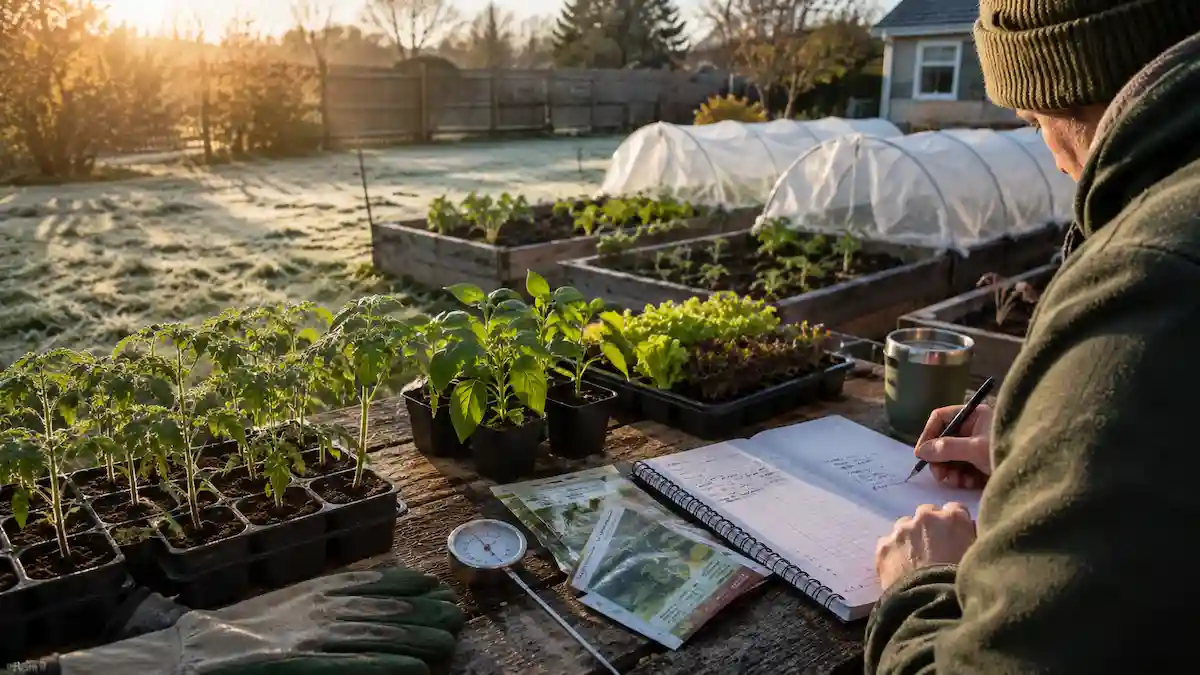
Keep a simple notebook or phone note each season recording your actual first and last frost dates. After two or three years, you’ll understand your garden’s microclimate better than any regional database — and those notes become more useful every year you add to them.
Start with our Frost Date Planting Planner by ZIP Code to get your last spring frost and first fall frost dates instantly. Use those to map out your seed-starting schedule, your transplant window, and your fall planting deadlines. Then get outside, watch what your garden actually does, and adjust from there. Reliable data plus real-world attention — that combination is what separates a productive garden from one that’s always one late frost away from disaster.
[ad_2]
Source link

