
[ad_1]
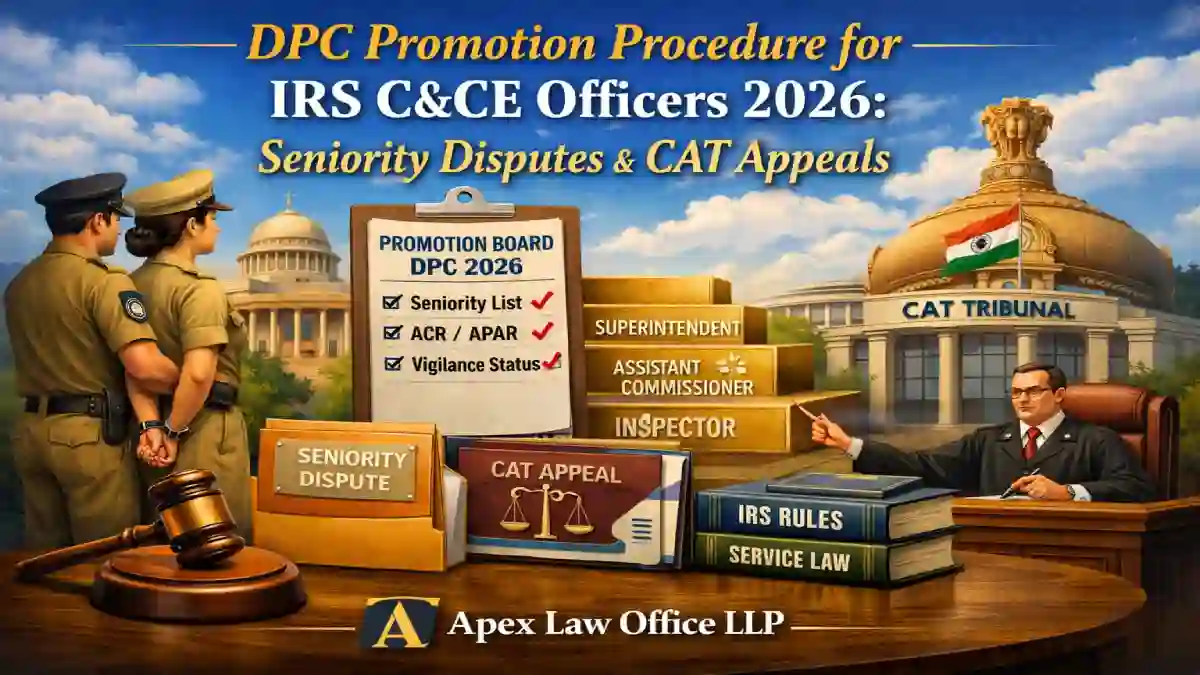
DPC Promotion Procedure – Apex Law Office LLP provides specialized service law representation for IRS Customs and Central Excise officers facing promotion disputes nationwide. Departmental Promotion Committee proceedings frequently generate seniority conflicts, sealed cover disputes, vigilance complications, and adverse ACR controversies affecting career progression. Therefore, officers require immediate legal evaluation regarding DPC eligibility, service records, reservation compliance, and tribunal remedies before departmental authorities. Central Administrative Tribunal benches regularly examine promotion irregularities involving CBIC, Department of Revenue, DoPT guidelines, and constitutional service protections comprehensively. Moreover, High Courts review CAT orders concerning retrospective seniority, review DPC claims, and disciplinary proceedings affecting promotional entitlements strategically. Service disputes often involve vigilance departments, CVC communications, and nearby police investigations concerning corruption allegations or administrative misconduct matters. Apex Law Office LLP develops litigation strategies protecting promotional rights and service benefits for government officers effectively.


Key legal support includes:
- CAT representation
- Seniority litigation
- Review DPC petitions
- Vigilance defence
- ACR dispute management
- Writ petition drafting
- Departmental inquiry defence
- Promotion-related advisory
Understanding DPC Promotion Procedure for IRS C&CE Officers
Departmental Promotion Committees evaluate eligible IRS Customs and Central Excise officers according to seniority, vigilance status, and service records periodically. Therefore, officers must understand applicable recruitment rules, DoPT instructions, reservation policies, and benchmark grading requirements before promotion exercises commence. CBIC authorities regularly issue eligibility lists, zone-wise vacancy notifications, and vigilance clearance requests during annual DPC proceedings nationwide. Consequently, service disputes frequently emerge regarding incomplete records, retrospective seniority claims, and benchmark-related assessment irregularities affecting promotional opportunities substantially. CAT benches examine procedural fairness, administrative consistency, and constitutional equality principles during promotion-related litigation involving revenue officers carefully. Moreover, departmental authorities maintain confidential service dossiers containing ACRs, disciplinary records, and integrity-related communications influencing DPC recommendations strategically. Apex Law Office LLP assists officers during representation submissions, record verification, and litigation planning comprehensively. Important DPC considerations include:
- Eligibility service length
- Vigilance clearance status
- ACR benchmark grading
- Reservation roster compliance
- Seniority positioning
- Vacancy calculations
Seniority Disputes Affecting Promotion Rights
Seniority disputes significantly affect promotional prospects because DPC panels rely heavily upon inter-se rankings and service continuity determinations consistently nationwide. Officers frequently challenge retrospective promotions, batch allocation discrepancies, and cadre restructuring decisions before CAT benches and constitutional courts strategically. Therefore, affected officers should immediately review gradation lists, recruitment notifications, and departmental circulars identifying administrative inconsistencies carefully. Seniority-related litigation often involves direct recruits, promotee officers, reservation roster calculations, and deputation-related service counting controversies substantially. Consequently, CAT benches evaluate recruitment rules, judicial precedents, and constitutional equality principles while deciding promotional entitlement disputes comprehensively. High Courts also review administrative decisions violating natural justice principles or established service jurisprudence concerning seniority determination matters strategically. Apex Law Office LLP prepares evidence-based service litigation challenging arbitrary gradation lists and discriminatory promotional practices effectively. Common seniority disputes include:
- Retrospective promotions
- Batch allocation conflicts
- Reservation roster objections
- Deputation service counting
- Cadre merger disputes
- Review DPC disagreements
Vigilance Clearance and Sealed Cover Procedure
Vigilance clearance remains essential because pending disciplinary proceedings frequently delay promotions through sealed cover procedures affecting IRS officers substantially nationwide. Therefore, officers facing vigilance scrutiny should immediately examine charge memorandums, inquiry records, and departmental communications affecting promotional eligibility strategically. CBIC authorities regularly withhold promotions when disciplinary proceedings, criminal investigations, or corruption allegations remain pending before competent authorities legally. Consequently, CAT benches carefully examine whether departments initiated proceedings lawfully before adopting sealed cover procedures during DPC evaluations comprehensively. Service tribunals also assess delay patterns, mala fide investigations, and procedural irregularities affecting constitutional service protections for government officers consistently. Moreover, criminal proceedings under BNS, BNSS investigations, or nearby police station complaints occasionally influence vigilance-related promotional decisions significantly. Apex Law Office LLP challenges arbitrary vigilance actions and sealed cover decisions through service litigation strategies effectively. Important sealed cover issues include:
| Issue | Legal Forum |
|---|---|
| Delayed promotion | CAT |
| Vigilance irregularity | High Court |
| Disciplinary challenge | Departmental Authority |
| Seniority correction | CAT Bench |
Adverse ACRs and Benchmark Grading Challenges
Annual Confidential Reports strongly influence promotion outcomes because DPC committees evaluate benchmark gradings before recommending officers for advancement opportunities. Therefore, IRS officers should regularly review communicated ACR entries and submit representations against adverse remarks within prescribed timelines strategically. Adverse gradings frequently arise from reporting officer bias, administrative conflicts, or procedural noncompliance affecting service progression and retirement benefits substantially. Consequently, CAT benches examine communication delays, representation disposal procedures, and comparative service records during promotional litigation carefully. Courts regularly hold uncommunicated adverse entries invalid when departments rely upon them during DPC assessments and promotion denials nationwide. Moreover, officers may seek review DPC proceedings after successful ACR expunction or benchmark correction orders before competent authorities strategically. Apex Law Office LLP assists officers with representation drafting, evidence compilation, and tribunal litigation concerning adverse ACR disputes comprehensively. Common ACR-related disputes include:
- Benchmark downgrading
- Uncommunicated remarks
- Bias allegations
- Representation delays
- Review DPC claims
- Comparative grading disputes
Reservation Policy and Roster Litigation
Reservation-related promotion disputes frequently arise from roster implementation errors, carry-forward vacancies, and seniority-related reservation calculations affecting IRS officers nationwide. Therefore, service law practitioners carefully examine constitutional provisions, DoPT instructions, and judicial precedents governing reservation in promotional exercises strategically. Officers regularly challenge improper roster maintenance, excessive reservation application, and retrospective adjustments affecting promotional opportunities before CAT benches comprehensively. Consequently, tribunals evaluate equality principles, representation requirements, and administrative consistency while reviewing departmental promotion policies carefully. High Courts often examine constitutional validity issues concerning reservation implementation within revenue services and central government departments strategically. Moreover, service disputes occasionally involve review DPC proceedings correcting earlier roster mistakes affecting batch-wise promotional positions substantially. Apex Law Office LLP develops constitutional litigation strategies protecting lawful seniority and promotional rights for government officers effectively. Important reservation disputes include:
- Roster calculation errors
- Carry-forward vacancy disputes
- Consequential seniority objections
- Reservation excess claims
- Review DPC litigation
- Batch reassignment conflicts
CAT Jurisdiction and Service Tribunal Remedies
Central Administrative Tribunal benches exercise specialized jurisdiction over service disputes involving promotions, transfers, disciplinary actions, and pension-related controversies nationwide consistently. Therefore, IRS officers should approach appropriate CAT benches after exhausting departmental representations and statutory remedies strategically within limitation periods. Service tribunals regularly examine DPC irregularities, seniority disputes, vigilance issues, and constitutional violations affecting promotional opportunities comprehensively. Consequently, officers may seek interim relief, status quo protection, and review DPC directions during pending service litigation before tribunals effectively. CAT proceedings require detailed pleadings, service records, judicial precedents, and procedural compliance supporting promotional entitlement claims strategically. Moreover, High Courts review CAT decisions through writ jurisdiction concerning jurisdictional errors or constitutional interpretation disputes significantly. Apex Law Office LLP represents officers before CAT principal benches, circuit benches, and appellate constitutional forums nationwide. Important CAT remedies include:
- Interim stay orders
- Promotion reconsideration
- Seniority corrections
- Review DPC directions
- Sealed cover opening
- Costs and compensation
Departmental Representation and Review DPC Process
Departmental representations often provide effective preliminary remedies before officers initiate CAT litigation regarding promotion and seniority-related grievances strategically nationwide. Therefore, officers should submit detailed representations containing recruitment rules, comparative seniority data, and judicial precedents supporting promotional claims carefully. Departments regularly constitute review DPCs after discovering procedural irregularities, revised ACR gradings, or corrected seniority positions affecting earlier recommendations substantially. Consequently, affected officers may obtain retrospective promotions, consequential benefits, and revised pension calculations through administrative corrective measures effectively. Service disputes frequently involve delayed representation disposal, inconsistent departmental replies, and selective implementation of judicial precedents affecting fairness principles. Moreover, review DPC outcomes occasionally generate fresh litigation concerning inter-se seniority and consequential service benefits strategically. Apex Law Office LLP prepares persuasive departmental representations and monitors compliance with review DPC recommendations comprehensively. Important representation issues include:
- Delayed disposal
- Incomplete records
- Selective reconsideration
- Consequential seniority claims
- Retrospective promotion demands
- Pension revision requests
Departmental Inquiries and Promotion Restrictions
Pending departmental inquiries frequently affect promotion eligibility because authorities invoke sealed cover procedures during disciplinary investigations against officers nationwide consistently. Therefore, officers facing inquiries should challenge defective charge memorandums, biased investigations, and procedural irregularities before disciplinary authorities strategically. Service jurisprudence requires departments to follow natural justice principles during inquiry proceedings affecting career progression and constitutional protections substantially. Consequently, CAT benches regularly examine whether departments initiated inquiries merely to delay legitimate promotions or service benefits unfairly. Criminal investigations under BNS provisions occasionally overlap with disciplinary proceedings involving corruption allegations, misconduct claims, or administrative irregularities strategically. Moreover, BNSS procedures governing investigations and evidence collection sometimes influence departmental findings affecting promotional rights significantly. Apex Law Office LLP coordinates disciplinary defence strategies protecting officers against arbitrary inquiry proceedings and unlawful promotional restrictions effectively. Important disciplinary defences include:
- Charge memo challenges
- Inquiry bias objections
- Procedural irregularity claims
- Natural justice violations
- Sealed cover challenges
- Review DPC requests
High Court Writ Petitions Against CAT Orders
High Courts exercise constitutional writ jurisdiction reviewing CAT orders involving jurisdictional errors, procedural irregularities, and constitutional interpretation disputes strategically nationwide. Therefore, aggrieved IRS officers may challenge adverse CAT decisions before jurisdictional High Courts through carefully drafted writ petitions effectively. Courts regularly examine whether tribunals ignored binding precedents, misunderstood recruitment rules, or violated natural justice principles during adjudication comprehensively. Consequently, officers may secure interim protection, remand directions, or final relief concerning promotion disputes and seniority controversies substantially. High Court proceedings often involve constitutional equality claims, reservation disputes, and retrospective promotion-related service benefits strategically. Moreover, CPC principles concerning pleadings, documentary evidence, and interim relief occasionally influence constitutional service litigation proceedings carefully. Apex Law Office LLP represents officers before constitutional courts handling complex service jurisprudence and promotional litigation nationwide. Important writ remedies include:
- CAT order quashing
- Interim protection
- Promotion reconsideration
- Remand directions
- Seniority restoration
- Constitutional declarations
Criminal Allegations and Promotional Consequences
Criminal allegations significantly affect promotional prospects because departments frequently withhold vigilance clearance during pending investigations against officers nationwide consistently. Therefore, IRS officers facing criminal complaints should immediately seek legal defence regarding BNS allegations, BNSS investigations, and departmental consequences strategically. Nearby police stations, CBI authorities, and vigilance departments occasionally investigate corruption complaints involving customs clearances, taxation matters, or administrative misconduct allegations. Consequently, CAT benches evaluate whether pending criminal proceedings justify sealed cover procedures and promotion restrictions during DPC assessments comprehensively. Courts regularly distinguish unsubstantiated allegations from serious criminal misconduct while protecting constitutional service rights and promotional entitlements effectively. Moreover, BSA standards governing electronic evidence and witness testimony influence disciplinary findings and criminal trial outcomes substantially. Apex Law Office LLP coordinates criminal defence and service litigation strategies protecting officers from unjust promotional denial effectively. Important criminal defence measures include:
- Anticipatory bail applications
- FIR quashing petitions
- Vigilance challenge proceedings
- Departmental defence coordination
- Evidence review
- Service protection litigation
Consequential Benefits and Retrospective Promotions
Successful CAT litigation frequently results in retrospective promotions, revised seniority positions, and consequential financial benefits for aggrieved officers nationwide strategically. Therefore, officers should calculate arrears, pension revisions, and promotional increments arising from corrected DPC recommendations carefully after favorable judgments. Departments occasionally delay implementation despite tribunal directions requiring contempt proceedings before CAT benches and constitutional courts effectively. Consequently, service tribunals examine compliance timelines, arrear calculations, and consequential seniority implementation during execution-related litigation comprehensively. Officers regularly pursue notional promotions, pay fixation corrections, and revised retirement benefits following successful service jurisprudence claims strategically. Moreover, retrospective promotion disputes sometimes affect batch-wise seniority positions and inter-se ranking among revenue officers significantly. Apex Law Office LLP assists officers with implementation proceedings, contempt petitions, and consequential service benefit calculations comprehensively. Important consequential remedies include:
- Notional promotions
- Pay fixation revision
- Pension recalculation
- Arrear recovery
- Contempt petitions
- Seniority restoration
Documentary Evidence and BSA Compliance in CAT Cases
Documentary evidence remains decisive because service litigation heavily depends upon records, notifications, circulars, and confidential departmental communications strategically nationwide. Therefore, officers should preserve DPC minutes, gradation lists, representation copies, and vigilance communications supporting promotional entitlement claims comprehensively. CAT benches regularly examine electronic records, official correspondence, and departmental files according to BSA evidentiary standards during adjudication carefully. Consequently, officers may challenge manipulated records, incomplete disclosures, and selective document production affecting tribunal fairness substantially. Departments frequently rely upon ACR gradings, vigilance notes, and service books while defending disputed promotional decisions before tribunals strategically. Moreover, RTI applications often assist officers obtaining crucial records supporting service litigation and review DPC demands effectively. Apex Law Office LLP develops evidence-based litigation strategies strengthening service claims through reliable documentary proof comprehensively. Important documentary materials include:
- DPC proceedings
- Gradation lists
- Vigilance clearances
- ACR records
- RTI disclosures
- Recruitment notifications
Limitation Periods and Procedural Compliance Before CAT
Limitation compliance remains essential because delayed CAT applications frequently face dismissal despite strong promotional and seniority-related service claims strategically nationwide. Therefore, officers should immediately calculate limitation periods after receiving adverse orders, DPC results, or rejected departmental representations carefully. Service tribunals regularly examine condonation requests, administrative delays, and continuing cause-of-action arguments before admitting delayed applications comprehensively. Consequently, officers require timely legal consultations preventing procedural objections and preserving substantive promotional rights effectively. CAT proceedings also require jurisdictional accuracy, proper party impleadment, and complete documentary annexures supporting service claims strategically. Moreover, procedural noncompliance occasionally weakens otherwise meritorious cases involving retrospective promotions and consequential service benefits substantially. Apex Law Office LLP ensures timely filings and procedural compliance throughout complex service litigation involving IRS officers nationwide. Important procedural requirements include:
- Limitation calculations
- Proper impleadment
- Verified pleadings
- Supporting affidavits
- Annexure compilation
- Interim relief requests
Strategic Service Law Representation from Apex Law Office LLP
Apex Law Office LLP provides comprehensive service law representation for IRS Customs and Central Excise officers facing DPC disputes and CAT litigation nationwide. Promotion controversies increasingly involve vigilance complications, reservation disputes, retrospective seniority claims, and constitutional service protections requiring specialized legal expertise consistently. Therefore, officers should obtain immediate legal evaluation regarding departmental remedies, tribunal jurisdiction, and documentary evidence preservation strategically during promotional disputes. Service litigation frequently proceeds before CAT benches, High Courts, departmental authorities, vigilance agencies, and constitutional forums across multiple jurisdictions nationwide. Consequently, experienced representation becomes essential during review DPC proceedings, disciplinary inquiries, and retrospective promotion-related litigation comprehensively. Apex Law Office LLP develops customized litigation strategies protecting service benefits, promotional rights, and constitutional safeguards for government officers effectively. Core legal services include:
- CAT litigation
- Seniority dispute management
- Vigilance defence representation
- Writ petition drafting
- Review DPC advisory
- Departmental inquiry defence
Frequently Asked Questions
Q1. Which forum handles IRS promotion disputes?
A1. Central Administrative Tribunal benches primarily examine DPC disputes, seniority conflicts, and promotional grievances involving IRS officers.
Q2. Can sealed cover promotions face legal challenge?
A2. Yes. Officers may challenge unlawful sealed cover procedures before CAT and High Courts through service litigation remedies.
Q3. What documents support seniority-related CAT cases?
A3. Gradation lists, DPC minutes, ACR records, vigilance clearances, and recruitment notifications strengthen promotional litigation claims.
Q4. Can adverse ACRs affect IRS promotions?
A4. Yes. Benchmark downgrading and adverse remarks frequently impact DPC recommendations and promotional eligibility assessments.
Q5. What remedies exist after successful CAT litigation?
A5. Officers may receive retrospective promotions, seniority corrections, arrears, pension revisions, and consequential service benefits.
Q6. How can Apex Law Office LLP assist IRS officers?
A6. Apex Law Office LLP manages CAT litigation, seniority disputes, vigilance defence, review DPC proceedings, and writ petitions.
Read More
[ad_2]
Source link

