
[ad_1]
The war in the Middle East if prolonged can carry a steep price for India not just because it has a growing energy-dependent economy but bulk of its energy resources is imported. More specifically, its economy leans heavily on energy that moves through the Strait of Hormuz. The fragile ceasefire with the blockades imposed by Iran and the US in the Strait of Hormuz still in place cannot assure India of stable and continuous supply of energy resources. Further, millions of Indians who live and work in the Gulf contribute around 38 percent of total income of India through their remittances which in turn serve as lifelines for their families back home. The protracted war will not only have direct implications for India’s households as they depend on imported fuel, more Indians in the Gulf would be susceptible to collateral damage, relocation and loss of occupation impinging on remittance flows which in turn can have significant impacts on their families in India and on the economy as a whole.

For some time, Washington had paused sanctions on Iranian oil and India also received green signal from Iran for safe passage for its commercial ships through the Strait. Meanwhile, the US has imposed its own blockade and uncertainty hovers over the Iranian and US approach to India’s commercial shipping through the Strait as the peace talks are not making any headway.
India has long kept its Middle East ties in separate lanes. Iran was a historic counterweight to Pakistan and the Taliban, and the gateway to Central Asia through Chabahar port. Israel became a vital technology partner. The Gulf states supply India’s energy, buy its exports, and invest in its growth. While India could tend each relationship on its own, the prolonged war is blurring those lines as economic pressures continue to pile up on India despite Central Government’s indications of economic stability and diversification of supply chains. It became quite perceptible when cooking gas shortages began to force the Indian government to divert commercial supplies to homes as a stopgap measure indicating the strains the wider economy might suffer from as the war drags on.
Diplomatic Challenges
Ripples of diplomatic pressures were palpable when the USS Charlotte sank the Iranian frigate IRIS Dena as it returned from an international fleet review hosted by India on March 4. The case demonstrated how India cannot insulate itself from the war even if it wants. Unless attempts at fostering regional peace bear results, such pressures would mount apart from surge in prices or shortages in supply of natural resources to India. India may have to break silence and shun the strategy of middle path if the war persists with diversified ramifications. As the war prolongs diplomatic tools for India will be more fraught.
As US and Iran continue to maintain maximalist positions and remain unable to reconcile their objectives and interests in the Middle East, India will find it much harder to buy Iranian crude without drawing American punishment and the fragile ceasefire cannot not guarantee open shipping lanes as Tehran and Washington continue to jostle to bring the Strait under their firm control. India may have to find ways through which it can throw its weight behind long-term negotiations for peace and stability. It must have to navigate the region as a single, entangled theater — where energy, diaspora, diplomacy, and rivalry collide. India’s Middle East policy can no longer rest on compartmentalization treating Israel-US alliance, Iran and other Gulf states separately. The US will remain India’s core partner across every domain and its Middle East ally Israel in the areas of defence and technology but India cannot sever ties with Tehran either which has been critical supplier of energy resources and partner in building Chabahar port providing alternative routes to Afghanistan and Central Asia, bypassing Pakistan. In this backdrop, India can pool the collective energies of developing and underdeveloped countries of Asia and Africa to promote long-term peace initiatives in the Middle East. New Delhi has given up its role that it was seen playing during the Cold War days in shaping the world public opinion and discourse formation on the negative aspects of wars, proliferation of arms and ammunitions on the global population and environment and practice of apartheid and colonization by dominant powers using the platforms like Non-Alignment Movement (NAM). Pakistan has been able to draw international attention as it started hosting negotiations between the US and Iran which is key to de-escalation of tensions in the Middle East. This must be concerning India as Pakistan looks for strategic opportunities to cultivate strong ties with various stakeholders in the Middle East in order to expand its influence vis-à-vis India. New Delhi needs to review its role in this light.
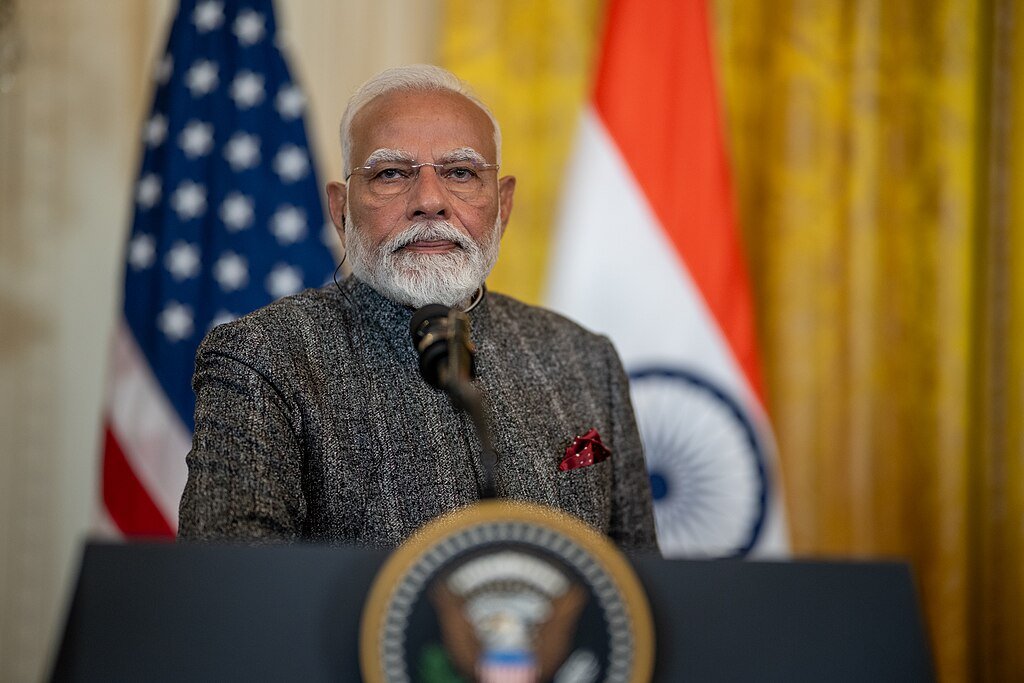
[Photo by the White House, Public domain, via Wikimedia Commons]
The views and opinions expressed in this article are those of the author.
[ad_2]
Source link


