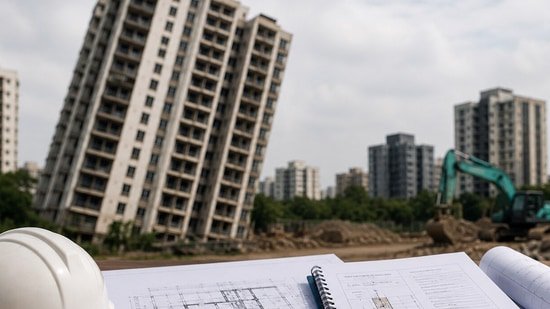

The voluntary demolition of an 18-storey residential tower in Bengaluru after it developed a noticeable tilt has sparked a discussion on what homebuyers should look for before investing in a property, often the biggest and longest-term investment of their lives. Most buyers evaluate projects based on the brochure, location, amenities, developer reputation and price. However, experts say buyers should go a step further and seek key technical information, such as soil investigation reports and structural design details, before making a purchase.
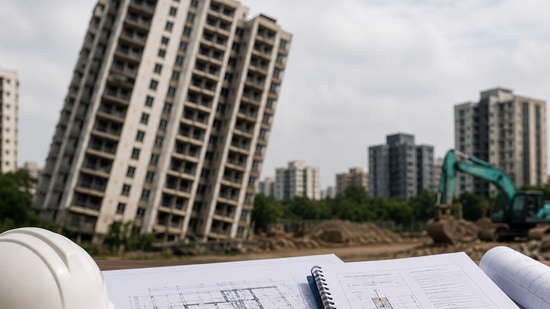

The case also raises important questions: Can homebuyers identify warning signs of structural issues before purchasing? What role do soil testing, foundation design, construction quality and independent structural reviews play in ensuring a building’s safety?
Developer cites error in soil investigation report
The developer, SNN Raj Corp, has attributed the issue to an error in the geotechnical investigation report prepared by an external soil testing agency.
Anuj Sanjay Jain, Director of Operations, SNN Raj Corp, told HT Real Estate that the company engaged a reputed external agency to conduct the soil investigation, which forms the basis for designing a building’s foundation.
“All developers completely rely on external agencies for the soil testing report, which forms the basis for designing the building’s foundation. In this case, we had enrolled a very reputable firm to carry out the soil investigation. However, there was an error in the report, and they had interchanged the borehole readings, and structural designers designed the building, keeping in mind their original report, and where the report said that there was hard rock that happened to be loose plastic soil, which caused the building to settle differently. We hired another external soil testing agency, which discovered this error,” he said.
“The structure has absolutely no signs of distress and is completely intact, and hence, the issue was very difficult to tell in the first place. But we volunteered to reconstruct, should there be any problem a few years later, and hence approached the RERA and GBA to seek the necessary permissions to demolish and reconstruct,” he said.
The demolition will be carried out by engineering firm Edifice using diamond wire-cutting technology, a controlled dismantling method intended to minimise the impact on neighbouring buildings, Jain said, adding the demolition is expected to take five to six months, while reconstruction will take around 18 months.
“We have created a comprehensive customer support package. The project will be entirely funded by us and there will be zero financial burden on homebuyers. We have communicated this to all customers, who have been supportive throughout the process,” he said.
The project comprises 972 apartments, of which 822 have already been handed over.
Homebuyers should ask for technical documents, not just brochures, say experts
Structural engineer Abhay Gupta, Director, Skeleton Consultants Pvt Ltd and ESCOM Consultants Pvt Ltd, told HT Real Estate that most buyers evaluate projects based on location, developer reputation, amenities, floor plans and pricing, while paying little attention to the engineering aspects that determine a building’s long-term safety.
He said that buyers should also have access to key engineering documents before taking possession, including structural drawings, geotechnical reports, electrical and services drawings, and records of construction quality inspections.
“Since a home is expected to last several decades, such information should not remain confidential,” he said.
According to Gupta, buyers should seek information on:
The structural design consultant and their experience in designing high-rise buildings.
Whether the structural engineer is licensed and professionally qualified.
The geotechnical investigation report, which establishes soil conditions before construction begins.
Quality assurance procedures followed during construction.
Independent quality inspections and structural audits, wherever available.
Launch ads spotlight architects, but not structural engineers or soil experts
Experts say the incident also call for greater transparency in building approval and disclosure framework.
While launch advertisements prominently feature architects, they rarely disclose the names of structural engineers or geotechnical consultants. In several countries, completed buildings display plaques identifying the architect, structural engineer and the engineering codes followed during design and construction. Similar disclosure norms in India, experts say, would improve accountability.
Some states have already moved in this direction. In Haryana, the approval process for high-rise buildings requires the geotechnical consultant’s certification as part of the Occupancy Certificate process, while Mumbai has comparable requirements. However, such safeguards are not uniformly adopted across the country, including in Bengaluru, said Gupta.
He also said the Real Estate Regulatory Authority (RERA) should mandate greater disclosure of engineering-related information. At present, developers submit quarterly updates on construction progress and expenditure, but there is no requirement to disclose construction quality records, structural audits or major engineering revisions, such as changes to structural design or building height.
Making such records publicly available, he said, would enable homebuyers to make better-informed decisions before investing in under-construction projects.
Soil investigation reports are investments in safety, say experts
Ranjini Ramanath, Director and Co-founder, Kshipra Imagineers Pvt Ltd, wrote on LinkedIn: “Let’s stop treating soil investigation and structural design as additional costs. They are investments in safety.”
The incident has also reignited concerns about construction on reclaimed lakebeds and marshy land, while drawing attention to the importance of geotechnical investigations.
Mahesh BR, who tracks Karnataka government’s infrastructure projects, urged homebuyers in a post on X to exercise caution while purchasing apartments built on or near lakes and wetlands.
He identified Bellandur, Varthur, Gunjur and Sarjapur as particularly vulnerable because large parts of these localities comprise reclaimed lakebeds and wetlands. He also urged the Karnataka government to mandate fresh geotechnical evaluations for apartment buildings constructed near lakes, arguing that stronger oversight is essential to prevent similar incidents in the future.

