About the author
PM Modi Joins ‘Bhajan Clubbing’ in Delhi as Devotion Finds a New Rhythm Among India’s Youth
New Delhi: Prime Minister Narendra Modi joined a “Bhajan Clubbing” event in Delhi on Friday, September 25, bringing national attention to a growing cultural trend that is presenting traditional devotion in a contemporary, youth-friendly format. The event, held at Deen Dayal Upadhyaya Park near the BJP headquarters, marked the 110th birth anniversary of Pandit Deendayal Upadhyaya.
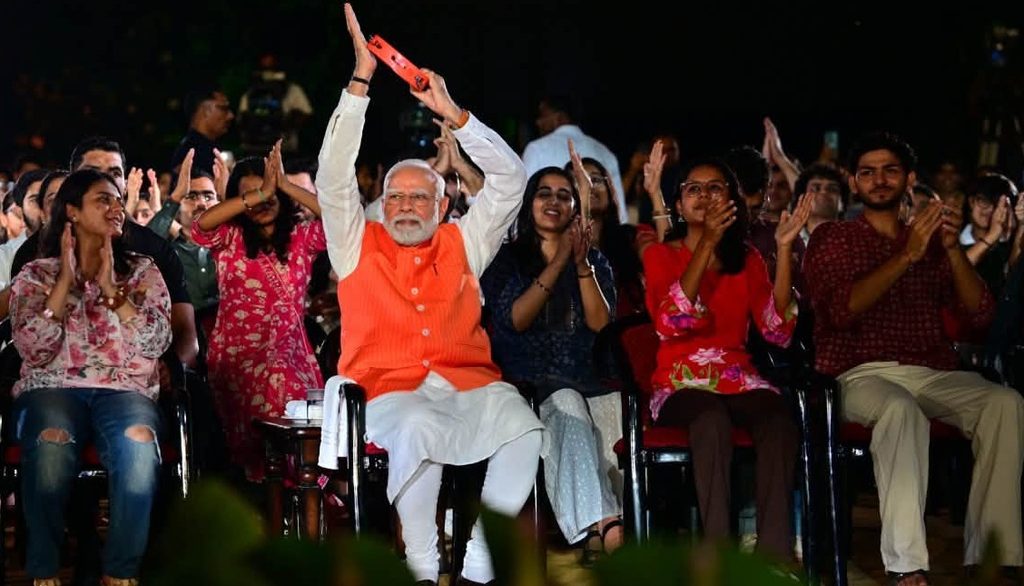
Videos from the gathering showed Modi seated among participants, clapping along with devotional music and playing a tambourine-like percussion instrument during a bhajan dedicated to Lord Ram. He also greeted the audience as he arrived at the venue.
Beyond the Prime Minister’s participation, however, the event highlighted a larger cultural phenomenon that has been gaining visibility across India: Bhajan Clubbing, a format that combines traditional bhajans, kirtans and devotional chanting with the atmosphere and production style usually associated with contemporary concerts.
There may be modern lighting, energetic music, young crowds and sophisticated sound systems, but instead of conventional club music, the gathering revolves around devotion. Participants sing, clap and sometimes dance together to bhajans and spiritual compositions. The idea is to give younger generations a space where spirituality can be experienced collectively without requiring them to disconnect completely from contemporary forms of music and social interaction.
The trend has particularly attracted attention because of the participation of young Indians. Rather than seeing spirituality only through traditional religious gatherings, temples or formal ceremonies, some young people are finding new ways to engage with devotional music and spiritual traditions.
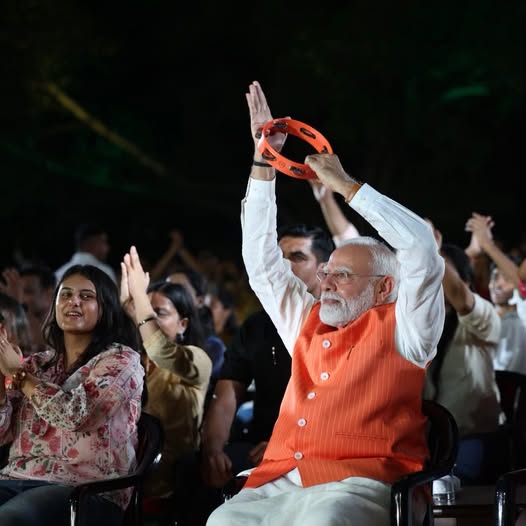
Interestingly, Modi had earlier spoken about the phenomenon during his Mann Ki Baat programme. A Ministry of Information and Broadcasting publication on the trend described Bhajan Clubbing as a meeting point between modern presentation and traditional spiritual heritage, noting the participation of Generation Z and the use of contemporary musical arrangements while retaining the devotional essence of bhajans.
From a spiritual perspective, the popularity of such gatherings raises an interesting question: Does spirituality have to look the same in every generation?
India’s devotional traditions have never been completely static. Bhakti has historically found expression through music, poetry, storytelling, chanting and collective singing. Saints such as Kabir, Mirabai, Tulsidas and Surdas communicated spiritual ideas through forms that ordinary people could understand and experience emotionally. The instruments, presentation and social environment may change with time, but the fundamental search for connection with something beyond the material world remains.
Bhajan Clubbing can therefore be understood as another contemporary expression of an old spiritual instinct. A young person who might hesitate to attend a conventional spiritual discourse may be comfortable entering a music-driven devotional gathering with friends. If that experience encourages someone to explore the meaning behind a bhajan, understand the teachings associated with it or simply spend some time away from purely material entertainment, it can become an entry point into a deeper spiritual journey.
At the same time, the real value of such trends should ultimately be measured not by their lights, crowds, social-media videos or celebrity participation, but by whether they preserve the essence of bhakti. Spirituality is more than an atmosphere. Bhajans are not merely songs; at their deepest level, they represent remembrance, surrender, love and a search for inner connection.
That distinction becomes particularly important as spirituality increasingly enters popular culture. Modern presentation can make ancient traditions accessible, but the presentation should not become more important than the message itself. When entertainment becomes a doorway to devotion, it can create meaningful engagement. When devotion becomes merely another form of entertainment, however, its deeper purpose risks being lost.
Friday’s gathering also coincided with the birth anniversary of Pandit Deendayal Upadhyaya. Earlier in the day, Modi paid tribute to Upadhyaya and referred to his philosophy of Antyodaya, centred on the upliftment of the person at the last end of society, as an enduring inspiration for public welfare.
For the wider spiritual community, the growing popularity of Bhajan Clubbing represents an opportunity to engage a generation whose cultural habits are being shaped by smartphones, short-form videos, streaming platforms and rapidly changing forms of entertainment.
The challenge is not necessarily to ask young people to abandon modernity in order to discover spirituality. It may instead be to find meaningful ways of carrying timeless spiritual values into contemporary life without diluting their essence.
Prime Minister Modi’s participation has now given the trend considerably greater national visibility. But the more significant story may be what is happening among the young people attending these gatherings: devotional music, once assumed by some to belong primarily to temples, satsangs and older generations, is finding another stage.
The lights may be modern, the sound may be louder and the audience may be younger, but when hundreds of people come together to sing the name of Ram, Krishna or the Divine, an ancient Indian tradition is being expressed in a distinctly contemporary language.
And perhaps that is the most interesting message emerging from Bhajan Clubbing: the form of devotion can change with generations, while its spiritual essence can remain timeless.
Go Spiritual News Magazine & App
www.gospiritualindia.in
Go Spiritual Organization
www.gospiritualindia.org
The post PM Modi Joins ‘Bhajan Clubbing’ in Delhi as Devotion Finds a New Rhythm Among India’s Youth first appeared on Go Spiritual .
News, bhajan, bhajan clubbing, narendra modi, Prime Minister Narendra Modi, spiritual apps, spiritual entertainment, spiritual events, spiritual events management, spiritual events management agencies, spiritual media, spiritual media agencies, spiritual music, spiritual music in india, spiritual news magazines in india, spiritual pr agencies in india, spiritual pr agencies in mumbai, spiritual pr agencies in new delhi, spiritual pr agency, spiritual tv Go Spiritual
Soon We May Start Falling in Love With AI and Hating Real Humans
As artificial intelligence becomes more patient, available, understanding and personalized, we may face an unexpected human crisis: real people could begin to feel too complicated, demanding and imperfect. The biggest danger of AI may not be that machines become human, but that humans gradually lose the patience, empathy and emotional maturity required to love one another.
By Sonu Tyagi, Founder, Go Spiritual & Approach Entertainment
For generations, technology was created primarily to make human life easier. Machines reduced physical labour, calculators solved mathematical problems, computers processed information, mobile phones connected people across distances and the internet opened an extraordinary world of knowledge. Artificial intelligence is taking this relationship between humans and technology into an entirely new territory. AI is no longer simply helping us perform tasks. Increasingly, it is entering spaces that were once considered deeply and exclusively human—conversation, companionship, creativity, emotional support, advice and even intimacy.

This brings us to a question that may sound exaggerated today but could become one of the defining psychological and spiritual questions of our future: What happens when artificial intelligence becomes easier to love than a real human being?
Think about it carefully. A real human being can misunderstand you. AI can analyse what you are saying and respond almost instantly. A friend may be busy when you desperately want to talk. AI can often be available at any hour. Your partner may disagree with you. An AI system can be designed to communicate patiently. A family member may become irritated, distracted or emotionally unavailable. AI does not become tired in the same human way. It can remember preferences, adapt to communication styles and increasingly personalize interactions around the individual user.
There is enormous value in these capabilities. Artificial intelligence can transform education, healthcare, communication, business, entertainment, creativity and countless other areas of life. I am not against AI, and this is not an argument for rejecting technological progress. Humanity should explore and use artificial intelligence intelligently and responsibly. But alongside the excitement about what AI can do, we also need to ask what AI could gradually do to us.
The real danger may begin when we become accustomed to relationships without the difficult parts of relationships.
Real human beings are complicated. They interrupt us. They disagree with us. They forget things. They have moods. They become angry. They misunderstand our intentions. They sometimes fail to appreciate us. They may not answer our messages immediately. They have their own careers, families, problems, fears, ambitions, insecurities and emotional needs. Sometimes they need us precisely when we want them to take care of us. They cannot always provide the perfect response because they are living their own complicated lives.
And perhaps that is exactly why human relationships matter.
Love was never supposed to mean finding another person who behaves according to our instructions. Friendship was never supposed to mean having someone who agrees with everything we say. Family was never supposed to mean receiving unconditional convenience. Genuine human relationships require patience, forgiveness, sacrifice, compromise, listening, adjustment, empathy and sometimes the willingness to remain present even when the other person is difficult.
Artificial intelligence could quietly change these expectations.
Imagine someone growing up with an AI companion that remembers what they like, communicates in the way they prefer, is available whenever they want to talk, rarely appears bored, does not have an independent social life and can continuously adapt to their personality. Now imagine that same person entering a relationship with another human being who has completely independent desires, moods, boundaries and expectations.
The human being may suddenly appear unnecessarily difficult.
This is where the problem begins.
The greatest danger of AI companionship may not be that people will literally believe machines are human. The greater danger is that our experience with machines could begin changing the standards by which we judge humans. Once we become accustomed to instant responses, personalized attention and technology designed around our preferences, ordinary human behaviour may start feeling like a defect.
A friend who does not respond for several hours may appear uncaring. A spouse who wants emotional space may seem distant. A parent who repeats the same story may feel irritating. A colleague who challenges our opinion may appear hostile. A partner who refuses to agree with us may suddenly seem incompatible. Instead of developing the emotional maturity required to understand these differences, we may increasingly prefer artificial environments that adjust themselves to us.
Human beings have always had to learn how to live with people they did not design. We did not choose the personalities of our parents, siblings, teachers, neighbours or children. Even when we choose our friends and life partners, we do not choose every part of their personality. Relationships therefore teach us something profoundly important: another person does not exist simply to satisfy us.
Artificial intelligence potentially reverses this relationship. Instead of requiring us to adjust ourselves to another person, technology can increasingly adjust itself to us. It can learn what we like, understand how we communicate, remember our preferences and personalize itself around our needs.
That sounds wonderful from the perspective of convenience. From the perspective of spiritual growth, however, it deserves serious reflection.
Much of our inner development happens precisely because life refuses to behave according to our preferences. We develop patience because somebody tests our patience. We learn forgiveness because somebody hurts us. We develop humility because somebody challenges our ego. We discover compassion because we encounter suffering that is not our own. We learn responsibility because somebody depends upon us. We understand sacrifice because occasionally another person’s needs must come before ours.
Even disagreement has value. Someone who challenges our thinking can force us to examine ourselves. A genuine well-wisher may tell us something we do not want to hear. A good teacher may expose our ignorance. A true friend may tell us that we are making a mistake. A partner may reveal weaknesses in our personality that we cannot see ourselves.
These experiences can be uncomfortable, but discomfort is not always harmful. Sometimes discomfort is where growth begins.
If every difficult interaction can eventually be replaced by a more agreeable digital alternative, we must ask ourselves where we will practise patience, compromise, forgiveness and emotional resilience.
This is why I believe the artificial intelligence revolution is not merely a technological revolution. It may become one of the greatest psychological, emotional and spiritual experiments humanity has ever conducted on itself.
AI companionship can certainly have positive uses. Technology may help people who feel isolated to express themselves. It can assist people in organizing thoughts they struggle to communicate. It may provide conversational support, educational guidance or encouragement to seek appropriate human or professional help. We should recognize these benefits without fear or prejudice.
But we should also recognize an invisible line between assistance and replacement.
An artificial system can generate words that feel caring. It can simulate patience and attention. But a reciprocal human relationship involves something fundamentally different: two independent human beings, each with their own needs, vulnerabilities, choices and limitations, choosing to care about one another.
That mutual responsibility is part of what gives love its meaning.
When your mother waits for your phone call, your decision to call matters to another human life. When your friend is grieving and you sit beside them even though you cannot solve their pain, your presence means something. When you care for an ageing parent, forgive someone who genuinely regrets hurting you, support a partner during difficult circumstances or help a sibling through failure, you are doing something more than receiving emotional comfort.
You are giving a part of yourself.
And love is not only about what we receive. Love is also about what we are willing to give.
This distinction could become increasingly important in an AI-dominated world because we may gradually confuse being emotionally satisfied with being emotionally connected.
The two are not necessarily the same.
A personalized digital system may be able to give us responses we find satisfying. A real human relationship may occasionally frustrate us. But the frustration of dealing with another independent human consciousness is part of what teaches us that the world does not revolve around our individual desires.
There is another concern: AI may become attractive not merely because it listens to us, but because it can validate us.
Human beings naturally enjoy agreement. Our ego loves appreciation and dislikes criticism. We generally prefer people who tell us that we are right. Yet the people who contribute most to our growth are not always the people who agree with us.
Sometimes the person saying “no” is our greatest well-wisher.
If technology continuously learns how to please us, reassure us and keep us engaged, we must ensure that we do not become psychologically incapable of hearing disagreement. Otherwise, we could produce a strange generation—highly skilled at communicating with intelligent machines but emotionally unprepared to deal with independent human beings.
There is an extraordinary irony here. For decades, science fiction warned us about machines becoming more like humans. Perhaps we should now be equally concerned about humans becoming less capable of being human.
We may become more connected technologically and more disconnected emotionally. We may have hundreds of digital conversations but fewer people with whom we can sit silently. We may become brilliant at writing prompts for machines but increasingly poor at understanding another person’s unspoken pain. We may know how to customize every digital experience but forget how to compromise in a marriage. We may expect instant responses because machines provide them and become angry when people need time.
We may have artificial intelligence everywhere and genuine human understanding nowhere.
And that would be a tragedy.
This is where spirituality becomes particularly relevant. Spirituality teaches us that relationships are not merely instruments for our comfort. Other people are not products designed to fulfil our expectations. Every human being carries a world within themselves—their fears, dreams, pain, memories, struggles and hopes. To genuinely love another person is to recognize that their world matters too.
Sometimes the person irritating us is teaching us patience. Sometimes the person disagreeing with us is protecting us from arrogance. Sometimes the family member who requires our care is teaching us responsibility. Sometimes heartbreak teaches us detachment. Sometimes disappointment develops resilience. Sometimes loneliness forces us to understand ourselves.
Human relationships are messy because human beings are imperfect.
But perhaps love becomes meaningful precisely because it survives imperfection.
If something can be switched off whenever it becomes inconvenient, customized whenever it becomes uncomfortable and replaced whenever it stops satisfying us, we should ask ourselves an uncomfortable question: are we experiencing love, or are we experiencing personalized convenience?
The answer matters because technology should serve humanity. Humanity should never reorganize itself around the emotional convenience of technology.
We therefore need a new form of digital wisdom. Parents should teach children not only how to use artificial intelligence but why real friendships matter. Education should develop emotional intelligence, empathy, conversation and collaboration alongside technological skills. Families should consciously create spaces where phones, screens and algorithms do not dominate every moment. Workplaces should preserve meaningful human interaction even as automation expands.
Above all, we must continue practising the difficult art of living with imperfect people.
Call your parents even when the conversation sometimes repeats itself. Sit with your friend without checking your phone every few minutes. Listen to someone whose opinion differs from yours. Learn to apologize without protecting your ego. Learn to forgive without constantly reopening old wounds. Learn to wait. Learn to compromise. Learn to disagree without hatred. Learn to stay beside someone who is suffering even when you have no perfect words to offer.
These ordinary human acts may become increasingly extraordinary in the age of artificial intelligence.
We should embrace AI, but we should not outsource our humanity to it. Let artificial intelligence make us more productive, informed and creative. Let it help us solve problems that were previously impossible. Let it improve medicine, education, science, communication and creativity. But let us never allow technological progress to become emotional regression.
The purpose of intelligence—whether artificial or human—should ultimately be to improve human life, not to make human beings disposable to one another.
Perhaps the greatest challenge of the coming decades will therefore not be teaching machines how to understand humans. Humanity is already investing enormous energy in doing that.
The greater challenge may be making sure humans do not forget how to understand humans.
We may indeed reach a time when an AI companion appears more patient than our friends, more attentive than our partners, more available than our families and more agreeable than almost anyone around us. At that moment, we should remember something fundamental.
Real love was never valuable because another person was perfectly programmed for us. It was valuable because two imperfect human beings, with different personalities, weaknesses, fears and expectations, still learned to understand, forgive, support and care for one another.
AI can become our assistant, teacher, creative partner and perhaps even a form of companionship. But it should never become an excuse to abandon the difficult, beautiful and spiritually transformative experience of human relationships.
Otherwise, the most disturbing outcome of the artificial intelligence revolution may not be that machines eventually learn how to love human beings.

It may be that we start falling in love with AI because we have forgotten how to love real humans.
— Sonu Tyagi
Founder, Go Spiritual & Approach Entertainment
Visit at www.sonutyagi.com & www.approachentertainment.com
Sonu Tyagi is an award-winning writer, director and producer, and Founder of Go Spiritual and Approach Entertainment. With over two decades of experience in media, journalism, advertising, public relations, films and entertainment, he has built a multidisciplinary career in communications and creative industries. Through Approach Entertainment, he works across celebrity management, film productions, advertising, film marketing and events. Through Go Spiritual, Tyagi promotes spirituality, compassion, humanity, mental wellness, vegetarianism, non-violence and conscious living. He believes real spirituality is about inner transformation—developing self-awareness, resilience, peace and compassion while becoming a better and more responsible human being.
The post Soon We May Start Falling in Love With AI and Hating Real Humans first appeared on Go Spiritual .
Relationships, go spiritual, indian love, love, love india, love relationships, mental health, mental health in india, spiritual love, spiritual mind, spiritual wellness Go Spiritual
Why Well-Wishers Are More Important Than Friends in Life
Friendship gives us companionship, but a genuine well-wisher gives us something even more valuable—the courage to tell us the truth, the wisdom to guide us when we are wrong and the happiness to see us grow even when there is nothing in it for them.
By Sonu Tyagi, Founder, Go Spiritual & Approach Entertainment
We spend much of our lives looking for friends. From childhood and college to our professional and social lives, friendship is considered one of the most important human relationships. We celebrate friendships, remember old friends, make new ones and often measure the richness of our social lives by the number of people around us. But as we move through success, failure, relationships, disappointments and changing circumstances, life gradually teaches us something deeper: having many friends is not nearly as important as having a few genuine well-wishers.
A friend and a well-wisher are not necessarily the same person. A true friend will naturally be a well-wisher, but everyone we call a friend may not genuinely wish the best for us. At the same time, someone who is not particularly close to us may sincerely want us to succeed, remain healthy, make the right decisions, overcome our weaknesses and become a better human being. That distinction becomes increasingly important as we grow older.
A friend may enjoy spending time with you, but a well-wisher cares about what happens to you when the good time is over. A friend may make you comfortable, while a well-wisher may sometimes make you uncomfortable by telling you something you need to hear. A friend may agree with you because disagreement could disturb the relationship, while a genuine well-wisher may disagree precisely because your life matters more to them than your temporary approval. That is why I believe genuine well-wishers are among the greatest blessings we can receive in life.
Most friendships begin because two people have something in common. We study together, work together, live nearby, share interests, enjoy similar conversations or simply like each other’s company. There is nothing wrong with this. Human beings need companionship, belonging and emotional connection. But circumstances change. School ends, jobs change, people move to different cities, financial situations improve or deteriorate, people marry, have families, change professions, become successful or go through difficult periods. Many relationships naturally become distant because the circumstances that created them no longer exist.
A genuine well-wisher can survive these changes because goodwill is not entirely dependent on convenience. Someone may not speak to you every day and still sincerely pray for your happiness and success. Someone may meet you only occasionally and still give you the right advice when you need it. Someone may not attend every celebration in your life but may quietly stand beside you during your most difficult period. We should therefore never confuse the frequency of communication with the depth of someone’s goodwill. Sometimes the person constantly around us is not our greatest well-wisher, while someone sitting hundreds of kilometres away may genuinely want the best for us.
Perhaps the greatest value of a well-wisher becomes visible when we are wrong. When everything is going well, almost everyone around us can appear supportive. The real test comes when we are making a mistake. We may be taking a wrong professional decision, damaging an important relationship, becoming arrogant after success, developing an unhealthy habit, behaving unfairly towards someone or simply failing to see our own weaknesses. At that moment, what kind of person do we really need? Someone who tells us that everything we are doing is right because that is what we want to hear, or someone who has the courage to tell us, with compassion, that we may be making a mistake?
The second person may temporarily annoy us, but that person may actually be far more valuable to our life. One of the dangers of success is that the number of people agreeing with us can increase while the number of people willing to correct us decreases. The more successful, wealthy, famous, powerful or influential someone becomes, the more important genuine well-wishers become. Flattery feels pleasant, but it rarely helps us grow. A person who always agrees with you may protect the relationship, but a person who respectfully corrects you may sometimes protect your life.
Another important test of a well-wisher is how they respond to your success. Human relationships are complicated by comparison. Two people may genuinely like each other and still experience jealousy when one begins moving ahead. We compare careers, income, houses, relationships, recognition, social status and achievements. Social media has intensified this tendency because we are constantly exposed to carefully selected versions of other people’s lives.
A genuine well-wisher rises above this competition. When something wonderful happens to you, they do not immediately think, “Why not me?” They are capable of saying, “I am genuinely happy for you.” That sentence may sound simple, but being truly happy for another person’s success requires considerable emotional maturity. The person who celebrates your success without feeling diminished by it is precious. Someone who wants you to become bigger without fearing that they will become smaller deserves a special place in your life. A genuine well-wisher does not compete with your light; they are happy to see you shine.
Life also reveals people when our circumstances change. There are periods when the phone keeps ringing, invitations arrive, people want meetings and everyone seems interested in being associated with us. Our ideas suddenly appear brilliant, our presence becomes desirable and many people want to be part of our world. Then circumstances can change. A business may fail, a career may slow down, a position may disappear, fame may fade, money may become difficult, health may deteriorate or a personal crisis may arrive. Suddenly, some phones stop ringing.
These periods can be painful, but they are also deeply educational. Difficulty has an extraordinary ability to reveal the nature of relationships. When you have something people want, it can be difficult to distinguish affection from interest. When you have very little to offer, the distinction becomes much clearer. A genuine well-wisher does not calculate your value according to your designation, bank balance, influence, fame or usefulness. They remember the human being behind all these temporary identities. Success introduces us to many people; difficult times often introduce us to the people who genuinely care.
It is equally important to understand that a well-wisher may not necessarily be someone we traditionally describe as a friend. Some of our greatest well-wishers may be our parents, teachers, mentors, colleagues, seniors, siblings, spouses or people with whom we do not share a conventionally close friendship. There may even be someone who regularly disagrees with us but sincerely wants us to do well. We should therefore stop evaluating every meaningful relationship only through labels. Instead of merely asking, “Who are my friends?”, perhaps we should occasionally ask, “Who genuinely wants the best for me?” The answer may surprise us.
There is also a deeper spiritual dimension to this idea. Much of our suffering in relationships comes from possession and expectation. We expect people to call us, remember us, support us, agree with us, invite us, praise us and behave according to our expectations. When they do not, we feel disappointed or hurt. Spiritual growth gradually teaches us that love does not always have to possess. Sometimes the purest form of affection is simply wanting another human being to be peaceful, healthy, successful and happy, even when we receive nothing from their happiness.
This is where an ordinary relationship can evolve into something much deeper. A relationship based primarily on expectation keeps asking, “What am I getting from you?” A relationship based on genuine goodwill begins asking, “Am I bringing something good into your life?” That movement from expectation towards goodwill is one of the most beautiful forms of inner transformation.
A genuine well-wisher also does not encourage our weaknesses simply to keep us happy. There is a mistaken belief that people who support us should support everything we do. That is not genuine support. If someone encourages our anger, arrogance, irresponsibility, dishonesty, addiction or destructive behaviour simply because they want to remain on our good side, they may actually be contributing to our problems. A genuine well-wisher understands the difference between supporting a person and supporting that person’s mistakes. They can stand beside us without justifying everything we do.
This is particularly important for our psychological and emotional growth. Sometimes we need reassurance. Sometimes we need encouragement. Sometimes we need rest, professional help or simply somebody who listens without judging us. But there are also times when we need a trustworthy person to hold a mirror in front of us. Someone who helps us see ourselves more clearly can contribute more to our growth than dozens of people who simply applaud us.
We should also be careful not to judge people’s intentions merely by the sweetness of their words. The person who praises us may not always be our well-wisher, and the person who criticises us may not necessarily be our enemy. Criticism can certainly come from jealousy, bitterness or negativity, and we need the wisdom to recognise that. But constructive criticism from someone who genuinely wants us to improve should not automatically be rejected merely because it hurts our ego. Spiritual maturity requires us to examine intention. Was this person trying to humiliate me, or were they trying to help me see something I could not see myself? Sometimes one honest sentence from a genuine well-wisher can save us from years of unnecessary difficulty.
There is, however, an even more important question than identifying our own well-wishers: for whom are we a genuine well-wisher? Spirituality should never be only about what we receive from relationships. It should make us examine what we contribute to them. We all want people who celebrate our success, but do we genuinely celebrate theirs? We want people who remain with us when we struggle, but do we remain when they struggle? We want people who tell us the truth, but do we have the courage to speak truth with compassion? We want people who do not use us, but are our own relationships free from calculation? We want others to forgive our imperfections, but how forgiving are we of theirs?
Spirituality begins when we stop using every teaching to evaluate other people and start applying it to ourselves. Instead of spending our entire lives searching for the perfect friend, perhaps we should first try to become a genuine well-wisher to the people around us. Wish good for people without expecting something in return. Help when you can. Correct without humiliating. Celebrate without comparing. Support without controlling. Forgive without constantly reminding someone of their mistakes. And sometimes, simply pray that another human being finds happiness and peace, even if you are no longer an important part of their life.
As we grow older, the number of people around us becomes less important than the quality of their intentions. We do not need hundreds of people calling themselves our friends. Even a handful of people who sincerely want us to remain healthy, peaceful, grounded, successful and good human beings can be an extraordinary blessing.
We should protect such relationships. We should not take genuine well-wishers for granted merely because they are not constantly visible. We should not lose someone who genuinely cares about us simply because they once told us an uncomfortable truth. And we should never confuse constant praise with loyalty, social proximity with affection, networking with friendship or popularity with meaningful human connection.
When you find someone who is genuinely happy when you succeed, concerned when you are going wrong, present when circumstances become difficult and honest enough to correct you without trying to control you, value that person. Friends can make our journey enjoyable, but genuine well-wishers can help make our journey meaningful, wiser and better.
Ultimately, life is not about collecting the maximum number of relationships. It is about discovering a few relationships in which there is truth without cruelty, support without selfishness, affection without possession and goodwill without expectation. Perhaps one of life’s greatest blessings is not simply having people who enjoy being with us, but having people who genuinely want something beautiful for us even when they have absolutely nothing to gain from it.
And perhaps an even greater spiritual achievement is becoming that kind of person for someone else.
— Sonu Tyagi
Founder, Go Spiritual & Approach Entertainment
Visit at www.sonutyagi.com & www.approachentertainment.com
Sonu Tyagi is an award-winning writer, director and producer, and Founder of Go Spiritual and Approach Entertainment. With over two decades of experience in media, journalism, advertising, public relations, films and entertainment, he has built a multidisciplinary career in communications and creative industries. Through Approach Entertainment, he works across celebrity management, film productions, advertising, film marketing and events. Through Go Spiritual, Tyagi promotes spirituality, compassion, humanity, mental wellness, vegetarianism, non-violence and conscious living. He believes real spirituality is about inner transformation—developing self-awareness, resilience, peace and compassion while becoming a better and more responsible human being.
The post Why Well-Wishers Are More Important Than Friends in Life first appeared on Go Spiritual .
Relationships, advertising for spiritual, go spiritual tv, hindu pr agency, spiritual, spiritual advertising agency, spiritual apps, spiritual branding, spiritual branding agencies in india, spiritual branding agencies in mumbai, spiritual branding agency, spiritual celebrity management, spiritual celebrity management agencies in india, spiritual conference management, spiritual digital pr agency, spiritual events celebrity management, spiritual events management, spiritual events management agencies in india, spiritual events management agencies india, spiritual films productions companies in india, spiritual films productions in mumbai, spiritual health, spiritual health pr agencies in india, spiritual magazine, spiritual magazines, spiritual magazines in india, spiritual marketing, spiritual marketing agencies in india, spiritual marketing in india, spiritual media agencies, spiritual media companies in india, spiritual media companies in new delhi, spiritual news, spiritual newspapers, spiritual newspapers in india, spiritual pr, spiritual pr agencies in india, spiritual pr agencies in mumbai, spiritual pr agencies in new delhi, spiritual pr agencty, spiritual pr in mumbai, spiritual publicity advertising agencies, spiritual publicity agencies in india, spiritual publicity agencies in mumbai, spiritual publicity agency, spiritual tv, spiritual wellness pr agencies india, spiritual wellness pr agency, top spiritual digital pr agencies in india, top spiritual pr Go Spiritual
From Germany to Mathura: Padma Shri Friederike Irina Bruning’s Extraordinary Journey of Spirituality, Compassion and Gau Seva
Known as Sudevi Dasi, the German-born spiritual seeker who arrived in India in 1978 has devoted decades of her life to caring for abandoned, sick, injured and disabled cows at Radha Kund, turning her spiritual search into an extraordinary example of compassion and selfless service
Mathura: In 1978, a 20-year-old woman from Berlin arrived in India while travelling across the world and searching for a deeper meaning to life. Nearly five decades later, Friederike Irina Bruning, now widely known as Sudevi Dasi or Sudevi Mataji, has become one of the most remarkable examples of how a personal spiritual journey can evolve into a lifetime of compassion and selfless service. From her home at Radha Kund in Mathura, she has dedicated decades to caring for abandoned, sick, injured and disabled cows, a mission that eventually earned her the Padma Shri, one of India’s highest civilian honours.

Born in Berlin on March 2, 1958, Bruning grew up in a Christian family. After finishing school, she began travelling in search of experience and meaning, journeying overland from Germany through Turkey, Iran and Afghanistan before reaching India. Her travels later took her through Sri Lanka and several Southeast Asian countries before she returned to India. During this period of exploration, she encountered the Bhagavad Gita, an experience that had a profound influence on the direction of her life. According to her official biography, she came to regard its teachings as a revelation of profound spiritual knowledge and decided that she needed a guru to guide her further on the spiritual path.
That search eventually brought her to Radha Kund in Govardhan, Mathura, one of the sacred centres associated with the Krishna tradition. There, she found her spiritual guru, Shri Shri 108 Shri Kishorikishoranand Goswami Babaji Maharaj, also known as Shri Tinkodi Baba Ji Maharaj, and received the initiated name Sudevi Dasi. Her official biography says she subsequently spent around two decades following her guru’s instructions and devoting herself to bhajan and spiritual practice.
Yet the defining transformation in her life came through something remarkably simple: an act of compassion towards a suffering animal.
One day, Bruning found an injured calf lying on the road with a broken leg. She brought the animal home and began caring for it. Instead of remaining an isolated act of kindness, that rescue changed the course of her life. She started taking in more cows and calves found injured, sick or abandoned on the streets. What began with one suffering calf gradually grew into Radha Surabhi Gaushala, a large Gau Seva mission at Radha Kund.
Today, her mission is associated with the care of more than 2,500 cows, according to recent accounts and information published by the gaushala. Many of these animals are not ordinary cattle requiring only food and shelter; they include abandoned, sick, injured and disabled cows and calves that need sustained attention and medical care. Her organisation has described the shelter as a sanctuary where animals that might otherwise have little chance of survival can receive food, treatment and lifelong care.
Bruning’s relationship with the animals also challenges the purely economic way in which cattle are sometimes viewed. Her mission has focused particularly on cows that are no longer useful commercially or have been abandoned because of age, illness or disability. Over the years, she has repeatedly described the cows under her care as her family. Earlier accounts of her work documented separate arrangements for animals requiring special attention, including blind and severely injured cows.
Running such a large sanctuary has required enormous financial commitment. Bruning has used her own resources, including income connected with property in Germany, to help sustain the work. Earlier reports documented substantial monthly expenses for fodder, medicines, workers and other necessities, while her family’s money also helped establish the gaushala. The scale of the operation has changed over time, but the underlying principle has remained the same: animals in distress should not be abandoned simply because caring for them is difficult or expensive.
Her decades of work eventually received national recognition. In 2019, the Government of India honoured Friederike Irina Bruning with the Padma Shri for Social Work–Animal Welfare. The official Padma Awards announcement listed her as a foreign recipient from Germany in the field of animal welfare. By the time the honour arrived, the young traveller who had entered India in 1978 had already spent decades building a life around Gau Seva.
But Bruning’s story is much bigger than an award. For Go Spiritual News Magazine & App, her journey represents a powerful example of what spirituality can become when inner awakening moves beyond personal experience and expresses itself through seva, compassion and responsibility towards other living beings.
Spirituality is often associated with meditation, prayer, scriptures, pilgrimages, gurus and religious practices. These may all play an important role in a person’s spiritual journey, but the deeper question is what that journey ultimately does to the individual. Does spirituality make a person more compassionate? Does it reduce selfishness and ego? Does it make the suffering of another living being more difficult to ignore? Does inner transformation eventually become service?
Bruning’s life offers a compelling answer. She came to India searching for spiritual knowledge, but her spiritual journey eventually became inseparable from caring for living beings that could give her little or nothing in return. Her work shows that seva itself can become a form of spiritual practice.
There is a particularly important lesson in her care for sick, old and disabled animals. Compassion is easy to speak about when another living being is useful to us. Its real test comes when that being is injured, weak, ageing, abandoned or incapable of giving anything back. Caring for such animals is not a transaction. It is an expression of the belief that life possesses value beyond economic usefulness.
Her journey also gives a deeper meaning to the Indian spiritual principles of Daya, Karuna, Ahimsa and Seva. These ideas become meaningful not merely when they are discussed in scriptures or spiritual gatherings, but when they influence how human beings treat the vulnerable. Feeding a hungry animal, nursing an injured cow, giving shelter to an abandoned creature and refusing to turn away from suffering can themselves become profound spiritual acts.
At a time when spirituality is sometimes presented through claims of supernatural miracles, material blessings and instant solutions, Bruning’s life presents a very different kind of miracle. The miracle is not that something supernatural happened around her. The transformation happened within her: a young traveller’s search for spiritual meaning evolved into a commitment that has touched the lives of thousands of animals.
That transformation carries an important message. The real measure of spirituality may not be the extraordinary things a person claims to perform, but the compassion that spirituality creates within them and the good that compassion creates around them.
Bruning’s life is also an extraordinary story of crossing cultures and borders. Born thousands of kilometres away in Germany, she found her spiritual home in Braj and chose to devote much of her adult life to animals in Mathura. Her journey demonstrates that compassion does not belong to one nationality, culture or geography. When suffering is recognised and responded to with love, seva becomes a universal language.
From a 20-year-old traveller arriving in India in 1978 to Sudevi Dasi of Radha Kund, from rescuing one injured calf to caring for thousands of vulnerable cows, and from a personal search for spiritual meaning to receiving the Padma Shri for animal welfare, Friederike Irina Bruning’s life has travelled an extraordinary path.
Her story ultimately reminds us that spirituality does not have to announce itself through grand words or spectacular claims. Sometimes it can be seen most clearly in a simple decision repeated every day for decades: to see suffering, to care, and to serve.
For Go Spiritual, that may be the most inspiring message of Padma Shri Friederike Irina Bruning’s journey: when spirituality awakens compassion, compassion becomes seva; and when seva becomes a way of life, spirituality moves from belief into action.
The post From Germany to Mathura: Padma Shri Friederike Irina Bruning’s Extraordinary Journey of Spirituality, Compassion and Gau Seva first appeared on Go Spiritual News Magazine & App .
Social, Friederike Irina Bruning, Friederike Irina Bruning germany, Friederike Irina Bruning mathura, gau seva, spiritual advertising, spiritual advertising agencies in india, spiritual advertising agencies in mumbai, spiritual events, spiritual events in india, spiritual events management agencies, spiritual events management companies in india, spiritual events management companies in new delhi, spiritual films productions, spiritual humanity, spiritual india, spiritual media agencies, spiritual media pr agencies, spiritual media tv channels, spiritual pr, spiritual pr agencies in ghaziabad, spiritual pr agencies in gurugram, spiritual pr agencies in haridwar, spiritual pr agencies in india, spiritual pr agencies in mathura, spiritual pr agencies in mumbai, spiritual pr agencies in rishikesh, spiritual pr agency, spiritual publicity, spiritual publicity agencies in india, spiritual seva Go Spiritual News Magazine & App
The Greatest Miracle of Spirituality Is Not What Happens Around You, But What Happens Within You
By Sonu Tyagi, Founder, Go Spiritual & Approach Entertainment
Whenever we talk about spirituality in India, the conversation very quickly turns towards miracles. We hear stories about a spiritual person predicting the future, producing something mysteriously, curing an illness, bringing wealth, solving a business problem or making an impossible situation suddenly possible. Television, social media and even everyday conversations have helped create an image in which the greatness of a spiritual person is often measured by the number of supernatural stories associated with them. The more unbelievable the story, the greater the fascination.

I believe this approach has distracted us from the real meaning of spirituality. Instead of constantly asking, “What miracles can this spiritual person perform?”, we should be asking a far more important question: What miracle has spirituality performed within this person? Has anger turned into compassion? Has greed become contentment? Has fear become courage? Has ego become humility? Has hatred become understanding? Has a restless mind found peace? Has suffering created wisdom instead of bitterness? Has spiritual awakening made that person more sensitive towards the pain of human beings, animals and nature? These, to me, are the real miracles of spirituality.
Getting money unexpectedly is not necessarily a spiritual miracle. Becoming successful in business is not enlightenment. Getting a promotion, buying a bigger house, becoming famous, winning a dispute or seeing a material wish fulfilled may certainly make us happy, but these things should not become our definition of spirituality. If spirituality is reduced to a system in which we pray because we want money, perform a ritual because we want success or follow a spiritual personality because we expect our material problems to disappear, then spirituality becomes another transaction. We are effectively saying: I have prayed, now give me what I want.
The deeper purpose of spirituality is not to make the external world permanently behave according to our wishes. The real purpose is to create such a transformation within us that we develop the wisdom, strength and balance to deal with a world that will never completely behave according to our wishes.
Life will always remain uncertain. Money comes and goes. Careers rise and fall. Relationships change. The body ages. People disappoint us. Success can become failure, and sometimes what appears to be failure can later become the beginning of something meaningful. Spirituality does not guarantee that these realities will disappear. Its deeper gift is that something changes inside us, enabling us to face them differently.
Think of a person who once collapsed emotionally after every setback but gradually develops resilience. Think of someone who carried anger for years and eventually learns to forgive. Think of a person who constantly compared himself with others but discovers contentment. Think of someone whose mind was controlled by fear and anxiety but who gradually learns to observe thoughts instead of becoming a prisoner of every thought. Think of a wealthy or powerful person who finally begins to see dignity in people who can offer him nothing in return. Are these transformations any less miraculous than the supernatural stories we repeatedly celebrate? I believe they are far more meaningful.
The human mind can become its own prison. Ego, jealousy, insecurity, resentment, greed, fear and endless desire can make even a materially successful person deeply unhappy. Real spirituality begins to break these walls from within. The miracle is not that the world suddenly starts obeying you. The miracle is that you no longer require the entire world to obey you in order to remain peaceful.
This is also where spirituality and psychology can have a meaningful conversation. They are not the same thing, and they should not be confused with each other. Modern psychology works through scientific knowledge, research, professional practice and evidence-based approaches. Spiritual traditions have explored the human mind through meditation, contemplation, philosophy, ethical living and inner inquiry. Spirituality should never be presented as a substitute for professional mental-health treatment when such treatment is required. At the same time, some of the deepest spiritual questions are also questions about the human mind: Why do I suffer? Why am I so attached? Why does desire never completely satisfy me? Why do I fear losing what I possess? Why does somebody else’s success disturb me? Can I observe my thoughts without automatically reacting to them? Who am I when my ego, position, wealth and social identity are removed?
Meditation without emotional honesty can become an escape. Prayer without self-examination can become only a ritual. Knowledge without compassion can become another form of ego. Real spirituality should make us psychologically more aware, emotionally more mature and internally more responsible.
Unfortunately, spirituality today is often presented as entertainment. A video claiming that someone performed a supernatural miracle may attract millions of views. A story about a person spending decades serving the poor, overcoming hatred, developing extraordinary inner stability or quietly helping people without seeking publicity may attract far less attention. This tells us something about the audience as well. We demand spectacle, so spectacle is supplied.
When we talk about saints, spiritual teachers and genuinely evolved human beings, why are we so interested in whether they could perform supernatural acts? Why do we not ask how they dealt with their own ego? How did they react when someone insulted them? How did they remain compassionate during suffering? How did they treat people who disagreed with them? How did they behave with the poor, the powerless and those who could offer them nothing? What did they contribute to humanity? How many lives became better because they existed?
The true measure of a spiritual person should not be the miracles attributed to them, but the humanity reflected through their life.
For me, spirituality and humanity cannot be separated. If years of prayer, meditation, pilgrimage, scripture reading and religious activity make someone more arrogant, intolerant, hateful or obsessed with superiority, then something fundamental has been missed. If I claim to love God but cannot feel compassion for another human being because of their religion, caste, class, language or social position, I must question what my spirituality has actually achieved. If I worship divine forms but remain completely insensitive to the suffering of living beings around me, I must examine the depth of that worship.
A truly spiritual person should gradually become more compassionate, humble, honest, forgiving and responsible. Spirituality should expand our humanity, not reduce it.
This is why we must also distinguish genuine spirituality from the business that is sometimes conducted in its name. India has an extraordinary spiritual heritage, but every person wearing religious clothes, giving themselves a spiritual title or gathering a large following cannot automatically be considered spiritually evolved. There are people who exploit fear, grief, illness, financial difficulty and emotional vulnerability. Some promise instant solutions to every problem. Some claim supernatural powers. Some turn faith into personality worship. Some discourage questions and encourage complete dependence on themselves. Others use religion and supposed divine authority to accumulate money, influence or unquestioned power.
A robe does not automatically create wisdom. A huge following does not prove enlightenment. Millions of views on social media do not establish spiritual depth. Extraordinary claims should not become true merely because they are presented in the language of religion.
Questioning such claims does not mean rejecting faith. In fact, questioning exploitation can help protect genuine faith and spirituality. A true spiritual teacher should make people more conscious, more compassionate, more courageous and less controlled by fear. A teacher should help people discover their inner strength rather than make them permanently dependent on another human being. Spirituality should liberate the mind, not capture it.
Religion itself can offer community, tradition, discipline, philosophy, moral guidance and a connection with something greater than our individual existence. But religion without humanity can become an empty structure. We should ask ourselves a simple question: What is the purpose of searching for God if, during that search, we stop seeing the human being standing beside us?
Feeding someone who is hungry, supporting someone going through emotional pain, caring for elderly parents, protecting an animal from cruelty, forgiving when revenge would be easier, refusing corruption when dishonesty would be profitable, remaining humble after achieving success and helping someone without announcing it to the world may appear to be ordinary acts. Spiritually, they can be extraordinary.
Perhaps we need to redefine what we call a miracle. When an angry person becomes peaceful, that is a miracle. When someone survives a devastating failure without losing hope, that is a miracle. When a person carrying hatred for years finally learns to forgive, that is a miracle. When wealth stops controlling someone’s identity, that is a miracle. When success creates humility rather than arrogance, that is a miracle. When suffering produces compassion instead of cruelty, that is a miracle. When someone discovers meaning after feeling completely lost, that is a miracle. When a person begins to feel another living being’s pain as his own, that is a spiritual miracle.
Most of us begin our relationship with God through requests. Give me success. Give me money. Give me health. Give me this relationship. Remove this problem. Defeat my enemy. Fulfil my desire. There is nothing unnatural about asking for help during difficult times. We are human. But perhaps spiritual maturity begins when the nature of our prayer starts changing.
Instead of only asking, “Change my circumstances,” we begin asking, “Give me the wisdom to understand my circumstances.” Instead of saying, “Remove every difficulty,” we begin saying, “Give me the strength to face difficulty.” Instead of asking, “Give me more,” perhaps we ask, “Reduce my greed.” Instead of asking God to make everybody behave according to our wishes, perhaps we say, “Help me understand myself.” And instead of constantly demanding, “Show me a miracle,” perhaps our prayer becomes, “Create the miracle within me.”
That, for me, is the journey from simply expecting things from spirituality to actually experiencing spiritual transformation.
The world does not need more performances of spirituality. It needs more spiritually transformed human beings. We do not need spirituality that promises to magically fill our bank accounts; we need spirituality that enriches our consciousness. We do not need spirituality that makes us obsessed with supernatural powers; we need spirituality that gives us the inner power to face reality. We do not need spirituality that creates superiority and division; we need spirituality that makes us recognise our shared humanity.
The greatest spiritual miracle is not when something impossible happens outside you. The greatest miracle is when something beautiful, compassionate, courageous and conscious happens within you—and that inner transformation changes the way you live, think, love, respond to suffering and treat the world around you.
That is real spirituality. And that is the miracle worth searching for.
— Sonu Tyagi
Founder, Go Spiritual & Approach Entertainment
Sonu Tyagi is an award-winning writer, director and producer, and the Founder of Go Spiritual and Approach Entertainment. With more than two decades of experience across media, journalism, advertising, public relations, films and entertainment, he has increasingly focused his work on spirituality, mental wellness, humanity, compassion and conscious living. Through Go Spiritual, Tyagi advocates a practical approach to spirituality that goes beyond rituals and external miracles, focusing instead on inner transformation, self-awareness, resilience, compassion and becoming a better human being. He also heads Approach Entertainment, an award-winning company working across celebrity and talent management, film productions, advertising and corporate films, film marketing, events and entertainment marketing.
Visit at www.sonutyagi.com & www.approachentertainment.com
The post The Greatest Miracle of Spirituality Is Not What Happens Around You, But What Happens Within You first appeared on Go Spiritual News Magazine & App .
Spiritual, go spiritual, real spirituality, sonu tyagi, spiritual apps, spiritual content, spiritual content apps, spiritual content apps in india, spiritual content apps in mumbai, spiritual content productions in mumbai, spiritual films, spiritual films productions, spiritual humanity, spiritual media, spiritual media agencies, spiritual media communications agencies in india, spiritual media companies india, spiritual media organizations in india, spiritual media tv productions, spiritual miracles, spiritual news agency, spiritual organizations, spiritual organizations in india, spiritual organizations in mumbai, spiritual ott productions, spiritual pr, spiritual pr agencies, spiritual pr agencies in mumbai, spiritual pr agency, spiritual press release, spiritual speakers in india, spiritual tv productions, spiritual wellness, spiritual wellness tv, spirituality Go Spiritual News Magazine & App
अप्रोच एंटरटेनमेंट ने जानी-मानी भारतीय शास्त्रीय गायिका मौसमी चक्रवर्ती को किया साइन
मुंबई: अवॉर्ड-विनिंग सेलिब्रिटी एवं टैलेंट मैनेजमेंट, फिल्म प्रोडक्शन, एडवरटाइजिंग एवं कॉरपोरेट फिल्म प्रोडक्शन, फिल्म मार्केटिंग, इवेंट्स और एंटरटेनमेंट मार्केटिंग कंपनी अप्रोच एंटरटेनमेंट ने जानी-मानी भारतीय शास्त्रीय गायिका मौसमी चक्रवर्ती को साइन करने की घोषणा की है। इस नई साझेदारी के साथ मौसमी चक्रवर्ती अप्रोच एंटरटेनमेंट के बढ़ते आर्टिस्ट और टैलेंट मैनेजमेंट पोर्टफोलियो से जुड़ गई हैं।

इस साझेदारी के तहत अप्रोच एंटरटेनमेंट मौसमी चक्रवर्ती के आर्टिस्ट मैनेजमेंट, लाइव कॉन्सर्ट, म्यूजिक प्रोजेक्ट्स, सहयोग, ब्रांड एसोसिएशन, पब्लिक अपीयरेंस और एंटरटेनमेंट से जुड़े अवसरों पर काम करेगा। वहीं ग्रुप की अवॉर्ड-विनिंग पी आर , डिजिटल और इंटीग्रेटेड कम्युनिकेशन्स एजेंसी अप्रोच कम्युनिकेशंस उनकी मीडिया पोजिशनिंग, पब्लिसिटी, डिजिटल स्ट्रैटेजी और कम्युनिकेशन की जिम्मेदारी संभालेगी। इस साझेदारी का उद्देश्य भारत में मौसमी की मौजूदगी को और मजबूत करना तथा उनके संगीत के लिए अंतरराष्ट्रीय स्तर पर भी नए अवसर तलाशना है।
भारतीय शास्त्रीय संगीत की समृद्ध परंपरा से जुड़ी मौसमी चक्रवर्ती के पास वर्षों की संगीत साधना, बेहतरीन प्रशिक्षण और मंच पर प्रस्तुति देने का लंबा अनुभव है। उनका जन्म एक संगीत प्रेमी परिवार में हुआ और उन्होंने बहुत कम उम्र में अपने पिता श्री पी. सी. चक्रवर्ती से शास्त्रीय गायन सीखना शुरू किया। उनके पिता दिल्ली घराने के प्रसिद्ध सारंगी वादक स्वर्गीय उस्ताद सगीरुद्दीन खान के शिष्य थे। बाद में मौसमी ने सीधे उस्ताद सगीरुद्दीन खान से भी 1993 में उनके निधन तक संगीत की शिक्षा ली।
मौसमी की संगीत यात्रा को आगे बढ़ाने में स्वर्गीय संगीत गुरु पंडित समरेश चौधरी की भी महत्वपूर्ण भूमिका रही। वे भारत रत्न पंडित रविशंकर के शिष्य और रामपुर-सेनिया घराने के जाने-माने गायक थे। मौसमी ने 2018 तक उनसे नियमित रूप से संगीत की शिक्षा ली। इसके अलावा उन्होंने मुंबई में प्रसिद्ध संवादिनी वादक स्वर्गीय पंडित मनोहर चिमोटे और शाहजहांपुर घराने के प्रसिद्ध सरोद वादक पंडित जयदीप घोष से भी एडवांस तालीम हासिल की।
मौसमी चक्रवर्ती की उपलब्धियां शास्त्रीय संगीत के क्षेत्र में उनकी मजबूत पहचान को दर्शाती हैं। उन्होंने आचार्य विनोबा भावे विश्वविद्यालय से संगीत में फर्स्ट क्लास ऑनर्स के साथ ग्रेजुएशन किया है। उन्हें 1998 से 2000 तक भारत सरकार के मानव संसाधन विभाग की नेशनल स्कॉलरशिप भी मिली। वर्ष 1998 में उन्होंने ऑल इंडिया रेडियो की राष्ट्रीय स्तर की संगीत प्रतियोगिता में खयाल गायन में पहला पुरस्कार जीता।
मौसमी ऑल इंडिया रेडियो मुंबई की ग्रेडेड आर्टिस्ट और नियमित कलाकार हैं। उन्हें नवरस रिकॉर्ड्स मुंबई के प्रतिष्ठित नवरस अवॉर्ड से भी सम्मानित किया जा चुका है। इसके अलावा उन्हें संस्कार भारती से भी सम्मान मिला है।
अपने संगीत सफर के दौरान मौसमी ने देश के कई प्रमुख संगीत समारोहों और मंचों पर प्रस्तुति दी है। इनमें मुंबई में स्वर्गीय प्रसिद्ध तबला वादक डॉ. अबान ई. मिस्त्री द्वारा सह-स्थापित संस्था स्वर-साधना समिति का कॉन्सर्ट, सॉल्ट लेक सिटी म्यूजिक कॉन्फ्रेंस, कोलकाता; नवरंग म्यूजिक कॉन्सर्ट, कोलकाता; संगीत पियासी, कोलकाता; उत्तरपाड़ा म्यूजिक फेस्टिवल, कोलकाता; मुंबई में संगात एवं सप्तक के कॉन्सर्ट; और गुजरात में सुरश्री का कॉन्सर्ट शामिल हैं। इसके अलावा भी उन्होंने कई शास्त्रीय संगीत मंचों पर अपनी प्रस्तुति दी है।
शास्त्रीय संगीत जगत में उनकी पहचान का एक और महत्वपूर्ण उदाहरण तब सामने आया, जब डॉ. अबान ई. मिस्त्री ने मौसमी चक्रवर्ती को मुंबई में आयोजित सीनियर कैटेगरी की शास्त्रीय गायन प्रतियोगिता में जज के रूप में आमंत्रित किया।
अप्रोच एंटरटेनमेंट के साथ अपनी नई साझेदारी पर मौसमी चक्रवर्ती ने कहा, “भारतीय शास्त्रीय संगीत बचपन से ही मेरे जीवन का सबसे महत्वपूर्ण हिस्सा रहा है। मुझे ऐसे महान गुरुओं से सीखने का सौभाग्य मिला, जिन्होंने मुझे केवल संगीत ही नहीं सिखाया, बल्कि अनुशासन और हमारी संगीत परंपराओं का सम्मान करना भी सिखाया। मैं अप्रोच एंटरटेनमेंट और सोनू त्यागी के साथ जुड़कर बहुत खुश हूं। मैं अपनी शास्त्रीय परंपरा से जुड़े रहते हुए अपने संगीत को ज्यादा से ज्यादा लोगों तक पहुंचाना चाहती हूं।”
अप्रोच एंटरटेनमेंट ग्रुप के फाउंडर एवं डायरेक्टर सोनू त्यागी ने कहा, “मौसमी चक्रवर्ती एक ऐसी कलाकार हैं, जिनके संगीत में सच्चाई, गहराई और भारतीय शास्त्रीय संगीत की मजबूत नींव है। आज संगीत अलग-अलग प्लेटफॉर्म के जरिए दुनिया भर के लोगों तक पहुंच रहा है। ऐसे समय में भारतीय शास्त्रीय संगीत के बेहतरीन कलाकारों को उनकी कला की मूल भावना से समझौता किए बिना नई पीढ़ी और नए दर्शकों तक पहुंचाने की बहुत बड़ी संभावना है। हमें मौसमी का अप्रोच एंटरटेनमेंट में स्वागत करते हुए बेहद खुशी हो रही है।”
उन्होंने आगे कहा, “हमारी योजना केवल पारंपरिक आर्टिस्ट मैनेजमेंट तक सीमित नहीं रहेगी। हम मौसमी की म्यूजिक, कॉन्सर्ट्स, फेस्टिवल्स, डिजिटल प्लेटफॉर्म्स, सांस्कृतिक सहयोग, ब्रांड्स और अंतरराष्ट्रीय अवसरों में मजबूत और लंबे समय की पहचान बनाने पर काम करेंगे। अप्रोच कम्युनिकेशंस PR और डिजिटल कैंपेन के जरिए उनके संगीत और उनकी संगीत यात्रा को ज्यादा से ज्यादा लोगों तक पहुंचाएगा।”
यह साझेदारी ऐसे समय में हुई है, जब अप्रोच एंटरटेनमेंट म्यूजिक, आर्टिस्ट्स, ओरिजिनल कंटेंट और लाइव एंटरटेनमेंट के क्षेत्र में अपना काम और बढ़ा रहा है। कंपनी मौसमी के लिए शास्त्रीय संगीत के कॉन्सर्ट्स, म्यूजिक फेस्टिवल्स, डिजिटल परफॉर्मेंस, ओरिजिनल म्यूजिक रिलीज, संगीतकारों और दूसरे कलाकारों के साथ सहयोग के साथ-साथ राष्ट्रीय और अंतरराष्ट्रीय सांस्कृतिक मंचों पर नए अवसर तलाशेगी। इसका उद्देश्य भारतीय शास्त्रीय संगीत की गहराई को आज के दर्शकों से जोड़ना और इस महान संगीत परंपरा को नई पीढ़ियों, नए प्लेटफॉर्म और दुनिया के अलग-अलग हिस्सों तक पहुंचाना है।

सोनू त्यागी अवॉर्ड-विनिंग लेखक, निर्देशक, निर्माता, गीतकार और मीडिया एंटरप्रेन्योर हैं। उन्होंने साइकोलॉजी, एडवरटाइजिंग मैनेजमेंट, जर्नलिज्म और फिल्ममेकिंग की प्रोफेशनल पढ़ाई की है। अप्रोच एंटरटेनमेंट ग्रुप शुरू करने से पहले उन्होंने प्रमुख एडवरटाइजिंग एजेंसियों और मीडिया संस्थानों के साथ काम किया। उन्होंने आध्यात्मिक फिल्म और वेब सीरीज ‘टू ग्रेट मास्टर्स’ को क्रिएट और को-प्रोड्यूस किया है। इसमें वरिष्ठ अभिनेता राकेश बेदी हैं और यह स्वामी विवेकानंद एवं परमहंस योगानंद की शिक्षाओं पर आधारित है। सोनू त्यागी और अप्रोच एंटरटेनमेंट अंतरराष्ट्रीय फीचर फिल्म ‘लिबरेशन’ को भी को-प्रोड्यूस कर रहे हैं। इसके अलावा सोनू त्यागी हिंदी व्यंग्य कॉमेडी फिल्म ‘कैंप डिसेंट’ के क्रिएटिव प्रोड्यूसर हैं, जिसमें बृजेंद्र काला, राजपाल यादव, सारा खान और हेमंत पांडे प्रमुख भूमिकाओं में हैं।
अप्रोच एंटरटेनमेंट को सेलिब्रिटी एवं टैलेंट मैनेजमेंट, फिल्म प्रोडक्शन, एडवरटाइजिंग एवं कॉरपोरेट फिल्म प्रोडक्शन, फिल्म मार्केटिंग, इवेंट्स और एंटरटेनमेंट मार्केटिंग के क्षेत्र में दो दशकों से ज्यादा का अनुभव है। ग्रुप में अप्रोच कम्युनिकेशंस, एक अवॉर्ड-विनिंग पी आर , डिजिटल और इंटीग्रेटेड कम्युनिकेशन्स एजेंसी; अप्रोच बॉलीवुड, एक बॉलीवुड एवं एंटरटेनमेंट न्यूज़वायर, पोर्टल एवं ऐप; और गो स्पिरिचुअल, अध्यात्म, परोपकार, मेंटल हेल्थ एवं वेलनेस, आयुर्वेद एवं ऑर्गेनिक लिविंग, स्पिरिचुअल टूरिज्म, मीडिया और सामाजिक कार्यों से जुड़ा स्पिरिचुअल एवं वेलनेस संगठन भी शामिल हैं।
अधिक जानकारी के लिए:
अप्रोच एंटरटेनमेंट एवं अप्रोच कम्युनिकेशंस
फोन: 9820965004 / 9716962242
ईमेल: info@approachentertainment.com
वेबसाइट: www.approachentertainment.com एवं www.approachcommunications.in
The post अप्रोच एंटरटेनमेंट ने जानी-मानी भारतीय शास्त्रीय गायिका मौसमी चक्रवर्ती को किया साइन first appeared on Go Spiritual News Magazine & App .
News, spiritual, spiritual artist management agencies in india, spiritual celebrity management, spiritual celebrity management agencies, spiritual events, spiritual events management, spiritual events management agencies, spiritual events management agency, spiritual events management companies in gurugram, spiritual films productions in mumbai, spiritual media companies, spiritual media events agency, spiritual media pr agencies india, spiritual music artist management, spiritual music marketing, spiritual music marketing agencies, spiritual pr, spiritual pr agencies, spiritual pr agencies in gurugram, spiritual pr agencies in india, spiritual pr agencies in mumbai, spiritual pr agencies in new delhi, spiritual pr agency, spiritual pr agency india, spiritual public relations agencies india, spiritual wellness pr agencies, spiritual wellness pr agencies in mumbai Go Spiritual News Magazine & App
How Bal Gangadhar Tilak Transformed Ganeshotsav into a Movement for National Unity
By Sonu Tyagi, Founder, Go Spiritual
Lord Ganesha is worshipped as the remover of obstacles, the giver of wisdom and the symbol of auspicious beginnings. Ganesh Chaturthi should therefore inspire wisdom, humility, discipline, compassion and inner purification. Unfortunately, much of what we witness today, particularly during Ganpati Visarjan, appears to have moved far away from these spiritual values. What was intended to unite society has increasingly become a competition over who can install the biggest Ganpati idol, organise the grandest procession, spend the most money and create the loudest noise.
There is an important historical distinction that must first be understood. Lokmanya Bal Gangadhar Tilak did not begin the worship of Lord Ganesha or invent the ancient spiritual practice of idol immersion. Lord Ganesha had been worshipped privately in Indian homes and temples for centuries. What Tilak did in the 1890s was transform the largely private Ganesh Chaturthi celebration into an organised public festival, popularly known as Sarvajanik Ganeshotsav.
India was under British rule at the time, political gatherings faced restrictions and society remained divided by caste, class and community. Tilak understood that a public celebration centred on Lord Ganesha could bring people together on a common cultural platform. Public Ganeshotsav celebrations became spaces for patriotic speeches, cultural programmes, social awareness, community interaction and discussions about India’s freedom. The larger purpose was to awaken national consciousness, strengthen unity and mobilise people against colonial rule.
Tilak used the public Ganesh festival as a powerful means of national awakening. He did not create it as a competition for gigantic idols, deafening sound systems, vulgar dancing, political promotion or the display of money and power. Its purpose was unity, but today it often becomes competition. Its purpose was national awakening, but today it is frequently reduced to commercial promotion. Its purpose was meaningful public participation, but today it is too often associated with noise, obstruction, extravagance and spectacle.
We must therefore ask an uncomfortable but necessary question: Is this spirituality, or has it become drama?
During many immersion processions, traditional prayers and devotional songs are pushed aside by inappropriate film songs, vulgar remixes and meaningless music played at unbearable volumes. People dance as if they are participating in a commercial street show rather than respectfully bidding farewell to a sacred form of Lord Ganesha. Roads are blocked for hours, hospital patients suffer, senior citizens are disturbed, students cannot study, animals become terrified and local residents are forced to endure the celebration whether they wish to participate or not.
Can an activity that causes suffering to others honestly be called devotion? A celebration does not become spiritual merely because the name of God has been attached to it. If our way of celebrating Lord Ganesha creates obstacles for thousands of people, what message are we giving to the God we worship as the remover of obstacles?
Then there is the growing competition to create increasingly enormous idols. Every mandal appears determined to prove that its Ganpati is taller, grander and more expensive than the others. But is the physical size of an idol a measure of the depth of our faith? Does a fifty-foot idol represent greater devotion than a small clay Ganpati worshipped with honesty in an ordinary home? God cannot be measured in feet, decorations, expenditure, crowd size or social-media views. A small idol accompanied by sincere devotion is infinitely more spiritual than a gigantic idol surrounded by ego, noise and publicity.
The environmental consequences are equally troubling. Idols made with Plaster of Paris, chemical paints and non-biodegradable materials can pollute seas, rivers and lakes. Plastic, thermocol, flowers, decorations and other waste are frequently left behind at immersion sites. We call our rivers sacred and then pollute them in the name of religion. We worship nature as divine and simultaneously damage it through our rituals. This contradiction cannot be defended as faith or tradition.
The present form of competitive, noisy and environmentally destructive Ganpati Visarjan must now stop. This does not mean that devotion to Lord Ganesha should stop, nor does it mean that Ganeshotsav itself should end. It means that the drama, competition, vulgarity, noise and pollution surrounding the celebration must end. We must preserve the spiritual essence while reforming practices that harm people, animals and nature.
Families and communities can worship small idols made from natural clay. Immersion can be conducted symbolically at home or in designated artificial ponds. Public mandals can organise peaceful prayers, meditation, devotional music, community meals, blood-donation camps, educational programmes, tree plantations, assistance for poor families and environmental initiatives. Instead of spending enormous amounts of money on decorations, DJs and sound systems, that money could educate underprivileged children, support hospitals, feed hungry people, help struggling families or protect animals.
Would Lord Ganesha not be happier if a poor child received an education in His name? Would feeding a hungry person not be a greater offering than playing loud music until midnight? Would planting and protecting trees not be more sacred than polluting the sea? Would helping a distressed family overcome its difficulties not honour the remover of obstacles more meaningfully than creating obstacles on public roads?
We must also reconsider our understanding of puja. Lighting a lamp, offering flowers, performing an aarti and reciting prayers can be beautiful expressions of devotion, but rituals without truth, compassion and ethical conduct are empty. God does not need our expensive decorations, deafening music or public display. God wants us to remove ego, greed, cruelty, dishonesty, anger and selfishness from our lives.
God does not love drama; God loves reality. God is not impressed by how loudly we announce our devotion. God sees how honestly and compassionately we live when there is no crowd watching us. Real spirituality is visible in how we treat our parents, families, employees, neighbours, animals and the environment. It is reflected in whether we earn ethically, speak truthfully, help vulnerable people and show kindness to every living being.
A person may perform an elaborate puja every day, but if that person exploits others, spreads hatred, behaves dishonestly or remains indifferent to suffering, the ritual has not created spirituality. Puja should transform our character. If it does not make us more truthful, peaceful and compassionate, it has remained only an external performance.
Lord Ganesha represents wisdom. If our celebration lacks wisdom, can we honestly call it Ganeshotsav? Lord Ganesha removes obstacles. If our processions create obstacles for ambulances, patients, elderly people, working citizens and entire neighbourhoods, are we truly honouring Him? Lord Ganesha represents auspiciousness. If our celebration pollutes water and frightens animals, what is auspicious about it?
Bal Gangadhar Tilak gave public Ganeshotsav a powerful social and national purpose suited to the needs of his time. India today is independent. Our responsibility is to give the festival a peaceful, compassionate, socially meaningful and environmentally responsible purpose for our time. Let Ganeshotsav continue as a celebration of devotion, wisdom, unity and service, but let the competition, vulgar songs, deafening noise, pollution and meaningless display end.
The most meaningful visarjan is not simply the immersion of an idol in water. The real visarjan is the immersion of our ego, anger, greed, dishonesty, hatred, pretence and selfishness. When these qualities dissolve within us, Lord Ganesha truly enters our hearts. That is devotion. That is spirituality. Everything else is merely drama.
Sonu Tyagi, Founder, Go Spiritual & Approach Entertainment
Visit at www.gospiritualindia.org & www.approachentertainment.com
The post How Bal Gangadhar Tilak Transformed Ganeshotsav into a Movement for National Unity first appeared on Go Spiritual News Magazine & App .
Festivals, ganesh chaturthi, ganesh ji, ganesh mahotsav, ganesh visarjan, gannesh Go Spiritual News Magazine & App
अप्रोच कम्युनिकेशंस और अप्रोच एंटरटेनमेंट ने लॉन्च किया स्पिरिचुअल एंड वेलनेस वर्टिकल
मुंबई: अप्रोच कम्युनिकेशंस और अप्रोच एंटरटेनमेंट, अप्रोच एंटरटेनमेंट ग्रुप की दो प्रमुख कंपनियों ने एक नया स्पिरिचुअल एंड वेलनेस वर्टिकल शुरू करने की घोषणा की है। इस नए वर्टिकल के जरिए आध्यात्म और वेलनेस से जुड़े ब्रांड्स, संस्थाओं और लोगों को पीआर, डिजिटल, मीडिया, सेलिब्रिटी मैनेजमेंट, विज्ञापन, कंटेंट प्रोडक्शन, इवेंट्स और एंटरटेनमेंट मार्केटिंग की सेवाएं एक साथ दी जाएंगी।

यह नया वर्टिकल आध्यात्मिक और वेलनेस ब्रांड्स, संस्थाओं, आध्यात्मिक गुरुओं, वेलनेस एक्सपर्ट्स, योग और ध्यान से जुड़े लोगों, आयुर्वेद कंपनियों, ऑर्गेनिक और नेचुरल प्रोडक्ट ब्रांड्स, मेंटल वेलनेस प्लेटफॉर्म्स, आध्यात्मिक पर्यटन से जुड़ी कंपनियों, वेलनेस रिट्रीट्स, लेखकों, हीलर्स और हेल्दी व कॉन्शियस लाइफस्टाइल से जुड़े कारोबारों के लिए काम करेगा। इसका उद्देश्य इन सभी को आज के समय के अनुसार बेहतर मीडिया, मार्केटिंग और कम्युनिकेशन सेवाएं देना और उन्हें ज्यादा लोगों तक पहुंचाने में मदद करना है।
आज आध्यात्म और वेलनेस केवल पूजा-पाठ, योग या ध्यान तक सीमित नहीं रह गए हैं। मानसिक स्वास्थ्य, जीवनशैली, काम का तनाव, खान-पान, रिश्ते, यात्रा, ऑर्गेनिक जीवन, योग, ध्यान और बेहतर जीवन जीने जैसे विषय आम लोगों के जीवन का महत्वपूर्ण हिस्सा बन रहे हैं। इसी के साथ इस क्षेत्र में काम करने वाले ब्रांड्स और संस्थाओं को अपनी बात सही और भरोसेमंद तरीके से लोगों तक पहुंचाने की जरूरत भी बढ़ रही है। अप्रोच कम्युनिकेशंस और अप्रोच एंटरटेनमेंट का नया वर्टिकल इसी जरूरत को पूरा करेगा।
अप्रोच कम्युनिकेशंस, ग्रुप की अवॉर्ड-विनिंग पीआर, डिजिटल और इंटीग्रेटेड कम्युनिकेशंस एजेंसी है। नए वर्टिकल के तहत कंपनी पब्लिक रिलेशंस, मीडिया रिलेशंस, डिजिटल कम्युनिकेशंस, सोशल मीडिया, ब्रांड पोजिशनिंग, रेपुटेशन मैनेजमेंट, कंटेंट स्ट्रैटेजी, इन्फ्लुएंसर कम्युनिकेशंस, थॉट लीडरशिप, क्राइसिस कम्युनिकेशंस और इंटीग्रेटेड कम्युनिकेशन कैंपेन पर काम करेगी। इसका उद्देश्य आध्यात्म और वेलनेस से जुड़े विषयों को आसान, प्रभावशाली और भरोसेमंद तरीके से मीडिया और आम लोगों तक पहुंचाना होगा।
वहीं अप्रोच एंटरटेनमेंट अपनी सेलिब्रिटी और टैलेंट मैनेजमेंट, फिल्म प्रोडक्शन, एडवरटाइजिंग और कॉरपोरेट फिल्म प्रोडक्शन, फिल्म मार्केटिंग, इवेंट्स और एंटरटेनमेंट मार्केटिंग की सेवाओं के जरिए इस क्षेत्र के ब्रांड्स और संस्थाओं को आगे बढ़ाने में मदद करेगा। कंपनी सेलिब्रिटी एसोसिएशन, ब्रांड एंबेसडर, इन्फ्लुएंसर और एक्सपर्ट सहयोग, विज्ञापन फिल्में, कॉरपोरेट फिल्में, डॉक्यूमेंट्री, ब्रांडेड कंटेंट, पॉडकास्ट, शॉर्ट वीडियो, इवेंट्स और दूसरे एंटरटेनमेंट आधारित मार्केटिंग अभियानों पर काम करेगी।
आध्यात्मिक गुरुओं, वेलनेस एक्सपर्ट्स, योग शिक्षकों, लेखकों और दूसरे विशेषज्ञों के लिए दोनों कंपनियां मिलकर उनकी सही पहचान बनाने, मीडिया में उनकी मौजूदगी बढ़ाने, डिजिटल प्लेटफॉर्म पर उन्हें मजबूत करने, इवेंट्स, कंटेंट, ब्रांड सहयोग और दूसरे अवसर तैयार करने पर काम करेंगी। वहीं कंपनियों और संस्थाओं के लिए पीआर, डिजिटल, विज्ञापन, वीडियो, सेलिब्रिटी, इवेंट्स और एंटरटेनमेंट मार्केटिंग को मिलाकर एक पूरी रणनीति तैयार की जाएगी।
अप्रोच एंटरटेनमेंट ग्रुप के फाउंडर और डायरेक्टर सोनू त्यागी ने कहा, “आध्यात्म और वेलनेस अब आधुनिक जीवन और बिजनेस का महत्वपूर्ण हिस्सा बन रहे हैं। लोग मानसिक स्वास्थ्य, योग, ध्यान, आयुर्वेद, ऑर्गेनिक जीवन और बेहतर लाइफस्टाइल को लेकर पहले से ज्यादा जागरूक हैं। इस क्षेत्र में काम करने वाले ब्रांड्स और संस्थाओं के लिए भरोसा और सही जानकारी बहुत जरूरी है। इसलिए आध्यात्म और वेलनेस की मार्केटिंग सामान्य प्रोडक्ट्स की तरह नहीं की जा सकती। इसमें जिम्मेदारी, भरोसा और सही संदेश सबसे महत्वपूर्ण हैं।”

इस नए वर्टिकल को गो स्पिरिचुअल के अनुभव का भी लाभ मिलेगा। गो स्पिरिचुअल, ग्रुप का स्पिरिचुअल और वेलनेस संगठन है, जो आध्यात्म, आध्यात्मिक जागरूकता, समाज सेवा, मानसिक स्वास्थ्य और वेलनेस, आयुर्वेद और ऑर्गेनिक जीवन, आध्यात्मिक पर्यटन, मीडिया और इवेंट्स के क्षेत्र में काम करता है। इसके अलग-अलग जागरूकता अभियानों, सामाजिक कार्यक्रमों और डिजिटल कंटेंट के जरिए ग्रुप को आध्यात्म और वेलनेस से जुड़े विषयों को समझने और उन्हें आज के दर्शकों तक पहुंचाने का अनुभव मिला है।
गो स्पिरिचुअल गो स्पिरिचुअल न्यूज मैगजीन एंड ऐप भी चलाता है, जिसमें आध्यात्म, वेलनेस, मानसिक स्वास्थ्य, ध्यान, योग, आयुर्वेद, तीर्थ यात्रा, मंदिर, त्योहार, रिश्ते और प्रेरणादायक जीवन से जुड़ा कंटेंट दिया जाता है। संगठन गो स्पिरिचुअल वेब टीवी और ओटीटी शुरू करने की दिशा में भी काम कर रहा है।
ग्रुप का मानना है कि भारत के आध्यात्म और वेलनेस सेक्टर के लिए दुनिया भर में बड़ी संभावनाएं हैं। भारत को योग, ध्यान, आयुर्वेद और अपनी प्राचीन आध्यात्मिक परंपराओं के लिए पूरी दुनिया में जाना जाता है। अप्रोच कम्युनिकेशंस भारतीय ब्रांड्स, संस्थाओं और विशेषज्ञों को सही पीआर, मीडिया और कम्युनिकेशन के जरिए देश और विदेश में पहचान बनाने में मदद करेगा, जबकि अप्रोच एंटरटेनमेंट कंटेंट, सेलिब्रिटी, इवेंट्स, सहयोग और एंटरटेनमेंट मार्केटिंग के जरिए उनके लिए नए अवसर तैयार करेगा।

सोनू त्यागी अवॉर्ड-विनिंग लेखक, निर्देशक, निर्माता और मीडिया उद्यमी हैं। उन्होंने साइकोलॉजी, एडवरटाइजिंग मैनेजमेंट, जर्नलिज्म और फिल्ममेकिंग की पढ़ाई की है। अप्रोच एंटरटेनमेंट ग्रुप शुरू करने से पहले उन्होंने विज्ञापन एजेंसियों और मीडिया संस्थानों के साथ काम किया। उन्होंने वरिष्ठ अभिनेता राकेश बेदी अभिनीत आध्यात्मिक फिल्म और वेब सीरीज टू ग्रेट मास्टर्स बनाई और को-प्रोड्यूस की, जो स्वामी विवेकानंद और परमहंस योगानंद की शिक्षाओं पर आधारित है। वह अंतरराष्ट्रीय फीचर फिल्म लिबरेशन के को-प्रोड्यूसर हैं और कैंप डिसेंट के क्रिएटिव प्रोड्यूसर हैं। हाल ही में उन्हें 7वें वर्ल्ड मेंटल हेल्थ कांग्रेस एंड अवॉर्ड्स में “टॉप मोस्ट लीडर्स इन मेंटल हेल्थ” सम्मान से भी सम्मानित किया गया।
दो दशकों से अधिक के अनुभव के साथ अप्रोच एंटरटेनमेंट ग्रुप मीडिया, एंटरटेनमेंट और कम्युनिकेशंस के क्षेत्र में काम कर रहा है। ग्रुप में अप्रोच एंटरटेनमेंट, अप्रोच कम्युनिकेशंस, अप्रोच बॉलीवुड और गो स्पिरिचुअल शामिल हैं। नए स्पिरिचुअल एंड वेलनेस वर्टिकल के जरिए अप्रोच कम्युनिकेशंस और अप्रोच एंटरटेनमेंट का उद्देश्य आध्यात्म, वेलनेस, मीडिया, क्रिएटिविटी और बिजनेस को एक साथ जोड़कर इस क्षेत्र के ब्रांड्स, संस्थाओं और लोगों को आगे बढ़ने के लिए एक मजबूत प्लेटफॉर्म देना है।
अधिक जानकारी के लिए:
अप्रोच एंटरटेनमेंट एवं अप्रोच कम्युनिकेशंस
फोन: +91 9820965004 / +91 9716962242
ईमेल: info@approachentertainment.com
वेबसाइट: www.approachentertainment.com | www.approachcommunications.in
The post अप्रोच कम्युनिकेशंस और अप्रोच एंटरटेनमेंट ने लॉन्च किया स्पिरिचुअल एंड वेलनेस वर्टिकल first appeared on Go Spiritual News Magazine & App .
News, spiritual, spiritual pr agencies, spiritual pr agencies in bengaluru, spiritual pr agencies in chandigarh, spiritual pr agencies in gurugram, spiritual pr agencies in hyderabad, spiritual pr agencies in india, spiritual pr agencies in ludhiana, spiritual pr agencies in mathura, spiritual pr agency, spiritual pr company, spiritual public relations agencies, spiritual wellness pr agencies in india, spiritual wellness pr agency, top spiritual pr agencies in india, top spiritual pr agencies in mumbai, top spiritual pr agencies in new delhi, top spiritual pr agency Go Spiritual News Magazine & App
Approach Communications & Approach Entertainment Launch Dedicated Spiritual & Wellness Vertical
Mumbai: Approach Communications and Approach Entertainment, two key divisions of the Approach Entertainment Group, have announced the launch of a dedicated Spiritual & Wellness Vertical, bringing together specialised PR, digital, integrated communications, celebrity management, advertising, content production, events and entertainment marketing services for the rapidly expanding spirituality and wellness sector.
The new vertical will cater to spiritual and wellness brands, organisations, institutions, spiritual leaders, wellness experts, yoga and meditation professionals, Ayurveda companies, organic and natural product brands, mental wellness platforms, spiritual tourism ventures, retreats, authors, healers, conscious lifestyle businesses and purpose-driven entrepreneurs. The initiative aims to provide the sector with professional communication and entertainment solutions that combine credibility and purpose with contemporary marketing, media and audience-engagement strategies.
As spirituality and wellness increasingly become part of mainstream conversations around health, lifestyle, workplaces, travel, food, relationships, mental wellbeing and conscious consumption, Approach Communications and Approach Entertainment see a growing need for specialised agencies that understand both the sensitivities of the sector and the demands of modern brand building. The new vertical will help clients communicate authentic ideas while building visibility, reputation, communities and sustainable business opportunities.
Approach Communications, the group’s award-winning PR, Digital & Integrated Communications agency, will lead public relations, media relations, digital communications, social media strategy, reputation management, thought leadership, content strategy, influencer communications, brand positioning, crisis communications and integrated campaigns. The agency will work with clients to transform complex spiritual, wellness and holistic concepts into credible, accessible narratives capable of reaching mainstream media as well as specialised audiences.
Complementing the communications mandate, Approach Entertainment will bring its extensive capabilities in Celebrity & Talent Management, Films Productions, Advertising & Corporate Films Productions, Films Marketing, Events and Entertainment Marketing to spirituality and wellness clients. The company will develop opportunities involving celebrity associations, brand ambassadors, influencer and expert collaborations, advertising films, corporate films, documentaries, branded content, podcasts, short-form videos, events, experiential campaigns and entertainment-led brand integrations.
For individual spiritual leaders, wellness experts, yoga teachers, authors and thought leaders, the combined vertical will work on professional positioning, media visibility, digital presence, speaking opportunities, events, content development, collaborations and appropriate celebrity or brand associations. For companies and organisations, the group will create integrated campaigns combining PR, digital communications, advertising, video content, events and entertainment marketing to build both reputation and consumer engagement.
Sonu Tyagi, Founder & Director of Approach Entertainment Group, said, “Spirituality and wellness are moving into the mainstream of modern life and business. Consumers are increasingly thinking about mental wellbeing, mindfulness, yoga, Ayurveda, organic living, conscious consumption and meaningful experiences. At the same time, brands operating in these areas require communication that is responsible and authentic. They cannot be marketed exactly like conventional products because trust, credibility and purpose are fundamental to this sector.”
The new vertical will draw significant domain understanding from Go Spiritual, the group’s Spiritual & Wellness organisation working across spirituality, spiritual awareness, philanthropy and social causes, mental health & wellness, Ayurveda and organic living, spiritual tourism, media and events. Through its awareness campaigns, social initiatives and digital content, Go Spiritual has enabled the group to develop first-hand understanding of how spiritual and wellness subjects can be communicated to contemporary audiences.
Go Spiritual also operates the Go Spiritual News Magazine & App, which covers spirituality, wellness, mental health, meditation, yoga, Ayurveda, pilgrimage, temples, festivals, relationships, inspirational living and related subjects. The organisation is additionally developing Go Spiritual Web TV & OTT, further strengthening the group’s engagement with positive and spiritually oriented media and content.
The group sees substantial opportunities for Indian spirituality and wellness businesses internationally. India’s longstanding global association with yoga, meditation, Ayurveda and spiritual traditions, combined with growing interest in holistic and conscious lifestyles, offers significant potential for Indian brands, experts and organisations to build international audiences. Approach Communications will support this through strategic communications and media positioning, while Approach Entertainment will explore content, collaborations, personalities, events and entertainment-led opportunities capable of taking Indian spiritual and wellness narratives to wider markets.
Sonu Tyagi is an award-winning writer, director, producer and media entrepreneur with professional qualifications in Psychology, Advertising Management, Journalism and Filmmaking. Before establishing Approach Entertainment Group, he worked with advertising agencies and media organisations. He created and co-produced the spiritual film and web series Two Great Masters featuring veteran actor Rakesh Bedi and exploring the teachings of Swami Vivekananda and Paramahansa Yogananda. He is also co-producing the international feature film Liberation and serves as Creative Producer on Camp Decent. Tyagi was recently honoured among the “Top Most Leaders in Mental Health” at the 7th World Mental Health Congress & Awards.
With more than two decades of experience, Approach Entertainment Group operates across entertainment, communications and purpose-driven media. Its businesses include Approach Entertainment, Approach Communications, Approach Bollywood, a Bollywood & Entertainment Newswire, Portal & App, and Go Spiritual. Through the new Spiritual & Wellness Vertical, Approach Communications and Approach Entertainment aim to create a specialised communications and entertainment ecosystem where spirituality, wellness, creativity, media and responsible business growth can come together under one integrated strategy.
For More Information:
Approach Entertainment & Approach Communications
Phone: +91 9820965004 / +91 9716962242
Email: info@approachentertainment.com
Websites: www.approachentertainment.com | www.approachcommunications.in
The post Approach Communications & Approach Entertainment Launch Dedicated Spiritual & Wellness Vertical first appeared on Go Spiritual News Magazine & App .
News, spiritual, spiritual brand pr, spiritual image management, spiritual marketing, spiritual media management, spiritual media pr agency, spiritual podcast pr agency, spiritual pr, spiritual pr agencies, spiritual pr agencies in india, spiritual pr agencies in mathura, spiritual pr agencies in new delhi, spiritual pr agencies in noida, spiritual pr agency, spiritual public relations, spiritual public relations agencies in india, spiritual public relations agency, spiritual wellness pr Go Spiritual News Magazine & App
