About the author
अप्रोच एंटरटेनमेंट और अप्रोच कम्युनिकेशंस बने इंकस्पेल इनसाइट इग्निशन 4.0 के पीआर एवं कम्युनिकेशंस पार्टनर
28 अक्टूबर को गुरुग्राम में एक साथ आयोजित होंगे आईसीएल अवॉर्ड्स का 9वां, अनलॉक्ड अवॉर्ड्स का छठा और मैडेक्स अवॉर्ड्स का दूसरा संस्करण

मुंबई: अप्रोच एंटरटेनमेंट और अप्रोच कम्युनिकेशंस को इंकस्पेल इनसाइट इग्निशन 4.0 का पीआर एवं कम्युनिकेशंस पार्टनर बनाया गया है। इंकस्पेल मीडिया की ओर से यह कार्यक्रम 28 अक्टूबर 2026 को दोपहर 3 बजे से शाम 6 बजे तक द ऑडिटोरियम, डीएलएफ साइबर पार्क, गुरुग्राम में आयोजित किया जाएगा। इसमें भारत के विज्ञापन, डिजिटल और मीडिया जगत से जुड़े ब्रांड्स, एजेंसियां, मार्केटिंग विशेषज्ञ, कंटेंट क्रिएटर्स और अन्य पेशेवर शामिल होंगे।
इस साझेदारी के साथ अप्रोच एंटरटेनमेंट ग्रुप और इंकस्पेल मीडिया का सहयोग आगे बढ़ रहा है। इससे पहले भी ग्रुप डिजिफेस्ट 2026 और इंकस्पेल एलिवेट 2026 के लिए पीआर एवं कम्युनिकेशंस पार्टनर के रूप में काम कर चुका है। इनसाइट इग्निशन 4.0 के मीडिया और प्रचार से जुड़े काम की जिम्मेदारी अप्रोच कम्युनिकेशंस संभालेगी। यह ग्रुप की पुरस्कार विजेता पीआर, डिजिटल एवं इंटीग्रेटेड कम्युनिकेशंस एजेंसी है।
इनसाइट इग्निशन 4.0 में तीन प्रमुख अवॉर्ड कार्यक्रम एक मंच पर आयोजित किए जाएंगे। इनमें इंडिया कंटेंट लीडरशिप अवॉर्ड्स (आईसीएल) का 9वां संस्करण, अनलॉक्ड अवॉर्ड्स का छठा संस्करण और मैडेक्स अवॉर्ड्स का दूसरा संस्करण शामिल हैं। इन पुरस्कारों के माध्यम से कंटेंट, डिजिटल, मार्केटिंग और विज्ञापन के क्षेत्र में बेहतरीन काम करने वाले ब्रांड्स, एजेंसियों, अभियानों और पेशेवरों को सम्मानित किया जाएगा।
पीआर एवं कम्युनिकेशंस पार्टनर के रूप में अप्रोच एंटरटेनमेंट और अप्रोच कम्युनिकेशंस कार्यक्रम की जानकारी मीडिया तक पहुंचाने, समाचार विज्ञप्तियां जारी करने, मीडिया के साथ समन्वय और प्रचार का काम करेंगी। इस प्रयास में तीनों अवॉर्ड कार्यक्रमों, आयोजन में साझा किए जाने वाले विचारों और सम्मानित होने वाले लोगों व उनके काम को प्रमुखता दी जाएगी।
कार्यक्रम में तीनों अवॉर्ड कार्यक्रमों के विजेताओं को सम्मानित किया जाएगा। इसके बाद उद्योग के विशेषज्ञों की एक परिचर्चा होगी। इसमें चर्चा की जाएगी कि रचनात्मक सोच, तकनीक, उपभोक्ताओं का व्यवहार और कहानी कहने के तरीके किस तरह ब्रांड्स के संवाद और कारोबार के नतीजों को प्रभावित कर रहे हैं। आयोजन में अलग-अलग क्षेत्रों के पेशेवरों को एक-दूसरे से मिलने, विचार साझा करने और नए संबंध बनाने का अवसर भी मिलेगा।
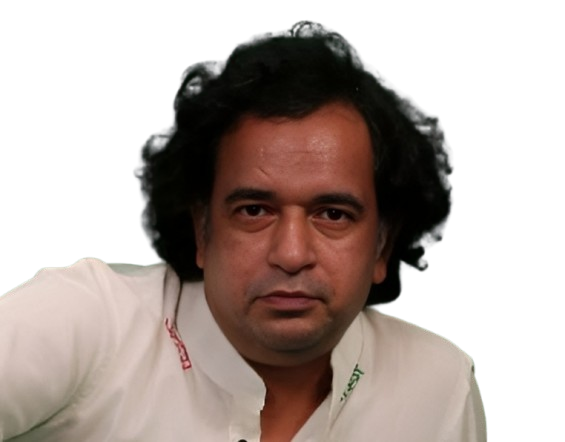
इस साझेदारी पर अप्रोच एंटरटेनमेंट ग्रुप के संस्थापक एवं निदेशक और गो स्पिरिचुअल के संस्थापक सोनू त्यागी ने कहा, “इनसाइट इग्निशन 4.0 के पीआर एवं कम्युनिकेशंस पार्टनर के रूप में इंकस्पेल मीडिया के साथ अपना सहयोग जारी रखते हुए हमें खुशी हो रही है। आईसीएल, अनलॉक्ड और मैडेक्स के एक साथ आने से उद्योग के कई जुड़े हुए क्षेत्रों में अच्छे काम को पहचान देने का अवसर मिलेगा। हमारा प्रयास इन उपलब्धियों, इनके पीछे की कहानियों और उद्योग से जुड़े विचारों को संबंधित मीडिया और लोगों तक पहुंचाना होगा।”
उन्होंने आगे कहा, “जनसंपर्क, विज्ञापन, फिल्मों, टैलेंट मैनेजमेंट और एंटरटेनमेंट मार्केटिंग में काम करने से हमें इन क्षेत्रों की व्यापक समझ मिली है। डिजिफेस्ट 2026 और इंकस्पेल एलिवेट 2026 के बाद हम एक और ऐसे मंच के साथ जुड़कर खुश हैं, जो अच्छे काम को सम्मान देने, बातचीत और पेशेवर संबंधों को बढ़ावा देता है।”
तीनों अवॉर्ड कार्यक्रमों में आई प्रविष्टियों का मूल्यांकन उद्योग के वरिष्ठ विशेषज्ञों की जूरी ने किया है। इसमें मार्केटिंग, मनोरंजन, वित्तीय सेवाओं, तकनीक, मीडिया और अन्य क्षेत्रों के अनुभवी लोग शामिल हैं। इन विशेषज्ञों के अनुभव और अलग-अलग नजरियों के आधार पर अभियानों, विचारों और उपलब्धियों का मूल्यांकन किया गया है।
इंकस्पेल इनसाइट इग्निशन 4.0 में केन्सियो इंटीग्रेटेड मार्केटिंग पार्टनर, मार्केज़िंग ऑफिशियल आउटरीच पार्टनर, अप्रोच एंटरटेनमेंट पीआर एवं कम्युनिकेशंस पार्टनर और गो स्पिरिचुअल स्पिरिचुअल पार्टनर के रूप में सहयोग कर रहे हैं। ग्लोबल ट्रेंड्स फोरम और इंडिया क्रिएटिव इंडस्ट्रीज काउंसिल आयोजन के मीडिया पार्टनर हैं।

अप्रोच एंटरटेनमेंट और अप्रोच कम्युनिकेशंस, अप्रोच एंटरटेनमेंट ग्रुप की दो अलग–अलग कंपनियां हैं। अप्रोच एंटरटेनमेंट एक पुरस्कार विजेता कंपनी है, जो सेलिब्रिटी एवं टैलेंट मैनेजमेंट, फिल्म निर्माण, विज्ञापन एवं कॉरपोरेट फिल्म निर्माण, फिल्मों की मार्केटिंग, इवेंट्स और एंटरटेनमेंट मार्केटिंग के क्षेत्र में काम करती है। अप्रोच कम्युनिकेशंस एक पुरस्कार विजेता पीआर, डिजिटल एवं इंटीग्रेटेड कम्युनिकेशंस एजेंसी है। यह कॉरपोरेट, मनोरंजन, स्वास्थ्य, वित्त, शिक्षा और सामाजिक क्षेत्रों में अपनी सेवाएं देती है। ग्रुप की मौजूदगी मुंबई, नई दिल्ली, गुरुग्राम, कोलकाता, गोवा, चंडीगढ़, देहरादून, हैदराबाद, अहमदाबाद और अन्य शहरों में है।
ग्रुप में अप्रोच बॉलीवुड भी शामिल है, जो बॉलीवुड एवं मनोरंजन की खबरों के लिए न्यूज़वायर, पोर्टल और ऐप है। इसके अलावा, गो स्पिरिचुअल एक आध्यात्मिक एवं वेलनेस संस्था है, जो आध्यात्मिक जागरूकता, परोपकार, मानसिक स्वास्थ्य, सेहत, आयुर्वेद, जैविक जीवनशैली, आध्यात्मिक पर्यटन, कार्यक्रमों, मीडिया और सामाजिक कार्यों से जुड़ी है। गो स्पिरिचुअल अपनी न्यूज़ मैगजीन एवं ऐप भी संचालित करता है।
सोनू त्यागी पुरस्कार विजेता लेखक, निर्देशक, निर्माता, गीतकार और मीडिया उद्यमी हैं। उन्होंने मनोविज्ञान की पढ़ाई के साथ विज्ञापन प्रबंधन, पत्रकारिता और फिल्म निर्माण का प्रशिक्षण लिया है। अप्रोच एंटरटेनमेंट ग्रुप की स्थापना से पहले उन्होंने विज्ञापन एजेंसियों और मीडिया संस्थानों में काम किया। उन्होंने आध्यात्मिक फिल्म एवं वेब सीरीज ‘टू ग्रेट मास्टर्स’ की रचना और सह-निर्माण किया है। इसमें वरिष्ठ अभिनेता राकेश बेदी हैं और यह स्वामी विवेकानंद तथा परमहंस योगानंद की शिक्षाओं पर आधारित है।
सोनू त्यागी, अप्रोच एंटरटेनमेंट के साथ अंतरराष्ट्रीय फीचर फिल्म ‘लिबरेशन’ का सह-निर्माण भी कर रहे हैं। इसके अलावा, वह व्यंग्य पर आधारित हिंदी कॉमेडी फिल्म ‘कैंप डिसेंट’ के क्रिएटिव प्रोड्यूसर हैं। इस फिल्म में बृजेंद्र काला, राजपाल यादव, सारा खान और हेमंत पांडे जैसे कलाकार हैं। वह गो स्पिरिचुअल के माध्यम से मानसिक स्वास्थ्य और आध्यात्मिक जागरूकता के लिए भी काम करते हैं। उन्हें 7वें वर्ल्ड मेंटल हेल्थ कांग्रेस एंड अवॉर्ड्स में ‘टॉप मोस्ट लीडर्स इन मेंटल हेल्थ’ सम्मान से सम्मानित किया गया है।
अधिक जानकारी के लिए संपर्क करें:
अप्रोच एंटरटेनमेंट / अप्रोच कम्युनिकेशंस
फोन: +91-9820965004 / +91-9716962242
ईमेल: info@approachentertainment.com
वेबसाइट: www.approachentertainment.com | www.approachcommunications.in
The post अप्रोच एंटरटेनमेंट और अप्रोच कम्युनिकेशंस बने इंकस्पेल इनसाइट इग्निशन 4.0 के पीआर एवं कम्युनिकेशंस पार्टनर first appeared on Go Spiritual .
News, approach communications, approach entertainment, celebrity management, pr agencies in india, pr agency, public relations, sonu tyagi, spiritual media, spiritual media management, spiritual media management agency, spiritual news, spiritual ott productions, spiritual pr agencies in gurugram, spiritual pr agencies in india, spiritual pr agencies in mathura, spiritual pr agencies in mumbai, spiritual pr agencies in new delhi, spiritual pr agencies in new delhi india, spiritual pr agency, spiritual pr agency in noida, spiritual pr firms in india, spiritual pr firms in mumbai, spiritual tv productions, spiritual tv productions companies in india, spiritual wellness pr agency, top spiritual pr agencies in india Go Spiritual
Approach Entertainment & Communications Named PR & Communications Partner for Inkspell Insight Ignition 4.0
ICL Awards 9th Edition, Unlocked Awards 6th Edition and MADEX Awards 2nd Edition to come together on October 28 in Gurugram
Mumbai: Approach Entertainment & Communications has been named the PR & Communications Partner for Inkspell Insight Ignition 4.0, organised by Inkspell Media. Scheduled for October 28, 2026, from 3:00 PM to 6:00 PM at The Auditorium, DLF Cyber Park, Gurugram, the event will bring together brands, agencies, marketing leaders, content creators and professionals from India’s advertising, digital and media industries.
The association continues the Approach Entertainment Group’s collaboration with Inkspell Media, following its PR and communications partnerships for DigiFest 2026 and Inkspell Elevate 2026. Communications activities for Insight Ignition 4.0 will be led by Approach Communications, the group’s award-winning PR, Digital & Integrated Communications agency.
Insight Ignition 4.0 will host three flagship award programmes on a common platform: the India Content Leadership Awards (ICL) 9th Edition, Unlocked Awards 6th Edition and MADEX Awards 2nd Edition. Together, these programmes will recognise outstanding brands, agencies, campaigns and professionals across content, digital, marketing and advertising.
As PR & Communications Partner, Approach Entertainment & Communications will support the event’s media outreach, news announcements, editorial coordination and publicity. The communications effort will focus on the three award programmes, the industry perspectives shared during the event and the people and ideas being recognised.
The programme will feature the felicitation of winners across all three award properties, followed by an industry panel discussion. Senior industry voices will explore how creativity, technology, consumer behaviour and storytelling are influencing brand communication and business outcomes. The gathering will also provide opportunities for professional connections and the exchange of ideas across related sectors.
Commenting on the association, Sonu Tyagi, Founder & Director of Approach Entertainment Group and Founder of Go Spiritual, said, “We are pleased to continue our association with Inkspell Media as the PR & Communications Partner for Insight Ignition 4.0. Bringing ICL, Unlocked and MADEX together creates an opportunity to recognise work across several closely connected areas of the industry. Our communications effort will focus on bringing these stories, achievements and industry perspectives to relevant media and audiences.”
He added, “Our work across public relations, advertising, films, talent management and entertainment marketing gives us a broad understanding of this ecosystem. Following our associations with DigiFest 2026 and Inkspell Elevate 2026, we look forward to supporting another platform that encourages recognition, dialogue and professional connections.”
Entries across the three award programmes have been evaluated by a jury of senior industry leaders representing marketing, entertainment, financial services, technology, media and other sectors. Their participation brings a range of professional perspectives to the recognition of campaigns, ideas and achievements across the awards.
Inkspell Insight Ignition 4.0 is supported by Kenscio as Integrated Marketing Partner, MarkeZing as Official Outreach Partner, Approach Entertainment as PR & Communications Partner and Go Spiritual as Spiritual Partner. Global Trends Forum and India Creative Industries Council are the event’s Media Partners.
Approach Entertainment and Approach Communications are separate companies under the Approach Entertainment Group. Approach Entertainment is an award-winning Celebrity & Talent Management, Films Productions, Advertising & Corporate Films Productions, Films Marketing, Events & Entertainment Marketing company. Approach Communications is an award-winning PR, Digital & Integrated Communications agency, working across corporate, entertainment, healthcare, finance, education and social sectors. The group has a presence across Mumbai, New Delhi, Gurugram, Kolkata, Goa, Chandigarh, Dehradun, Hyderabad, Ahmedabad and other cities.
The group also includes Approach Bollywood, a Bollywood & Entertainment Newswire, Portal & App, and Go Spiritual, a Spiritual & Wellness organisation working across spiritual awareness, philanthropy, mental health and wellness, Ayurveda and organic living, spiritual tourism, events, media and social causes. Go Spiritual also operates its News Magazine & App.
Sonu Tyagi is an award-winning writer, director, producer, lyricist and media entrepreneur with an educational background in Psychology and professional training in Advertising Management, Journalism and Filmmaking. Before establishing Approach Entertainment Group, he worked with advertising agencies and media organisations. He created and co-produced the spiritual film and web series Two Great Masters, featuring veteran actor Rakesh Bedi and exploring the teachings of Swami Vivekananda and Paramahansa Yogananda.
Along with Approach Entertainment, Tyagi is also co-producing the international feature film Liberation and serves as Creative Producer on the satirical Hindi comedy Camp Decent, featuring Brijendra Kala, Rajpal Yadav, Sara Khan and Hemant Pandey. His work also includes mental health and spiritual awareness initiatives through Go Spiritual. He has been honoured among the “Top Most Leaders in Mental Health” at the 7th World Mental Health Congress & Awards.
For More Information:
Approach Entertainment / Approach Communications
Phone: +91-9820965004 / +91-9716962242
Email: info@approachentertainment.com
Websites: www.approachentertainment.com | www.approachcommunications.in
The post Approach Entertainment & Communications Named PR & Communications Partner for Inkspell Insight Ignition 4.0 first appeared on Go Spiritual .
News, approach entertainment, celebrity advertising agency, celebrity brand endorsement agency, films productions in mumbai, leading spiritual pr agency, leading spiritual pr agency mumbai, mental health speakers in india, spiritual celebrity, spiritual celebrity management, spiritual celebrity management agency, spiritual digital pr agency, spiritual events, spiritual events management agencies in india, spiritual films productions, spiritual pr, spiritual pr agency, spiritual pr agency in india, spiritual public relations agency, spiritual wellness pr agency, top spiritual pr agencies, top spiritual pr agency india Go Spiritual
The Greatest Philanthropist Is the Miser Who Leaves All His Wealth Behind: A Spiritual Lesson on Money, Greed and the Meaning of Life
By Sonu Tyagi, Founder, Go Spiritual & Approach Entertainment
We spend our lives accumulating wealth, property and possessions, often forgetting that nothing material can accompany us beyond death. True spirituality reminds us that the real value of wealth lies not in how much we possess, but in how much good we do with it while we are alive.
There is a thought-provoking saying: “The greatest philanthropist is the miser who leaves all his wealth behind for others.” At first, it sounds humorous, almost like a joke about human greed. But when we reflect on it deeply, it reveals one of the greatest truths of human existence. We spend our lives earning, saving, accumulating and protecting wealth, yet when our journey ends, everything we have collected remains behind. The money we refused to spend, the property we fought to acquire and the possessions we guarded so carefully eventually pass into the hands of others.
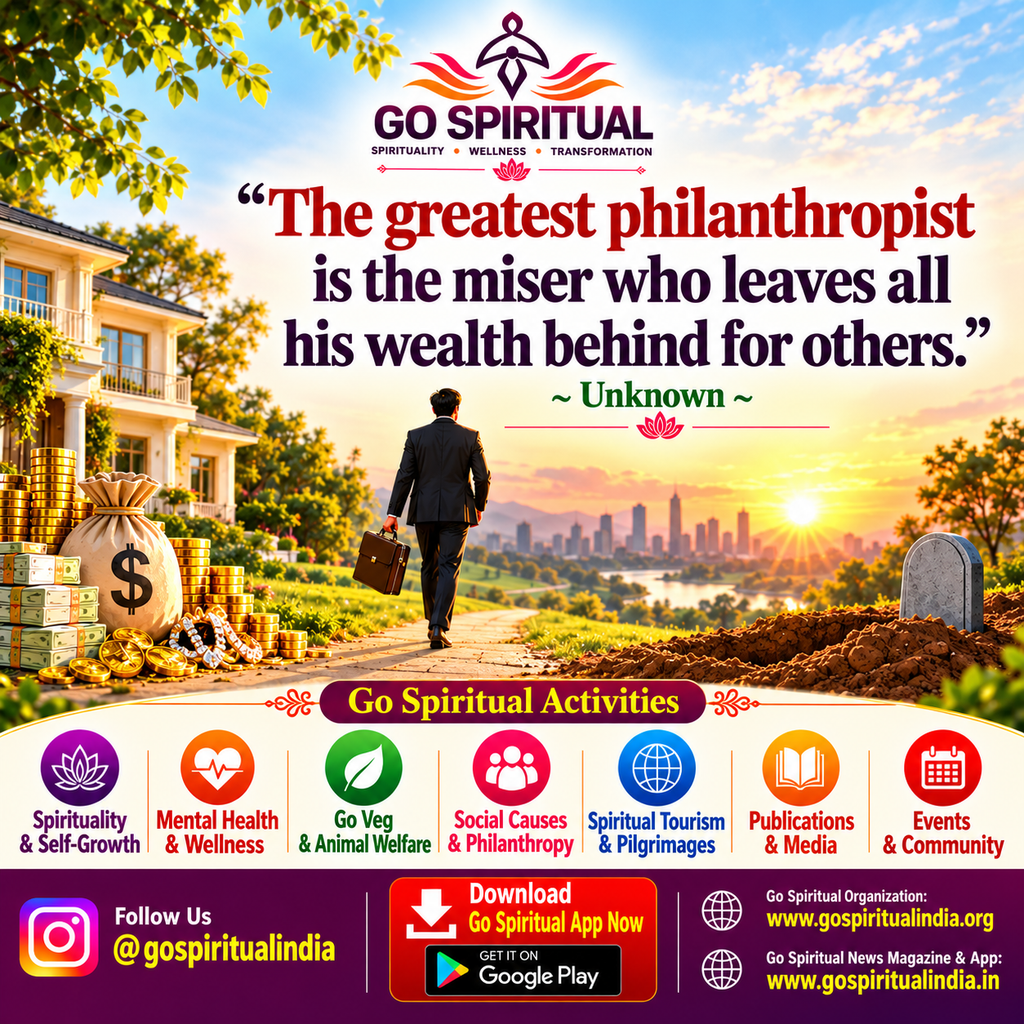
The irony is that a miser may spend an entire lifetime refusing to share even a small portion of his wealth, only to leave everything behind when death arrives. He may never have intended to become a philanthropist, but his accumulated wealth will ultimately benefit someone else. What makes this observation spiritually powerful is the reminder that we can own wealth during our lifetime, but we cannot own it forever.
Money is undoubtedly important. It provides security, comfort, education, healthcare and opportunities. It helps us support our families, fulfil responsibilities and live with dignity. There is nothing inherently wrong with earning money, building businesses, creating wealth or enjoying the rewards of honest work. In fact, responsible wealth creation can contribute to employment, economic development and social progress. The problem begins when money stops being a means to live and becomes the only purpose of living.
We often see people who have accumulated considerable wealth but remain deeply insecure about losing even a small part of it. They may own luxurious houses but struggle to experience peace within them. They may possess expensive cars but have little time to enjoy the journey of life. They may have enough money to support several generations, yet continue sacrificing relationships, health, happiness and emotional wellbeing in the endless pursuit of more.
This raises a simple question: How much wealth is enough?
For someone struggling to provide food, education and shelter for a family, earning more money is a genuine necessity. But for someone who already has more than enough, the pursuit of endless accumulation can gradually become an attachment that no amount of money can satisfy. One crore becomes ten crores, ten becomes a hundred, and a hundred becomes a thousand. The numbers change, but the desire for more often remains the same.
Spirituality does not necessarily ask us to abandon wealth. It asks us to understand our relationship with it. The Bhagavad Gita teaches the importance of performing one’s duties without becoming enslaved by attachment to the results. This wisdom is relevant not only to spiritual seekers but also to entrepreneurs, professionals, business leaders and anyone navigating the pressures of modern life.
Wealth should serve human life. Human life should not become a servant of wealth.
One of the greatest illusions of material success is the belief that possessions make us permanent. We buy houses as though we will live in them forever. We accumulate land as though the earth belongs to us. We fight over inheritance, property and financial interests as though these things will accompany us beyond death. Yet history repeatedly reminds us that even the wealthiest and most powerful individuals eventually leave the world with nothing material in their hands.
A person may spend decades building an empire, but one day someone else will sit in the same office, live in the same house, drive the same car and manage the same bank accounts. The world continues, businesses continue, and life moves forward. What remains of the individual is not merely the wealth accumulated but the influence, relationships, kindness and contribution left behind.
This is where the difference between wealth and a meaningful legacy becomes important.
A wealthy person may be remembered for the size of an estate, but a compassionate person is remembered for the lives they touched. Someone who helped educate disadvantaged children, supported a struggling family, cared for abandoned animals, funded medical treatment or stood beside a person during a difficult time creates something more enduring than material possessions. Such acts become part of other people’s lives and memories.
Through Go Spiritual, we have consistently emphasised the importance of spirituality, philanthropy, social causes, mental health and wellness, animal welfare and compassion towards all living beings. I believe that these values should not be treated as activities reserved for retirement or the final years of life. They should become part of our everyday existence.
Many people say they will begin helping others after they become sufficiently wealthy. They promise themselves that once their business reaches a particular level, once their investments grow or once their financial responsibilities are completed, they will devote time and resources to charitable work. But life does not always wait for our plans to be fulfilled.
Why should we postpone kindness until tomorrow when someone needs our help today?
Philanthropy is not the exclusive responsibility of billionaires. A person with limited financial resources who shares a meal with someone hungry may demonstrate greater generosity of spirit than a wealthy individual who contributes a large sum merely for publicity. True giving is not measured only by the amount donated. It is also measured by intention, compassion and the difference it makes.
Sometimes, the greatest contribution requires no money at all. Spending time with lonely parents, supporting a friend experiencing emotional distress, helping an elderly neighbour, mentoring a young person or showing kindness to a vulnerable animal can be meaningful expressions of service.
We should also understand that saving money and being miserly are not the same thing. Financial discipline is a virtue. Responsible savings protect families from uncertainty and help us fulfil future obligations. A person who carefully manages money to educate children, support ageing parents or prepare for medical emergencies is acting responsibly. Miserliness begins when the fear of losing money becomes so powerful that it prevents a person from enjoying life, fulfilling reasonable responsibilities or showing compassion even when they have the means to do so.
Similarly, generosity should never mean neglecting one’s family or giving beyond one’s financial capacity. Spirituality encourages balance, not recklessness.
Another unfortunate reality is that excessive attachment to wealth can damage relationships. Families sometimes become divided over property. Brothers stop speaking to one another over inheritance. Friendships break because of financial disputes. People who once shared love and affection become strangers because possessions begin to matter more than human bonds.
What is the value of accumulating wealth if, in the process, we lose the very relationships that give life meaning?
There is also a deeper spiritual dimension to this discussion. Hindu philosophy speaks of Maya, a concept often associated with the illusion of permanence and our attachment to the changing material world. Money, status, possessions and worldly achievements are not necessarily evil, but they are temporary. When we mistake temporary things for the ultimate purpose of existence, disappointment and suffering become more likely.
A spiritually aware person can enjoy material success without allowing it to define their entire identity. Such a person understands that wealth may increase or decrease, professional positions may change and social recognition may fade, but values such as truthfulness, compassion, humility and kindness remain worthy of cultivation.
We must also remember that death is the great equaliser. It does not distinguish between a billionaire and a labourer, a famous personality and an ordinary citizen, or someone living in a palace and someone living in a modest home. Every human being eventually faces the same fundamental reality: our time here is limited.
This awareness should not make us fearful or pessimistic. On the contrary, it should inspire us to live more consciously. We should work hard, achieve our ambitions, build successful enterprises and provide for our loved ones. But we should also make time for relationships, enjoy simple moments, care for our physical and mental wellbeing and contribute something positive to the world.
Perhaps the greatest tragedy is not dying with wealth. It is living without understanding what wealth was meant for.
I often feel that people spend the first half of their lives sacrificing their health and happiness to earn money, and then spend the second half trying to recover what they have lost. Many discover too late that peace cannot simply be purchased, genuine relationships cannot be manufactured through financial power and lost time cannot be recovered from a bank account.
The spiritual purpose of wealth should be to create security without arrogance, comfort without excess, success without exploitation and generosity without expectation.
We do not need to reject ambition. We need to give ambition a higher purpose.
Imagine a society in which successful entrepreneurs consider social responsibility a natural part of business, families teach children the value of sharing, individuals support causes close to their hearts and wealth becomes an instrument for reducing suffering rather than displaying superiority. Such a society would be materially productive and spiritually richer.
The saying about the miser who leaves everything behind is therefore more than a clever observation. It is a warning against postponing the meaningful use of our resources until life itself makes the decision for us.
If we are eventually going to leave everything behind, why not consciously share some of it while we can still experience the happiness of giving? Why not help someone today rather than allowing our wealth to remain untouched until it passes to others? Why not create memories, strengthen relationships, support worthwhile causes and make a difference while we still have the opportunity?
The real question is not how much money we will leave behind. It is how much love, compassion, goodwill and positive change we will leave in the world.
Earn wealth, but do not become its prisoner. Save responsibly, but do not forget to live. Build success, but never lose your humanity. And when you have enough, remember those who have far less.
Because in the end, we will all leave our material possessions behind. What matters is whether we used them wisely while we were here.
The greatest philanthropist should not be the miser who unwillingly leaves everything behind after death. The greatest philanthropist should be the person who understands the value of giving while still alive.
That is the true spiritual lesson of wealth, generosity and the meaning of life.
About the Author: Sonu Tyagi is an award-winning writer, director, producer and Founder of Go Spiritual & Approach Entertainment. Through Go Spiritual, he advocates spirituality, philanthropy, mental health and wellness, vegetarianism, animal welfare, spiritual tourism and compassionate living.
Go Spiritual Organisation: www.gospiritualindia.org
Sonu Tyagi: www.sonutyagi.com
The post The Greatest Philanthropist Is the Miser Who Leaves All His Wealth Behind: A Spiritual Lesson on Money, Greed and the Meaning of Life first appeared on Go Spiritual .
Spiritual, miser, philanthropy, sonu tyagi, sonu tyagi approach entertainment, sonu tyagi go spiritual, spiritual, spiritual brands, spiritual communications agency, spiritual community, spiritual events, spiritual events in mumbai, spiritual events management, spiritual films, spiritual image management, spiritual insights, spiritual life, spiritual media, spiritual media events, spiritual mind, spiritual news, spiritual pr agencies in gurugram, spiritual pr agencies in india, spiritual pr agencies in new delhi, spiritual pr agency, spiritual public relations, spiritual tv, spiritual world Go Spiritual
Inkspell Media Brings Three Flagship Awards Together at Insight Ignition 4.0 in Gurugram
ICL Awards 9th Edition, Unlocked Awards 6th Edition and MADEX Awards 2nd Edition to honour excellence across content, digital, marketing and advertising on October 28
New Delhi: Inkspell Media will bring together brands, agencies, marketers, creators and industry leaders at Inkspell Insight Ignition 4.0, scheduled for October 28, 2026, from 3:00 PM to 6:00 PM at DLF Auditorium, Gurugram. The event will host three flagship award programmes—the India Content Leadership Awards (ICL) 9th Edition, Unlocked Awards 6th Edition and MADEX Awards 2nd Edition—on a common platform celebrating excellence across India’s content, digital, marketing and advertising ecosystem.
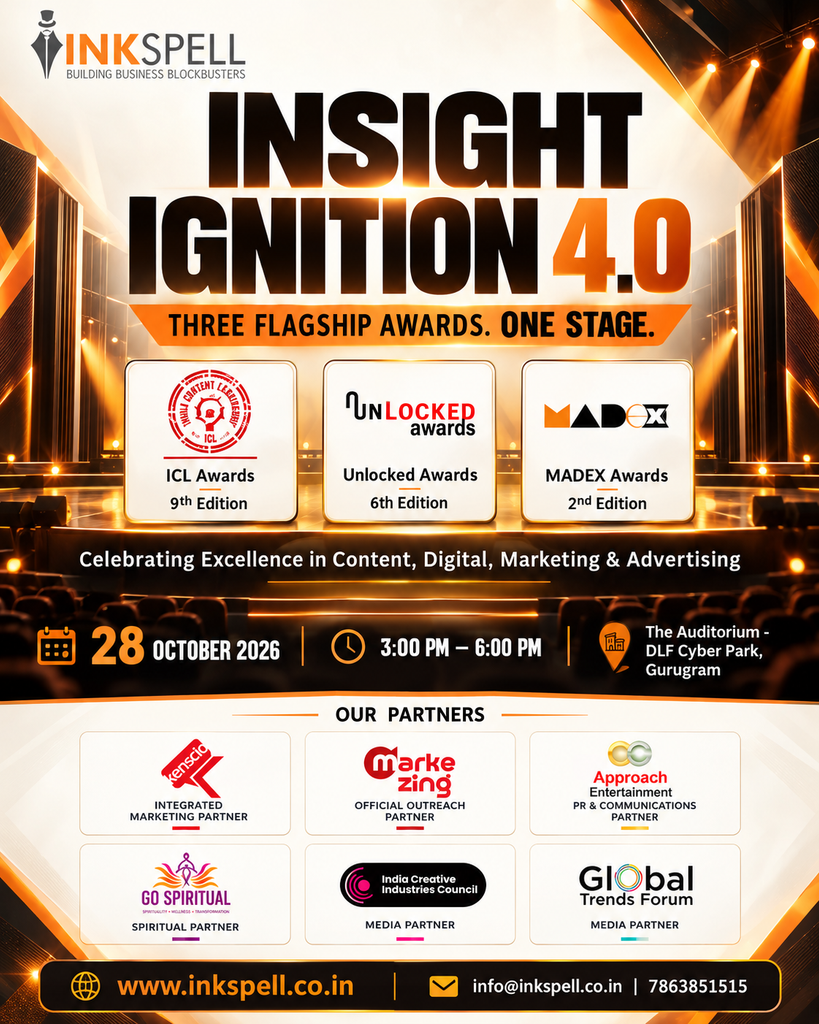
The programme will recognise outstanding brands, agencies, campaigns and professionals across the three award properties. The awards presentation will be followed by an industry panel discussion exploring how creativity, technology, storytelling and changing consumer behaviour are shaping marketing and business outcomes.
Bringing the three programmes together, Insight Ignition 4.0 will provide a shared space for recognition, exchange of ideas and professional connections across closely linked sectors. The event will spotlight the work and people contributing to the evolution of content, media, advertising and digital engagement.
A spokesperson for Inkspell Media said, “Insight Ignition is designed to be more than an awards platform. It is an opportunity to recognise the ideas and people creating meaningful impact while bringing the industry together for conversations that matter. With ICL, Unlocked and MADEX coming together, this edition will celebrate excellence across diverse facets of the ecosystem while creating a space to exchange perspectives on where the industry is headed.”
Entries across the three programmes have been evaluated by a distinguished jury of senior industry leaders representing marketing, entertainment, financial services, technology, media and other sectors.
The jury comprises Amitabh Biswas, Marketing Head (IPs, Entertainment, CTV), Times Network; Archana Roche, Ex-Global Head, Measurement and Analytics, Truecaller; Balaaji Vaidyanathan, Director & Head of Marketing CEEMA, Franklin Templeton; Dr. Ankoor Dasguupta, Chief Experience Officer, Garage Collective; Imran Qadri, Head of Program Management AXJ & India, Harley-Davidson Motor Company; and Jiteen Aggarwal, Chief Marketing Officer – India, SAARC and Middle East, Hettich India Pvt Ltd.
Also serving on the jury are Kunal Madhavdas, Director Product Merchandising – India, Netflix; Madhu S Dutta, Founder & CEO, House of MSD; Neeraj Jha, Head of Sports Business – India & South Asia, Warner Bros. Discovery; Piali Dasgupta Surendran, Vice President Marketing, Sattva Group; Prasad Pimple, Executive Vice President & Head of Digital Business Unit, Kotak Life; and Saurabh Varma, Film Director & Chief Creative Officer, Saurabh Varma Pictures.
The jury further includes Shalu Zala, Vice President – Marketing Strategy, Key Projects & Social Media, HSBC; Sharmila Sandeep, Ex-General Manager – Marketing (FMCD), CG Power and Industrial Solutions Limited; Shefali Khalsa, Head Marketing & Corporate Communications, TransUnion CIBIL; Sudhanshu Tripathi, Chief Marketing Officer, Quick Heal; Sukhpreet Singh, Chief Revenue Officer – Dish TV and VZY Smart TV Business, DishTV (Zee Group); Swati Bansal, Ex-Head of Marketing ACM India, Henkel; and Vishesh Sharma, Chief Marketing Officer, PL Capital (Prabhudas Lilladher Group).
The panel discussion will bring senior industry voices together to examine the intersection of creativity, technology, consumer behaviour, storytelling and business impact. It will offer an opportunity to exchange perspectives on the changes influencing how brands communicate, engage audiences and build lasting relevance.
Inkspell Insight Ignition 4.0 is supported by Kenscio as Integrated Marketing Partner, MarkeZing as Official Outreach Partner, Approach Entertainment as PR & Communications Partner, Go Spiritual as Spiritual Partner, and Global Trends Forum and India Creative Industries Council as Media Partners.
With three established award platforms converging on one stage, Insight Ignition 4.0 will combine recognition with industry dialogue, celebrating the campaigns, professionals and ideas helping shape the future of marketing, media, content and advertising.
For More Information:
Approach Entertainment / Approach Communications
9820965004 / 9716962242 info@approachentertainment.com
Visit us at www.approachentertainment.com & www.approachcommunications.in
The post Inkspell Media Brings Three Flagship Awards Together at Insight Ignition 4.0 in Gurugram first appeared on Go Spiritual .
News, advertising, advertising awards, events, inkspell media, spiritual magazines, spiritual news Go Spiritual
World Food Day 2026: Go Spiritual Calls for a World Without Hunger, Food Waste and Cruelty
On World Food Day, Go Spiritual highlights the deeper connection between food, spirituality, humanity and compassion, urging people to respect every meal, feed the hungry, reduce food wastage and embrace conscious eating through its Go Veg initiative.
Mumbai, October 16, 2026: Food is one of life’s most basic necessities, yet it also carries a profound spiritual meaning. It sustains the body, connects families, brings communities together and reminds humanity of its dependence on nature. On World Food Day 2026, observed globally on October 16, Go Spiritual has called for a more compassionate and responsible approach towards food, emphasising that no society can claim to be truly spiritual or humane while people continue to suffer from hunger, nutritious food is wasted and unnecessary cruelty towards living beings remains a part of everyday consumption.

World Food Day is an opportunity to reflect not only on food production, agriculture and nutrition, but also on our relationship with what we eat. While millions of people struggle to secure adequate meals, enormous quantities of food are lost or wasted across households, restaurants, celebrations, businesses and supply chains. This contrast raises an important moral question: How can a world capable of producing so much food allow hunger and wastage to exist side by side?
For Go Spiritual, the answer begins with recognising that food is not merely a commodity or a source of pleasure; it is a gift of nature and a shared responsibility towards humanity.
In Indian spiritual traditions, food has long been regarded with reverence. The concept of Anna carries deep cultural and religious significance, while Annadaan, the act of offering food to those in need, is widely considered one of the noblest forms of charity. Feeding a hungry person is not simply an act of generosity. It is an expression of empathy, equality and recognition of another person’s dignity.
A person struggling with hunger does not need a lecture on spirituality before receiving a meal. They need food, compassion and human support. This simple truth reminds us that genuine spirituality must extend beyond prayers, rituals and philosophical discussions into practical acts of service.
This year’s global World Food Day theme, “Innovate Today. Nourish Tomorrow,” announced by the Food and Agriculture Organization of the United Nations (FAO), focuses on combining innovation, traditional knowledge and inclusive approaches to create sustainable food systems. The campaign emphasises ensuring access to safe, diverse and nutritious food while protecting the planet for future generations.
The challenge remains enormous. According to FAO’s World Food Day 2026 information, approximately 645 million people face hunger worldwide, while 2.69 billion cannot afford a healthy diet. These figures demonstrate that the challenge is not simply producing more food, but ensuring that nutritious food reaches people affordably, fairly and sustainably.
Go Spiritual believes that modern innovation and ancient spiritual wisdom can work together to address this challenge. Better agricultural technologies, improved storage facilities, efficient distribution systems, support for farmers and stronger nutrition programmes are essential. Equally important is cultivating a culture in which food is respected rather than casually discarded.
Food wastage is particularly troubling during lavish weddings, parties, religious celebrations and social gatherings, where excessive quantities are sometimes prepared while disadvantaged people nearby struggle to obtain basic meals. Go Spiritual encourages families, event organisers, hotels, restaurants and communities to plan responsibly, serve appropriate portions and safely redistribute surplus edible food through credible charitable organisations.
The organisation also highlights the spiritual significance of vegetarianism and compassionate food choices. Through its Go Veg initiative, Go Spiritual promotes vegetarian living as an expression of Ahimsa, or non-violence, and Karuna, or compassion towards living beings. The initiative encourages individuals to consider the ethical, environmental and spiritual dimensions of their diets, recognising that everyday food choices can influence animal welfare and the natural world.
From a spiritual perspective, compassion should not end with human beings. Animals are also capable of experiencing pain and distress, and Go Spiritual believes that reducing avoidable suffering should be an important consideration in how food is produced and consumed. Its advocacy for vegetarianism is based on awareness, education and personal choice rather than coercion or hostility towards people with different dietary traditions.
At the same time, responsible eating must include proper nutrition. A balanced vegetarian diet can support good health when thoughtfully planned, with adequate attention to essential nutrients. Go Spiritual encourages conscious eating rather than treating spirituality as an excuse for extreme dietary restrictions or nutritional neglect.
World Food Day also provides an opportunity to recognise the invaluable contributions of farmers, agricultural workers, food producers, transporters and everyone involved in bringing food from fields to households. Their work sustains communities, yet many food producers themselves face financial uncertainty, climate-related challenges and difficulties accessing markets. Respecting food also means respecting the labour, resources and livelihoods behind every meal.
Children, too, should be taught the importance of food, gratitude and sharing. Simple family practices such as avoiding unnecessary wastage, appreciating farmers, sharing meals with those in need and understanding where food comes from can help cultivate compassion from an early age.
Go Spiritual believes that feeding a hungry person, preventing unnecessary food waste and making compassionate food choices are all meaningful expressions of spirituality. A prayer before a meal becomes more meaningful when accompanied by gratitude. A religious celebration becomes more humane when it includes feeding those in need. And spiritual teachings become more relevant when they inspire responsible action.
As the world observes World Food Day 2026, the organisation urges individuals, communities, businesses and institutions to move beyond symbolic celebrations and make practical commitments towards reducing hunger, improving nutrition, protecting natural resources and promoting compassion.
Ultimately, a truly spiritual society should not be judged merely by the grandeur of its religious celebrations or the abundance on its dining tables, but by how sincerely it cares for those who have nothing to eat.
Food should nourish life, not be wasted. Compassion should guide our choices, not remain confined to words. And no human being should have to sleep hungry in a world that has the resources to feed everyone.
Feed the Hungry. Respect Food. Stop Food Waste. Choose Compassion. Go Veg. Go Spiritual.
Go Spiritual News Magazine & App: www.gospiritualindia.inGo Spiritual Organisation: www.gospiritualindia.org
The post World Food Day 2026: Go Spiritual Calls for a World Without Hunger, Food Waste and Cruelty first appeared on Go Spiritual .
News, food, food day, food donation, spiritual brand, spiritual brands in india, spiritual brands in mumbai, spiritual content, spiritual content in india, spiritual events, spiritual food, spiritual food productions, spiritual magazine, spiritual magazines in india, spiritual media brands, spiritual media in india, spiritual media tv, spiritual mumbai, spiritual news, spiritual ott, spiritual pr agencies in india, spiritual pr agencies in mumbai, spiritual pr agency, spiritual products, spiritual public relations, spiritual retreats in india, spiritual stores in india, spiritual tv, spiritual tv channels in india, spiritual world in mumbai, world food day in india Go Spiritual
श्योर रियल पिक्चर्स और अप्रोच एंटरटेनमेंट की ग्लोबल थ्रिलर फिल्म लिबरेशन की दिल्ली में शूटिंग
सात्विक भाटिया और महिका शर्मा की मुख्य भूमिका वाली अंग्रेजी फिल्म की शूटिंग दिल्ली–एनसीआर के शानदार होटलों और खास लोकेशनों पर की जा रही है
मुंबई/नई दिल्ली: श्योर रियल पिक्चर्स और अप्रोच एंटरटेनमेंट अपनी आने वाली ग्लोबल थ्रिलर फिल्म लिबरेशन की शूटिंग दिल्ली और राष्ट्रीय राजधानी क्षेत्र यानी दिल्ली–एनसीआर में कर रहे हैं। अंग्रेजी भाषा में बन रही इस फिल्म की शूटिंग दिल्ली-एनसीआर के कई शानदार स्थानों पर की जा रही है। इनमें पांच सितारा होटल, आधुनिक इमारतें और शहर की कई खास लोकेशन शामिल हैं।

फिल्म को अंकित कदम ने लिखा है और वही इसका निर्देशन कर रहे हैं। फिल्म का निर्माण कनिष्क कदम और श्योर रियल पिक्चर्स कर रहे हैं, जबकि सोनू त्यागी और अप्रोच एंटरटेनमेंट इसके सह-निर्माता हैं। फिल्म में सात्विक भाटिया जेम्स और महिका शर्मा डोरोथी की भूमिका निभा रही हैं।
लिबरेशन को भारत के साथ-साथ दुनिया भर के दर्शकों के लिए बनाया जा रहा है। यह एक रोमांचक थ्रिलर फिल्म है, जिसमें विद्रोह, संघर्ष, पहचान, खुद को समझने और जीवन में बदलाव जैसे विषयों को दिखाया गया है। दिल्ली-एनसीआर की लोकेशनों को फिल्म की कहानी और माहौल के अनुसार चुना गया है। फिल्म की टीम दिल्ली के शानदार होटल, आधुनिक व्यावसायिक क्षेत्र और शहर की अलग-अलग लोकेशनों पर शूटिंग कर रही है। इन स्थानों की मदद से फिल्म को आधुनिक और अंतरराष्ट्रीय रूप देने की कोशिश की जा रही है।
फिल्म में दिल्ली को केवल एक पृष्ठभूमि के रूप में नहीं दिखाया जाएगा। दिल्ली में ताकत, आधुनिकता, परंपरा, तेजी, शानदार जीवन और आम लोगों के संघर्ष—सब एक साथ दिखाई देते हैं। शहर की यही अलग-अलग तस्वीरें फिल्म के किरदारों की भावनाओं और उनके अंदर चल रहे संघर्ष से जुड़ती हैं। फिल्म के कई महत्वपूर्ण दृश्य दिल्ली-एनसीआर के पांच सितारा होटलों और दूसरी खास लोकेशनों पर फिल्माए जा रहे हैं। ये स्थान फिल्म की कहानी में रहस्य, तनाव और रोमांच पैदा करने में मदद करेंगे। फिल्म की टीम दिल्ली को एक अलग और आकर्षक सिनेमाई रूप में दिखाना चाहती है।
लिबरेशन की कहानी जेम्स नाम के एक परेशान युवा के आसपास घूमती है। जेम्स एक गायक की हत्या की खतरनाक साजिश में फंस जाता है। जैसे-जैसे वह इस साजिश में आगे बढ़ता है, वह धोखे, हिंसा और छिपे हुए इरादों की दुनिया में पहुंच जाता है। इसी दौरान उसकी मुलाकात डोरोथी से होती है। डोरोथी एक मजबूत और समझदार महिला है, जो अपने जीवन और अस्तित्व की लड़ाई लड़ रही है। डोरोथी से मिलने के बाद जेम्स के जीवन और सोच में बदलाव आना शुरू होता है।
शुरुआत में यह कहानी एक हत्या की साजिश पर आधारित थ्रिलर दिखाई देती है, लेकिन धीरे-धीरे यह अपनी गलतियों को समझने, जिम्मेदारी लेने, अंदरूनी संघर्ष से लड़ने और जीवन में सुधार की संभावना की कहानी बन जाती है। जेम्स और डोरोथी के माध्यम से फिल्म यह समझने की कोशिश करती है कि कठिन परिस्थितियों और पुराने फैसलों में फंसे लोगों के लिए असली आजादी का क्या अर्थ है।
श्योर रियल पिक्चर्स के निर्माता और संस्थापक कनिष्क कदम ने कहा, “लिबरेशन को भारतीय सोच के साथ एक ग्लोबल थ्रिलर फिल्म के रूप में बनाया जा रहा है। दिल्ली-एनसीआर में हमें कई तरह की शानदार लोकेशन मिली हैं। यहां के पांच सितारा होटल, आधुनिक इमारतें और शहर के अलग-अलग हिस्से फिल्म की कहानी और उसके माहौल को मजबूत बनाते हैं।”
फिल्म के लेखक और निर्देशक अंकित कदम ने कहा, “दिल्ली के कई अलग-अलग रूप हैं। एक तरफ यह शहर ताकत, आधुनिकता और शानदार जीवन को दिखाता है, तो दूसरी तरफ इसमें अकेलापन, रहस्य और भावनात्मक तनाव भी दिखाई देता है। दिल्ली की यही खासियत इसे लिबरेशन की कहानी के लिए सही स्थान बनाती है।”
फिल्म के सह–निर्माता और अप्रोच एंटरटेनमेंट के संस्थापक सोनू त्यागी ने कहा, “लिबरेशन एक आधुनिक थ्रिलर फिल्म है, जिसमें रोमांच के साथ पहचान, संघर्ष और जीवन में बदलाव की कहानी भी है। दिल्ली-एनसीआर में हो रही शूटिंग फिल्म को एक मजबूत और आकर्षक रूप देने में मदद कर रही है। हमारा उद्देश्य इस फिल्म को भारत के साथ-साथ दुनिया भर के दर्शकों तक पहुंचाना है।”
फिल्म में जेम्स की भूमिका निभा रहे सात्विक भाटिया एक ऐसे युवा का किरदार निभा रहे हैं, जो दूसरों के दबाव और अपने अंदर चल रहे संघर्ष के बीच फंसा हुआ है। एक खतरनाक साजिश में शामिल होने के बाद उसे अपने विचारों, फैसलों, रिश्तों और आजादी के अर्थ को समझना पड़ता है। गुस्से और उलझन से खुद को समझने और जीवन बदलने तक की उसकी यात्रा फिल्म की कहानी का मुख्य हिस्सा है।
महिका शर्मा फिल्म में डोरोथी की भूमिका निभा रही हैं। डोरोथी एक मजबूत महिला है, जिसकी मुलाकात एक महत्वपूर्ण समय पर जेम्स से होती है। वह केवल जेम्स की कहानी का हिस्सा नहीं है, बल्कि उसकी अपनी जिंदगी, अनुभव और संघर्ष भी हैं। उसकी ताकत, संवेदनशीलता और भावनाएं फिल्म की कहानी को आगे बढ़ाने में महत्वपूर्ण भूमिका निभाती हैं।
महिका शर्मा फिल्मों, ओटीटी, थिएटर, शास्त्रीय नृत्य और संगीत से जुड़ी रही हैं। वह ब्रीद: इनटू द शैडोज सीजन 2, वी नीड टू टॉक, स्वराज, फर्रे, कॉस्टाओ और मनुष्य जैसे प्रोजेक्ट्स में काम कर चुकी हैं। लिबरेशन में उनका किरदार गंभीर और भावनात्मक है, जिसमें उन्हें अपनी अभिनय क्षमता दिखाने का अच्छा अवसर मिलेगा।
लिबरेशन मुख्य रूप से अंग्रेजी भाषा में बनाई जा रही है। इसे हिंदी और दूसरी भाषाओं में भी लाने की योजना है, ताकि फिल्म भारत और विदेशों में ज्यादा से ज्यादा दर्शकों तक पहुंच सके। निर्माता फिल्म को दुनिया भर में सीधे ओटीटी प्लेटफॉर्म और टीवी चैनलों पर रिलीज करने की संभावना पर काम कर रहे हैं। फिल्म के वितरण भागीदारों, ओटीटी प्लेटफॉर्म, टीवी चैनलों, देशों और रिलीज की तारीख से जुड़ी जानकारी सही समय पर घोषित की जाएगी।
श्योर रियल पिक्चर्स भारत की एक फिल्म निर्माण कंपनी है, जिसकी स्थापना कनिष्क कदम ने की है। कंपनी नई पीढ़ी, खासकर जेन जेड और मिलेनियल दर्शकों के लिए फिल्में, शो, वेब सीरीज और डिजिटल कंटेंट बनाने पर काम कर रही है। कंपनी का उद्देश्य ऐसी आधुनिक और भावनात्मक कहानियां बनाना है, जो भारतीय संस्कृति से जुड़ी हों और दुनिया भर के दर्शकों को पसंद आएं। लिबरेशन कंपनी की पहली फीचर फिल्म है।
अप्रोच एंटरटेनमेंट भारत की एक पुरस्कार विजेता सेलिब्रिटी एवं टैलेंट मैनेजमेंट, फिल्म प्रोडक्शन, विज्ञापन एवं कॉरपोरेट फिल्म प्रोडक्शन, फिल्म मार्केटिंग, इवेंट्स और एंटरटेनमेंट मार्केटिंग कंपनी है। कंपनी कलाकारों, फिल्म निर्माताओं, ब्रांडों, प्रोडक्शन हाउस और मनोरंजन क्षेत्र से जुड़े संगठनों के साथ काम करती है।
अप्रोच एंटरटेनमेंट ग्रुप का काम और प्रोफेशनल नेटवर्क मुंबई, नई दिल्ली, गुरुग्राम, गोवा, कोलकाता, देहरादून, चंडीगढ़, हैदराबाद, अहमदाबाद और जालंधर में है। इससे ग्रुप को देश के प्रमुख शहरों में मनोरंजन, संचार और सामाजिक जागरूकता से जुड़े अभियानों पर काम करने में मदद मिलती है।
अधिक जानकारी के लिए:
अप्रोच एंटरटेनमेंट एवं अप्रोच कम्युनिकेशंस
फोन: +91 9820965004 / +91 9716962242
ईमेल: info@approachentertainment.com
वेबसाइट: www.approachentertainment.com | www.approachcommunications.in
The post श्योर रियल पिक्चर्स और अप्रोच एंटरटेनमेंट की ग्लोबल थ्रिलर फिल्म लिबरेशन की दिल्ली में शूटिंग first appeared on Go Spiritual .
News, approach entertainment, bollywood films productions, films productions, liberation, liberation film, sonu tyagi, sonu tyagi approach entertainment, sure real pictures Go Spiritual
Sure Real Pictures & Approach Entertainment Shoot Global Thriller Film Liberation in Delhi
English-language feature starring Saatvik Bhatia and Mahika Sharma is being extensively filmed across premium hotels and striking locations in Delhi-NCR for worldwide audiences
Mumbai/New Delhi: Sure Real Pictures and Approach Entertainment are shooting their upcoming global thriller film Liberation across Delhi and the National Capital Region. The English-language feature is being extensively filmed at a range of visually striking locations, including premium five-star hotels, contemporary architectural spaces and distinctive urban settings that reflect the scale, atmosphere and international character of the story.
Written and directed by Ankit Kadam, produced by Kanishk Kadam and Sure Real Pictures, and co-produced by Sonu Tyagi and Approach Entertainment, Liberation stars Saatvik Bhatia as James and Mahika Sharma as Dorothy. Conceived for audiences in India and worldwide, the film combines the tension of a thriller with an emotionally driven story of rebellion, survival, identity, self-discovery and redemption.
The Delhi-NCR schedule has been planned to give Liberation a sophisticated and contemporary visual language. The production is using the capital’s contrasting environments—from luxurious hotel interiors and modern commercial districts to atmospheric urban spaces—to create a cinematic world capable of connecting with viewers across countries and cultures.
Delhi is not being treated merely as a backdrop in the film. Its combination of power, elegance, ambition, tradition, modernity and constant movement adds depth to the narrative. The city’s striking contrasts closely mirror the inner conflicts of the characters, who find themselves caught between personal choices, external pressures and their search for freedom.
Several important sequences are being filmed inside premium hospitality properties and other carefully selected locations across Delhi-NCR. These settings will help establish the polished international environment of the story while supporting its suspenseful and psychological elements. The production aims to present Delhi through a distinctive cinematic lens that goes beyond familiar representations of the capital.
At the centre of Liberation is James, a troubled young man drawn into a dangerous conspiracy involving a plan to assassinate a singer. As he moves deeper into a world shaped by manipulation, violence and hidden motives, his encounter with Dorothy, a resilient and street-smart woman fighting her own battle for survival, begins to transform the course of his life.
What initially unfolds as a tense assassination thriller gradually becomes a deeper examination of personal responsibility, emotional conflict and the possibility of redemption. Through James and Dorothy, the film explores what liberation means for people who feel trapped by their circumstances, choices and past experiences.
Kanishk Kadam, producer and founder of Sure Real Pictures, said, “Liberation has been conceived as a global thriller with an Indian creative perspective. Delhi-NCR gives us an exceptional range of locations that can appear sophisticated, intense, mysterious and international. From premium five-star properties to contemporary urban environments, each location has been selected to strengthen the film’s narrative and visual identity.”
Ankit Kadam, writer and director of Liberation, said, “Delhi has multiple cinematic identities. It can communicate power and luxury in one frame, while expressing isolation, unpredictability and emotional tension in another. These contrasting qualities make the city an ideal setting for the world of Liberation.”
Sonu Tyagi, co-producer and founder of Approach Entertainment, said, “Liberation is a contemporary thriller that combines suspense and entertainment with a meaningful exploration of identity, struggle and redemption. The extensive Delhi-NCR schedule is helping us create a visually strong film with the scale and atmosphere required to engage audiences worldwide.”
Saatvik Bhatia, who plays James, portrays a young man caught between external manipulation and an increasingly intense internal struggle. His involvement in a dangerous plan forces him to confront his beliefs, actions, relationships and understanding of freedom. His journey from anger and confusion towards self-confrontation and possible redemption forms the central dramatic arc of the film.
Mahika Sharma plays Dorothy, a resilient woman whose life intersects with James at a critical moment. Dorothy is not simply a supporting presence in his journey; she has her own experiences, instincts and struggle for survival. Her strength, vulnerability and emotional depth make her central to the development of the narrative.
A versatile performer with experience across films, OTT, theatre, classical dance and music, Mahika has appeared in projects including Breathe: Into the Shadows Season 2, We Need to Talk, Swaraj, Farrey, Costao and Manushya. Her role in Liberation gives her an opportunity to explore an intense, layered and character-driven performance.
Primarily conceived in English, Liberation is also planned in Hindi and other languages to expand its reach among viewers in India and international territories. The producers are exploring a direct worldwide release through OTT platforms and television channels. Details regarding distribution partners, platforms, television networks, territories and the release schedule will be announced after the relevant arrangements are finalised.
Sure Real Pictures is an India-based production house founded by Kanishk Kadam. The company is focused on producing films, shows, web series and digital content for Gen Z and Millennial audiences. Its creative vision centres on bold, contemporary and emotionally engaging narratives that are culturally rooted yet capable of connecting with viewers globally. Liberation is the company’s debut feature film and marks the beginning of its planned slate of original entertainment projects.
Approach Entertainment is India’s award-winning celebrity and talent management, film productions, advertising and corporate film productions, film marketing, events and entertainment marketing company. The organisation works with artists, filmmakers, brands, production houses, institutions and entertainment ventures across different areas of the media and entertainment industry.
The Approach Entertainment Group has operations and a professional network across Mumbai, New Delhi, Gurugram, Goa, Kolkata, Dehradun, Chandigarh, Hyderabad, Ahmedabad and Jalandhar, enabling it to support entertainment, communications and social-impact initiatives across key Indian markets.
For More Information:
Approach Entertainment & Approach Communications
Phone: +91 9820965004 / +91 9716962242
Email: info@approachentertainment.com
Websites: www.approachentertainment.com | www.approachcommunications.in
The post Sure Real Pictures & Approach Entertainment Shoot Global Thriller Film Liberation in Delhi first appeared on Go Spiritual .
News, approach entertainment, films productions, liberation film, liberation sonu tyagi, line productions, sonu tyagi approach entertainment, sonu tyagi films productions, sonu tyagi go spiritual, spiritual films, sure real pictures Go Spiritual
सोनू त्यागी ने बॉलीवुड, सेलिब्रिटी मैनेजमेंट, विज्ञापन, बिजनेस और अध्यात्म पर की खुलकर बात, द सनी शाह शो का एपिसोड रिलीज
अप्रोच एंटरटेनमेंट और गो स्पिरिचुअल के संस्थापक ने गाजियाबाद के गांव से मुंबई तक के सफर, फिल्म इंडस्ट्री की चुनौतियों, बदलते ओटीटी कंटेंट, मानसिक स्वास्थ्य और आध्यात्मिक जीवन पर साझा किए अपने अनुभव
मुंबई: जाने-माने लेखक, निर्देशक, निर्माता और अप्रोच एंटरटेनमेंट ग्रुप एवं गो स्पिरिचुअल के संस्थापक सोनू त्यागी ने द सनी शाह शो के नए एपिसोड में बॉलीवुड, सेलिब्रिटी मैनेजमेंट, विज्ञापन, पब्लिक रिलेशंस, बिजनेस, उद्यमिता और अध्यात्म से जुड़े अपने अनुभव साझा किए हैं। बिजनेसमैन और लीडरशिप के क्षेत्र में सक्रिय सनी शाह के साथ उनका यह वीडियो पॉडकास्ट अब यूट्यूब पर रिलीज हो चुका है। इस बातचीत में सोनू त्यागी ने अपने करियर, मनोरंजन जगत के अनुभवों, जीवन के मूल्यों और अध्यात्म के प्रति अपने लगाव के बारे में खुलकर बात की।
बातचीत के दौरान सोनू त्यागी ने बताया कि उनका बचपन गाजियाबाद के एक गांव में बीता। उनका परिवार खेती-किसानी से जुड़ा रहा है। बचपन से ही उन्हें लोगों के व्यवहार, मनोविज्ञान, लेखन और अध्यात्म में रुचि थी। उन्होंने मनोविज्ञान में स्नातक की पढ़ाई की और इसके बाद विज्ञापन प्रबंधन, पत्रकारिता और फिल्म निर्माण की पढ़ाई भी की। उनका मानना है कि जीवन में कितनी भी सफलता मिल जाए, इंसान को सादगी, ईमानदारी और अपनी जड़ों से जुड़े रहना चाहिए।
पूरा एपिसोड यहां देखें:
अपने बिजनेस के सफर के बारे में सोनू त्यागी ने बताया कि उन्होंने विज्ञापन एजेंसियों में कॉपीराइटिंग और क्लाइंट सर्विसिंग का काम करने के बाद महज 24 साल की उम्र में दिल्ली में अप्रोच कम्युनिकेशंस की शुरुआत की थी। मनोविज्ञान की पढ़ाई से उन्हें लोगों की सोच और व्यवहार को समझने में मदद मिली। पब्लिक रिलेशंस के क्षेत्र में बढ़ते अवसरों को देखते हुए उन्होंने अपनी कंपनी शुरू की। इसके बाद वह मुंबई आए और अपने काम को बॉलीवुड, सेलिब्रिटी मैनेजमेंट, फिल्म निर्माण, विज्ञापन और मीडिया तक बढ़ाया।
पॉडकास्ट में बॉलीवुड और सेलिब्रिटी मैनेजमेंट पर भी विस्तार से चर्चा हुई। सोनू त्यागी ने बताया कि वह शुरू से ही लेखक और निर्देशक बनना चाहते थे, लेकिन बिना बड़े बजट और आर्थिक सहयोग के फिल्म इंडस्ट्री में काम शुरू करना आसान नहीं था। ऐसे में सेलिब्रिटी मैनेजमेंट ने उन्हें मनोरंजन जगत में आगे बढ़ने का रास्ता दिया। इसके जरिए उन्हें कलाकारों के साथ काम करने, विज्ञापन अभियानों, ब्रांड एंडोर्समेंट, कार्यक्रमों और फिल्मों से जुड़े काम का अनुभव मिला। उन्होंने बताया कि करियर के शुरुआती दौर में एक सेलिब्रिटी विज्ञापन अभियान उनके लिए महत्वपूर्ण साबित हुआ और इससे अप्रोच एंटरटेनमेंट को आगे बढ़ाने में मदद मिली।
भारतीय सिनेमा में आए बदलावों पर बात करते हुए सोनू त्यागी ने पुरानी बॉलीवुड फिल्मों की तारीफ की। उन्होंने कहा कि पुरानी फिल्मों की कहानियां, किरदार और भावनाएं आज भी लोगों के दिलों को छूती हैं। वहीं, उन्होंने कुछ ओटीटी वेब सीरीज में अपराध, हिंसा और अश्लील दृश्यों पर जरूरत से ज्यादा ध्यान देने पर सवाल उठाए। उनका मानना है कि फिल्मकारों को समाज और इंसानी रिश्तों से जुड़ी अच्छी कहानियों पर भी काम करना चाहिए। उन्होंने अपनी आने वाली व्यंग्यात्मक हिंदी कॉमेडी फिल्म कैंप डिसेंट के बारे में भी बताया, जिसमें वह क्रिएटिव प्रोड्यूसर हैं। यह फिल्म हास्य और व्यंग्य के जरिए समाज के कई मुद्दों को उठाती है।
बातचीत में सोनू त्यागी ने अपनी आध्यात्मिक फिल्म और वेब सीरीज टू ग्रेट मास्टर्स के बारे में भी बताया, जिसके वह क्रिएटर और सह-निर्माता हैं। यह प्रोजेक्ट भारत के दो महान आध्यात्मिक गुरुओं की शिक्षाओं पर आधारित एक पुस्तक से प्रेरित है। इसका उद्देश्य आज की पीढ़ी तक अध्यात्म और जीवन से जुड़ी अच्छी बातें पहुंचाना है। उन्होंने बताया कि फिल्मों और रचनात्मक अभियानों के जरिए लोगों को ध्यान, अध्यात्म और मानसिक शांति के प्रति जागरूक किया जा सकता है।
पॉडकास्ट का एक महत्वपूर्ण हिस्सा गो स्पिरिचुअल के काम पर केंद्रित रहा। सोनू त्यागी ने वर्ष 2017 में गो स्पिरिचुअल की स्थापना की थी। यह संस्था अध्यात्म, आध्यात्मिक जागरूकता, समाज सेवा, मानसिक स्वास्थ्य, वेलनेस, आयुर्वेद, ऑर्गेनिक जीवनशैली, आध्यात्मिक पर्यटन, मीडिया और कार्यक्रमों के क्षेत्र में काम करती है।
गो स्पिरिचुअल की गतिविधियों में मानसिक स्वास्थ्य के प्रति जागरूकता, स्कूलों में कार्यक्रम, मनोवैज्ञानिकों के साथ बातचीत, शाकाहार को बढ़ावा देना, पशुओं के प्रति दया, जरूरतमंदों को भोजन और कंबल बांटना तथा लोगों को बेहतर जीवन जीने के लिए प्रेरित करना शामिल है।
सोनू त्यागी ने बच्चों, माता-पिता और बुजुर्गों की मानसिक और भावनात्मक परेशानियों पर भी बात की। उन्होंने विशेष रूप से बुजुर्गों के अकेलेपन और परिवारों में कमजोर होते रिश्तों पर चिंता जताई। उनका मानना है कि परिवार में प्यार, सम्मान, समझ और एक-दूसरे के लिए समय होना बहुत जरूरी है।
उन्होंने गो स्पिरिचुअल न्यूज मैगजीन एवं ऐप के बारे में भी जानकारी दी। इसके जरिए अध्यात्म, मानसिक स्वास्थ्य, योग, ध्यान, आयुर्वेद, वेलनेस, आध्यात्मिक पर्यटन और सकारात्मक जीवन से जुड़ी खबरें और लेख प्रकाशित किए जाते हैं। गो स्पिरिचुअल अपने संदेश को अधिक लोगों तक पहुंचाने के लिए वेब टीवी और ओटीटी के क्षेत्र में भी काम कर रहा है। पॉडकास्ट में पारिवारिक मूल्यों, सामाजिक मुद्दों और लेखन के प्रति सोनू त्यागी के लगाव पर भी चर्चा हुई। उन्होंने पुरानी पारिवारिक फिल्मों की तारीफ करते हुए कहा कि ऐसी फिल्में रिश्तों, त्याग और परिवार के महत्व को समझाती हैं। उन्होंने अपनी लिखी एक गजल और निजी अनुभवों से प्रेरित एक उपन्यास के बारे में भी बताया।
बातचीत के अंत में सनी शाह ने सोनू त्यागी से पूछा कि वह चाहते हैं कि लोग उन्हें भविष्य में किस रूप में याद रखें। इस पर सोनू त्यागी ने बहुत सरल जवाब दिया, “एक आध्यात्मिक और ईमानदार इंसान के रूप में।” उनका यह जवाब बताता है कि उनके लिए बिजनेस और सफलता के साथ-साथ ईमानदारी, सादगी और अध्यात्म भी बहुत महत्वपूर्ण हैं।
सोनू त्यागी को विज्ञापन, मीडिया, पब्लिक रिलेशंस और मनोरंजन जगत में दो दशकों से अधिक का अनुभव है। वह फिल्म निर्माण, मार्केटिंग, लेखन, निर्देशन, सेलिब्रिटी मैनेजमेंट और क्रिएटिव कंसल्टेशन के जरिए 40 से अधिक बॉलीवुड फिल्मों से जुड़े रहे हैं। वह अंतरराष्ट्रीय अंग्रेजी फिल्म लिबरेशन (Liberation) के सह-निर्माता भी हैं।
उनके काम और उपलब्धियों के लिए उन्हें द बिज इंडिया 2010 अवॉर्ड, सर्विस एक्सीलेंस अवॉर्ड, पीआर एजेंसी ऑफ द ईयर अवॉर्ड और युवा रत्न अवॉर्ड जैसे सम्मान मिल चुके हैं। इसके अलावा उन्हें 7वें वर्ल्ड मेंटल हेल्थ कांग्रेस एंड अवॉर्ड्स में टॉप मोस्ट लीडर्स इन मेंटल हेल्थ सम्मान से भी नवाजा गया है।
अप्रोच एंटरटेनमेंट ग्रुप मुंबई, नई दिल्ली, गुरुग्राम, गोवा, कोलकाता, हैदराबाद, चंडीगढ़ और देहरादून सहित देश के कई शहरों में काम करता है। ग्रुप की प्रमुख कंपनियों और संस्थाओं में अप्रोच एंटरटेनमेंट, अप्रोच कम्युनिकेशंस, अप्रोच बॉलीवुड और गो स्पिरिचुअल शामिल हैं। अप्रोच एंटरटेनमेंट एक अवॉर्ड विजेता कंपनी है, जो सेलिब्रिटी एवं टैलेंट मैनेजमेंट, फिल्म निर्माण, विज्ञापन एवं कॉर्पोरेट फिल्म निर्माण, फिल्म मार्केटिंग, इवेंट्स और एंटरटेनमेंट मार्केटिंग के क्षेत्र में काम करती है।
अप्रोच कम्युनिकेशंस एक अवॉर्ड विजेता पीआर, डिजिटल और इंटीग्रेटेड कम्युनिकेशंस एजेंसी है। यह कॉर्पोरेट, हेल्थकेयर, मनोरंजन, वित्त, शिक्षा और सामाजिक क्षेत्रों में पब्लिक रिलेशंस, मीडिया रिलेशंस, डिजिटल और कम्युनिकेशन सेवाएं देती है। अप्रोच बॉलीवुड बॉलीवुड और मनोरंजन जगत की खबरों से जुड़ा न्यूजवायर, न्यूज पोर्टल और ऐप है। वहीं, गो स्पिरिचुअल अध्यात्म, मानसिक स्वास्थ्य, वेलनेस और समाज सेवा से जुड़ी गतिविधियों को आगे बढ़ा रहा है।
द सनी शाह शो के होस्ट सनी शाह, द लीडरशिप फेडरेशन (The Leadership Federation) के संस्थापक और सीईओ हैं। उनके शो में बिजनेसमैन, उद्यमी और अलग-अलग क्षेत्रों में काम करने वाले प्रमुख लोग अपने जीवन, काम, संघर्ष और अनुभवों के बारे में बातचीत करते हैं।
सोनू त्यागी के साथ रिलीज हुआ यह नया एपिसोड दर्शकों को बॉलीवुड, विज्ञापन, सेलिब्रिटी मैनेजमेंट और बिजनेस की दुनिया को करीब से समझने का अवसर देता है। साथ ही यह संदेश भी देता है कि जीवन में सफलता के साथ ईमानदारी, अच्छे रिश्ते, मानसिक शांति और अध्यात्म का होना भी जरूरी है।
अधिक जानकारी के लिए संपर्क करें:
अप्रोच एंटरटेनमेंट ग्रुप / गो स्पिरिचुअल
फोन: +91 9820965004 / +91 9716962242
ईमेल: info@approachentertainment.com | sonutyagi@sonutyagi.com
वेबसाइट:
The post सोनू त्यागी ने बॉलीवुड, सेलिब्रिटी मैनेजमेंट, विज्ञापन, बिजनेस और अध्यात्म पर की खुलकर बात, द सनी शाह शो का एपिसोड रिलीज first appeared on Go Spiritual .
News, ad films productions, approach entertainment, celebrity management, films productions, go spiritual, pr agencies in gurugram, pr agencies in india, pr agencies in mumbai, pr agencies in new delhi, sonu tyagi, sonu tyagi ghaziabad, sonu tyagi go spiritual, spiritual pr, spiritual pr agencies in india, spiritual pr agencies in mumbai, spiritual pr agencies in mumbai india, spiritual pr agency, spiritual public relations, spiritual public relations agency, spiritual speakers in india, spiritual wellness pr agency Go Spiritual
Sonu Tyagi, Founder, Approach Entertainment & Go Spiritual, Shares Bollywood, Celebrity Management, Advertising, Business & Spirituality Insights as The Sunny Shah Show Goes Live
Award-winning filmmaker and entrepreneur discusses his journey from a Ghaziabad village to Mumbai, the realities of Bollywood, changing OTT content, entrepreneurship, mental health and the importance of spirituality
Mumbai: Award-winning writer, director, producer and Founder of Approach Entertainment Group and Go Spiritual, Sonu Tyagi, has shared insights into Bollywood, celebrity management, advertising, public relations, entrepreneurship, business challenges and spirituality in the newly released episode of The Sunny Shah Show. Hosted by entrepreneur and leadership advocate Sunny Shah, the video podcast is now live on YouTube, featuring an engaging conversation about Tyagi’s professional journey, entertainment industry experiences, personal values and commitment to spiritual awareness.
During the conversation, Tyagi recalled his beginnings in village in Ghaziabad, where he grew up in an agricultural family. His interest in human behaviour, psychology, writing and spirituality led him to pursue a degree in Psychology and professional studies in Advertising Management, Journalism and Filmmaking. He emphasised that simplicity, honesty and staying connected to one’s roots remain important, regardless of professional achievements.
Watch the Full Episode:
Discussing his entrepreneurial journey, Tyagi explained how he established Approach Communications in Delhi at the age of 24, after working with advertising agencies in copywriting and client servicing. His understanding of psychology helped him appreciate consumer behaviour and communication, while opportunities in public relations encouraged him to start his own business. He subsequently moved to Mumbai and expanded into entertainment, celebrity management, filmmaking and media.
One of the podcast’s key discussions focused on Bollywood and celebrity management. Tyagi explained that his original ambition was to become a writer and director, but entering film production without substantial financial backing was challenging. Celebrity management provided an opportunity to build industry relationships and work on brand endorsements, advertising campaigns, events and entertainment assignments. He described an early celebrity advertising campaign as an important milestone in establishing Approach Entertainment.
Speaking about changing cinema, Tyagi praised classic Bollywood films for their emotional depth, memorable characters and enduring appeal. He also questioned the excessive emphasis on crime, violence and sexually explicit themes in some OTT productions, advocating greater attention to meaningful and socially relevant storytelling. He discussed his upcoming satirical Hindi comedy Camp Decent, on which he serves as Creative Producer, as an example of exploring contemporary social issues through entertainment.
The conversation also explored Two Great Masters, the spiritual film and web series created and co-produced by Tyagi. Inspired by a book about the teachings of two renowned Indian spiritual masters, the project seeks to bring spiritual wisdom to contemporary audiences. Tyagi discussed using creative storytelling and promotional campaigns to encourage greater interest in spirituality, meditation and mental wellbeing.
A significant part of the podcast focused on Go Spiritual, founded by Tyagi in 2017. The organisation works across Spirituality, Spiritual Awareness, Philanthropy & Social Causes, Mental Health & Wellness, Ayurveda & Organic Living, Spiritual Tourism, Media and Events. Its initiatives include mental health awareness programmes, school activities, discussions with psychologists, vegetarianism and animal compassion campaigns, hunger relief, blanket donations and efforts promoting conscious living.
Tyagi particularly highlighted emotional challenges affecting children, parents and senior citizens, including loneliness and weakening family relationships. He also discussed the Go Spiritual News Magazine & App, which publishes content on spirituality, mental health, yoga, meditation, Ayurveda, wellness, spiritual tourism and inspirational living. Go Spiritual is additionally developing Web TV and OTT initiatives to expand its positive and spiritually oriented media activities.
The podcast also covered family values, social concerns and Tyagi’s passion for creative writing. He spoke about his admiration for classic family-oriented cinema, a recently written ghazal and a novel inspired by personal experiences. In a memorable concluding exchange, Sunny Shah asked how he would like to be remembered beyond his professional achievements. Tyagi replied, “As a spiritual and honest person.”
Sonu Tyagi has more than two decades of experience across advertising, media, communications and entertainment, with contributions to over 40 Bollywood films through production, marketing, writing, direction, celebrity management and creative consultation. He is also co-producing the international English-language feature film Liberation. His recognitions include The Bizz India 2010 Award, Service Excellence Award, PR Agency of the Year Award, Yuva Ratn Award and the Top Most Leaders in Mental Health honour at the 7th World Mental Health Congress & Awards.
Approach Entertainment Group operates across major Indian cities, including Mumbai, New Delhi, Gurugram, Goa, Kolkata, Hyderabad, Chandigarh and Dehradun. Its businesses include Approach Entertainment, an award-winning Celebrity & Talent Management, Films Productions, Advertising & Corporate Films Productions, Films Marketing, Events & Entertainment Marketing company; Approach Communications, an award-winning PR, Digital & Integrated Communications agency serving corporate, healthcare, entertainment, finance, education and social sectors; Approach Bollywood, a Bollywood & Entertainment Newswire, Portal & App; and Go Spiritual, the group’s spiritual and wellness initiative.
The Sunny Shah Show, hosted by Sunny Shah, Founder and CEO of The Leadership Federation, features conversations with entrepreneurs, business leaders and accomplished personalities. The newly released episode offers viewers insights into entertainment, business and spirituality while highlighting the personal values behind Tyagi’s professional journey.
Watch the Full Episode:
For More Information:
Approach Entertainment Group / Go Spiritual
Phone: +91 9820965004 / +91 9716962242
Email: info@approachentertainment.com | sonutyagi@sonutyagi.com
Websites: www.approachentertainment.com | www.approachcommunications.in | www.sonutyagi.com
Go Spiritual: www.gospiritualindia.org | www.gospiritualindia.in
The post Sonu Tyagi, Founder, Approach Entertainment & Go Spiritual, Shares Bollywood, Celebrity Management, Advertising, Business & Spirituality Insights as The Sunny Shah Show Goes Live first appeared on Go Spiritual .
News, ad film makers in mumbai, ad film makers in new delhi, celebrity management, celebrity management agencies in india, celebrity management agencies in mumbai india, go spiritual, sonu tyagi, sonu tyagi films productions in india, sonu tyagi ghaziabad, sonu tyagi go spiritual, spiritual, spiritual advertising, spiritual celebrity management, spiritual events management, spiritual events management agencies in india, spiritual events management agencies in mumbai, spiritual films marketing, spiritual films productions, spiritual films productions in mumbai, spiritual marketing, spiritual marketing agencies in india, spiritual media, spiritual organizations, spiritual organizations in india, spiritual pr, spiritual pr agencies in chandigarh, spiritual pr agencies in gurugram, spiritual pr agencies in hyderabad, spiritual pr agencies in india, spiritual pr agencies in mathura, spiritual pr agencies in mohali, spiritual pr agencies in new delhi, spiritual pr agencies in new delhi india, spiritual pr agencies in noida, spiritual pr agencies in rishikesh, spiritual pr agencies india, spiritual pr agency, spiritual pr agency in ghaziabad, spiritual pr companies in new delhi, spiritual pr company, spiritual public relations agencies, spiritual public relations agencies in mumbai, spiritual wellness, spiritual wellness pr agencies in india, spiritual wellness pr agency Go Spiritual
Navratri 2026: Celebrating Maa Durga’s Divine Shakti, the Victory of Good Over Evil and the Spiritual Power Within Us
From devotion and fasting to self-discipline, compassion and inner transformation, Navratri reminds us that the true worship of Maa Durga lies not only in rituals but also in overcoming ego, anger, greed and negativity while embracing courage, kindness and righteousness.
Mumbai: Navratri, one of India’s most sacred and spiritually significant Hindu festivals, celebrates the divine feminine energy of Maa Durga, symbolising strength, wisdom, protection, compassion and the eternal victory of good over evil. Observed with prayers, fasting, devotional music, meditation and vibrant cultural traditions, the festival carries a profound message that extends far beyond religious rituals. It reminds humanity that the greatest battles are often fought not in the outside world, but within our own minds and hearts.
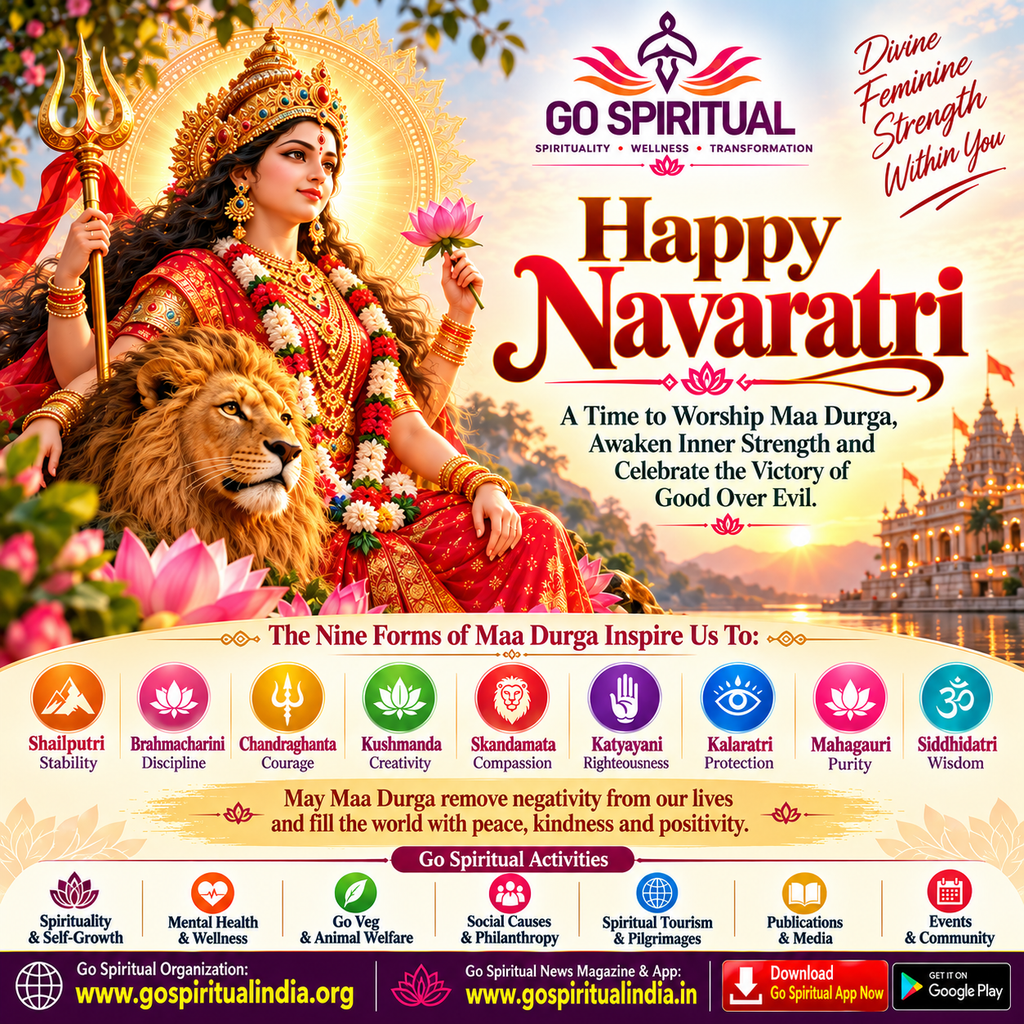
The word Navratri means nine nights, traditionally dedicated to the worship of the nine manifestations of Goddess Durga, collectively known as Navadurga. Each manifestation represents a distinct aspect of divine energy and spiritual development. From Maa Shailputri, symbolising strength and stability, to Maa Siddhidatri, associated with spiritual accomplishment, the nine forms inspire devotees to cultivate courage, wisdom, discipline, patience, compassion and inner awareness.
India observes several Navratri festivals throughout the year, with Chaitra Navratri and Sharad Navratri being the most widely celebrated. The festival brings together millions of devotees across different regions, each expressing devotion through distinctive customs and traditions. While Gujarat celebrates with Garba and Dandiya, West Bengal is renowned for Durga Puja, and northern India observes fasting, devotional gatherings and Kanya Pujan. Despite these cultural differences, the spiritual message remains universal: the triumph of positive forces over negativity and the awakening of divine consciousness within human life.
At the heart of Navratri is the powerful symbolism of Maa Durga’s victory over the demon Mahishasura. According to Hindu tradition, the Goddess defeated the demon after an intense battle, establishing the victory of Dharma over Adharma. Spiritually, Mahishasura can also be understood as representing the destructive tendencies that exist within human beings—ego, uncontrolled desires, anger, greed, arrogance, jealousy and ignorance.
The festival therefore encourages devotees to examine their own lives and recognise the inner obstacles that prevent them from becoming better human beings. Defeating anger, overcoming hatred, controlling selfishness and developing compassion can become meaningful expressions of devotion to the Divine Mother.
For Go Spiritual, Navratri is not merely a celebration of divine power; it is an opportunity for spiritual awakening, self-reflection and personal transformation. True devotion should inspire positive changes in behaviour, relationships and attitudes towards other living beings. Worshipping Maa Durga while continuing to practise cruelty, dishonesty, discrimination or hatred raises an important spiritual question: Have we understood the deeper message of the Goddess?
The festival also highlights the importance of Shakti, the divine feminine energy that sustains creation. In Hindu spiritual philosophy, Shakti represents the dynamic force of existence, reminding society of the sacred significance of feminine strength, wisdom and nurturing power. Navratri consequently provides an opportunity to reflect on the dignity, safety, equality and empowerment of women.
Respect for the Divine Mother should naturally translate into respect for mothers, daughters, sisters, wives, colleagues and every woman in society. A culture that celebrates feminine divinity must also ensure that women experience dignity, freedom, security and equal opportunities in everyday life. Spirituality becomes meaningful when reverence expressed in temples is reflected in human relationships.
Another important dimension of Navratri is fasting, traditionally associated with purification, restraint and spiritual discipline. Many devotees observe vegetarian or sattvic diets, avoid intoxicants and dedicate more time to prayer and meditation. Beyond dietary practices, fasting can encourage individuals to examine their habits, desires and attachments.
However, the deeper purpose of fasting should not be limited to avoiding certain foods. A truly spiritual fast can also involve avoiding anger, negative speech, jealousy, dishonesty and harmful behaviour. Giving up cruelty and cultivating compassion can be just as meaningful as following dietary restrictions.
Through its Go Veg initiative and campaigns promoting Ahimsa, animal welfare and compassionate living, Go Spiritual encourages people to consider how everyday choices can reduce unnecessary suffering. The organisation advocates vegetarianism as a conscious expression of non-violence, kindness and respect for living beings, while recognising the importance of awareness, dialogue and individual choice.
Navratri also offers an important opportunity to reconnect with family and community. In an increasingly fast-paced world, where stress, competition and digital distractions often dominate daily life, collective prayers, devotional music, meditation and cultural gatherings can provide moments of emotional connection and reflection.
The festival reminds us that spiritual strength does not necessarily mean physical power or the ability to defeat others. Sometimes the greatest strength lies in controlling anger when provoked, forgiving someone who has hurt us, helping someone without expecting anything in return or remaining hopeful during difficult circumstances.
Maa Durga’s many forms represent not only power but also compassion, protection and wisdom. Her divine strength is directed towards restoring balance and protecting the vulnerable. This offers an important lesson for contemporary society: power should serve justice, knowledge should inspire humility and spiritual awareness should encourage service to humanity.
Navratri is also a reminder that darkness and light coexist within human experience. Fear, uncertainty, disappointment and suffering are unavoidable parts of life, but faith can inspire the courage to confront difficulties rather than surrender to them. Prayer and meditation may provide emotional grounding, while spiritual teachings can encourage resilience, gratitude and hope.
As devotees celebrate Navratri through worship, fasting, Garba, Durga Puja and other traditions, the festival invites everyone to make a personal spiritual commitment. Instead of asking only for wealth, success, protection and prosperity, devotees can also seek the strength to become more compassionate, truthful, disciplined and responsible.
Ultimately, the greatest tribute to Maa Durga is not measured only by the grandeur of decorations, the number of prayers performed or the scale of celebrations. It is reflected in the goodness we cultivate within ourselves and the compassion we extend to others.
Navratri teaches us that the real victory of good over evil begins within. When we overcome hatred with compassion, ego with humility, fear with courage and selfishness with service, we begin to awaken the divine Shakti that the festival celebrates.
May Maa Durga bless humanity with wisdom, peace, courage, compassion and the strength to build a more spiritual, peaceful and harmonious world.
The post Navratri 2026: Celebrating Maa Durga’s Divine Shakti, the Victory of Good Over Evil and the Spiritual Power Within Us first appeared on Go Spiritual .
Festivals, durga puja, hindu, hindu festivals, hindu gods, jai mata di, maa durga, navratri, spiritual hindu, spiritual hindu festivals Go Spiritual
विश्व मानसिक स्वास्थ्य दिवस पर गो स्पिरिचुअल की अपील: परिवार में मानसिक सेहत को दें प्राथमिकता
संस्थापक सोनू त्यागी ने कहा—परेशानी बताने पर किसी को गलत न ठहराएं, उसकी बात ध्यान से सुनें, निजी बातों का सम्मान करें और समय पर विशेषज्ञ की मदद दिलाएं
मुंबई : विश्व मानसिक स्वास्थ्य दिवस पर गो स्पिरिचुअल ने परिवारों से अपील की है कि वे घर का माहौल ऐसा बनाएं, जहां कोई भी अपनी मानसिक परेशानी बिना डर के बता सके। उसे यह चिंता न हो कि उसकी बात सुनकर उसका मजाक उड़ाया जाएगा, उसे गलत समझा जाएगा या परिवार की इज्जत का सवाल उठाया जाएगा। अपने लगातार चल रहे “मन और आत्मा में संतुलन” — “Harmony in Mind and Soul” अभियान के तहत संगठन ने कहा कि पढ़ाई, करियर, आर्थिक सुरक्षा और शारीरिक सेहत के साथ मन की सेहत को भी परिवार में प्राथमिकता मिलनी चाहिए।
गो स्पिरिचुअल और अप्रोच एंटरटेनमेंट के संस्थापक सोनू त्यागी, जिन्हें 7वें वर्ल्ड मेंटल हेल्थ कांग्रेस एंड अवॉर्ड्स में “टॉप मोस्ट लीडर्स इन मेंटल हेल्थ” पुरस्कार से सम्मानित किया गया है, ने कहा कि जब कोई पहली बार अपनी परेशानी बताता है, तब परिवार का जवाब बहुत मायने रखता है। उससे व्यक्ति को आगे मदद लेने का भरोसा मिल सकता है। गो स्पिरिचुअल की अपील है कि परिवार सलाह देने से पहले बात सुने, निजी बातों का सम्मान करे, दोष न दे और जरूरत पड़ने पर योग्य विशेषज्ञ की मदद लेने में साथ दे।
सोनू त्यागी ने कहा, “हम बच्चों से उनके नंबर पूछते हैं, जीवनसाथी से काम के बारे में और माता-पिता से दवाइयों के बारे में पूछते हैं। हमें यह भी पूछना चाहिए कि वे मन से कैसा महसूस कर रहे हैं और उनका सच्चा जवाब सुनने के लिए तैयार रहना चाहिए। घर में कोई कह सके कि ‘मैं परेशान हूं’ और उसे कमजोर, एहसान न मानने वाला या शर्मिंदगी का कारण न कहा जाए। परिवार में मानसिक सेहत को प्राथमिकता देने की शुरुआत इसी आजादी से होती है।”
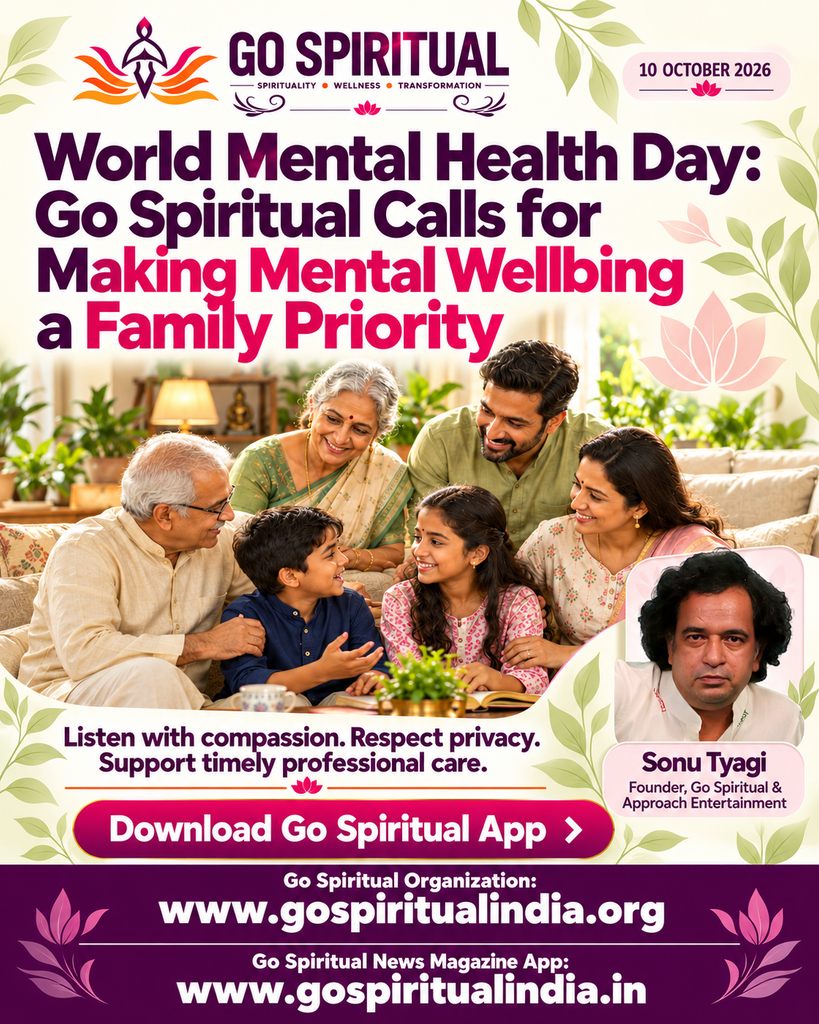
संगठन ने कहा कि प्यार और चिंता जताने का तरीका ऐसा होना चाहिए, जिससे मुश्किल बातों पर भी बातचीत हो सके। परिवार का कोई सदस्य अपनी परेशानी बताने से इसलिए हिचक सकता है क्योंकि उसे दूसरों से तुलना, आलोचना या उसकी निजी बात सबको बता दिए जाने का डर हो। कई बार परिवार की छवि बचाने का दबाव भी उसे चुप रख सकता है। गो स्पिरिचुअल ने परिवारों से कहा कि वे अपने व्यवहार पर ध्यान दें और ऐसा माहौल बनाएं, जहां मदद मांगने वाले व्यक्ति का सम्मान बना रहे तथा उससे जुड़े फैसलों में उसकी बात भी सुनी जाए।
त्यागी ने कहा, “‘लोग क्या कहेंगे’ की चिंता इलाज और मदद के रास्ते में नहीं आनी चाहिए। अगर किसी अपने को काउंसलिंग या मनोचिकित्सक से सलाह लेने की जरूरत है, तो उसकी सेहत से ज्यादा जरूरी परिवार की इज्जत नहीं हो सकती। मिलने का समय तय करने में मदद करना, उसकी इच्छा हो तो साथ जाना या उसे अपनी बात निजी तौर पर रखने का अवसर देना भी जरूरी सहयोग है।”
विश्व मानसिक स्वास्थ्य दिवस पर गो स्पिरिचुअल की अपील में बच्चों और युवाओं पर खास ध्यान दिया गया है। संगठन ने माता-पिता से कहा कि हर बातचीत को नंबर, नौकरी या शादी तक सीमित न रखें। युवाओं को अपनी निराशा, भविष्य की चिंता और दबाव के बारे में बात करने का मौका दें। उनकी बात सुनते ही समझाना शुरू करने या दूसरों की सफलता से तुलना करने के बजाय शांत तरीके से सवाल पूछें और ध्यान से सुनें।
यह अपील उन बड़ों की परेशानियों पर भी ध्यान देती है, जिनसे हमेशा जिम्मेदार और मजबूत बने रहने की उम्मीद की जाती है। माता-पिता, कमाने वाले सदस्य और दूसरों की देखभाल करने वाले लोग भी थक सकते हैं और परेशान हो सकते हैं। उनके लिए यह कहना मुश्किल हो सकता है कि अब सब संभालना भारी लग रहा है। गो स्पिरिचुअल ने परिवारों से जिम्मेदारियां बांटने और उनकी भावनात्मक परेशानी समझने की अपील की है। जो व्यक्ति सबको सहारा देता है, उसे भी सहारे की जरूरत हो सकती है।
अपने “मन और आत्मा में संतुलन” अभियान के तहत गो स्पिरिचुअल अपने विचारों और भावनाओं को समझने, ध्यान, योग तथा दया और समझ के साथ जीने का संदेश देता है। लोग अपनी इच्छा से इन तरीकों को अपना सकते हैं। संगठन का कहना है कि आध्यात्मिक अभ्यास मानसिक स्वास्थ्य विशेषज्ञों की मदद के साथ चल सकते हैं, लेकिन उनकी जगह नहीं ले सकते।
त्यागी ने कहा, “परिवार में कुछ समय शांति से बैठना या अपने मन की बात समझना अच्छा लग सकता है। लेकिन किसी पर अपनी आस्था साबित करने का दबाव नहीं डालना चाहिए और न ही किसी को इलाज बंद करने के लिए कहना चाहिए। परिवार की आध्यात्मिक जिम्मेदारी अपने व्यवहार में दया दिखाना है—एक-दूसरे का सम्मान करना, साथ देना और देखभाल करना।”
गो स्पिरिचुअल न्यूज़ मैगज़ीन और ऐप तथा अपने डिजिटल मंचों के जरिए संगठन मन की सेहत, रिश्तों, मानवता और समझदारी से जीवन जीने पर लगातार बातचीत को बढ़ावा देता है। विश्व मानसिक स्वास्थ्य दिवस पर उसका संदेश है कि परिवार इस सोच को पूरे साल अपनी रोज की बातचीत और व्यवहार में अपनाएं।
त्यागी ने कहा, “आज हम हर परिवार से एक सवाल पूछने की अपील करते हैं—‘क्या इस घर में हर कोई ईमानदारी से बता सकता है कि वह कैसा महसूस कर रहा है?’ अगर जवाब नहीं है, तो हमें मिलकर इसे बदलने की कोशिश करनी चाहिए। अच्छा घर वह है, जहां लोगों की बात सुनी जाए, उनका सम्मान बना रहे और मदद लेने का साथ दिया जाए।”
सोनू त्यागी पुरस्कार विजेता लेखक, निर्देशक और निर्माता हैं। उन्होंने मनोविज्ञान में स्नातक किया है और विज्ञापन प्रबंधन, पत्रकारिता तथा फिल्म निर्माण की पेशेवर पढ़ाई की है। उन्हें विज्ञापन, मीडिया, संचार और मनोरंजन के क्षेत्र में दो दशक से ज्यादा का अनुभव है। उन्होंने प्रमुख विज्ञापन एजेंसियों और मीडिया संस्थानों में काम करने के बाद अप्रोच एंटरटेनमेंट ग्रुप की स्थापना की। उन्होंने राकेश बेदी की भागीदारी वाली आध्यात्मिक वेब सीरीज और फिल्म टू ग्रेट मास्टर्स की रचना और सह-निर्माण किया है। वह वैश्विक थ्रिलर फिल्म लिबरेशन का भी सह-निर्माण कर रहे हैं और जल्द ही एक हिंदी फीचर फिल्म का निर्देशन और निर्माण करने की तैयारी में हैं।
गो स्पिरिचुअल एक आध्यात्मिक और वेलनेस संगठन है। यह आध्यात्मिकता, आध्यात्मिक जागरूकता, परोपकार और सामाजिक कार्यों, मानसिक स्वास्थ्य और सेहत, आयुर्वेद, संतुलित जीवन, जैविक जीवनशैली, आध्यात्मिक पर्यटन, मीडिया और आयोजनों के क्षेत्र में काम करता है। इसकी मीडिया पहल गो स्पिरिचुअल न्यूज़ मैगज़ीन और ऐप पर आध्यात्मिकता, सेहत, प्रेरक कहानियों और समझदारी से जीवन जीने से जुड़ी सामग्री उपलब्ध है।
अप्रोच एंटरटेनमेंट की सेवाओं में सेलिब्रिटी और टैलेंट मैनेजमेंट, फिल्म निर्माण, विज्ञापन और कॉर्पोरेट फिल्मों का निर्माण, फिल्मों की मार्केटिंग, आयोजन और मनोरंजन मार्केटिंग शामिल हैं। ग्रुप में अप्रोच कम्युनिकेशंस, पुरस्कार विजेता जनसंपर्क, डिजिटल और समग्र संचार एजेंसी, तथा अप्रोच बॉलीवुड, बॉलीवुड और मनोरंजन की खबरों का न्यूज़वायर, पोर्टल और ऐप, भी शामिल हैं।
मीडिया जानकारी के लिए: अप्रोच एंटरटेनमेंट / अप्रोच कम्युनिकेशंस
फोन: +91 9820965004 / +91 9716962242
ईमेल: info@approachentertainment.com
वेबसाइट: www.approachentertainment.comऔर www.approachcommunications.in
The post विश्व मानसिक स्वास्थ्य दिवस पर गो स्पिरिचुअल की अपील: परिवार में मानसिक सेहत को दें प्राथमिकता first appeared on Go Spiritual .
News, body mind and soul, go spiritual, mental health, mental health activist, sonu tyagi go spiritual, sonu tyagi mental health, spiritual, spiritual activist, spiritual events, spiritual events india, spiritual media, spiritual media agency, spiritual mind, spiritual pr, spiritual pr agencies in india, spiritual pr agency, spiritual retreats in india, spiritual retreats in m, spiritual retreats in rishikesh, spiritual wellness, wellness, world mental health day Go Spiritual
Go Spiritual Calls for Making Mental Wellbeing a Family Priority on World Mental Health Day
Founder Sonu Tyagi urges families to replace judgement with compassionate listening, respect privacy and support timely professional care
Mumbai, October 10, 2026: On World Mental Health Day, Go Spiritual has called on families to make their homes safe spaces where people can discuss mental health concerns without fear of judgement, ridicule or damage to the family’s reputation. Taking forward its ongoing “Harmony in Mind and Soul” campaign, the organisation is urging households to treat emotional wellbeing as a family priority alongside education, careers, financial security and physical health.
Sonu Tyagi, Founder of Go Spiritual and Approach Entertainment, who has been honoured with the “Top Most Leaders in Mental Health” award at the 7th World Mental Health Congress & Awards, said the way a family responds when someone first shares a concern can shape whether that person feels able to seek further support. Go Spiritual’s appeal focuses on practical changes at home: listening before offering advice, respecting privacy, avoiding blame and helping people access qualified care when needed.
“We ask our children about their marks, our partners about work and our parents about medicines. We must also ask how they are feeling—and be prepared to hear an honest answer,” Tyagi said. “A home becomes emotionally safe when someone can say ‘I am struggling’ without being called weak, ungrateful or an embarrassment. Making mental wellbeing a family priority begins with that freedom.”
The organisation said that love and concern need to be expressed in ways that allow difficult conversations. A family member may hesitate to speak about distress because they expect comparison, criticism, unwanted disclosure or pressure to protect the household’s image. Go Spiritual is encouraging families to examine these responses and make room for conversations in which the person seeking support retains dignity and a voice in decisions affecting them.
“Concern about ‘what people will say’ should never become a barrier to care,” Tyagi said. “If a loved one needs counselling or a psychiatric consultation, the family’s reputation should not take priority over their wellbeing. Helping someone arrange an appointment, accompanying them if they wish or giving them privacy can be a meaningful expression of support.”
Go Spiritual’s World Mental Health Day appeal places particular emphasis on how families respond to children and young adults. It urges parents to avoid making every conversation about performance, employment or marriage, and to give young people space to discuss disappointment, uncertainty and pressure. The organisation advocates calm questions and attentive listening rather than immediately turning a disclosure into a lecture or a comparison with someone else’s achievements.
The appeal also addresses adults whose distress can be overlooked because they are expected to remain dependable. Parents, earning members and caregivers may find it difficult to admit that they feel overwhelmed. Go Spiritual encourages households to share responsibilities, acknowledge emotional strain and avoid assuming that the person who supports everyone else never needs support themselves.
Within its “Harmony in Mind and Soul” approach, Go Spiritual promotes reflection, meditation, yoga and compassionate living as practices people may choose to support their wellbeing. It maintains that participation should be voluntary and that spiritual practices must complement, rather than replace, professional mental healthcare.
“A shared moment of reflection or a peaceful family routine can have personal meaning, but nobody should be pressured to prove their faith or told to stop treatment,” Tyagi said. “The spiritual responsibility of a family is to show compassion in its actions—to respect, support and care for one another.”
Through Go Spiritual News Magazine & App and its digital platforms, the organisation continues to encourage conversations about mental wellbeing, relationships, humanity and conscious living. Its World Mental Health Day message asks families to carry that awareness into ordinary interactions throughout the year.
“Today, we ask every family to begin with one question: ‘Can everyone in this home speak honestly about how they feel?’” Tyagi concluded. “If the answer is no, there is something we can work on together. A caring home is one where people feel heard, their dignity is protected and help is welcomed.”
Sonu Tyagi is an award-winning writer, director and producer, a Psychology graduate with professional training in Advertising Management, Journalism and Filmmaking. With more than two decades of experience across advertising, media, communications and entertainment, he began his career with leading advertising agencies and media houses before establishing Approach Entertainment Group. He created and co-produced the spiritual web series and film Two Great Masters, featuring Rakesh Bedi, and is also co-producing the global thriller film Liberation. He is soon preparing to direct and produce a Hindi feature film, further expanding his work in cinema.
Go Spiritual is a spiritual and wellness organisation working across Spirituality, Spiritual Awareness, Philanthropy & Social Causes, Mental Health & Wellness, Ayurveda & Holistic Living, Organic Living, Spiritual Tourism, Media and Events. Its media initiative, Go Spiritual News Magazine & App, offers content on spirituality, wellness, inspirational stories and conscious living.
Approach Entertainment works across Celebrity & Talent Management, Film Productions, Advertising & Corporate Film Productions, Film Marketing, Events and Entertainment Marketing. The group also includes Approach Communications, an award-winning PR, Digital and Integrated Communications Agency, and Approach Bollywood, a Bollywood & Entertainment Newswire, Portal & App.
For Media Information: Approach Entertainment / Approach Communications
Phone: +91 9820965004 / +91 9716962242
Email: info@approachentertainment.com
Visit us at www.approachentertainment.com & www.approachcommunications.in
The post Go Spiritual Calls for Making Mental Wellbeing a Family Priority on World Mental Health Day first appeared on Go Spiritual .
News, mental health, mental health activist, mental health activists in india, mental health speakers in india, mental wellness, spiritual, spiritual mental health, spiritual news, spiritual sonu tyagi, world mental health day Go Spiritual
