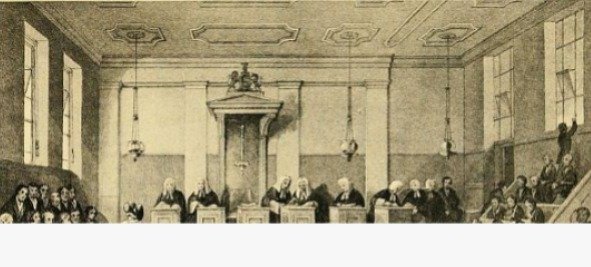

CASE DETAILS
Case Name: Ashby v. White
Citation: (1703) 92 ER 126; (1703) 2 Ld Raym 938

Court: Court of King’s Bench; subsequently considered by the House of Lords
Year: 1703
Plaintiff: Matthew Ashby
Defendant: William White
Judge: Chief Justice Holt, with Powell J, Powys J and Gould J
INTRODUCTION
Ashby v. White (1703) is a landmark case in English tort and UK Constitutional law. The case concerned the wrongful denial of a person’s right to vote. The case is therefore closely associated with the maxim “injuria sine damno”, meaning “legal injury without actual damage,” and “ubi jus ibi remedium”, which mean “where there is a right, there is a remedy.” Therefore, the case established the important principle that the violation of a legal right can be actionable even when the claimant suffers no actual or financial loss.
FACT OF THE CASE
Matthew Ashby was a qualified voter in the parliamentary election at Aylesbury. He attempted to cast his vote in the parliamentary election. William White, the police constable officer responsible for receiving the votes. Officer White wrongfully refused to accept Ashby’s vote on the ground that he was not a settled inhabitant of the borough.
Ashby claimed that he was legally entitled to vote and that White had denial of his voting right. Therefore, he brought an action against White. However, the candidate whom Ashby support, at the end of the result the candidate ultimately won the election. Therefore, the refusal of Ashby’s vote did not change the result of the election. Additionally, Ashby also not suffered financial loss as a result of his vote refusal.
ISSUES BEFORE THE COURT
- Whether the defendant’s wrongful refusal to accept the plaintiff’s vote amounted to a violation of his legal right?
- Whether the plaintiff was entitled to a legal remedy despite suffering when no actual or financial damage happened?
- Ashby argued that he was a qualified voter and therefore he had a legal right to cast his vote. But officer White wrongful refusal to accept his vote constituted an infringement of that right.
- It was argued that when the law gives someone a right, The individual should be able to take legal action when that right is violated. The absence of financial loss should not prevent an action.
- The right to vote is an important legal right, not just a privilege. Mr. White, officer wrongly prevented from voting, they should be able to take legal action, even if the election result remained unchanged.
- Defendant’s Arguments:
- Mr. White argued that Ashby had suffered no actual or financial loss because the candidate he wanted to vote for had already won the election.
- Since Ashby’s vote could not have changed the outcome of the election result, therefore, refusal to accept his vote did not cause any actual or practical harm.
- He was also argued that disputes concerning parliamentary elections were matters for Parliament rather than ordinary courts. The defendant’s position was that the courts should not interfere with the privileges of the House of Commons.
JUDGMENT
The majority of the Court of King’s Bench rejected Ashby’s claim. The Hon’ble Chief Justice Holt dissented with the majority and strongly believed that Ashby should have the right to seek a legal remedy when his voting right was infringement. Justice Holt CJ held that the violation of a legal right is itself an injury, even if the person does not suffer any financial loss. He emphasized that it would be meaningless if the law did not provide a legal remedy when that right was violated.
The matter was taken to the House of Lords, which reversed the King’s Bench decision and upheld Ashby’s claim. The Lords recognized that a person whose lawful vote was unlawfully denied by the responsible police officer. Terefore, that person could take legal action and recover damages.
RATIO DECIDENDI
The central principle in the case of Ashby v. White is that the violation of a legal right is actionable even without proof of actual damage. This principle is expressed through the doctrine of “injuria sine damno“. “Injuria” which is refers to the infringement of a legal right, on other hand, “damnum” which is refers to actual loss or damage. Therefore, injuria sine damno means that a person may suffer a legally recognized injury even without suffering financial or physical loss.
The case also reflects the maxim ubi jus ibi remedium which is refers as where there is a right, there is a remedy. The recognition of a right would have little practical value if there were no legal remedy for its violation.
CRITICAL ANALYSIS
The importance of Ashby v. White extends beyond the historical dispute over the right to vote. The case established that a legal right should not remain merely theoretical. When an individual is deprived of a right recognised by law, the courts should provide a legal remedy. It therefore strengthened the connection between legal rights and legal remedies.
Thus, the case decision is closely associated with the maxim ubi jus ibi remedium.
It also illustrates the principle of injuria sine damno, where legal injury may exist without actual loss. Although the case arose in eighteenth-century England, its principle remains legally significant. It continues to influence the understanding of rights, remedies, and judicial protection.
CONCLUSION
In the case of Ashby v. White (1703) is a foundational case on injuria sine damno. It established that the violation of a legal right can be actionable even without actual or financial loss. The case also reinforces ubi jus ibi remedium, which mean that where there is a right, there is a remedy. Its lasting importance lies in recognizing that denial of a legal right itself constitutes a legal injury, even without measurable damage.
REFERENCES
- Ashby v. White (1703), 92 ER 126; 2 Ld Raym 938
- House of Lords – Watkins v. Home Office: https://publications.parliament.uk/
- Berkeley Law Library – Judgments of Lord Chief Justice Holt in Ashby v. White: https://lawcat.berkeley.edu/record/1304173
- LawFoyer – Ashby v. White Case Analysis: https://lawfoyer.in/ashby-v-white/

