

The Bombay High Court has observed that Mumbai’s recurring monsoon flooding and chronic waterlogging cannot be attributed solely to the Brihanmumbai Municipal Corporation (BMC), holding that widespread illegal encroachments, blocked stormwater drains and the misuse of public infrastructure by citizens have substantially contributed to the city’s flooding woes.
The Division Bench of Acting Chief Justice Ravindra Ghuge and Justice Gautam Ankhad made the observations on Tuesday while hearing petitions concerning the removal of encroachments for the widening of the Sion-Trombay Road near Mandala village in Mankhurd.
During the hearing, the High Court observed that even a brief spell of rain is enough to bring large parts of Mumbai to a standstill because of years of unchecked encroachments, indiscriminate dumping of waste into drainage systems and continued violations of civic norms. The Court remarked that citizens should stop blaming the BMC alone for annual flooding, as the situation is largely a consequence of their own actions.
The judges observed that public land is routinely encroached upon, drains and gutters are clogged with debris and construction material, and civic infrastructure created for public use is frequently misused. The Bench noted that storm-water drainage lines have been covered with pavement blocks, pedestrian footpaths have been converted into parking spaces, and public walkways have been occupied by street vendors and temporary commercial establishments, thereby obstructing both pedestrian movement and the natural drainage of rainwater. In these circumstances, the Court said it would be unfair to hold the municipal corporation solely responsible for waterlogging.
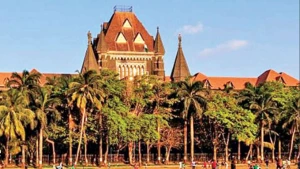
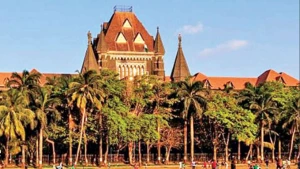
Referring to the area behind the Bombay High Court building, Acting Chief Justice Ghuge observed that even the footpaths surrounding the Court premises have been encroached upon by photocopy shops, tea stalls and other vendors. The Bench remarked that such widespread illegal occupation of public spaces leaves little room for pedestrians and reflects a broader civic problem that undermines urban infrastructure and public convenience.
The Court also expressed concern over what it described as the tendency of encroachers to invoke legal protections only after demolition action is initiated. It observed that persons who illegally occupy public land often insist upon statutory notice requirements and procedural safeguards when municipal authorities undertake demolition drives, despite having disregarded the law while carrying out the encroachments. The Bench indicated that unless there is a fundamental change in this culture of illegal occupation of public land and civic indiscipline, Mumbai will continue to experience severe waterlogging during every monsoon.
During the proceedings, Senior Advocate Milind Sathe, appearing for the BMC, submitted that the civic body had already removed encroachments and widened the existing road to 30 feet, a process that also involved the felling of nearly 192 trees. He informed the Court that the remaining land required to widen the road to 50 feet belongs to the Bhabha Atomic Research Centre (BARC), which functions under the Union Government’s Department of Atomic Energy (DAE).
The BMC submitted that it was willing to complete the road-widening project, but the additional encroachment-free land required between the existing 30-foot alignment and the proposed 50-foot road would have to be made available by the DAE. It contended that if BARC required a wider road for improved access and connectivity, the land necessary for the project would have to be provided by the Department.
Taking note of the submissions, the Division Bench observed that the Department of Atomic Energy would have to take an appropriate decision on whether it was prepared to part with the additional land required for the public infrastructure project. The matter has been posted for further hearing in the last week of July.

