
[ad_1]


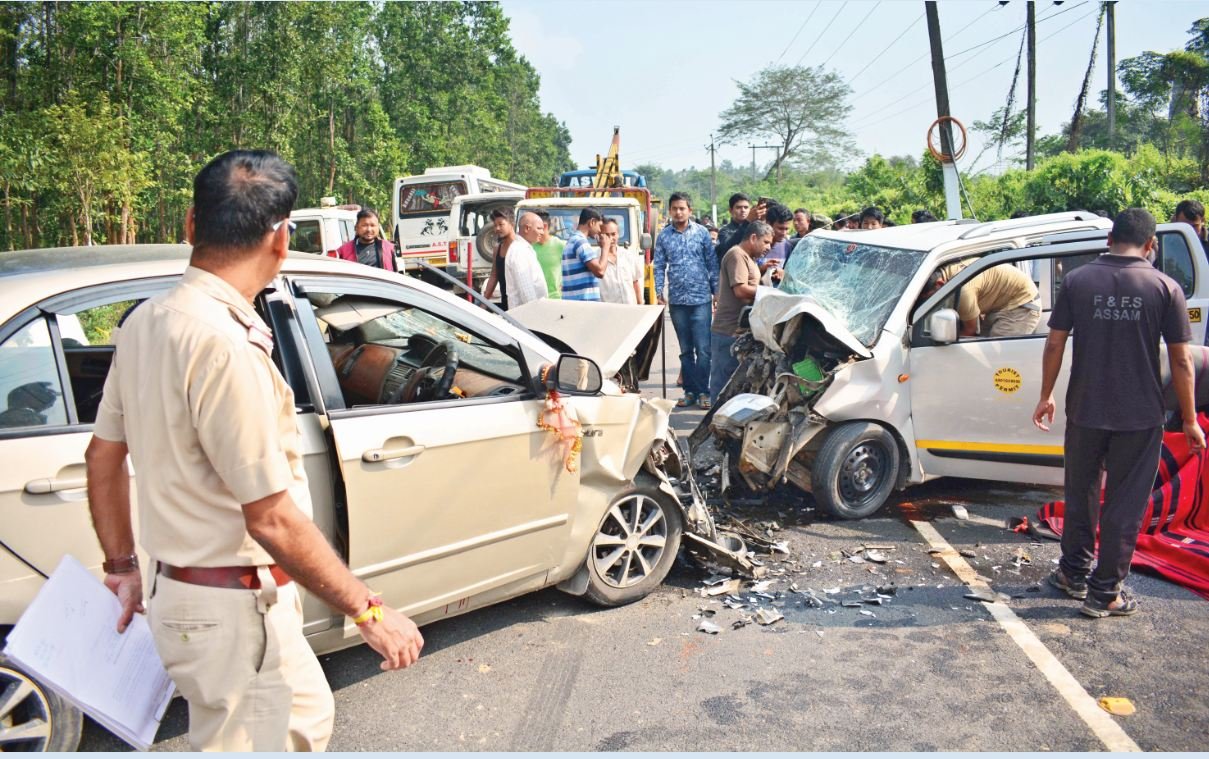
Pick up a newspaper on any given day and there will almost certainly be reports of road crashes: pedestrians knocked down while crossing the road, two-wheelers mowed down by speeding vehicles, or fatal collisions caused by blatant violations of traffic rules. For the shattered families left behind, however, the tragedy of the accident is only the beginning.
Compensation claims for road accidents in India can take three to five years or even longer to settle, particularly when dealing with third-party claims through Motor Accident Claims Tribunals (MACT). Despite legal frameworks designed to speed up resolution, more than Rs 80,000 crore in motor accident compensation remains unpaid as of early 2026, while over ten lakh cases are pending. With over five crore cases pending across India’s courts, MACT matters frequently face delays, with gaps between hearings often stretching beyond a month.
The reasons are rooted in the complex legal process involved. Claimants must gather evidence, examine witnesses, prove income, and obtain disability certifications where applicable. In just one city, Gurgaon, 100 out of 102 claims took over three years to settle, with only two resolved earlier. Even after a tribunal passes an award, beneficiaries often wait months or years to actually receive payment.
One example highlights the ordeal. In July 2024, a speeding Mercedes-Benz in Delhi’s Civil Lines, driven by a minor, killed Siddharth Sharma, 32. The court directed the insurance company to pay Rs 1.21 crore in compensation. Sharma’s sister, Shilpa Mittal, later revealed that it took eight years and endless court visits for part of the money to be paid, and she says she is still waiting for final justice.
Influence and money can also derail the legal and investigative process. That reality was starkly exposed in the Pune Porsche crash case 2024, when Vedant Agarwal, 17, allegedly killed two motorbike riders while driving a luxury sports car under the influence of alcohol.
Early reports revealed that he had been driving an unregistered Porsche and had consumed alcohol before the crash. His father arrived at the police station accompanied by Maharashtra legislator Sunil Tingre, and the police were accused of giving the teenager preferential treatment, including delays in conducting blood alcohol tests. The Juvenile Justice Board granted the minor bail within hours, triggering nationwide outrage.
Subsequent investigations uncovered even more disturbing developments. The minor’s blood sample was allegedly swapped with his mother’s, implicating both parents and hospital staff. The juvenile’s grandfather was accused of abducting a driver present at the scene and coercing him into taking the blame. After a series of legal developments, including intervention by the Bombay High Court, the Supreme Court eventually granted bail in February 2026 to those accused of tampering with the blood samples. The case remains emblematic of how justice can become distorted when wealth and influence intervene.
Meanwhile, a recent report by Cars24, titled, “Justice Unserved: Why Most Crash Victims Don’t Get Compensated in India”, reveals the scale of the crisis. According to the report, 10.46 lakh compensation cases are currently stuck in courts. Many victims come from poor families, making the long wait for compensation devastating, both emotionally and financially.
The study estimates that the average compensation case takes about 3.6 years to resolve, while many stretch far longer due to appeals and litigation. Even after tribunals pass compensation awards, accessing the funds remains a challenge. In Mumbai alone, more than Rs 459 crore remains unclaimed in MACT accounts, while Rs 361 crore lies unclaimed in Goa and Rs 282 crore in Gujarat, largely due to procedural hurdles and lack of awareness among victims’ families.
India’s legal framework includes the Hit-and-Run Compensation Scheme, under which families of victims whose offending vehicle cannot be traced are entitled to Rs two lakh in case of death and Rs 50,000 for grievous injury. Yet, the scheme remains severely underutilised. In 2022-23, only 205 claims were filed, nationwide. Even when filings increased the following year, just 10 states and one Union territory accounted for all recorded claims, revealing sharp disparities in awareness and access. The report argues that compensation is treated as a downstream legal issue rather than an integrated part of crash response, leading to extremely low claim rates.
In response to these systemic delays, the Supreme Court has directed that claims should be filed within six months, but not dismissed solely due to delay, noting that such dismissals defeat the “beneficial purpose” of the legislation. The Court has also attempted to address the larger issue of road safety. In October 2025, a bench, comprising Justices JB Pardiwala and KV Viswanathan, directed state governments, Union territories and the National Highways Authority of India to strictly enforce helmet laws for both drivers and passengers on two-wheelers. The judges encouraged the use of cameras to detect violations and asked authorities to share data on penalties, licence suspensions and fines collected.
Yet, enforcement on the ground remains patchy. In many cities, especially across the National Capital Region, it is common to see riders—including delivery personnel—driving recklessly, ignoring traffic signals and riding without helmets. Corruption within traffic policing further weakens deterrence.
A landmark case highlighting the scale of the crisis was S Rajaseekaran vs Union of India, where the petitioner, an orthopaedic surgeon, sought stricter enforcement of road safety laws. The Court noted with concern that official data showed over 35,000 pedestrians were killed in road accidents in 2023. In the same year, more than 54,000 two-wheeler riders and passengers died because they were not wearing helmets.
According to the government report. “Road Accidents in India 2023”, pedestrians accounted for 20.4 percent of all road fatalities, up from 10.4 percent in 2016. The same data revealed that 54,000 deaths were linked to non-use of helmets, 16,000 to non-use of seat belts, and 12,000 to vehicle overloading. Nearly 34,000 accidents involved drivers without valid licences.
Globally, the contrast is stark. India records the highest number of road accident fatalities in the world, with a road death rate of 250 per 10,000 kilometres. The comparable figure is 57 in the United States, 119 in China, and 11 in Australia.
According to data from the National Crime Records Bureau, 1.73 lakh people were killed and 4.47 lakh injured in road accidents in 2023, with nearly 46 percent of the victims being two-wheeler riders. Over speeding and careless driving remain the primary causes.
Traffic violations continue despite amendments to the Motor Vehicles Act Amendment, 2019, which significantly increased fines for breaking traffic rules. The reform was expected to deter violations financially, but its impact appears limited. Experts also point to the failure to enforce Section 106(2) of the Bharatiya Nyaya Sanhita, 2023, which enhanced penalties for fatal road accidents. Following widespread protests by truck unions, the provision was placed in abeyance by the government.
The law and courts may be slow in processing accident claims, and insurance companies often attempt to delay or deny payouts. Yet, stricter policing alone will not solve the crisis unless the legal system itself accelerates compensation for victims—many of whom lose their family’s sole breadwinner.
Public indifference also plays a role. Despite the Good Samaritan Law, many bystanders fear police involvement and hesitate to assist victims. This reluctance not only delays life-saving aid, but also weakens the evidence needed for compensation claims.
A landmark ruling in Parmanand Katara vs Union of India (1989) established that immediate medical care for accident victims is a fundamental right, overriding legal formalities such as filing an FIR. The judgment made it mandatory for both public and private hospitals to provide emergency treatment. Yet, violations persist. Just last week, two private hospitals in Badshahpur, Gurgaon, faced allegations of refusing emergency treatment to Shomita Singh, a 28-year-old Noida tech professional who later died from injuries sustained in a motorcycle accident.
Between the labyrinth of legal procedures, insurance delays, corrupt traffic enforcement and indifferent medical responses, road accident victims in India often face a system stacked against them. For many, the crash is only the beginning. The journey that follows is less a road to justice and more—quite literally—a highway to hell.
—The writer is former Senior Managing Editor, India Legal magazine
[ad_2]
Source link

