



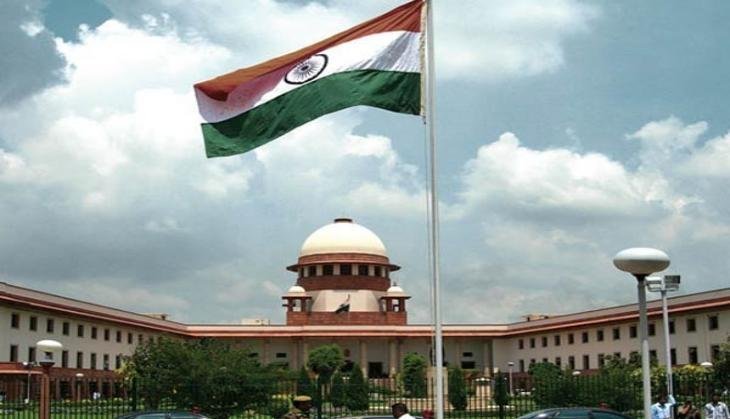


Supreme Court of India: Whether a clause mentioning ‘Arbitration’ but primarily providing for Negotiation, Mediation, and recourse to Civil Courts qualify as a valid Arbitration Agreement?
In M/s Alchemist Hospitals Ltd. v. M/s ICT Health Technology Services India Pvt. Ltd. 2025 INSC 1289, the Supreme Court of India decided the issue of whether a clause in a contract that uses the word “arbitration” but primarily provides for negotiation and mediation, followed by recourse to civil courts, can be treated as a valid arbitration agreement under the Indian Arbitration and Conciliation Act, 1996.
Factual Matrix
In the facts of the case, the appellant, M/s Alchemist Hospitals Ltd., entered into a Software Implementation Agreement (‘Agreement’) on 1 November 2018 with the respondent, M/s ICT Health Technology Services India Pvt. Ltd., for deploying its hospital management software “HINAI Web.”
The implementation faced repeated delays and technical failures, leading to rollback of the system twice. Resultantly, the appellant invoked Clause 8.28 of the Agreement, which mentioned negotiation, mediation, and “arbitration” by the Chairmen of both companies as a mode dispute resolution. Clause reads as under:-
“8.28 – Arbitration
The parties shall attempt in good faith to resolve any dispute arising out of or relating to this Agreement promptly by negotiation between executives, who have authority to settle the controversy and who are at a higher level of management, than the persons with direct responsibility for administration of this Agreement.
If the matter is not resolved by negotiation pursuant to paragraph above, then the matter will proceed to mediation as set forth below:
Any dispute, controversy or claim arising out of or relating in any way to the Agreement/the relationship, including without limitation, any dispute concerning the construction, validity, interpretation, enforceability or breach of the Agreement, shall be resolved by arbitration through senior management comprising respective Chairmen of the two parties (Arbitrators). Should the dispute not be resolved within fifteen (15) days after arbitration, the complaining party shall seek remedies through the courts of law. The demand for arbitration should be made within a reasonable time (maximum 60 days) after the dispute or matter in question has arisen.”
Appellant issued a notice under Sections 11 and 21 of the Indian Arbitration and Conciliation Act, 1996 (‘Arbitration Act’) proposing appointment of a sole arbitrator. The respondent did not agree and suggested another trial instead. Consequently, the appellant approached the Punjab & Haryana High Court under Section 11(6) of the Arbitration Act for appointment of an arbitrator. The High Court dismissed the application, holding that Clause 8.28 did not constitute a valid arbitration agreement but only provided for negotiation and mediation, with recourse to civil courts thereafter. This led to the present appeal before the Supreme Court.
Parties Contentions
The appellant argued that Clause 8.28 of the Agreement was a valid arbitration agreement under Section 7 of the Arbitration Act. They emphasized that the clause repeatedly used the term “arbitration,” was in writing, and related to a defined legal relationship, thereby satisfying statutory requirements. The appellant contended that party autonomy allowed the Chairmen of both companies to act as arbitrators and that subsequent correspondence from the respondent, which did not deny the arbitration clause, demonstrated mutual consent to arbitrate.
Conversely, the respondent maintained that Clause 8.28 did not constitute an arbitration agreement but merely outlined a three-tier dispute resolution process—negotiation, mediation, and then recourse to civil courts. They argued that the clause lacked essential attributes of arbitration, such as finality and enforceability, and that appointing the parties’ own Chairmen as “arbitrators” undermined impartiality. The respondent further asserted that their communications suggesting another trial of the software project could not be construed as consent to arbitration, as the clause never intended to create a binding arbitral process.
Issues
The issue before the Court was whether Clause 8.28 of the Agreement constitutes a valid arbitration agreement under Section 7 of the Arbitration Act. The Court had to determine if the clause, despite using the word “arbitration” multiple times, reflected an intention to submit disputes to a binding arbitral process or merely provided for negotiation and mediation followed by recourse to civil courts.
Findings of the Court
The Supreme Court found that Clause 8.28 of the agreement did not constitute a valid arbitration agreement under Section 7 of the Arbitration Act. The Court held that mere use of the word “arbitration” in the clause was not decisive and what matters is the parties’ intention to submit disputes to a binding arbitral process.
On examining the clause, the Court observed that it only provided for negotiation and mediation between senior executives and Chairmen of the companies, followed by recourse to civil courts if disputes remained unresolved. There was no indication that the Chairmen’s decision would be final and binding, nor was there any provision for a neutral third-party adjudicator, which is a fundamental attribute of arbitration.
The Court also noted that subsequent correspondence between the parties could not cure the absence of an arbitration agreement in the first place. Consequently, the Court affirmed the High Court’s view that Clause 8.28 was merely a mechanism for internal settlement and dismissed the appeal, leaving the appellant free to seek remedies before a competent civil court.
Thus, mere use of the word “arbitration” in a dispute resolution clause does not make it an arbitration agreement under Section 7 of the Indian Arbitration and Conciliation Act, 1996. For a clause to qualify as an arbitration agreement, it must clearly indicate the parties’ intention to submit disputes to a binding arbitral process, with finality and enforceability, and typically involve a neutral adjudicator. A clause that only provides for negotiation or mediation, followed by recourse to civil courts, lacks these essential attributes and cannot be treated as an arbitration agreement.