




By Sanjay Raman Sinha
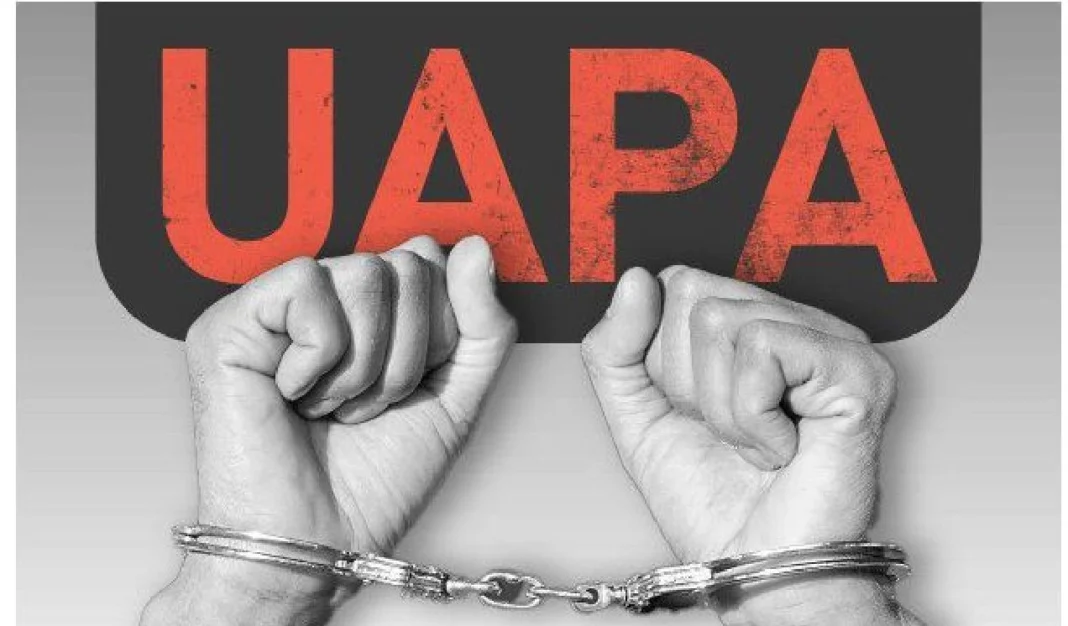
Prolonged incarceration under the Unlawful Activities (Prevention) Act (UAPA) has once again come under sharp judicial scrutiny. In a significant move, the Supreme Court has issued notice to the centre and state governments, asking them to estimate the staffing required to clear pending UAPA and related criminal cases in National Investigation Agency special courts within a year.
The directive came from a bench led by Chief Justice of India Surya Kant and Justice Joymalya Bagchi while hearing a suo motu matter on the creation of exclusive courts to tackle the backlog of trials under special laws.
The bench underscored a fundamental constitutional principle: prolonged incarceration without trial violates Article 21, which guarantees the right to life and personal liberty. It directed that such cases be heard on a day-to-day basis so that the process itself does not become the punishment.
Days earlier, Justice Ujjal Bhuyan of the Supreme Court voiced a similar concern in striking terms. He warned that the aspiration of a Viksit Bharat 2047 cannot be realised through the criminalisation of dissent, indiscriminate arrests under anti-terror laws, or the widening of “deep social fault lines”.
Bhuyan pointed to stark statistics: between 2019 and 2023, thousands were arrested under UAPA, yet the conviction rate hovered around just five percent. Such figures, he cautioned, suggest that the law may be “overused, if not misused”.
Judicial discomfort with sweeping criminal laws is not new. In SG Vombatkere vs Union of India (2022), the Supreme Court effectively put the colonial-era Section 124A of the Indian Penal Code—the sedition law—into abeyance, noting that it was no longer in tune with contemporary democratic values. The law was subsequently dismantled by the Union government.
In recent years, however, both the UAPA and the Prevention of Money Laundering Act have drawn criticism for allegedly being weaponised by political establishments. Critics say the laws increasingly ensnare civil society members, activists, students and journalists rather than focusing solely on violent extremist networks.
The Bhima Koregaon case remains a defining example. Several activists were arrested under UAPA provisions, including the late tribal rights campaigner Stan Swamy. Journalist Siddique Kappan was also detained in a separate case under the law, triggering widespread debate about the shrinking space for dissent.
Justice Bhuyan lamented that authorities have often invoked the law even in cases involving public demonstrations or student activism, sometimes triggered by memes or social media posts. Such instances, he suggested, reveal a troubling drift away from the law’s intended purpose.
The low conviction rate reinforces these concerns. According to data cited in court, thousands have been arrested under UAPA between 2019 and 2023, yet only a fraction of cases have ended in convictions. A developed nation, Bhuyan stressed, must place constitutional values above political slogans.
The Supreme Court itself has repeatedly flagged the dangers of indefinite detention. In Union of India vs KA Najeeb (2021), it ruled that statutory restrictions on bail cannot override the fundamental right to a speedy trial. More recently, while hearing aspects of the Delhi riots conspiracy case, the Court observed that excessive delay in trials can trigger heightened constitutional scrutiny.
Legal scholars describe UAPA jurisprudence as a “constitutional paradox”. Laws designed to protect the nation can, in practice, shackle its citizens. Under Section 43D(5) of the UAPA, the burden effectively shifts to the accused, and courts rely on a “prima facie” threshold when deciding bail—making release extraordinarily difficult.
As trials stretch for years, many accused remain behind bars as undertrials. Data suggests that in some states nearly 80 percent of convictions arise from guilty pleas, not fully contested trials—often a desperate attempt by detainees to escape years of pre-trial incarceration.
The Court has repeatedly reminded authorities that dissent is integral to democracy. In Adane vs State, it cautioned that the line between protest and terrorism must not be blurred, calling dissent the “safety valve” of democracy.
Judges have also criticised rigid “no-bail” regimes under special statutes. In the Arnab Goswami bail case (2020), Justice DY Chandrachud memorably observed: “Deprivation of liberty even for a single day is one day too many.”
Yet, concerns persist about the lower judiciary’s reluctance to grant bail in such cases. Justice Bhuyan candidly remarked that some judges appear “more loyal than the king”, a remark widely interpreted as a warning against excessive deference to prosecutorial narratives.
The Supreme Court’s latest intervention seeks structural reform. By assessing staffing requirements and proposing that NIA courts focus exclusively on UAPA and related cases with daily hearings, the Court hopes to streamline proceedings and reduce delays.
Whether these measures will restore balance between national security and civil liberties remains uncertain. The larger challenge lies in ensuring that anti-terror laws are neither diluted nor weaponised—but reformed in line with constitutional guarantees and the evolving social milieu.