


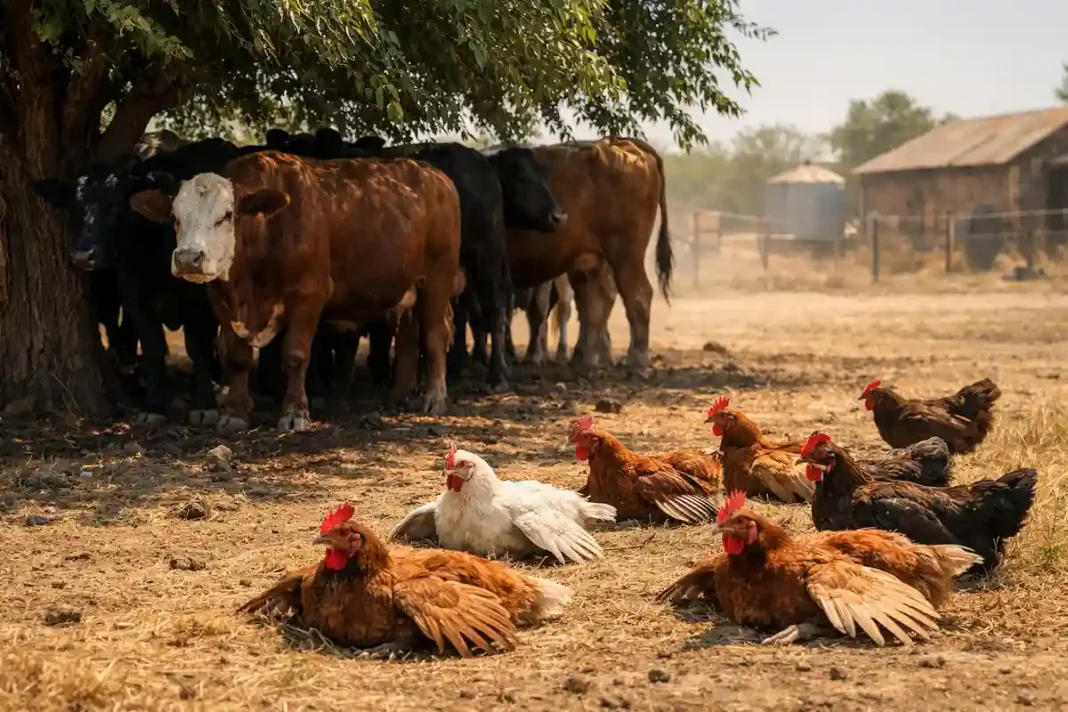
If you’ve ever checked your herds on a scorching afternoon, you already know how quickly heat changes the mood on your farm. The pasture gets quiet, and cattle bunch up in the last few patches of shade. In the yard, chickens pant with wings outstretched, and even animals that usually roam all day look sluggish. This guide discovers the hidden dangers of heat stress in livestock.
That behavior is about more than discomfort — it’s heat stress, and it can melt away your farm’s productivity. Cows stop producing as much milk, cattle struggle to gain weight and even egg production drops. Overheated animals eat less and become more vulnerable to illness.
Many farming practices unintentionally worsen the problem, with tree removal in pastures and crop land stripping away natural protection through shade loss. Understanding how excess warmth affects livestock helps you protect your herds and operation.
The Economic Toll of an Overheated Herd

The loss of natural shade is so severe that the UK government issues tree protection orders to secure remaining trees on government and private land. Without protection, heat stress shows up in animal behavior, and it’s often felt by farmers when it affects production numbers.
When animals spend energy trying to stay cool, they stop using it for growth, milk production and reproduction. Over time, those losses can add up to significant financial setbacks.
Reduced Feed Efficiency
One of the first changes you may notice during extreme heat is reduced appetite. Livestock naturally eat less when the mercury rises. Digestion raises the body temperature, and animals instinctively avoid anything that makes them warmer.
That means the feed you provide converts less efficiently into growth. Beef cattle may gain weight more slowly, while poultry eat less and may even go into distress with fatal consequences.
You can check here: Homemade Feed Formulation for Livestock.
Lowered Reproductive Performance
Heat stress may also interfere with fertility. Eggs may not hatch during excessively warm conditions, while conception for cows drops with increased embryo loss. Bulls may even experience lower sperm quality during prolonged heat waves, and in scorching conditions, they are less interested in the cows. Young and old animals easily sicken and die during hot conditions, reducing herd expansion.
Declined Production
Dairy cows show stress through production loss. Milk yields fall during hot weather because cows drink more and eat less feed. Meat stock grows more slowly, affecting slaughter timelines. Even a short swelter can have an economic impact for several weeks.
Increased Operating Costs
While productivity drops, costs rise. Livestock drink more, which increases demand and the cost of pumping water from underground sources. Vet bills skyrocket to treat dehydrated animals with electrolytes and manage respiratory issues triggered by heat stress.
Increased insect swarms also affect the herd during high temperatures. Flies and biting insects irritate herds in the pasture and further exhaust them. Farmers must expend labor and financial resources to care for distressed animals with repellent sprays and dips.
How Heat Stress Affects Different Livestock

Various farm animals react differently to high temperatures.
| Livestock | Vulnerability | Reaction to Heat |
| Cattle | Highly sensitive | Cattle reduce feeding and lose production weight. |
| Pigs | Extremely vulnerable | Pigs can’t sweat, which increases their internal body temperature and can lead to sunburn and death. |
| Poultry | Medium to high sensitivity | Poultry experiences dehydration, overheating and death. |
| Sheep and goats | Moderate to high sensitivity | Unshorn sheep overheat quickly due to reduced wool fiber quality, and dehydration may lead to death. |
Practical Ways to Prevent Heat Stress
You can reduce production loss during high temperatures with a combination of simple management strategies. No single solution solves the problem on its own. Most successful farms combine shade, water management, airflow and grazing adjustments to keep herds and flocks comfortable during hot weather.
Provide Effective Shelter and Shade
Shade is one of the simplest ways to protect livestock from hot spells. Many traditional farms rely on scattered trees for natural shelter, but as expanding pastures reduce the number of trees, providing artificial UV protection and covering is the next best thing.
Tarps and sails mounted between gum poles can reduce sunlight intensity, improving animal comfort and maintaining weight gains. Studies show that cattle with access to shade eat more and gain weight in warmer weather. Providing shelter also meets animal welfare requirements, and it satisfies 80% of organic produce consumers who demand a better quality of life for farm animals.
Ensure Constant Access to Cool Water
Fluids play a major role in temperature regulation. Livestock drink significantly more during high-heat periods, sometimes doubling their normal intake. Troughs should be easily accessible and refilled regularly.
Ensure these are under cover to keep them cooler, as no animal wants to drink boiling water. Multiple refreshment points ensure every herd member has access.
Improve Air Circulation
Air movement cools hot bodies more efficiently, which is why poultry barns often have large industrial fans to maintain cooler temperatures. Even your cattle shed can benefit from fans to help the animals cool down.
Use Misters or Sprinklers
Water-based cooling systems provide relief by misting or sprinkling to lower body temperature through evaporative cooling. Use different sprinkler tempos and intensities to find what works best for your stock and optimize water use relative to production rate. Spraying pigs is especially effective.
Adjust Grazing and Feeding Schedules
Change daily routines to help animals avoid being outdoors during the hottest part of the day. Many farmers pasture their herds early in the morning and return them late in the afternoon, taking advantage of lower temperatures to make travel easier. Supplemental feeding during cooler hours encourages production stock to eat and maintain normal weight gain.
Consider Heat-Tolerant Breeds
Some livestock breeds handle humidity better than others. Select species adapted to warm climates as part of your long-term herd planning and manage the impact of extreme temperatures genetically. Heat-tolerant species often maintain feed intake and production more consistently during summer.
Planning Protects Your Farm

Heat stress builds gradually as temperatures rise and humidity increases. By recognizing early warning signs and implementing practical strategies, such as providing shade, improving air flow and ensuring reliable water access, you can protect your livestock and farm’s productivity.
For farmers and homesteaders alike, managing heat stress is not simply an animal welfare issue. It’s an investment in healthier animals, stronger production and a more resilient farming operation.