



Blinking
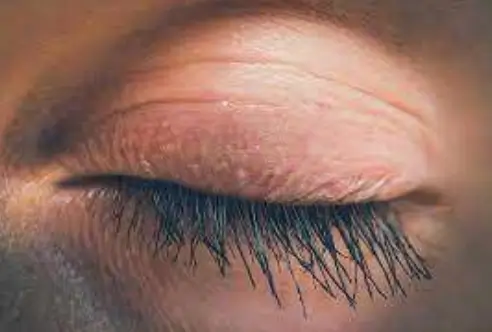
Blinking is something every single one of us does, and so do the animals. It is a body function so involuntary but sometimes voluntary at the same time.
Blinking clears the eye with the help of tears, cleans the surface of the cornea and the conjunctiva, and keeps the eye lubricated so it doesn’t dry out.

Blinking is used for many other reasons than just clearing the eyes, one of the reasons thought to be is to redirect brain power to internal processing by disengaging attention, Blinking of one eye is a form of body language, blink behaviour may be linked to psychological stress, ex: lying affects your blink rate, the production of the happy hormone is also linked to spontaneous eye blinking, people with schizophrenia blink more, while when less of the happy hormone is present one tends to blink less such as in Parkinson’s disease.
The amount of time in one’s blinks can be attributed to something called a ‘Blink Rate’ UCL research says one blink happens between 100-150 milliseconds and the Harvard Database of useful biological numbers says the no. is in between 100- 400 milliseconds.
Spontaneous Blinking: This is when the Blinking happens without outside reasons, it happens without the person knowing, and it is as seamless as breathing.
Reflex blink: This type of blinking happens when something comes at you rapidly or because of external aggression even by things such as sunlight or loud noises. This type of blinking is faster than the previous type of blinking, and it is also not a conscious type of blinking.
Voluntary Blink: this is a type of blink that is done consciously and with your full knowledge. Blinking in Children: Infants rarely blink, they blink maybe 2 or 3 times per minute, the reason is not known, it is thought to be because they sleep a lot, that they do not require as much eye lubrication as
that adults because their eyelid opening is smaller, and or because they do not even produce tears in the first few months in life. This blink rate though increases and by the time they are teenagers their blink rate is nearly identical to that of adults.
Blinking in Adults: it is not known why but in some research the blink rate is twice that of men for women and in other research there is no difference in their blink rate. Women using oral contraceptives blink about 32% more than other women, people who read blink only about 3- 4 times per minute which is why their eyes dry out, and so it does for the people who work a lot on their computers too. Blinking can also be an indicator of the onset of certain diseases like Tourette syndrome, stroke, etc. Blinking while being a Formula 1 race car driver
As seen above every time we blink, our eyes are closed up to at least 100 milliseconds at a time, it can almost be up to 1 fifth of a second. The normal driving speed of a Formula 1 race car is 354 km per hour, so blinking for even such a small amount of time could prove very dangerous for them, because they may lose vision for many metres at a stretch.
But blinking can even be forced- involuntary, and blinking is necessary to keep your eyes properly lubricated otherwise it may cause problems during the competition, and during such races, one cannot just lift their hands off the wheel and wipe their eyes.
This fascinated a Neuroscientist Ryota Nishizono, with his past as a professional racing cyclist he wanted to know how humans process information during physical activity. He didn’t find any research on blinking while in an active state for humans even while performing extreme sports such as motor racing or cycling especially because a slight mistake could lead to life-threatening danger. That is why he partnered with the Japanese Formula 1 racing team to find out how humans in such extreme conditions manage to blink.
3 Formula 1 drivers, drove 304 laps around 3 formula1 racing tracks in Fuji, Suzuka, and Sugo. All 3 drivers were fitted with eye motion capture cameras.
All 3 drivers blinked on safer highways and never blinked while changing speed accelerating, or changing direction. This pattern was also very similar among all 3 drivers and after a time it became predictable at which points in the laps the drivers blinked. There were 3 patterns identified they were; a driver’s blink count, lap pace with strict following of pattern on each lap, and car acceleration concerning the time and place to blink. They also saw that the blink pattern reflected the cognitive states of the drivers.
This finding is helping tell us how keeping our eyes moist during crucial tasks and not losing vision is such a balanced act. Nishozono now wants to explore what changes in the brain that make our eyes blink at any point in time. He also wants to conduct a generalised study on the larger population to see how this behaviour affects the day-to-day life of many people.