



Last Updated:
Mercedes are dominating early in F1 2026, but the newly-introduced ADUO could help struggling teams catch up — and help F1 avoid another one-sided era.




(Photo Credit: AFP)
Okay, Toto. We get it — you have a rocketship.
Two races into Formula 1’s bold new 2026 era, and Mercedes have rolled out something that looks less like a car and more like a cheat code on wheels.
The W17 is not just quick — it’s ‘blink and you’ll miss it’ quick.
Hell, it’s like watching the Road Runner. Ferrari are doing everything they can to box them in, but every time they get close — meep meep — Mercedes vanish into clean air again.
New Rules, Same Old Story?
The 2026 regulations — which brought in new power units, smaller chassis, and a complete aerodynamic rethink — were supposed to shake things up.
Instead, what we’ve got — for now, at least — feels like a rerun of 2014, just with better graphics. (and a better way to consume all the internal drama, too. Thanks, Drive To Survive)
Back then, Mercedes cracked the hybrid code early and left everyone else playing catch-up for years. Seven years, to be precise.
And here we are again, barely two races in, already wondering if history is about to repeat itself.
The difference this time? The FIA saw it coming.
What Exactly Is The ADUO?
Enter ADUO. And no, it’s not a secret upgrade hidden under the floor.
ADUO stands for Additional Development and Upgrade Opportunities, and it’s essentially F1’s version of a safety net.
Not a shortcut. Not a bailout. Just a way to make sure nobody gets stuck at the back with no way forward.
Because here’s the catch: once power units are homologated (read: locked in), you can’t just tear them apart and start again mid-season. That’s not how this works.
Between cost caps, technical restrictions, and sheer engineering complexity, rebuilding an engine on the fly is akin to performing open-heart surgery during a marathon.
That’s where ADUO comes in.
Let me allow the words of FIA single-seater boss Nikolas Tombazis, from his interview with Motorsport last year, to put it simply.
“We do have newcomers, and it is always a risk at the start of a new cycle that there is some divergence initially.”
“For that reason, there is a concept called ADUO… Additional Development and Upgrade Opportunities.”
In plain English: if you mess up your engine, at least you won’t be doomed for five years straight.
Why Does It Even Exist?
Well, F1 has already lived through the alternate reality (ahem, Mercedes in 2014, ahem), and it wasn’t fun.
Manufacturers like Ferrari, Mercedes, Red Bull, Honda, and Audi have spent years and millions building their 2026 engines.
Some nailed it, while others… are still reading the manual, for lack of a better term.
Now, the purists will raise an eyebrow here, and perhaps equate helping struggling manufacturers to the dreaded ‘Balance of Performance’ — a phrase that tends to send traditional F1 oldheads into a fit of rage.
But here’s the reality: a five-year engine freeze with one dominant supplier is bad for business.
Fans tune out. Sponsors hesitate. Teams suffer.
The ADUO doesn’t level the playing field completely, but it just makes sure it doesn’t collapse entirely — and gives the backmarkers a chance to change their fate.
So, How Does ADUO Actually Work?
Alright, here I go.
Imagine the F1 season as a high-stakes exam.
Mercedes? They’re the student who somehow finished early, double-checked everything, and is now casually tapping their pen, waiting for the bell.
Everyone else? Still flipping pages, hoping the next question is easier.
ADUO is the teacher quietly allowing the struggling students a quick extra glance at their notes, but only if they’re clearly behind.
Here’s how the FIA defines “struggling” in technical terms:
If your engine is 2-4% slower than the best:
- 1 extra upgrade this season
- 1 extra upgrade next season
If you’re more than 4% behind:
- 2 extra upgrades this season
- 2 extra upgrades next season
And it’s not just about upgrades. Teams that fall short may also receive additional development budget flexibility and extra dyno (test bench) hours.
In the words of Tombazis, again, “Those who are below a certain level… will get that benefit accumulating over the year.”
“That benefit would translate into… additional development money, more dyno hours and the possibility to make a new homologation of the engine.”
So, if you fall so far behind, you’ll get tools to catch up. But hey, no guarantees. Remember, it’s still up to you to write the correct answers on the test.
The Fine Print (Because There’s Always Fine Print)
Before anyone asks: no, this isn’t a free cheat code you can spam all season.
ADUO upgrades are not cumulative. You only get them once you qualify, and they’re only available during specific windows. Plus, you cannot carry ‘missed chances’ from one season into the next.
And when exactly can you get the chances? Well, each season is divided into four checkpoints (roughly every six races), where the FIA will evaluate engine performance and decide who qualifies for help.
Oh, and one more important thing: this is NOT judged by race results. It’s based on dyno data, i.e. raw engine performance metrics.
So even if a car performs decently on track, it could be lacking under the hood (Ah yes, Max from 2025) — and they can have a chance to reinvent themselves a bit.
Who Stands to Benefit Right Now?
Right now, Mercedes aren’t just leading the pack. They are the benchmark everyone else is nervously chasing.
And that’s exactly where ADUO comes in, quietly sharpening the plot.
Because while Mercedes are cruising, not everyone is having a good time.
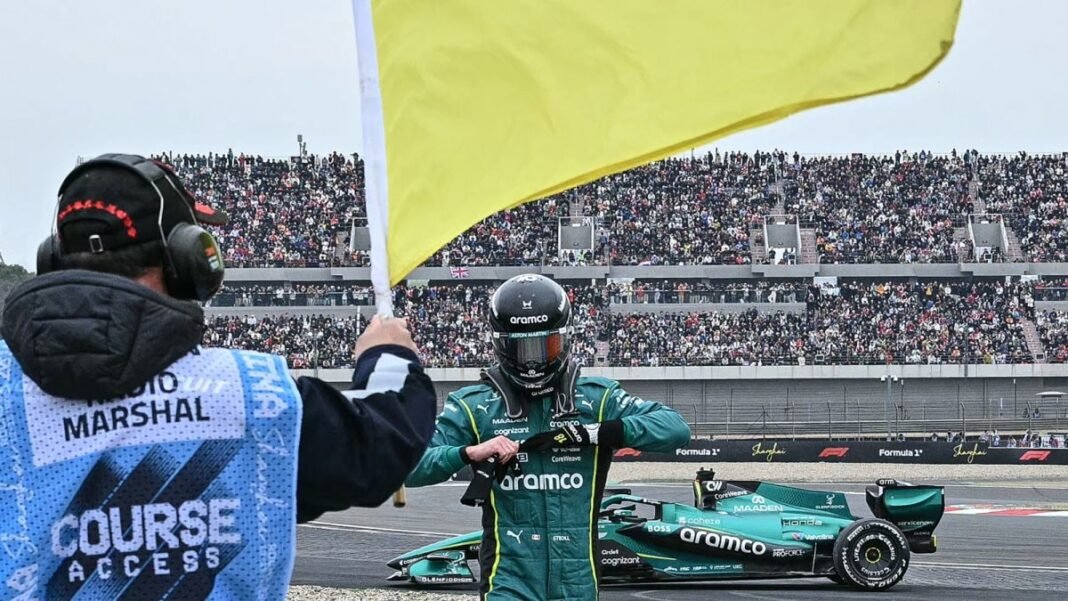
Early signs suggest Honda, now powering Aston Martin, are already fighting demons. We’re talking nasty vibrations, inconsistent energy deployment, and an AMR26 that’s starting to feel… well, cursed. (Seriously, Fernando, take care. You’re the one with the wife and kids now.)
If those issues push Honda beyond that dreaded 4% deficit threshold, ADUO stops being a safety net and starts looking like a full-blown lifeline.
But… here’s where it gets really interesting.
The Brixworth-built engine? It’s not exclusive to Mercedes. It also powers McLaren, Williams and Alpine.
So logically, all four teams should be flying. Right? Right?
Yeah… not quite.
Mercedes are the only ones truly making it sing, which poetically tells you everything you need to know about the new age of F1.
The engine might be the heart, but without the right aero wrapped around it, you’re basically strapping a rocket to an overloaded shopping cart. (Yes, Williams, I’m looking right at you.)
Isn’t ADUO Unfair On The Top Team?
Um, absolutely not.
The ADUO isn’t about dragging Mercedes back. It’s about making sure everyone else has a fighting chance to move forward.
Because if 2026 turns into a one-team procession again, F1 risks undoing years of work they did in building their popularity.
So, In Conclusion…
Right now, Toto Wolff’s students are on top of the leaderboard, quite comfortably. But the rest of the grid? They might just be handed a second shot at the exam.
And in F1, sometimes a second shot is all one needs.
Who knows? Maybe a fired-up Charles Leclerc or a resurgent Lewis Hamilton might still have a few answers left to scribble before the final bell rings.
March 25, 2026, 21:19 IST
Read More