
By Kumkum Chadha
Manipur is on fire yet again. Hours after the new government was sworn in, protests broke out: roads were blocked and markets and offices were shut. Even as the newly appointed Chief Minister, Yumnam Khemchand Singh, a black belt in martial art taekwondo, took oath, one of his deputies was under attack.
Singh, an old BJP hand, has served as speaker of the legislative assembly and also a state minister. He belongs to the majority Meiti community: one that is daggers drawn with the Kuki-Zo minorities.
Since 2023, Manipur has been in the throes of violence with both communities at war with each other. For over three years, the state has seen displacement, killings, rapes and ethnic violence.
In the past fingers were pointed at the government for turning a blind eye to the goings-on and letting people die, so to speak.
Earlier this month the central government acted and zeroed in on Singh to head the troubled state.
In what is being seen as a balancing act, the government appointed two deputies under Singh: one each from the Naga and Kuki-Zo community. In what is perceived as a “good step” under the given circumstances, it was expected that peace or at least a semblance of it, would return to the troubled state. But that seems to be a remote possibility given that some sections of the Kuki-Zo community have condemned their legislators for joining the government. They are enraged that “their own have broken ranks and joined the enemy” (read Meities). It is, in their perception, nothing short of betrayal.
This being the common sentiment, rather anger, Deputy Chief Minister Nemcha Kipgen, a Kuki, is in the line of fire. The first woman to be sworn in as deputy chief minister of the state, Kipgen was forced to take oath through video conferencing from Delhi’s Manipur Bhawan.
The Kuki-Zo community seems hell bent on continuing their protests till their long-standing demand for a separate administration is met. They will also continue to boycott the legislators who have joined the government.
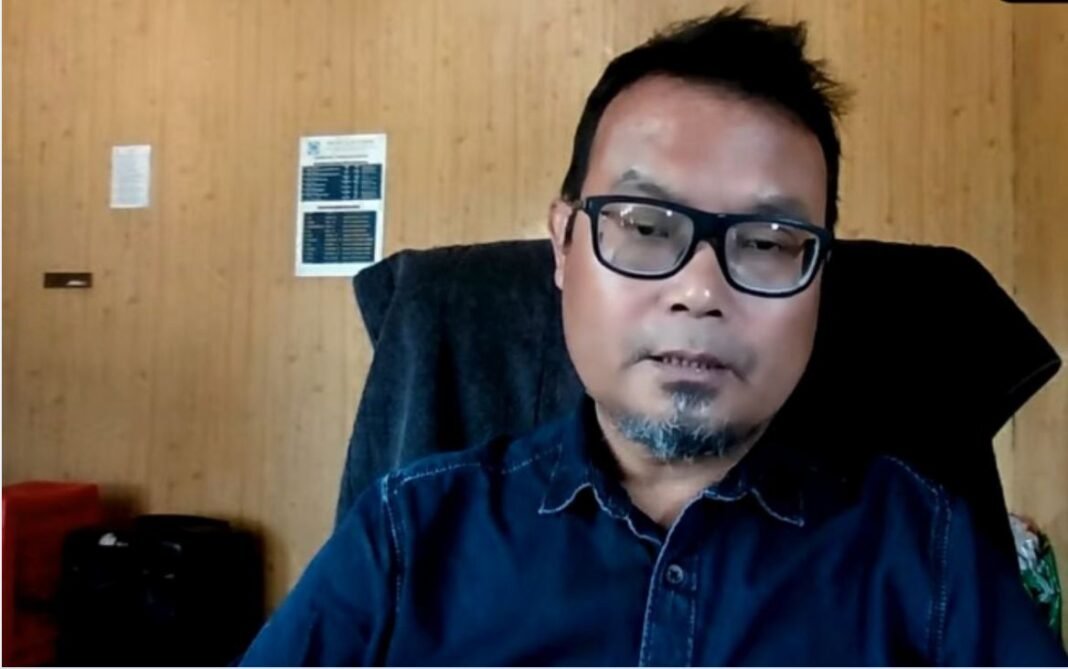
Meanwhile Kipgen has called for a “dialogue, healing and inclusive governance”, to bridge the divide: a plea that, perhaps, fell on deaf ears at least as far as the Kukis are concerned: “How can we trust those who betrayed us” said Ginza Vualzong, a prominent leader and chief spokesperson of the Kuki-Zo community in an interview with a prominent national daily recently.
Terming the situation as “far from peaceful” given that there is an absence of an agreement between the Kukis and Meities, Vualzong said: “This is no solution provided by the government and it seems that we are being forced to accept the new government whether we like it or not.”
While Vualzong agreed that peace is possible through negotiation rather than at gunpoint, he said talks with the Union Home Ministry are on but the “table” cannot be with the Meiti government: “We do not want to talk to them given that similar attempts in the past failed,” he said.
Using strong words like betrayal, Vualzong said that Kuki-Zo legislators joining the state government is going against the people’s wish. “The Kuki-Zo Council and MLAs had deliberated on the issue on whether the Kukis should join the government and it was decided that unless the state or the centre agree to the demand of the Kukis, we should not join the government. Those who have joined the government have done so against the wishes of the community so now they are on their own,” he said, visibly agitated.
On why he and the others are jumping the gun rather than wait for things to unfold, Vualzong said: “The main issue is the mistrust of the Meiti government. Under the Biren Singh government, the Kuki-Zo people lost many lives, they were driven out of their homes, their properties were destroyed. So, how can we expect anything from the same government who has driven us out and burnt our homes?”.
As for this being a new dispensation with one of their own as deputy chief minister, he said: “Whether the chief minister is changed or not, the people are the same who we have a conflict with—the Meities. It is not one person, but the community as a whole”, dismissing the government’s balancing act of having two deputies under a Meiti chief minister. “That is what the government is trying to do. attempting to normalize the situation, but the sentiment of the people is still high. Many have died, women were paraded naked, many were raped. How can we forget all this and share a table with the same person who targeted us. Therefore, all the Kuki MLAs need to be together in this political movement. They cannot go astray and if they do, like some have, it means that they are ready to face the music,” said Vualzong.
On his part, he dismissed the balancing act as about the government’s attempt at a balancing act as mere optics. “It looks nice for the world to see, but the ground reality is different because having two deputy CMs one each from Naga and Kuki Zo communities doesn’t mean we are going towards peace”.
Denying that there is “an invisible hand” fanning the protests and the movement, Vualzong said that those who know the dynamics of Manipur should also understand that if people are angry they would come to the streets. “The protests are spontaneous and there is no one behind these,” he said refuting allegations of outsiders financing and instigating the violence.
Terming the Meities as “enemies”, Vualzong compared the relationship between the two communities being similar to the hostility between India and Pakistan: “Pakistan is our enemy, will we go and sit together and form a government with them? The sentiment is similar. The Meities are our enemy. They killed our people and showed no mercy so how can we sit together with them?” Vualzong said leaving little scope for conciliation, saying the wounds are deep and “the hurt will remain”. He, however, did not rule out that the Kuki-Zo community could consider something less than a separate administration as a “first step”, were the government to make an offer.
—The writer is an author, journalist and political commentator