



By Agri Farming Editorial Team | Livestock Feed Calculator Guide | Reviewed by Animal Nutrition Experts | Updated April 2026
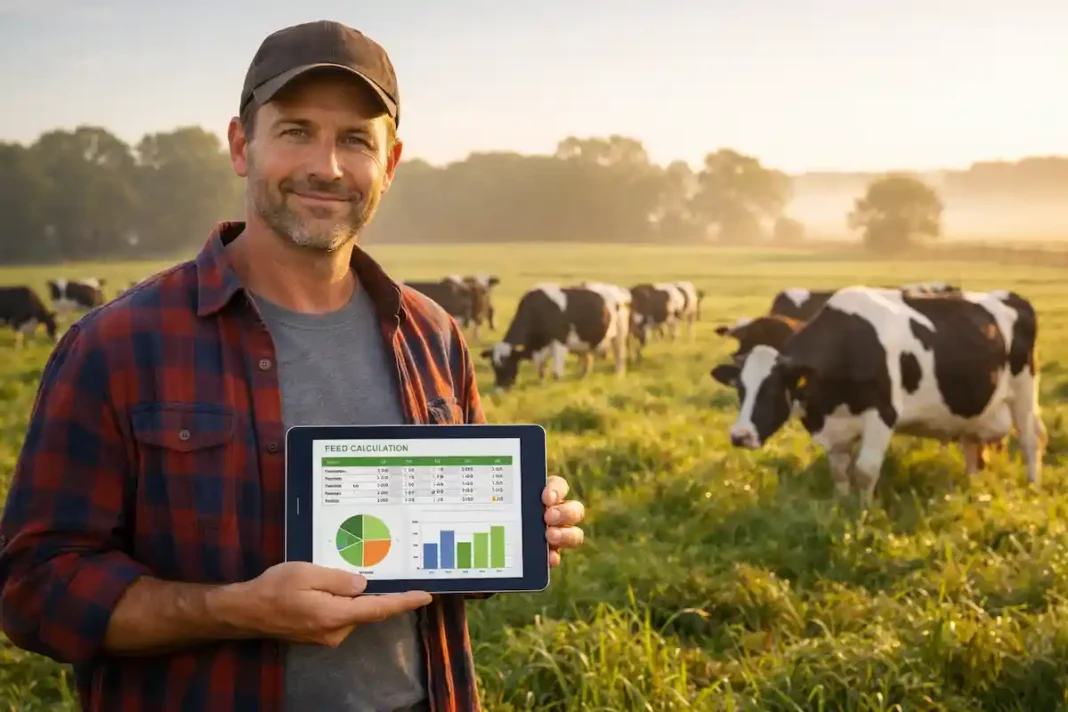
Use this livestock feed calculator to instantly calculate feed requirement and cost for cattle, goat, sheep, pigs, and other animals. Whether you are managing a small farm or a large commercial operation, this animal feed calculation tool helps you plan feeding accurately and control costs effectively.

✓ Copied!
About This Livestock Feed Calculator
The Livestock Feed Calculator estimates total daily and weekly dry matter and fresh weight feed requirements for cattle, sheep, goats, buffalo, and horses based on herd size, average animal weight, and recommended feed intake percentage. It eliminates the guesswork from feed procurement and helps managers plan storage and purchasing well in advance.
Formula Used
Daily Dry Matter (kg) = Animal Weight (kg) × Feed Intake Rate (% DM) ÷ 100 × Number of Animals. Fresh weight required = Dry Matter ÷ Dry Matter % of the feed being used (e.g. silage ≈ 30% DM, hay ≈ 85% DM).
Usage Tip
Weigh a sample of 10% of your herd or flock rather than estimating — visual assessment of livestock body condition is a poor proxy for actual weight and leads to systematic over- or under-feeding.
A livestock feed calculator is an essential tool for farmers who want to accurately estimate feed requirements and control feeding costs. In modern livestock farming, feed management plays a major role in profitability and animal performance. Without proper planning, even experienced farmers can face unnecessary financial losses.
Feed accounts for nearly 60–70% of total livestock production cost. Even a small mistake in feed planning can lead to significant financial loss or reduced productivity. This makes feed management one of the most critical aspects of running a profitable livestock operation.

Many farmers still depend on guesswork while feeding animals. This often results in overfeeding, which increases cost, or underfeeding, which affects growth, milk yield, and overall animal health. Both situations are harmful to farm profitability and animal welfare.
This cattle feed calculator and feed ration calculator helps solve that problem by providing accurate feed estimation based on simple inputs. It allows farmers to plan feeding efficiently and make better decisions. Whether you manage a small backyard farm or a large commercial operation, this tool is designed to simplify your feed planning process.
The calculator uses inputs like number of animals, feeding period, roughage percentage of diet, and feed price per kg. Based on these inputs, it calculates total feed requirement and cost. The results are instant and easy to understand, even for first-time users.
It is useful for both small farmers and large commercial livestock operations. It helps improve efficiency, reduce wastage, and increase farm profitability. By using data-driven feeding strategies, farmers can consistently improve their results season after season.
How Livestock Feed Calculator Works
The livestock feed calculator works using standard livestock nutrition principles. Animals consume feed based on their body weight, age, and production stage. These factors vary significantly between species, breeds, and individual animals.
The total feed is divided into roughage and concentrate. This division depends on the roughage percentage selected in the feed ration calculator. Getting this ratio right is key to maintaining good animal health and maximizing production output.
Farmers need to enter the number of animals they have. This helps calculate total feed requirement for the entire herd or flock.
The feeding period is entered in days. This allows the animal feed calculation tool to estimate feed requirement over a specific duration, whether it is a weekly plan or a seasonal feeding cycle.
The roughage percentage determines how much of the total feed will come from fodder sources like grass, hay, or silage. Roughage plays a critical role in supporting healthy digestion in ruminant animals.
The feed price per kg helps calculate the total feeding cost. This is important for financial planning and helps farmers budget accurately for each feeding cycle.
Once all inputs are entered, the calculator provides instant results. It shows total feed required, roughage quantity, concentrate quantity, and total cost. This eliminates manual calculations and reduces errors. It also saves time and improves decision-making across all farm sizes.
Animal Types Covered in Feed Calculation
This livestock feed calculator supports a wide range of animal types. It is suitable for dairy cows, beef cattle, buffalo, sheep, goats, horses, pigs, and rabbits.
Dairy cows require balanced nutrition to support milk production. They need both roughage and concentrate in proper proportion. High-producing dairy cows may require additional energy and protein supplementation depending on their milk yield.
Beef cattle feeding focuses more on weight gain. These animals require energy-rich feed for faster growth. Feed efficiency is a key metric for beef farmers, and proper ration planning using a cattle feed calculator helps maximize returns.
Buffalo feeding is similar to dairy cattle but requires slightly higher fiber content. Proper feeding improves milk quality and yield. In many regions, buffalo are an important source of both milk and draft power.
Sheep require moderate feed with balanced nutrients. They need proper feeding especially during breeding and lambing stages. Nutritional requirements increase significantly during pregnancy and lactation.
Goats require higher protein levels compared to sheep. They are active feeders and need good quality feed for growth. Goats are known for their adaptability but perform best when provided with consistent, balanced nutrition.
Horses depend on fiber-rich diets. Proper roughage is essential for their digestive health. Unlike ruminants, horses have a sensitive digestive system that requires careful feed management.
Pigs require high concentrate feed. Their growth depends heavily on energy and protein-rich diets. Commercial pig farmers often use specially formulated rations to maximize daily weight gain.
Rabbits need a fiber-rich diet along with essential nutrients. Proper feeding ensures healthy digestion and reproduction. Rabbits are efficient converters of feed and respond well to consistent, quality nutrition.
Feed Requirement by Animal Type

| Animal Type | Feed Requirement (% Body Weight) | Roughage % | Concentrate % |
|---|---|---|---|
| Dairy Cow | 2–3% | 60–70% | 30–40% |
| Beef Cattle | 2–2.5% | 50–60% | 40–50% |
| Buffalo | 2–3% | 65–75% | 25–35% |
| Sheep | 3–4% | 50–60% | 40–50% |
| Goat | 3–5% | 40–50% | 50–60% |
| Horse | 2–2.5% | 70–80% | 20–30% |
| Pig | 3–5% | 10–20% | 80–90% |
| Rabbit | 3–5% | 60–70% | 30–40% |
Understanding Roughage and Concentrate Feed

Roughage includes green fodder, hay, and silage. It is high in fiber and supports healthy digestion in livestock. For ruminant animals like cattle, buffalo, sheep, and goats, roughage forms the foundation of a balanced diet.
Concentrate feed includes grains, oil cakes, and protein-rich materials. It provides energy and supports production performance such as milk yield, growth rate, and egg production.
Maintaining a proper balance between roughage and concentrate is essential. It ensures better digestion, improved productivity, and long-term animal health. Disrupting this balance can lead to costly health problems and reduced output.
Too much concentrate can cause digestive problems such as acidosis in cattle and bloat in ruminants. It can also increase feeding costs unnecessarily. Too much roughage may reduce production efficiency, especially in high-yielding dairy animals that require concentrated energy for milk synthesis.
The livestock feed calculator and feed ration calculator helps maintain this balance easily and consistently across your entire herd.
Example Feed Calculation
Consider a farm with 10 dairy cows, each weighing approximately 500 kg.
Feeding period is 30 days.
Each cow consumes around 10 kg of feed per day based on a 2% body weight intake rate.
Feed price is ₹20 per kg.
Total feed required = 10 cows × 10 kg × 30 days = 3,000 kg
If roughage percentage is 60%, roughage required = 1,800 kg
Concentrate required = 1,200 kg
Total feeding cost = 3,000 kg × ₹20 = ₹60,000
This example clearly shows how farmers can plan feed requirements and cost using this cattle feed calculator. By knowing these figures in advance, farmers can procure feed at the right time, negotiate better prices, and avoid last-minute shortages.
Benefits of Using Livestock Feed Calculator
The livestock feed calculator provides several important benefits for farm management.
It helps reduce feed wastage by ensuring accurate feeding based on actual requirements. Wasted feed is a direct financial loss that can be avoided with proper animal feed calculation.
It improves animal health by promoting balanced nutrition. Healthy animals grow faster, produce more milk, and reproduce more efficiently.
It increases productivity in terms of milk, meat, and eggs. Proper feeding consistently leads to better output and higher farm revenue.
It saves time by eliminating manual calculations. Farmers can get results instantly without relying on complex formulas or external consultants.
It helps in financial planning by estimating total feed cost in advance. This allows better budget allocation and reduces the risk of financial surprises.
It enables comparison between different feeding strategies. Farmers can test different roughage percentages or feed prices to find the most cost-effective approach for their specific herd.
It increases productivity in terms of milk, meat, and eggs. Understanding the feed conversion ratio in livestock helps farmers measure how efficiently animals convert feed into output.
Common Feeding Mistakes to Avoid
Feeding without proper calculation is one of the most common mistakes in livestock farming. It leads to inefficient feeding, higher costs, and poor performance.
Ignoring mineral and vitamin supplements can affect animal health seriously. Minerals such as calcium, phosphorus, and magnesium are essential for bone development, reproduction, and milk production.
Overfeeding concentrate increases cost without proportionally improving performance. It can also cause metabolic disorders in cattle and other ruminants.
Using low-quality or spoiled fodder reduces productivity and can cause disease. Quality feed is a non-negotiable aspect of good livestock management.
Not adjusting feed based on the animal’s growth stage, pregnancy status, or production level leads to poor results. A milking cow has very different nutritional needs compared to a dry cow or a growing heifer.
Failing to monitor feed consumption and animal performance regularly is another mistake. Regular monitoring allows farmers to detect problems early and make timely adjustments to their feed ration calculator inputs.
Tips to Reduce Livestock Feeding Cost
Use locally available fodder to reduce transportation and purchase expenses. Local fodder is often fresher and more affordable than commercially sourced options.
Grow green fodder on your farm whenever land is available. Crops like napier grass, maize, and sorghum are highly productive and cost-effective roughage sources.
Store feed properly in dry, covered storage to avoid spoilage and pest damage. Poor storage can lead to significant feed losses over time.
Avoid feed wastage during feeding by using proper feeding troughs and managing access to feed. Animals often waste a large portion of their feed if feeding infrastructure is inadequate.
Monitor animal performance regularly using growth records, milk production data, and body condition scores. This helps ensure that feeding programs are delivering the expected results.
Use a livestock feed calculator consistently for accurate and updated planning. Adjusting your feed plan based on changing prices and animal needs can lead to significant cost savings over time.
Farmers looking to cut costs can also explore homemade feed formulations for livestock that use locally available ingredients without compromising nutrition.
Why Feed Calculation Is Important
Feed calculation ensures animals receive proper nutrition at every stage of their lives. It removes guesswork and replaces it with a science-based approach to farm management.
It helps maintain the right balance between feeding cost and productivity. Overfeeding and underfeeding both reduce farm profitability in different ways.
It improves growth rates, reproductive performance, and milk production. Well-nourished animals consistently outperform those fed without a proper plan.
It reduces losses caused by improper feeding, including health problems, poor growth, and reduced fertility. Prevention through proper nutrition is always more cost-effective than treatment.
It helps farmers make informed decisions backed by data. In today’s competitive agricultural environment, data-driven farming using tools like this cattle feed calculator is the key to long-term success.
For farmers new to structured feeding programs, this comprehensive livestock feeding guide covers everything from basics to advanced feeding strategies.
FAQs about Livestock Feed Requirement
1. How much feed does a dairy cow need per day?
A dairy cow needs about 2–3% of its body weight in dry matter daily, along with additional feed to support milk production requirements.
2. How do you calculate livestock feed requirement?
Animal feed calculation is based on the number of animals, their body weight, the feeding period, and the desired feed composition including roughage and concentrate ratios.
3. What is the ideal roughage to concentrate ratio?
It usually ranges from 60:40 for dairy cattle and varies for other animals based on their nutritional requirements and production stage.
4. Which feed is best for faster growth?
Balanced feed with the right combination of energy, protein, vitamins, and minerals gives the best growth results for all livestock species.
5. How often should I update my feeding plan?
Feeding plans should be reviewed at least every season or whenever there are significant changes in animal numbers, production levels, or feed prices.
References
Try the Livestock Feed Calculator
✓ Copied!
About This Livestock Feed Calculator
The Livestock Feed Calculator estimates total daily and weekly dry matter and fresh weight feed requirements for cattle, sheep, goats, buffalo, and horses based on herd size, average animal weight, and recommended feed intake percentage. It eliminates the guesswork from feed procurement and helps managers plan storage and purchasing well in advance.
Formula Used
Daily Dry Matter (kg) = Animal Weight (kg) × Feed Intake Rate (% DM) ÷ 100 × Number of Animals. Fresh weight required = Dry Matter ÷ Dry Matter % of the feed being used (e.g. silage ≈ 30% DM, hay ≈ 85% DM).
Usage Tip
Weigh a sample of 10% of your herd or flock rather than estimating — visual assessment of livestock body condition is a poor proxy for actual weight and leads to systematic over- or under-feeding.

Enter your details above to calculate feed instantly and plan your livestock feeding efficiently. Use this livestock feed calculator to estimate feed requirement based on number of animals, feeding period, roughage percentage, and feed price per kg.
This animal feed calculation tool will help improve productivity, reduce cost, and manage your livestock farm more efficiently. Start using it today and take the guesswork out of your daily feeding routine with the most accurate cattle feed calculator and feed ration calculator available online.