


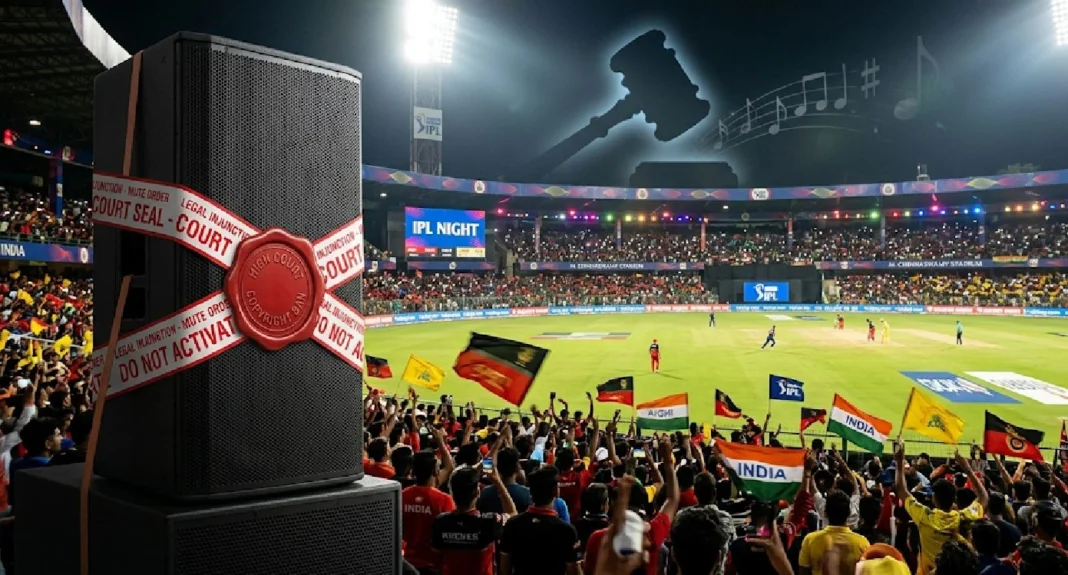


Even as the ten Indian Premier League franchises assemble their players for pre-tournament bonding, strategy and practice sessions, controversy has already erupted over the music that each team has been identified with over the years.
The issue was on the front foot when two southern teams, Chennai Super Kings and Sunrisers Hyderabad, engaged in an off-field battle over copyright infringement. Sun TV Network, which owns the Sunrisers franchise, filed a lawsuit in the Madras High Court against the Indian Cement-owned Chennai franchise over the usage of Tamil cinema legend Rajinikanth’s film songs in their promotional content.
Both teams have their bases in Chennai, where Tamil superstar Rajinikanth is an icon, and songs from his movies are often used for promotional content. Chennai Super Kings’ social media team regularly uses Rajinikanth songs in its promos and videos to engage fans. Songs from the movies Jailer, Jailer 2, and Coolie, all of which starred Rajinikanth, have been used by Chennai Super Kings to create social media content. The songs were cleverly advertised to draw parallels between Rajinikanth and Chennai Super Kings stalwart MS Dhoni, highlighting Dhoni’s iconic leadership and on-field charisma. However, the copyright dispute stemmed from Chennai Super Kings not obtaining proper licensing or permission from the rights holders. Sun TV Network has produced and holds the rights to these songs, prompting it to file the lawsuit to protect Rajinikanth’s intellectual property, saying it amounted to copyright infringement without proper authorization.
The company sought legal intervention to stop the franchise from continuing this practice. It also requested damages of Rs one crore for the alleged unauthorized use of the material. Sun TV Network further contended that the use of these film tracks and dialogues helped promote Chennai Super Kings’ merchandise and promotional campaigns.
According to the petition, the popularity of Rajinikanth and the music composed by Anirudh Ravichander could significantly influence fan engagement and boost the team’s merchandise sales, particularly in southern India. The dispute involves content promoting the Chennai Super Kings’ 2026 Indian Premier League jersey, featuring songs from Rajinikanth films.
Chennai Super Kings agreed to cease using the unlicensed music following a legal notice sent on March 1, 2026, promising future compliance with copyright laws, marking a major legal boundary regarding Intellectual Property Rights in IPL promotions.
The Madras High Court is playing umpire in the dispute, which highlights the need for franchises to obtain proper licensing for music used in their promotional videos and audio. Under Indian copyright law, commercial entities like IPL franchises require licensing for playing pre-recorded music or songs.
During the proceedings, Chennai Super Kings acknowledged that parts of the songs had been used in some of its promotional content over the past few years. The franchise further clarified that it would discontinue the use of such material unless proper authorization was obtained. The team’s legal counsel assured the Madras High Court that Chennai Super Kings would not use the songs again without securing the necessary copyright permissions or a valid licence. The franchise also agreed to submit a formal affidavit confirming this undertaking. After hearing the submissions, the Court recorded Chennai Super Kings’ assurance and adjourned the matter to allow the franchise time to file the affidavit.
The case highlights the growing scrutiny over the use of copyrighted entertainment content in sports marketing and digital promotions. The outcome may also set an example for how sports franchises manage copyrighted material while engaging fans through social media campaigns and promotional videos. Clubs cater to their fans by sharing match highlights, interviews, or behind-the-scenes videos where background music is clearly audible. Even unintended use of copyrighted music in such situations can violate copyright regulations.
The legal googly is not new. The Indian Singers’ Rights Association has previously raised issues concerning the non-payment of royalties for music used during matches. The Association approached the Delhi High Court back in 2016 against the Board of Control for Cricket in India and Indian Premier League franchises over the alleged non-payment of royalties for the use of Bollywood songs during matches in recent seasons and earlier editions. The Association had sought an injunction against Indian Premier League teams, claiming that songs were played during matches without obtaining proper permission or paying the required royalties to the artists’ body. According to the Association, this constitutes a violation of performers’ rights. The Association has more than 280 members, including Lata Mangeshkar, Alka Yagnik, Asha Bhosle and Kailash Kher.
In that particular case, during the proceedings, the Delhi High Court had directed DNA Entertainment Networks, the company responsible for managing logistics and entertainment for Indian Premier League matches, to temporarily stop playing Bollywood music during games. In its ruling, the High Court said that no individual team or India’s cricket governing body, Board of Control for Cricket in India, can use any songs or performances without paying a fee.
Consequently, on April 13, 2016, five Indian Premier League teams agreed to pay a licence fee to use songs during matches. Five teams—Kolkata Knight Riders, Mumbai Indians, Sunrisers Hyderabad, Royal Challengers Bangalore and Delhi Daredevils—complied with the order. The five teams were to pay Rs 1,00,000 for every match they played during the Indian Premier League 2016 season in which songs were used. The lawsuit filed on behalf of the Association alleged that, till then, neither the Indian Premier League teams nor the event management firm had paid royalty for the previous years.
According to the Indian Singers’ Rights Association’s plea, DNA Entertainment was the nodal agency and event partner for several Indian Premier League franchises and played songs—both film and non-film—during matches. The Association alleged that neither DNA nor BCCI had paid royalty for playing its members’ songs during the IPL seasons of 2014 and 2015, for which the amounts were Rs 19,37,000 and Rs 32,00,000, respectively. “Only Chennai Super Kings, which would not be participating in the ninth season of IPL, had obtained permission last year,” the Association said. The Association in its plea also sought damages of Rs ten lakh from each of the ten defendants, amounting to a total of Rs one crore.
The Indian music industry witnesses around 46 crore daily streams and is estimated to have generated Rs 3,700 crore in revenue. Against these impressive statistics, protecting intellectual property is more crucial than ever to prevent the exploitation of music artists. Copyright law protects the creators of sound recordings, musical compositions, and performers. Copyright exists as soon as the work is created. Under Indian copyright law, the Register of Copyrights serves as prima facie evidence (Section 48 of the Copyright Act, 1957). Indian copyright law protects the rights of singers, musicians and other performers. Now, IPL teams based in the south literally face the music in the Madras High Court.
IPL, from its glitzy start in 2008—created, ironically, by economic fugitive Lalit Modi—has become the biggest and richest cricket franchise league in the world and has also made the BCCI one of the most powerful sporting bodies. However, the IPL’s massive fan following is also tuned to the music blaring between overs in stadiums, or in each team’s promotional material, now facing legal bouncers for violating copyright laws.
—The writer is former Senior Managing Editor, India Legal magazine