




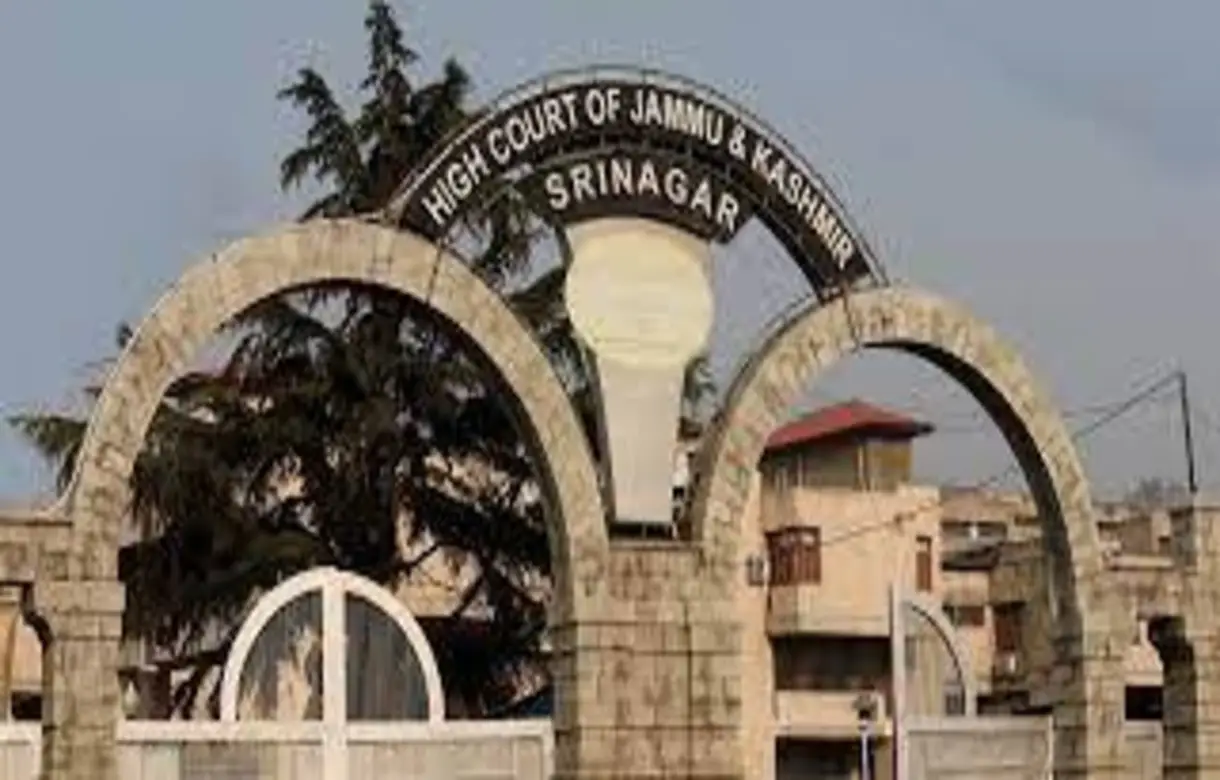

In a notable reaffirmation of constitutional morality and human dignity, the Jammu & Kashmir and Ladakh High Court recently underscored that administrative actions, including deportation, must remain anchored in fundamental human values. The decision reflects the judiciary’s continued commitment to ensuring that executive power is exercised within the bounds of fairness, legality, and compassion.
The case arose from the deportation of an individual under circumstances that raised serious concerns about due process and humanitarian considerations. The Court was called upon to examine whether such an action, though carried out under the authority of the State, had adequately respected the basic rights and dignity of the person affected.
In its observations, the High Court emphasized that human rights are not contingent upon nationality or status. Even in matters involving foreigners or individuals subject to deportation, the State is bound to act in a manner that respects life, dignity, and procedural fairness. The Court reiterated that constitutional values do not cease at the border; rather, they guide every exercise of State power.
Significantly, the Court directed the authorities to take steps to facilitate the return of the deported individual, recognizing that the earlier action may have overlooked critical humanitarian considerations. This direction highlights the judiciary’s willingness to intervene where administrative decisions risk undermining fundamental principles of justice.
The ruling also reflects a broader judicial approach that views deportation not merely as a matter of sovereign control over borders, but as an action with profound human consequences. The Court acknowledged that such decisions can affect family ties, personal security, and basic human dignity, and therefore must be approached with sensitivity and care.
By stressing that “human rights are sacrosanct,” the Court reinforced the idea that governance must be tempered by empathy. Even in situations involving national security or immigration control, the State cannot disregard the fundamental rights that form the core of constitutional democracy.
This judgment carries wider implications for administrative law and human rights jurisprudence in India. It signals that courts will continue to act as vigilant guardians against arbitrary or disproportionate State action. It also serves as a reminder that legality alone is not sufficient State actions must also meet the standards of fairness, reasonableness, and humanity.
In essence, the decision of the Jammu & Kashmir and Ladakh High Court represents a careful balancing of sovereign authority and individual dignity. It reiterates that while the State possesses the power to regulate entry and exit, such power must always be exercised in harmony with the enduring values of justice, compassion, and respect for human life.
Ultimately, the ruling stands as a powerful assertion that constitutional governance is not merely about enforcing the law, but about upholding the human values that give the law its meaning and legitimacy.