


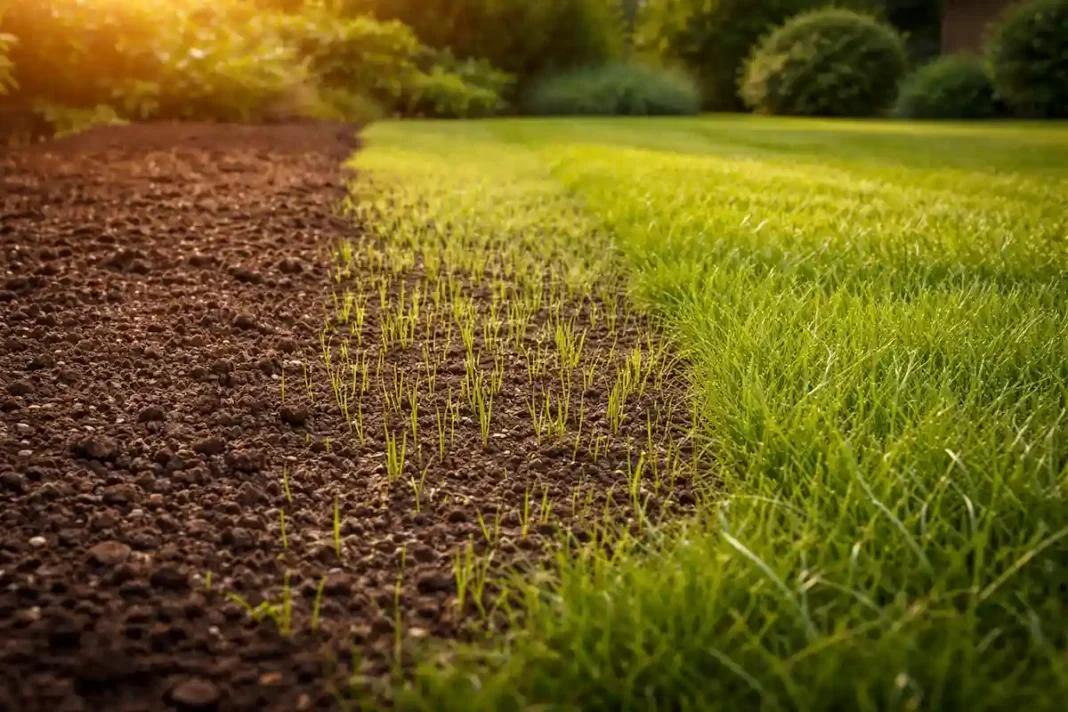

If you’ve just scattered grass seed and you’re wondering how long grass seed takes to grow, you’re not alone. Grass seed typically germinates in 5 to 30 days and becomes usable lawn in 6 to 12 weeks under proper conditions. Most people expect green within a week and get worried when nothing shows up.
Grass seed germination time typically ranges from 5 to 30 days, depending on the grass type, soil temperature, and how well you water. From first sprout to a fully usable lawn, expect 30 to 90 days. How fast grass seed grows varies quite a bit, but once you understand the factors, you can actually speed things up.
This guide covers the full grass seed growth timeline, from the day you plant to the day you mow, with real numbers and actionable steps drawn from hands-on lawn care experience.
How Long Does Grass Seed Take to Grow (Quick Answer Timeline)
Average Grass Seed Germination Time (5 to 30 Days)
Under good conditions, most grass seeds germinate within 7 to 21 days. Cool-season varieties like ryegrass can sprout in as little as 5 days, while warm-season grasses like Bermuda may need 10 to 30 days. Soil temperature is usually the deciding factor, and it’s something many people don’t even check before planting.
Fastest Grass Seed Germination Types
- Annual Ryegrass: 5 to 7 days
- Perennial Ryegrass: 7 to 10 days
- Tall Fescue: 7 to 14 days
- Kentucky Bluegrass: 14 to 21 days
- Bermuda Grass: 10 to 30 days
- Zoysia Grass: 14 to 21 days
- Buffalo Grass: 14 to 30 days
- Centipede Grass: 14 to 28 days
How Long Until Grass Becomes Thick
Grass starts covering bare soil noticeably around 3 to 4 weeks after germination. Full thickness, where the lawn actually looks lush and uniform, comes at around 8 to 12 weeks for most grass types. Warm-season grasses can take a full season.
Full Lawn Establishment Timeline (30 to 90 Days)
A newly seeded lawn goes through germination, early growth, and thickening before it’s truly established. For cool-season grasses planted in fall, you can expect a usable lawn in 45 to 60 days. Warm-season grasses started in spring take 60 to 90 days under ideal conditions.
Grass Seed Growth Timeline at a Glance
- Days 5 to 7: First sprouts on fast grasses (ryegrass)
- Days 7 to 21: Typical germination window for most varieties
- Weeks 3 to 5: Seedlings visible, coverage begins
- Weeks 6 to 8: First mow, light foot traffic safe
- Weeks 8 to 12: Lawn thickens, looks intentional
- Months 3 to 12: Full root establishment
Key Factors Affecting Grass Growth Speed
From practical lawn work, these are the factors that actually move the needle:
- Soil temperature (the most critical factor)
- Watering consistency
- Seed-to-soil contact
- Seed quality and variety
- Sunlight and shade levels
- Soil fertility and pH
Grass Seed Germination Time Chart by Grass Type

Cool Season Grass Germination Chart
| Grass Type | Germination Time | Ideal Soil Temp | Best Planting Season |
|---|---|---|---|
| Annual Ryegrass | 5 to 7 days | 50 to 65°F (10 to 18°C) | Fall / Early Spring |
| Perennial Ryegrass | 7 to 10 days | 50 to 65°F (10 to 18°C) | Fall / Early Spring |
| Tall Fescue | 7 to 14 days | 50 to 65°F (10 to 18°C) | Fall |
| Fine Fescue | 7 to 14 days | 50 to 65°F (10 to 18°C) | Fall |
| Kentucky Bluegrass | 14 to 21 days | 50 to 65°F (10 to 18°C) | Late Summer / Fall |
Warm Season Grass Germination Chart
| Grass Type | Germination Time | Ideal Soil Temp | Best Planting Season |
|---|---|---|---|
| Bermuda Grass | 10 to 30 days | 65 to 70°F (18 to 21°C) | Late Spring / Summer |
| Zoysia Grass | 14 to 21 days | 65 to 70°F (18 to 21°C) | Late Spring |
| Centipede Grass | 14 to 28 days | 65 to 70°F (18 to 21°C) | Late Spring |
| Buffalo Grass | 14 to 30 days | 60 to 80°F (15 to 27°C) | Spring |
| St. Augustine Grass | Rarely seeded (plugs) | 70 to 80°F (21 to 27°C) | Spring / Summer |
Bermuda grass germinates in 10 to 30 days and needs soil temperatures of at least 65°F to perform well. Getting the fertilizer timing right after germination matters just as much as the seeding itself — this Bermuda grass fertilizer schedule covers exactly when and how to feed it across seasons.
Fastest Germinating Grass Seeds
Annual ryegrass is the fastest germinating grass seed available, often showing sprouts in just 5 days under good conditions. Perennial ryegrass follows closely at 7 to 10 days. These are excellent choices when you need quick coverage, for erosion control, or as a temporary lawn while slower varieties establish.
Slowest Grass Seeds Explained
Kentucky bluegrass and buffalo grass are among the slowest germinating types. Bluegrass has a hard seed coat and requires specific cool temperatures to break dormancy properly. It is worth the wait because it produces a dense, beautiful lawn, but you need to plan for 3 weeks before seeing anything and several months before full establishment.
Germination Comparison Table
| Grass Type | Speed Category | Days to First Sprout | Days to Full Coverage |
|---|---|---|---|
| Annual Ryegrass | Fastest | 5 to 7 | 30 to 45 |
| Perennial Ryegrass | Very Fast | 7 to 10 | 40 to 60 |
| Tall Fescue | Fast | 7 to 14 | 45 to 60 |
| Bermuda Grass | Moderate | 10 to 30 | 60 to 90 |
| Kentucky Bluegrass | Slow | 14 to 21 | 60 to 90 |
| Buffalo Grass | Slowest | 14 to 30 | 90+ |
How Long Does Grass Seed Take to Grow From Planting to Lawn
How Long Grass Takes to Sprout After Planting
The first visible sprout usually appears between 5 and 21 days after planting, depending on variety and conditions. After seeding multiple lawns across different seasons, the pattern is clear: ryegrass consistently surprises with green threads by day 6, while a Kentucky bluegrass patch in the same yard took 17 days before anything showed. Same watering schedule, same care, just different seeds. Germination times also vary because no two soils behave exactly the same, even in the same garden.
How Long Before Grass Covers Soil
Patchy areas begin filling in around 3 to 5 weeks after seeding. Full ground coverage, where you can no longer see bare soil between plants, typically happens between weeks 5 and 8. Overseeding thin areas during this window helps fill gaps faster.
How Long Until New Grass Thickens
Grass thickens through a process called tillering, where each plant develops lateral shoots. This begins around weeks 4 to 6 and continues through weeks 8 to 12. The lawn looks noticeably fuller each week during this phase if moisture and nutrition are consistent.
How Long Until Grass Is Fully Established
Full establishment, meaning deep roots and resistance to drought and traffic, takes 6 to 12 months for most lawns. The surface looks great much earlier, but the root depth that gives a lawn real resilience takes a full growing season to develop properly. Most beginners underestimate how slow true lawn establishment really is, and start heavy use too early, which sets the whole project back.
Why Some Grass Grows Faster
Seed coat thickness, starch reserves inside the seed, and temperature requirements all differ by variety. Fast-germinating grasses tend to have thinner seed coats and lower temperature minimums. Slower grasses often need precise conditions to break dormancy but reward you with better density and drought tolerance later on.
Grass Growth Stages From Seed to Mature Lawn

Stage 1: Seed Activation Phase
Days 1 to 3. Water penetrates the seed coat and activates enzymes inside the seed. No visible change happens above ground. The seed swells slightly. This stage depends heavily on moisture — interrupt hydration here and you either reset the whole process or lose the embryo entirely.
Stage 2: Germination Phase
Days 3 to 14 (varies by variety). The radicle, the first root, pushes downward into soil. The coleoptile, the protective sheath around the first leaf, pushes upward. You may see a thin white or pale-green thread at the soil surface. This is not yet a grass blade but the seedling emerging.
Stage 3: Root Development Phase
Days 7 to 21. The root system branches and pushes deeper. Root depth at this stage is only 1 to 2 inches, which is why the seedlings are so vulnerable to drying out. Adequate phosphorus in the soil directly accelerates this stage.
Stage 4: Blade Growth Phase
By days 14 to 30, the first true grass blades usually appear. They are narrow, light green, and noticeably more delicate than mature grass. A healthy seedling at this point will have 2 to 3 leaf blades and roots reaching 2 to 4 inches deep. Worth knowing: fast-germinating varieties often reach this stage earlier, but they don’t always produce the densest or most drought-tolerant lawn in the long run.
Stage 5: Lawn Thickening Phase
Weeks 4 to 10. Tillering accelerates. Individual plants start connecting coverage visually. This is when your first light fertilizer application (nitrogen) makes a real difference. Watering frequency can be reduced as roots go deeper.
Stage 6: Mature Lawn Establishment
Months 3 to 12. Root depth reaches 4 to 6 inches or more. The lawn tolerates normal foot traffic, minor drought, and regular mowing without setbacks. This is a true established lawn, though yearly overseeding keeps it at its best.
Factors That Affect How Long Grass Seed Takes to Grow
Soil Temperature Impact

At the wrong soil temperature, grass seed simply will not germinate regardless of how much you water. Too cold and enzyme activity is too slow. Too hot and the embryo may die before it establishes. Most people measure air temperature, not soil temperature — they are often 5 to 15°F apart, which is enough to completely change your results.
Watering Frequency Impact
Inconsistent watering is the most common reason grass seed fails to grow. Even one day of dry soil during germination can kill seedlings that were 48 hours from appearing. Water little and often during germination, then shift to deeper, less frequent watering once blades are established. In most residential lawns, soil temperature and watering consistency account for about 80% of germination success — everything else is secondary.
Sunlight Requirements
Plant the right grass for your light conditions. Planting sun-loving Bermuda in a shaded yard and expecting it to grow quickly will always disappoint. Match the seed variety to your actual sun exposure for results that match expectations.
Soil Fertility Impact
Low phosphorus slows root development noticeably. A starter fertilizer with higher phosphorus content (the middle number on the bag) applied before seeding gives roots a meaningful advantage. Soil pH should be between 6.0 and 7.0 for most grass types; outside that range, nutrients become unavailable regardless of how much fertilizer you apply.
Seed Quality Impact
Old grass seed or cheap seed with low germination rates produces spotty, disappointing results. Always check the germination rate on the label (look for 85% or higher) and verify the sell-by date. Seed stored in humid conditions degrades quickly even before the stated date.
Always check the germination rate on the label before buying — look for 85% or higher and verify the sell-by date. For a detailed breakdown of how to read a grass seed label and what each figure actually means, the University of Maryland Extension grass seed guide is one of the most reliable references available.
Weather Effects
An unexpected heat wave, heavy rain, or frost after planting can set germination back significantly. Heavy rain washes seed into low spots or off slopes. Frost can kill newly germinated seedlings. Plant when a stable weather window of at least 2 to 3 weeks is forecast.
How to Make Grass Seed Grow Faster Naturally
One thing many guides skip: the steps below work best when soil temperature and moisture are already right. These techniques accelerate germination — they don’t rescue it from bad conditions.
Pre-Germination Technique
Soaking grass seed in water for 24 hours before planting, a technique called hydropriming, jumpstarts the seed activation phase. After soaking, spread seed on paper towels to dry slightly before planting. This shaves 2 to 5 days off germination time on varieties like fescue and ryegrass.
Soil Preparation Methods
Loosen the top 2 to 3 inches of soil before seeding. Raking creates a fine seedbed that puts seeds in close contact with soil particles, which is essential for good germination. Add a thin layer of compost to improve soil structure and fertility at the same time.
Loosen the top 2 to 3 inches of soil before seeding and break up any compacted clumps. Good seedbed preparation is the foundation of fast, even germination — for a deeper look at soil preparation techniques that apply across lawn and garden seeding, this soil preparation methods and tips guide is worth reading before you start.
Starter Fertilizer Timing
Apply a phosphorus-rich starter fertilizer (such as 10-18-10) before planting, not after germination. Phosphorus promotes root development directly. Once seedlings are 4 to 6 weeks old, switch to a balanced or nitrogen-focused fertilizer.
Apply a phosphorus-rich starter fertilizer (such as 10-18-10) before planting, not after germination. If you are unsure which product to choose, this best lawn grass fertilizers guide breaks down organic, slow-release, and quick-release options clearly.
How Often Should You Water New Grass Seed

Watering During Germination
Water 2 to 3 times per day during the germination phase, keeping the top inch consistently moist. From testing different watering schedules on new lawns, the most reliable routine is morning, midday, and late afternoon in the first 2 weeks. Each session should be 5 to 10 minutes. Missing even one full day during this window can kill seedlings that were hours away from emerging.
Watering After Sprouting
Once sprouts appear, shift to once daily watering for longer sessions, wetting the soil to about 2 inches depth. This encourages roots to grow downward. By weeks 4 to 6, reduce to 2 to 3 deep sessions per week. Deep and infrequent beats shallow and daily for long-term root development.
Signs Grass Seed Is Germinating Successfully
Early Germination Signs
The first sign is often a faint green tint to the soil surface, almost like moss starting to form. Look closely and you will see very fine, thread-like shoots just breaking through the soil surface. This is usually most visible in early morning light.
What Baby Grass Looks Like
Newly germinated grass looks like very thin, pale-green needles or blades, much lighter in color than mature grass. The blades are narrow, often less than 1mm wide, and translucent near the base. Over the first week of growth, they darken and widen gradually.
Healthy Seedling Signs
- Uniform green color across the seeded area
- Upright, firm-standing blades
- New blades appearing daily
- Seedlings that resist gentle pulling (root anchored)
Poor Germination Signs
- Nothing visible at 21 days past planting
- Pale yellow or white seedlings (nutrient deficiency or light deprivation)
- Seedlings lying flat on the soil surface (damping-off disease or overwatering)
- Patchy germination with large bare areas
Root Development Signs
Gently tug a seedling between your fingers at around 2 to 3 weeks. If it resists and stays rooted, the root system is developing well. If it pulls free easily with no resistance, roots are shallow and the seedling is vulnerable. This simple test tells you more about establishment progress than visual observation alone.
Why Grass Seed Is Not Growing
Why Grass Seed Fails to Germinate
The most common reasons grass seed does not germinate include incorrect soil temperature, inconsistent moisture, seed buried too deep, poor seed-to-soil contact, or using expired seed. In most cases when people ask why their grass seed is not growing, the answer is one of these five things.
When to Reseed Grass
Reseed if germination coverage is below 50% after 5 to 6 weeks. Wait for appropriate soil temperatures if the initial planting was done at the wrong time. Always identify and fix the underlying problem before reseeding, or the same result is likely to repeat.
Can Old Grass Seed Grow
Grass seed stored properly in cool, dry conditions can remain viable for 2 to 3 years, though germination rates drop each year. Seed that is 3 or more years old often germinates at 50% or less of its original rate, meaning you need to sow significantly more to achieve the same coverage. Always check the germination percentage on the label.
Poor Soil Problems
Highly compacted soil, very sandy soil with no organic matter, or soil with extreme pH outside 5.5 to 7.5 can all prevent germination despite good watering. A simple soil test before seeding costs very little and identifies problems that no amount of watering will fix.
Watering Mistakes
Both overwatering and underwatering kill grass seed. Overwatering drowns seeds and promotes damping-off fungal disease. Underwatering stops germination mid-process and desiccates the embryo. The right balance is moist soil with good drainage, never soggy, never bone dry.
Bird Damage Issues
Birds can consume a surprising amount of freshly broadcast seed within hours of planting. Covering seed with a thin layer of straw mulch significantly reduces bird predation. Bird netting is the most effective physical barrier if birds are a serious problem in your area.
10 Mistakes That Slow Grass Seed Growth

1. Planting at Wrong Temperature
Planting cool-season grass in summer heat or warm-season grass in cold spring soil delays or prevents germination entirely. Check soil temperature before you plant, not air temperature.
2. Planting Too Deep
Grass seed planted deeper than 1/4 inch runs out of stored energy before the shoot can reach sunlight. Rake seed lightly into the surface rather than burying it.
3. Overwatering Seeds
Waterlogged soil suffocates seeds and promotes fungal diseases. Soil should be moist like a wrung-out sponge, not wet or soggy.
4. Underwatering Seeds
Letting the soil surface dry out even once during the germination window can kill seedlings. During the first 2 to 3 weeks, consistent moisture is non-negotiable.
5. Wrong Grass Selection
Planting a shade-intolerant variety in a mostly shaded yard, or a cool-season grass in a tropical climate, sets the project up to fail before the seed even hits the ground. Match grass type to local climate and sun conditions.
6. Skipping Soil Prep
Broadcasting seed on hard, compacted, or weedy ground reduces germination rates significantly. Even a basic raking to loosen the surface makes a measurable difference in germination speed and coverage.
7. Not Covering Seed
Seed sitting on the surface with no soil contact dries out faster, is more vulnerable to birds, and germinates poorly. A light rake-in or straw covering dramatically improves results.
8. Early Mowing
Mowing before the grass reaches 3 to 4 inches and before roots are firmly anchored pulls seedlings from the soil. Wait until the lawn clearly needs mowing before starting.
9. Fertilizing Too Early
High-nitrogen fertilizer applied during germination can burn tender seedling roots. Use a starter fertilizer before planting, then wait until 4 to 6 weeks after germination for your first nitrogen application.
10. Poor Soil Contact
Seeds that germinate in air pockets or that rest on thatch instead of mineral soil often fail. A lawn roller used after seeding on prepared soil presses seed into firm contact with the soil surface, improving germination rates noticeably.
Overwatering and underwatering are both common causes of germination failure, and both can leave your lawn looking thin and patchy weeks after seeding. If your grass has already established but is showing dead spots, this guide on lawn turning brown in patches covers the most likely causes and fixes.
Best Time to Plant Grass Seed by Region
Planting at the right time in your region is just as important as choosing the right grass type. Cool-season grasses (ryegrass, fescue, bluegrass) perform best when planted in late summer to early fall in temperate climates, or early spring as a secondary window. Warm-season grasses (Bermuda, zoysia, centipede) need late spring to early summer when soil has warmed consistently. In India and tropical regions, planting just before the monsoon onset gives seeds the natural moisture they need without extra irrigation. In the UK, late August to October is the reliable window. In the US, fall is prime time for the north and Midwest; spring for the south.
Temperature Planting Calendar
| Soil Temperature | Grass Type to Plant | Expected Germination |
|---|---|---|
| Below 50°F (10°C) | Do not plant any grass | Germination unlikely |
| 50 to 65°F (10 to 18°C) | Cool-season grasses | 7 to 21 days |
| 65 to 75°F (18 to 24°C) | Warm or cool-season | 5 to 14 days |
| Above 85°F (29°C) | Warm-season only | 10 to 30 days with irrigation |
When Can You Walk on New Grass

First Mowing Timeline
Mow when grass reaches 3 to 4 inches tall. Set the mower blade high for the first cut, removing no more than one-third of blade height. For most grass types this happens at 6 to 8 weeks after germination. Make sure the soil is dry enough that the mower does not sink in or rut the surface.
Light foot traffic is generally safe after 6 to 8 weeks, once the grass has been mowed at least once and roots have had time to anchor firmly. Before this, even walking across the lawn to check it can damage seedlings and leave permanent bare patches.
When Grass Becomes Strong Enough for Regular Use
Regular lawn use, children playing, entertaining, and sports typically begins safely at 10 to 14 weeks for cool-season grasses and 12 to 16 weeks for warm-season grasses. Before this, the root system is not deep enough to withstand repetitive stress without thinning.
Early Damage Mistakes
The most common early damage mistakes include walking on wet seedlings, letting pets run on new grass, and parking garden equipment on newly seeded areas. Any compression of wet, shallow-rooted seedlings creates dead patches that take weeks to recover. Rope off or stake new lawn areas clearly until they are established.
How Long Grass Seed Takes to Grow in Hot vs Cold Weather

Weather at planting time has a direct effect on how long grass seed takes to grow, and the difference between good timing and bad timing can be 2 to 3 extra weeks of waiting.
Hot Weather Germination
In hot conditions above 85°F (29°C), cool-season grasses will not germinate reliably. The seed either stays dormant or the emerging seedling desiccates before it can root. Warm-season grasses like Bermuda actually prefer heat and germinate fastest when soil is consistently warm. If you’re planting in summer, stick to warm-season varieties and water more frequently since surface soil dries out within hours in high temperatures.
Cold Weather Germination
Below 50°F (10°C) soil temperature, most cool-season grasses slow dramatically or stall. Below 40°F they stop germinating entirely. The seeds sit dormant, which isn’t fatal — they can resume once temperatures rise. The risk is that dormant seeds sitting in wet soil are vulnerable to fungal rot. Late fall planting that catches a cold snap often produces better spring results than expected, as some seeds simply wait out winter and germinate naturally. This is called dormant seeding, and it works reliably for fescues and bluegrass.
Optimal Soil Temperature for Grass Seed Germination
This is one of the most referenced lookups for anyone starting a new lawn. Getting soil temperature right is the fastest way to get grass seed to germinate on schedule. The numbers below are soil temperature, not air temperature.
| Grass Type | Minimum Soil Temp | Optimal Soil Temp | Max Soil Temp | Days to Germinate (Optimal) |
|---|---|---|---|---|
| Annual Ryegrass | 41°F (5°C) | 50 to 65°F (10 to 18°C) | 85°F (29°C) | 5 to 7 days |
| Perennial Ryegrass | 41°F (5°C) | 50 to 65°F (10 to 18°C) | 85°F (29°C) | 7 to 10 days |
| Tall Fescue | 50°F (10°C) | 50 to 65°F (10 to 18°C) | 85°F (29°C) | 7 to 14 days |
| Kentucky Bluegrass | 50°F (10°C) | 50 to 65°F (10 to 18°C) | 80°F (27°C) | 14 to 21 days |
| Fine Fescue | 45°F (7°C) | 50 to 65°F (10 to 18°C) | 80°F (27°C) | 7 to 14 days |
| Bermuda Grass | 65°F (18°C) | 65 to 70°F (18 to 21°C) | 95°F (35°C) | 10 to 30 days |
| Zoysia Grass | 65°F (18°C) | 65 to 75°F (18 to 24°C) | 95°F (35°C) | 14 to 21 days |
| Centipede Grass | 65°F (18°C) | 65 to 70°F (18 to 21°C) | 90°F (32°C) | 14 to 28 days |
| Buffalo Grass | 60°F (15°C) | 60 to 80°F (15 to 27°C) | 95°F (35°C) | 14 to 30 days |
Use a basic soil thermometer pushed 2 to 3 inches into the ground for an accurate reading. Checking at 8 to 10 AM gives you the most useful daily average. Soil at the wrong temperature will not respond to extra watering or fertilizer. Temperature is the lock; everything else is just turning the handle.
Quick Facts About Grass Seed Growth
How long does grass seed take to grow depends mainly on soil temperature and watering consistency. Everything else — variety, fertilizer, mulch — supports those two factors rather than replacing them. Across cool-season lawns seeded in fall conditions, these numbers hold consistently. Actual timing still varies slightly by soil type and local weather.
- Fastest germinating grass: Annual ryegrass (5 to 7 days)
- Slowest germinating grass: Kentucky bluegrass and buffalo grass (14 to 30 days)
- Ideal soil temperature (cool-season): 50 to 65°F (10 to 18°C)
- Ideal soil temperature (warm-season): 65 to 70°F (18 to 21°C)
- First mow: When grass reaches 3 to 4 inches (typically 6 to 8 weeks)
- Safe foot traffic: After 6 to 8 weeks
- Watering during germination: 2 to 3 short sessions per day
- Seed viability: 2 to 3 years under proper storage
- Shade performance: Fine fescues are the best option for low-light areas
Key Takeaways About Grass Seed Growth Time
- Grass seed germinates in 5 to 30 days depending on variety and conditions
- A usable lawn takes 6 to 12 weeks from planting — a patchy look in the first month is completely normal
- Full lawn establishment takes 3 to 12 months, even when the surface looks complete much earlier
- Soil temperature is the single most important factor — get this wrong and nothing else matters
- Watering consistency in the first 2 to 3 weeks is non-negotiable — one missed day can kill seedlings
- Fall planting gives the fastest and most reliable results for cool-season grasses
- Even under perfect conditions, results can vary slightly from yard to yard — soil, shade, and drainage all play a role
Final Thoughts
In practice, the answer varies more than most guides suggest. Based on repeated lawn seeding observations across different seasons and soil types, the same bag of fescue seed can sprout in 7 days on a warm fall lawn with good soil and consistent watering, or take 21 days in compacted, dry, or cold conditions. Most people only learn this after their first failed lawn. Temperature, moisture, seed quality, soil prep, and variety selection all interact.
How long does grass seed take to grow is not a fixed number — it is a range shaped by every decision you make before and after planting. Get those factors right and the faster end of that range is consistently achievable. Skimp on soil prep or water inconsistently during those first two critical weeks, and even the best seed will underdeliver. The guidance in this article covers every part of that process, so there are no hidden variables left to chance.
Common Questions Homeowners Ask about Grass Seed Growth
1. Will grass seed grow if thrown on soil without any preparation?
Some seeds will germinate when simply thrown on the surface, but germination rates are much lower. Without soil contact, seeds dry out faster and are more vulnerable to birds and wind. Raking the surface before spreading and lightly raking seed in afterward improves germination rates significantly.
2. Does grass seed grow in 2 weeks?
Yes, fast varieties like annual or perennial ryegrass often show visible sprouting within 5 to 10 days under optimal conditions. By day 14, a well-planted ryegrass or tall fescue seeding should have clear germination visible across most of the area. Slower varieties like Kentucky bluegrass will not show anything in 2 weeks under average conditions.
3. How do I know if my grass seed is germinating?
Look for thin, pale green or lime-colored threads breaking through the soil surface, most visible in early morning light. You can also carefully part the soil mulch covering and inspect the seed directly: a germinating seed will have a small white root tip emerging from the seed coat. This root is usually visible before any above-ground growth appears.
4. Can grass grow in 7 days?
Annual ryegrass can show the first sprouts in 5 to 7 days under ideal conditions (soil temperature between 55 to 65°F, consistent moisture, good seed-to-soil contact). Most other varieties take 10 to 21 days. Seeing nothing at day 7 with most grass types is completely normal.
5. Does grass seed need sunlight to germinate?
No, grass seed does not need light to germinate. Germination is driven by moisture, temperature, and oxygen. Light becomes important only after the seedling emerges above soil. At that point, most grass types need several hours of sunlight daily for strong growth.
6. Can grass grow without topsoil?
Grass can germinate in subsoil but establishment is much harder. Subsoils are typically low in organic matter, have poor structure, and may have poor drainage or extreme pH. Adding a 2 to 4 inch layer of compost or topsoil over poor subsoil before seeding dramatically improves results and is worth the effort and cost for any permanent lawn.
7. How often should grass seed be watered daily?
During the germination phase (first 2 to 3 weeks), water 2 to 3 times per day in short sessions of 5 to 10 minutes each, keeping the top inch consistently moist. In hot, dry, or windy conditions, 3 sessions are better. Once seedlings are visibly growing and 1 to 2 inches tall, shift to once-daily deeper watering. By weeks 4 to 6, water deeply 2 to 3 times per week.
8. Can you walk on new grass after 2 weeks?
No. At 2 weeks, grass seedlings have roots only 1 to 2 inches deep and are highly vulnerable to compaction and physical damage. Walking on them at this stage crushes seedlings and creates bare spots that are slow to recover. Wait until at least 6 to 8 weeks after planting, when roots are anchored and the first mowing has been completed, before allowing any foot traffic.