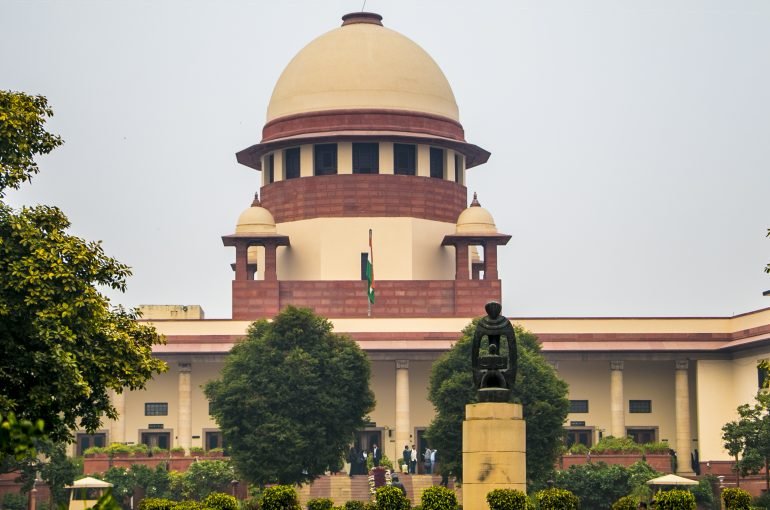
FORGED DEGREES, SUPPRESSED ANTECEDENTS AND PERVERSE BAIL: SUPREME COURT REASSERTS DISCIPLINE IN GRANT OF LIBERTY

INTRODUCTION
In Zeba Khan v. State of Uttar Pradesh & Others, reported as 2026 INSC 144, the Supreme Court of India, by Judgment dated 11 February 2026, delivered a significant ruling on the annulment of bail granted in serious fraud cases involving forged academic credentials and impersonation as an advocate. The Bench comprising Justice R. Mahadevan set aside the bail granted by the Allahabad High Court to the Accused, holding that the Order suffered from perversity, non-application of mind and suppression of material facts.
The Court clarified the doctrinal distinction between cancellation of bail due to post-release misconduct and annulment of a bail order that is legally unsustainable at its inception.
BRIEF FACTS
The criminal proceedings arose from FIR No. 314 of 2024 registered at Police Station Saray Khwaja, District Jaunpur, Uttar Pradesh. The allegations centred on a large-scale racket involving fabrication and circulation of forged law degrees and academic certificates. The Respondent-Accused was alleged to have procured and used a forged LL.B. degree purportedly issued by Sarvodaya Group of Institutions, claimed to be affiliated with Veer Bahadur Singh Purvanchal University.
Official communications from the University categorically denied such affiliation and clarified that no LL.B. degree had been issued to the Accused. It was further alleged that the Respondent not only used forged credentials to present himself as a qualified advocate before courts, including the Supreme Court, but also facilitated similar forged degrees for others as part of an organized racket.
The Accused was arrested and his Bail Application was initially rejected by the Sessions Court. However, the Allahabad High Court granted bail on 30 July 2025, primarily accepting his claim that the degree was genuine and that the Complaint was motivated by family property disputes.
Aggrieved by the grant of bail, the Complainant approached the Supreme Court seeking annulment of the Bail Order and transfer of investigation to a specialized agency.
ISSUES OF LAW
The primary issue before the Supreme Court was whether the High Court’s Order granting bail was legally sustainable in light of the material on record, particularly allegations of forgery, impersonation before courts and suppression of criminal antecedents.
A secondary issue concerned whether, after filing of the charge sheet and taking of cognizance, the investigation ought to be transferred to a special agency such as the CBI.
The Court also examined the broader question of disclosure obligations in bail proceedings and the consequences of suppression of material facts.
ANALYSIS OF THE JUDGMENT
The Supreme Court began by reiterating settled principles governing appellate interference with orders granting bail. It emphasized that an appeal against grant of bail stands on a different footing from cancellation of bail on account of subsequent misconduct. When a bail order itself is perverse, based on irrelevant considerations or rendered in disregard of material facts, appellate courts are duty-bound to intervene.
Applying these principles, the Court found that the High Court had relied upon documents whose genuineness formed the very subject matter of prosecution. The downloaded marksheet, containing disclaimers that it was not an original document, could not have been treated as conclusive proof of authenticity. Moreover, official communications from the University and the institution in question unequivocally indicated that no LL.B. course was conducted and no such degree had been issued.
A crucial factor that weighed with the Supreme Court was the suppression of criminal antecedents. Multiple FIRs had been registered against the Accused across different States involving allegations of forgery, impersonation, cheating and related offences. The Respondent had either partially disclosed or entirely concealed these antecedents before the High Court. The Court held that such non-disclosure strikes at the foundation of judicial discretion in bail matters.
Relying on precedents including Mahipal v. Rajesh Kumar, Neeru Yadav v. State of U.P., and Ash Mohammad v. Shiv Raj Singh, the Court observed that criminal antecedents are a significant consideration in bail adjudication, particularly where offences impact public institutions and societal trust.
The allegations in the present case transcended a private dispute. Impersonating an advocate and appearing before courts using forged credentials undermines the integrity of the legal profession and erodes public confidence in the justice delivery system. The Court noted that even assuming the existence of family or property disputes, such background could not dilute the seriousness of allegations relating to fraud upon judicial institutions.
On the question of transfer of investigation, the Court declined to interfere. Since the charge sheet had already been filed and cognizance taken, and no exceptional circumstances demonstrating bias or mala fides were established, transfer to a special agency was unwarranted. The Court relied upon its earlier jurisprudence in Disha v. State of Gujarat and K.V. Rajendran v. Superintendent of Police, which caution that transfer of investigation post charge sheet is permissible only in rare and exceptional cases.
Importantly, the Court addressed the broader issue of disclosure obligations in bail proceedings. It deprecated the growing tendency of accused persons to suppress material facts to secure discretionary relief and reiterated that fair and complete disclosure is a solemn obligation. Suppression of antecedents amounts to abuse of process and may itself vitiate a bail order.
CONCLUSION
This Judgment is a reaffirmation of judicial discipline in matters of bail. While personal liberty remains a cardinal constitutional value, the Court has underscored that discretionary relief cannot be granted in disregard of material facts, particularly where allegations strike at the credibility of public institutions.
By setting aside the Bail Order, the Supreme Court has drawn a clear boundary: liberty cannot be secured through suppression, misrepresentation or reliance on disputed material. The integrity of the justice system demands that courts apply their discretion with vigilance, especially in cases involving impersonation of legal professionals and systematic forgery.
At the same time, by refusing to transfer the investigation in the absence of exceptional circumstances, the Court maintained fidelity to established principles governing investigative autonomy.
Ultimately, the ruling reflects a balanced constitutional approach; one that safeguards personal liberty, yet insists that such liberty must rest upon candor, legality and respect for the rule of law.
SARTHAK KALRA
Senior Legal Associate
The Indian Lawyer & Allied Services