
[ad_1]
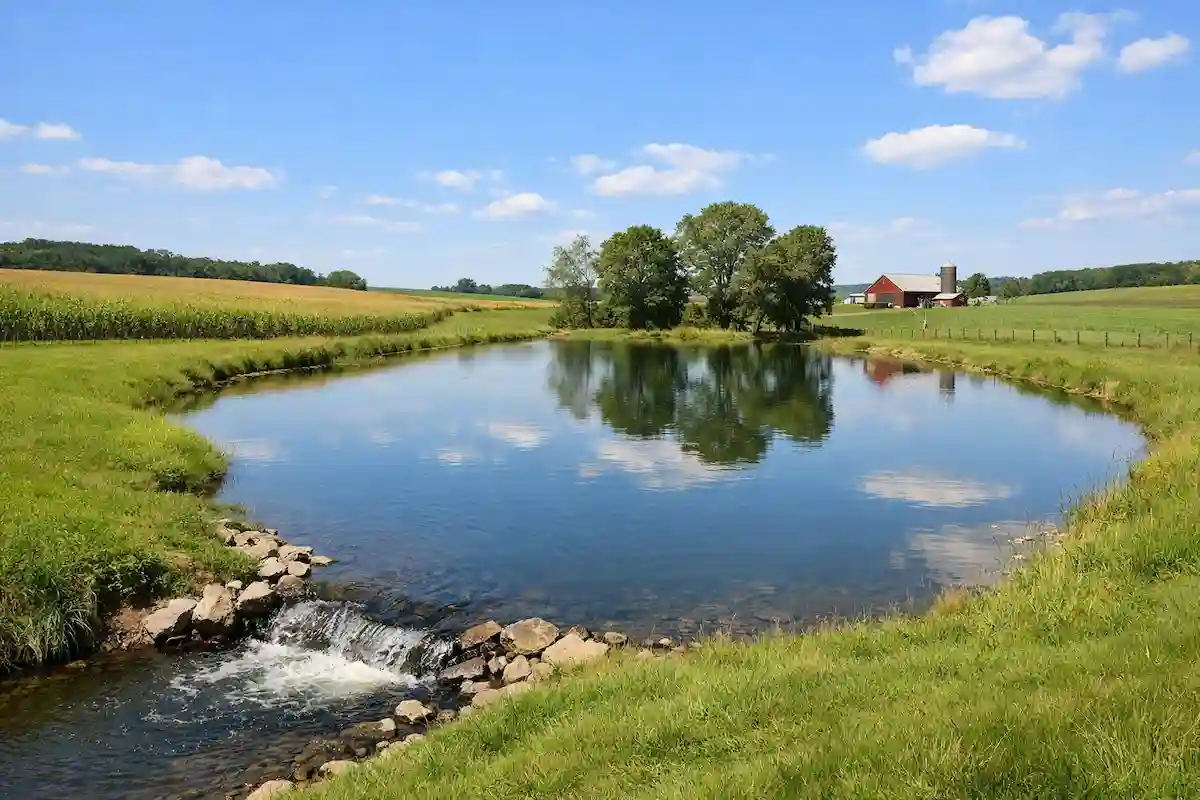
Water is an ongoing challenge for farmers. Rainfall can be unpredictable, and dry seasons can last longer than expected, so relying solely on natural water sources can limit what farmers can grow. A farm pond offers a simple, reliable solution, allowing you to store water during rainy periods and use it when crops and livestock need it most.

This guide walks you through building a farm pond step by step, including choosing the right site, planning and designing your pond, constructing it effectively and maintaining it for long-term use.
How Farm Ponds Work
Farm ponds collect and store water from rainfall, surface runoff or other nearby water sources. The stored water becomes a reserve that farmers can use for irrigation, livestock and aquaculture. Only 3% of Earth’s water is freshwater, and much of that isn’t readily available for farming, making water storage essential.
A well-built farm pond collects water that flows downhill from the surrounding land and reduces seepage and evaporation losses. Having a farm pond helps farmers stay productive even when rainfall is low, making it a smart investment in areas with irregular rain. Green water scarcity will affect 16% of global croplands by 2050, so farm ponds may become commonplace sooner rather than later.
1. Choose the Right Site
The first step to building a farm pond is site selection. A poorly placed pond will struggle to collect enough water and may not hold water effectively. Look for low-lying areas where water naturally gathers and collects. These spots require less excavation and fill more easily during rainfall.
Check the soil type. Clay-heavy soil works best as it holds water well. Sandy or rocky soil lets water seep through, leading to constant water loss. You may need a liner if the soil feels loose and crumbles easily.
Look for gentle slopes that will help direct runoff into the pond. Avoid steep slopes as they cause erosion and damage.
Consider safety and contamination, too. Keep ponds away from areas that use fertilizers and chemicals.
2. Design the Pond
Thoroughly think through the pond’s design before digging, keeping your water needs in mind. A small vegetable farm will require less water than a mixed farm with significant crop and livestock.
Think carefully about the depth of the pond. Deeper ponds are more resistant to sudden weather changes and reduce evaporation losses. They also stay cooler, which helps maintain water quality.
Choose a simple shape, either round or rectangular, as these ponds are easier to construct and maintain. It is important to realistically budget to ensure labor and material costs don’t spiral out of control.
Consider starting with a small pond in a location that can be expanded when more money becomes available, and then expand it after you’ve found tangible success. However, smaller ponds have less stable temperatures and are more likely to suffer from low water levels during droughts. Agriculture accounts for around 70% of freshwater withdrawals, so the larger the pond, the better.
A small vegetable farm will require less water than a mixed farm with significant crop and livestock. Use our irrigation water requirement calculator to estimate how much water your pond needs to store based on your crops and farm size.
Think carefully about your total water needs — crops, irrigation and livestock all draw from the same reserve. If you’re raising animals, our livestock feed calculator can help you plan feed and water requirements together for a more complete farm management approach.
3. Excavate and Build the Pond
Excavation begins once you’ve selected and marked your area. You will likely need to use machinery to dig the pond, although manual digging is possible for smaller ponds.
- Remove the topsoil first and set it aside. This soil can be reused later around the pond edges for planting grass or crops.
- Dig the pond gradually, maintaining a consistent and gentle slope to ensure stability and safety.
- Use the excavated soil to build embankments around the pond. These raised edges increase storage capacity and prevent water from escaping.
- Compact the soil thoroughly. Pressing down the soil reduces air pockets and improves water retention. This step is critical if you’re not using a liner.

4. Line and Seal the Pond
You need to seal the pond if it does not hold water well. Clay lining is a natural and cost-effective option. Spread a thick layer of clay across the pond base and compact it tightly. This reduces seepage.
Plastic and high-density polyethylene (HDPE) liners provide better performance, creating waterproof barriers and preventing leaks. They cost more up front but reduce long-term maintenance needs.
Ensure the liner properly fits and covers the entire base and sides. Secure the edges to prevent shifting.
5. Set Up Water Collection
You’ll need a reliable way to fill the pond to ensure it’s effective.
- Create channels or small trenches that direct rainwater and runoff into the pond. Position these channels based on the natural slope of your land.
- Install an inlet to allow water to enter the pond. You can add a simple filter or mesh to prevent debris from entering.
- Build an overflow system too, as excess water must be safely removed during heavy rainfall. A pond’s embankment can be damaged or destroyed if an emergency spillway isn’t installed.
Create channels or small trenches that direct rainwater and runoff into the pond. Knowing exactly how much water your plants need can help you size these channels correctly — use our plant watering calculator to get a more accurate estimate before you build.
6. Maintain and Manage the Pond
Regular maintenance keeps your pond functional and extends its lifespan.
- Check for leaks and cracks in the embankment. Repair them early before they develop into a serious problem.
- Control silt buildup. Solid and debris can accumulate at the bottom of your pond, reducing storage capacity.
- Manage weeds and algae, as too much plant growth can affect the water.
- Keep the surrounding area clean to prevent chemicals or waste from contaminating the water.

Water Reserves All Year Round
Building a farm pond is a big undertaking, but it can give you greater control and flexibility in achieving your agricultural goals and needs. Even a small pond can make a notable difference, providing a year-round water reserve if well designed.
Start with what you can afford, focusing on proper construction without cutting any corners. Maintain the pond regularly to maximize its efficiency, and consider expanding when you can.
[ad_2]
Source link

