


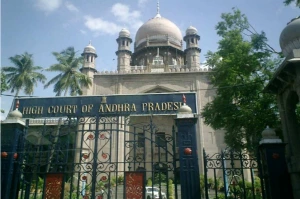

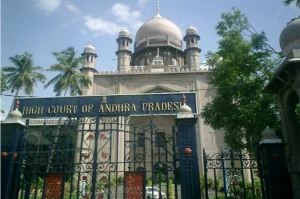

The Andhra Pradesh High Court recently examined how property should be inherited when a person dies without leaving behind children. The case was decided by a bench of Justice V. Gopala Krishna Rao, who clarified the correct application of the Hindu Succession Act in such situations.
The issue before the Court was whether the surviving spouse could claim exclusive rights over the deceased person’s property in the absence of children. While addressing this, the Court made it clear that inheritance cannot be based on assumptions or family expectations, but must strictly follow statutory law.
The Court observed that when a person dies intestate without leaving a will their property devolves upon legal heirs as specified under the Hindu Succession Act. In cases where there are no children, the property does not automatically pass solely to the spouse. Other eligible heirs, including the parents of the deceased, may also have a legitimate share as per the categories laid down in the Act.
Justice V. Gopala Krishna Rao emphasized that the character of the property, including parental property, must be respected during succession. The absence of children does not alter the legal scheme of inheritance, and courts must ensure that distribution aligns with the provisions of the law.
Through this ruling, the High Court reinforced that succession is governed strictly by statute. Property must devolve in accordance with the Hindu Succession Act, ensuring that all rightful heirs receive their due share under the law.