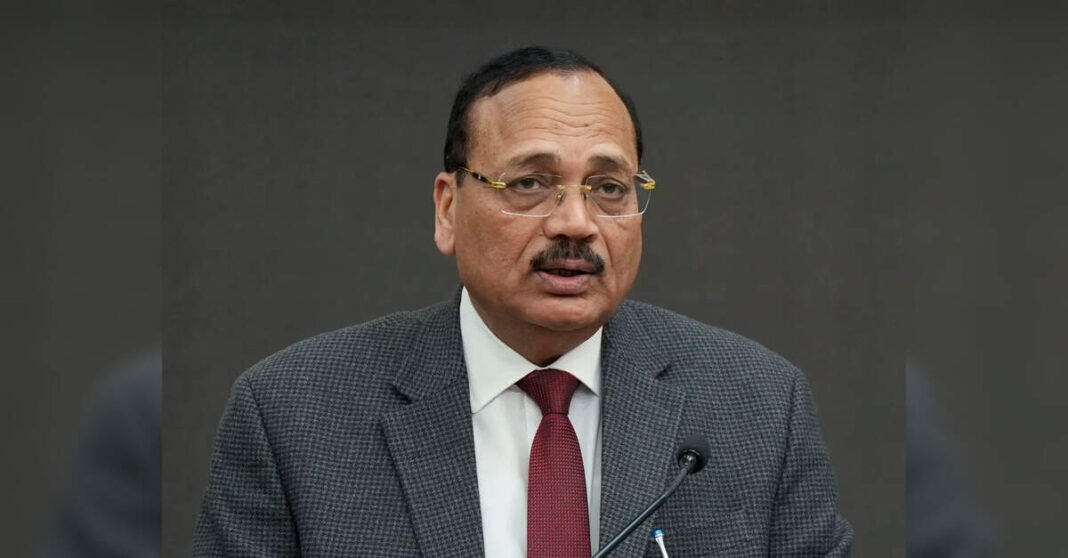


Dehradun, Chief Justice of India Surya Kant on Sunday said that the greatest challenge facing the country’s legal system is not a dearth of laws, but rather the limited access that ordinary citizens have to them.
Emphasising the urgent need to bridge the gap between legal rights and their practical availability, the CJI noted that while India possesses a robust framework of rights and policies, these benefits often fail to reach the needy due to issues of distance, delay, and implementation gaps.
The CJI was addressing a two-day North Zone Regional Conference, titled ‘Justice Beyond Barriers: Rights, Rehabilitation, and Reform for the Most Vulnerable,’ organised jointly by the National Legal Services Authority (NALSA), the Uttarakhand High Court, and the Uttarakhand State Legal Services Authority.
He remarked, “The mere existence of justice is not sufficient. Rather, it must reach the doorstep of every last citizen in a timely manner. The strength of a republic should be measured not by its declared rights, but by the rights that are actually realised.”
Highlighting the unique challenges faced by hilly states like Uttarakhand, the Chief Justice observed that rugged geographical terrain and limited connectivity infrastructure hinder access to justice. In such regions, it is imperative to make the judicial system more accessible and responsive, tailored to suit local conditions.
Sharing his experiences from various parts of the country, including Ladakh, Srinagar, Nagaland, and Kerala, he noted that citizens often struggle not due to a lack of rights, but due to the absence of accessible platforms through which to claim them.
The CJI observed that the true test of the Constitution lies not in major cases, but in the availability of justice in the daily lives of ordinary citizens, underscoring that the success of institutions would be measured by their effectiveness in delivering justice to those most in need.
He identified legal aid schemes, awareness campaigns, and multi-service camps as effective measures in this regard.
The CJI also cited his experiences from across the nation, including his interactions with Army personnel in Ladakh, tribal communities in Srinagar and Nagaland, and fishing communities in Kerala.
Describing this conference as a crucial platform for deliberating on regional legal challenges, the CJI said that, keeping in mind the distinct problems of various regions, it is essential to adopt local and context-specific strategies to ensure that vulnerable sections of society do not become marginalised.
Emphasising the promotion of Alternative Dispute Resolution (ADR) mechanisms, such as mediation, pre-litigation conciliation, and Lok Adalats, the CJI noted that these measures not only facilitate the speedy and cost-effective resolution of disputes but also aid in preserving social relationships.
Commending the Uttarakhand State Legal Services Authority’s “Nyay Mitra” portal initiative, he described it as a significant step towards facilitating access to justice, particularly in geographically challenging regions.