




By Kenneth Tiven
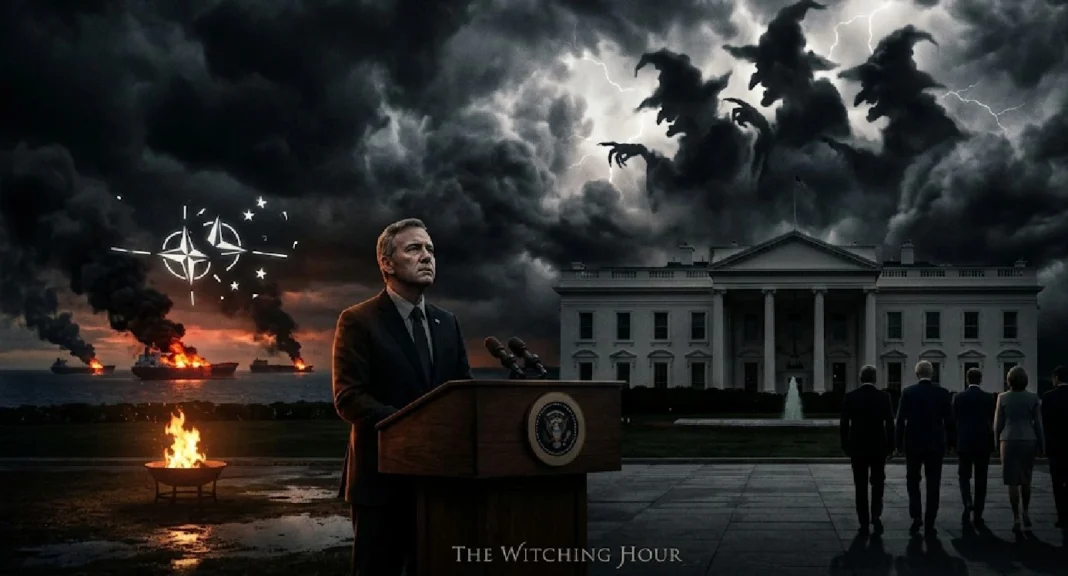
“Double, double toil and trouble.” Shakespeare’s witches in Macbeth might have scripted the present moment in Washington. Barely a fortnight into the Iran conflict, US President Donald Trump faces an uncomfortable reality: his war has not rallied the world—it has divided it.
Across Europe, America’s closest allies have refused to join the fight. Leaders from Germany, France, Spain and others have drawn a firm line, reminding Washington that NATO is a defensive alliance, not an instrument for offensive war. The message was blunt: this is not their war.
Even as the administration pressed for support to secure the Strait of Hormuz, European governments chose distance over alignment—citing legal concerns, public opposition, and the absence of clear objectives.
At home, the fractures are just as visible. Joe Kent, director of the National Counterterrorism Center, became the first senior security official to resign over the conflict. A former Green Beret and CIA operative, Kent stopped short of directly blaming the president, but his words were unmistakable. He warned of misinformation, questioned who the war ultimately served, and urged reflection.
Within days, the story took another turn: Kent was reportedly under FBI investigation over an alleged leak of classified information—an inquiry that predates his resignation, though officials have declined public confirmation.
In his first post-resignation interview, Kent described a decision-making process devoid of meaningful debate. “There wasn’t a robust debate,” he said—an indictment of how the United States entered a billion-dollar-a-day war. That cost—financial, political, and human—is mounting rapidly.
The administration has struggled to articulate a clear rationale. The president’s central claim—that Iran posed an imminent threat—has not been backed by publicly presented evidence strong enough to unify either Congress or the country. Meanwhile, the constitutional requirement for a congressional declaration of war has been bypassed entirely, reinforcing concerns about executive overreach.
Yet, within Trump’s political base, support remains strong. Polling suggests a significant majority of Republican voters back the campaign and trust the president’s judgment over prominent conservative critics.
On the battlefield, the consequences are immediate and global. Iran’s response—missiles, drones, and disruption of shipping lanes—has pushed the region towards chaos. The Strait of Hormuz, through which a significant share of the world’s oil flows, has become a choke point, sending energy markets into turmoil and raising fears of a prolonged economic shock.
There are deeper strategic tremors as well. Tehran has floated the idea of trading oil in Chinese yuan rather than US dollars—an economic signal that, if realized, could challenge decades of dollar dominance in global energy markets.
Meanwhile, attacks on infrastructure in the UAE and Saudi Arabia have shattered the carefully cultivated image of stability in the Gulf, threatening investment flows and regional security.
Back in Washington, the political calculus is shifting. The war has, for now, diverted attention from domestic controversies—from immigration battles to lingering investigations tied to the Epstein files. But that reprieve may be temporary.
Early indicators suggest softening support beyond Trump’s core base. Should that trend continue into the November mid-terms, a shift in congressional control could fundamentally reshape the remainder of his presidency—curbing executive authority and intensifying political gridlock.
For now, the president presses forward, increasingly alone on the global stage, offering a justification that remains more instinct than doctrine.
And like Shakespeare’s tragic kings, the question lingers: is this a show of strength—or the beginning of unravelling?
—The writer has worked in senior positions at The Washington Post, NBC,
ABC and CNN and also consults for several Indian channels