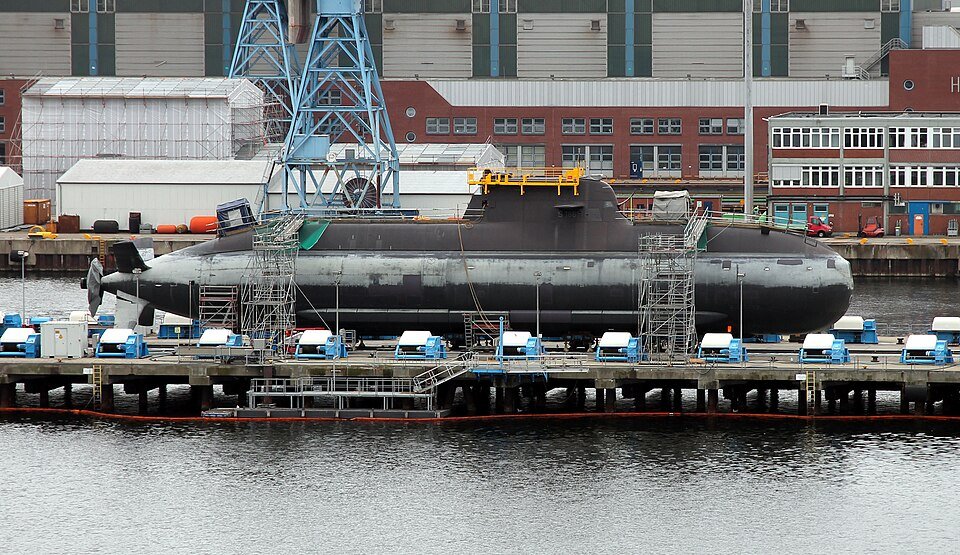

Canada’s recent decision to select Germany’s ThyssenKrupp Marine Systems (TKMS) over South Korea’s Hanwha Ocean prompts serious reflection. The outcome does not necessarily indicate that the South Korean submarine was technically inferior. Rather, it demonstrates a broader reality: the procurement of major weapons systems is heavily affected not only by capability, affordability, and quick delivery, but also by elements like alliances, geopolitical alignment, and long-term trust in arms suppliers.
South Korea has become a very successful country when it comes to selling advanced weapons. It must now also become effective in selling strategic relationships.

From the Post-2022 Surge to an Uncertain Future
South Korea’s emergence as a major arms exporter accelerated after Russia’s full-scale invasion of Ukraine in 2022. European governments urgently needed to replenish their depleted stockpiles, and many traditional suppliers did not possess sufficient production capabilities. In contrast, South Korea was able to present modern weapons systems at competitive prices and deliver them more swiftly than many European manufacturers.
Poland’s massive orders for K2 tanks, K9 self-propelled howitzers, FA-50 aircraft, and Chunmoo MLRS demonstrated South Korea’s ability to offer training, ammunition, financing, maintenance, and potential local production, in addition to the platforms themselves.
Nevertheless, the post-2022 expansion has not produced a continuously increasing export volume. After reaching roughly $17.3 billion in 2022, the value of South Korea’s defense contracts declined to $13.5 billion and $9.5 billion in 2023 and 2024, respectively. Although the export volume reportedly recovered to approximately $15.4 billion in 2025, these fluctuations raise the question of whether the 2022 surge represents a sustainable new normal or an outlier that was a reaction to wartime shortages.
To be sure, global arms demand is unlikely to disappear in the foreseeable future. The protracted Russo-Ukrainian war, growing tensions between NATO and Russia, instability in the Middle East, China’s increasingly coercive activities around Taiwan, and North Korea’s nuclear and missile programs will continue to fuel global rearmament. Nonetheless, persistent geopolitical instability itself does not guarantee South Korea’s success. European manufacturers are expanding their production capacity, while purchasing governments increasingly wish their defense expenditures to support domestic industry, technological sovereignty, and cooperation with close allies.
Therefore, South Korea should be prepared for a market in which quick delivery and price competitiveness alone are insufficient.
What Canada Was Really Choosing
Hanwha Ocean’s KSS-III was widely regarded as a credible candidate. South Korea underscored its displacement, armaments, operational maturity, and the ability of Korean shipyards to deliver sophisticated vessels quickly. Also, Seoul suggested industrial cooperation and advanced a comprehensive diplomatic campaign.
Germany, nevertheless, had an important strategic advantage: the Type 212CD was already incorporated into German-Norwegian naval cooperation. Hence, Canada was not merely assessing a proposal for twelve-submarines. Rather, Canada was considering joining an existing network that includes NATO member states, joint exercises, common logistics, industrial cooperation, and long-term underwater security cooperation.
Such a distinction matters since submarines have decades-long life cycles. The purchasing country should consider future upgrades, maintenance, weapons integration, intelligence cooperation, spare parts, and political support during crises. Submarine acquisition requires long-term trust.
South Korea presented a high-end platform and an impressive commercial package. Meanwhile, Germany proposed a platform—although one that has not yet been completed—that was linked with an established North Atlantic security framework. Naturally, the German proposal dovetailed with Canada’s concerns about NATO, Arctic security, and transatlantic security cooperation.
Alliance politics may not be the sole reason that determined the Canadian Patrol Submarine Project (CPSP) outcome: technical requirements, economic benefits, and delivery risks also mattered. Nonetheless, Germany was able to convincingly explain how its submarine could strengthen what Canada already regarded as central.
A Wider Pattern
In fact, Canada’s decision follows other cases in which South Korean platforms encountered competitors that presented stronger political or strategic narratives.
For example, Poland’s decision to select Sweden’s A26 submarine over the South Korean alternative illustrates the importance of regional context. Sweden and Poland share direct concerns about Russia and Baltic security, enabling the Swedish option to be shown as part of a broader regional and NATO partnership.
The Australia’s selection of Japan’s upgraded Mogami-class frigate over the South Korean Chungnam-class frigate is another case in point. While South Korea’s proposal did not reach the final phase, Japan benefited from its rapidly strengthening strategic relationship with Australia. The frigate decision consolidated bilateral cooperation that was increasingly being aligned with Indo-Pacific strategy.
Needless to say, these precedents do not prove that alliance considerations automatically determine procurement outcomes. Yet these cases demonstrate that the most appealing bids combine an effective platform with an attractive industrial package, political trust, and a persuasive vision of long-term strategic cooperation.
In recent years, South Korea has shown remarkable success when it comes to tangible areas, most notably platform capability, price, and delivery schedules. It is now crucial to improve intangible areas like alliance politics and convincing narratives.
Building a More Strategic Export Policy
South Korea’s arms export strategies are based on practical advantages. South Korean weapons are generally reliable, relatively affordable, and interoperable with Western systems. South Korean companies have substantial production capabilities and, in most cases, are proactive in discussing technology transfer, local assembly, and rapid delivery.
Obviously, these advantages should be maintained. But they are no longer sufficient. South Korea’s arms export campaigns have a tendency to frequently repeat the same expressions—centered on cost-effectiveness, proven capabilities, and swift production. Such a product-oriented approach might not be able to address the purchasing country’s deeper strategic concerns.
Major weapons systems create long-term dependency. Clients are not simply buying equipment but selecting a government, industrial ecosystem, and security partner that could remain engaged for decades. Therefore, the purchasing government will want to know whether the supplier can provide political support, as well as ammunition, maintenance, and intelligence support in a future crisis.
Thus, South Korea should more closely integrate arms exports with its foreign policy. In every major campaign, Seoul should thoroughly assess the client state’s threat perceptions, alliance commitments, industrial priorities, and domestic political constraints and ultimately develop a customized target-country narrative that specifically delineates how cooperation with South Korea would address these issues.
For example, in the recent Canadian CPSP deal, Seoul could have proposed the KSS-III as part of an underwater security partnership that connects the North Pacific, the Arctic, and the North Atlantic. In this proposal, anti-submarine warfare (ASW) training, officer exchanges, Arctic research, unmanned underwater systems, and mutual logistics support could have been included.
These types of cooperation should begin well before procurement competitions. Defense dialogues, joint exercises, research programs, logistics cooperation, and military exchanges should make South Korean platforms appear to be natural extensions of existing relationships, instead of the beginning of uncertain new relations.
South Korea should also establish multinational user communities for systems like the K9, K2, FA-50, Chunmoo, and Cheongung-II. Joint training, capability upgrades, ammunition support, and maintenance could reassure customers about long-term availability and interoperability.
Arms export campaigns should also incorporate stronger geopolitical analysis. South Korean firms and government authorities should review elections, alliance politics, parliamentary attitudes, industrial interests, and the influence of third countries. Engineers and sales officials do understand the weapons themselves, yet successful campaigns require experts who can fully grasp what the procurement is intended to symbolize politically.
Last but not least, South Korea should be more open to multinational bidding. Partnerships with U.S., European, Australian, or Japanese firms can combine South Korea’s production capacity with its partners’ political accessibility, technology, and established alliance relations. In some markets, such cooperation could be the most realistic entry path into a trusted defense-industrial network.
Beyond Platforms
South Korea has already demonstrated that it can produce advanced weapons quickly and at scale. The post-2022 success should not be overlooked. South Korea supplied critical assets when other established producers could not and emerged as a serious competitor in a market dominated by U.S. and European firms.
Nonetheless, Canada’s submarine choice illustrates the next stage of competition. South Korea is no longer competing against German submarines, Swedish submarines, and Japanese frigates. It is competing against the political relationships and security structures surrounding these platforms.
Capability, affordability, expandability, and swift delivery will remain crucial. However, these should be reinforced through alliance diplomacy, institutional cooperation, and country-specific narratives.
Germany did not simply present submarines alone: it proposed the opportunity to participate in an established German-Norwegian-NATO underwater network. Likewise, Sweden linked its submarine proposal to Baltic security, while Japanese frigates strengthened Australia’s expanding strategic partnership.
The most relevant lesson is not that South Korean weapons are inferior. When a competing offer comes with a more convincing geopolitical future, even an excellent platform can lose the deal.
[Photo by Marco Kuntzsch, CC BY-SA 3.0, via Wikimedia Commons]
The views and opinions expressed in this article are those of the author.

Dr. Ju Hyung Kim currently serves as the president at the Security Management Institute, a defense think tank affiliated with the South Korean National Assembly. He has been involved in numerous defense projects and has provided consultation to several key organizations, including the Republic of Korea Joint Chiefs of Staff, the Defense Acquisition Program Administration, the Ministry of National Defense, the Korea Institute for Defense Analysis, the Agency for Defense Development, and the Korea Research Institute for Defense Technology Planning and Advancement. He holds a doctoral degree in international relations from the National Graduate Institute for Policy Studies (GRIPS) in Japan, a master’s degree in conflict management from the Johns Hopkins University School of Advanced International Studies (SAIS), and a degree in public policy from Seoul National University’s Graduate School of Public Administration (GSPA).


