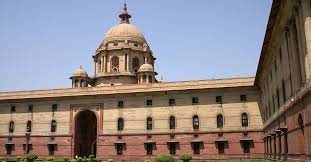

Harish Rana v. Union of India, Miscellaneous Application No. 2238 of 2025 in Special Leave Petition (Civil) No. 18225 of 2024, 2026 INSC 222 (Sup. Ct. India Mar. 11, 2026) (J.B. Pardiwala, J., for himself and K.V. Viswanathan, J., concurring).
| Particular | Details |
| Case Name | Harish Rana v. Union of India |
| Citation | 2026 SCC OnLine SC 358 (also reported as 2026 INSC 222) |
| Case Number | Miscellaneous Application No. 2238 of 2025 in Special Leave Petition (Civil) No. 18225 of 2024 |
| Court | Supreme Court of India |
| Bench | Justice J. B. Pardiwala and Justice K. V. Viswanathan |
| Date of Judgment | 11 March 2026 |
| Nature of Case | Special Leave Petition (Civil) concerning withdrawal of life-sustaining treatment (passive euthanasia) for a patient in a permanent vegetative state, involving the right to die with dignity under Article 21 and implementation of the principles laid down in Common Cause v. Union of India. |
- Applicant: Harish Rana, aged 32 at the time of filing, sustained a diffuse axonal brain injury on 20 August 2013 after falling from the fourth floor of his paying-guest accommodation while pursuing a B.Tech degree at Punjab University.
- Treatment history: hospitalised at PGIMER, Chandigarh, and subsequently at the Jai Prakash Narayan Trauma Centre, AIIMS, New Delhi.
- Nutritional support: nutrition initially provided through a nasogastric Ryle’s tube, later changed to a Percutaneous Endoscopic Gastrostomy (“PEG”) tube requiring replacement every two months.
- Medical certification: disability certificates dated 21 November 2014 and 13 April 2016 certified head injury with diffuse axonal injury, quadriplegia and Persistent Vegetative State (“PVS”), with complete sensorimotor dysfunction and 100% permanent physical impairment.
- Condition: for over thirteen years, the applicant has been unable to recognise his surroundings, respond to stimuli, or communicate, with recurring infections, fits and bed sores despite constant home-based family care.
- Earlier round of litigation: the family had earlier moved the Delhi High Court in Writ Petition (Civil) No. 4927 of 2024 for constitution of medical boards to withdraw the PEG tube; the petition was dismissed on the ground that the applicant was not being kept “alive mechanically.”
- First Supreme Court round: the special leave petition against that order was disposed of by this Court, directing home-based care while granting liberty to approach the Court again.
- Present application: following clinical deterioration and hospitalisation in May 2025, the family filed the present Miscellaneous Application.
- Constitution of medical boards: by orders dated 26 November 2025 to 11 December 2025, the Court directed constitution of a primary medical board (Chief Medical Officer, Ghaziabad) and a secondary medical board (AIIMS), in line with the guidelines in Common Cause v. Union of India, (2018) 5 S.C.C. 1 (India),[1] as modified by Common Cause v. Union of India, (2023) 9 S.C.C. 1 (India)[2] (together, the “Common Cause Guidelines”).
- Unanimous medical opinion: both boards unanimously found the applicant’s condition to be an irreversible, non-progressive PVS with virtually no scope of recovery, with continued CANH merely sustaining biological life without any prospect of improvement.
- Family’s consent: the applicant’s parents and siblings, after deliberation with counsel, unanimously and unequivocally agreed to withdrawal of the medical treatment.
The Court, sitting in its extraordinary appellate jurisdiction, framed the following questions for determination:

- Is the administration of CANH considered as “medical treatment” under Article 21 of the Constitution of India?
- What is the significance and meaning of the “best interests of the patient” concept while determining whether medical treatment should be withdrawn or withheld?
- Was it in the best interests of the patient that his life be extended by continuing the medical treatment?
- What further steps need to be taken once a decision has been made regarding withdrawal or withholding of medical treatment, including the procedure laid down in Common Cause (2018)?
A. Contentions on Behalf of the Applicant (Petitioner’s Side)
1.Limited and supervisory nature of judicial intervention
Common Cause (2018) did not foresee the frequent resort to the writ jurisdiction of constitutional courts; Article 226 was to be used sparingly and for a supervisory purpose and that too only in case of a difference between the two medical boards.
2. Absence of institutional mechanism
The family sought recourse to the High Court solely due to the non-existence of an institution through which board proceedings could be initiated for a patient being administered home care.
3. Reliance on Common Cause (2018) concurring opinions
The concurring judgments of Sikri, J. and D.Y. Chandrachud, J. in Common Cause (2018) on the ground that feeding tube amounts to life support and CANH constitutes medical treatment..
4. Reframing of the best-interest inquiry
And the true issue was said to be not whether it was in the best interests of the applicant to die but rather whether it was in his best interests to continue his life by means of CANH because in the United Kingdom, it was held that continued CANH is not in the best interests of a patient in a PVS state.
5. Ancillary directions sought
Directions were sought on non-compliance with the Common Cause Guidelines and on the nomination of Advance Medical Directive (“AMD”) guardians.
B. Contentions on Behalf of the Union of India (Respondent’s Side)
1. No opposition to relief
However, the Additional Solicitor General, who was well versed in the law, did not object to the grant of the reliefs – a rare occurrence where the State did not challenge the withdrawal of treatment
.2. CANH as “medical treatment” under Common Cause (2018)
The judgment in Common Cause (2018) had adopted the same principle from Airedale NHS Trust v. Bland, [1993] A.C. 789 (H.L.), that “CANH delivered through medical devices is ‘medical treatment’.”3. Constitutional distinction: causing death v. allowing death
The judgment in Common Cause (2018) had adopted the same principle from Airedale NHS Trust v. Bland, [1993] A.C. 789 (H.L.), that “CANH delivered through medical devices is ‘medical treatment’.”
3.Unanimity as the operative fact
Therefore, in view of the unanimous decision of both the medical boards and the family, withdrawal of CANH was constitutionally permissible.
1. Continuing Authority of the Common Cause Framework
The Court observed that Common Cause v. Union of India, (2018) 5 S.C.C. 1 (India) read along with Common Cause v. Union of India, (2023) 9 S.C.C. 1 (India) will continue to remain the law relating to the issue of end-of-life care and the Court was only to articulate the relevant constitutional principles.
2. Terminological Clarification: Active v. Passive Euthanasia
- Active euthanasia refers to a positive act causing death and remains impermissible in the absence of legislation.
- Withdrawal or withholding of treatment is treated as passive euthanasia.
- The operative distinction is not action versus inaction, but “causing death” (active euthanasia, involving an external intervening force) as against “allowing death to happen” (withdrawal of treatment).
3. Issue (i): CANH is “Medical Treatment”
- With reference to Airedale NHS Trust v. Bland, [1993] A.C. 789 (H.L.); In re Conroy, 486 A.2d 1209 (N.J. 1985); and Re BWV; Ex parte Gardner, [2003] VSC 173 (Austl.), the Court found that CANH through a PEG tube is certainly “medical treatment.”
- • The CANH involves the clinical assessment of the procedure through prescription, administration, and monitoring by competent practitioners; it carries an inherent risk in nature and cannot be regarded as merely feeding due to its administration at home by an untrained person.
- • If CANH were to be deprived of the status of ‘medical treatment’, the clinicians will lose their competence to evaluate its effectiveness..
4. Issue (ii): The “Best Interests of the Patient” Test
- For an incompetent patient, withdrawal must be decided applying the Best Interests of the Patient Test, requiring a holistic assessment of:
- Medical factors — diagnosis, prognosis, reversibility of treatment, and a burden–benefit assessment; and
- Non-medical factors — the patient’s personal values, way of life, and known preferences.
5. Issue (iii): Application of the Test to the Facts
· 13 years of irreversible, non-progressive PVS without much hope of recovery.
1. Absence of a Legislative Framework
- Legal basis: Almost seven years since the landmark case of Common Cause v. Union of India, (2018) 5 S.C.C. 1 (India), even with the admission by the Court of the lacuna, the Indian law still lacks any legislation dealing with end-of-life care. Medical committees, hospitals, and families find themselves without any statutory support, guidelines regarding criminal culpability, and time lines except through litigations.
- On the other hand, the systems that the Court referred to have laws for themselves such as the incapacity/best-interest standard of Airedale NHS Trust v. Bland, [1993] A.C. 789 (H.L.) and In re Conroy, 486 A.2d 1209 (N.J. 1985).
2. Persistence of the Institutional Gap the Judgment Sought to Cure
- Legal basis: This case, however, is an example of the defect which Common Cause (2018) sought to correct — the applicant’s relatives had to fight through almost fifteen years, all the way to the Supreme Court, simply because there was no process by which proceedings could be instituted for a patient under home-based care outside hospitals.
- The inadequacy of the Common Cause Guidelines as formulated was demonstrated as those were sufficient to address the matter for hospital based cases but inadequate for the home-based care case.
3. Indeterminacy of the “Best Interest” / Substituted-Judgment Standard
- Legal basis: without an advance directive – the protective measure acknowledged in Common Cause (2018) and improved upon in Common Cause v. Union of India, (2023) 9 S.C.C. 1 (India) – the best-interest approach hinges on inferring the wishes of the patient from their previous lifestyle and family statements.
- This results in a repeated threat that the substituted judgment could become an imposition test instead of a test that focuses solely on the best interest of the patient.
6.Heavy Reliance on Foreign Precedent Without an Equivalent Domestic Statutory Base
Legal basis: the Court relies heavily on cases from the United Kingdom, the United States, and Australia, such as Airedale NHS Trust v. Bland, [1993] A.C. 789 (H.L.), In re Conroy, 486 A.2d 1209 (N.J. 1985), and Re BWV; Ex parte Gardner, [2003] VSC 173 (Austl.), which feature a fundamentally different consent regime and end-of-life legal framework than that found in India.
INFERENCE
- Harish Rana v. Union of India, Miscellaneous Application No. 2238 of 2025 in Special Leave Petition (Civil) No. 18225 of 2024, 2026 SCC OnLine SC 358 (India).
- Common Cause v. Union of India, (2018) 5 S.C.C. 1 (India).
- Common Cause v. Union of India, (2023) 9 S.C.C. 1 (India).
- Airedale NHS Trust v. Bland, [1993] A.C. 789 (H.L.) (appeal taken from Eng.).
- In re Conroy, 486 A.2d 1209 (N.J. 1985).
- Re BWV; Ex parte Gardner, [2003] VSC 173 (Austl.).
[1] Common Cause v. Union of India, (2018) 5 S.C.C. 1 (India).
[2] Common Cause v. Union of India, (2023) 9 S.C.C. 1 (India).

