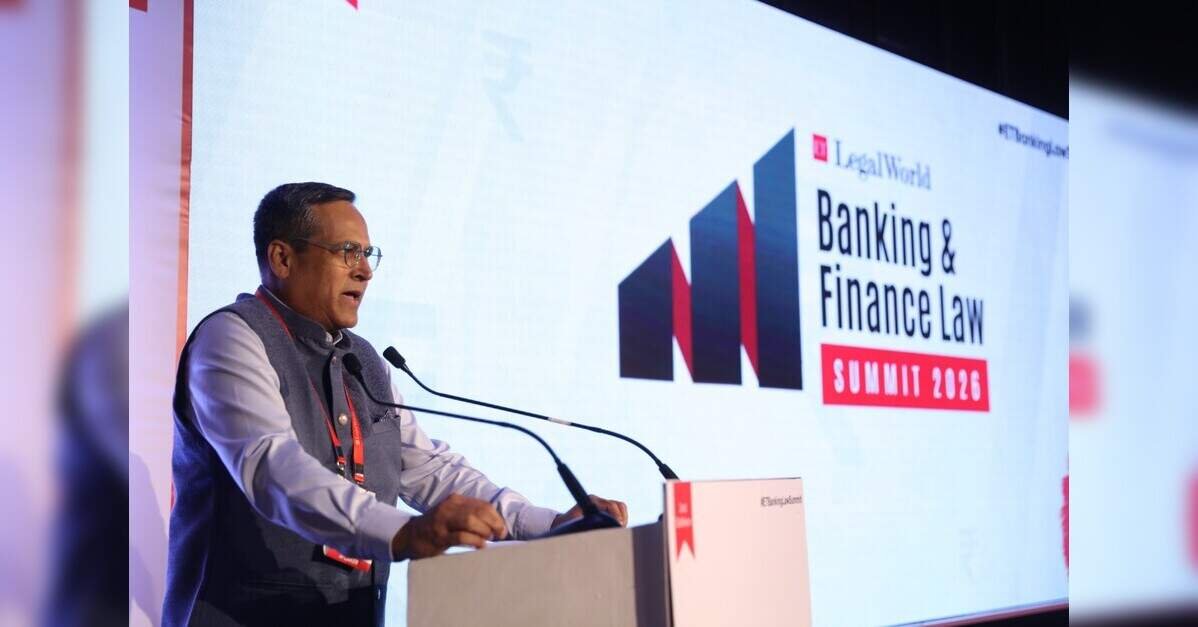


Geopolitical uncertainty, artificial intelligence, digital finance and evolving regulatory expectations took centre stage at the 3rd Edition of the ETLegalWorld Banking & Finance Law Summit, as leading general counsel, banking executives, regulators, compliance officers and law firm leaders came together to discuss the legal and governance challenges reshaping India’s financial services sector.
The 3rd Edition of the ETLegalWorld Banking & Finance Law Summit was supported by the General Counsel Association of India (GCAI), with Provakil, Kroll, Trilegal, Nasdaq and KNM & Partners Law Offices as supporting partners.
The day-long summit served as a platform for thought leaders from across banking, financial services and the legal fraternity to examine how institutions can navigate an increasingly complex landscape defined by technological disruption, cross-border risks, financial crime and heightened regulatory scrutiny.
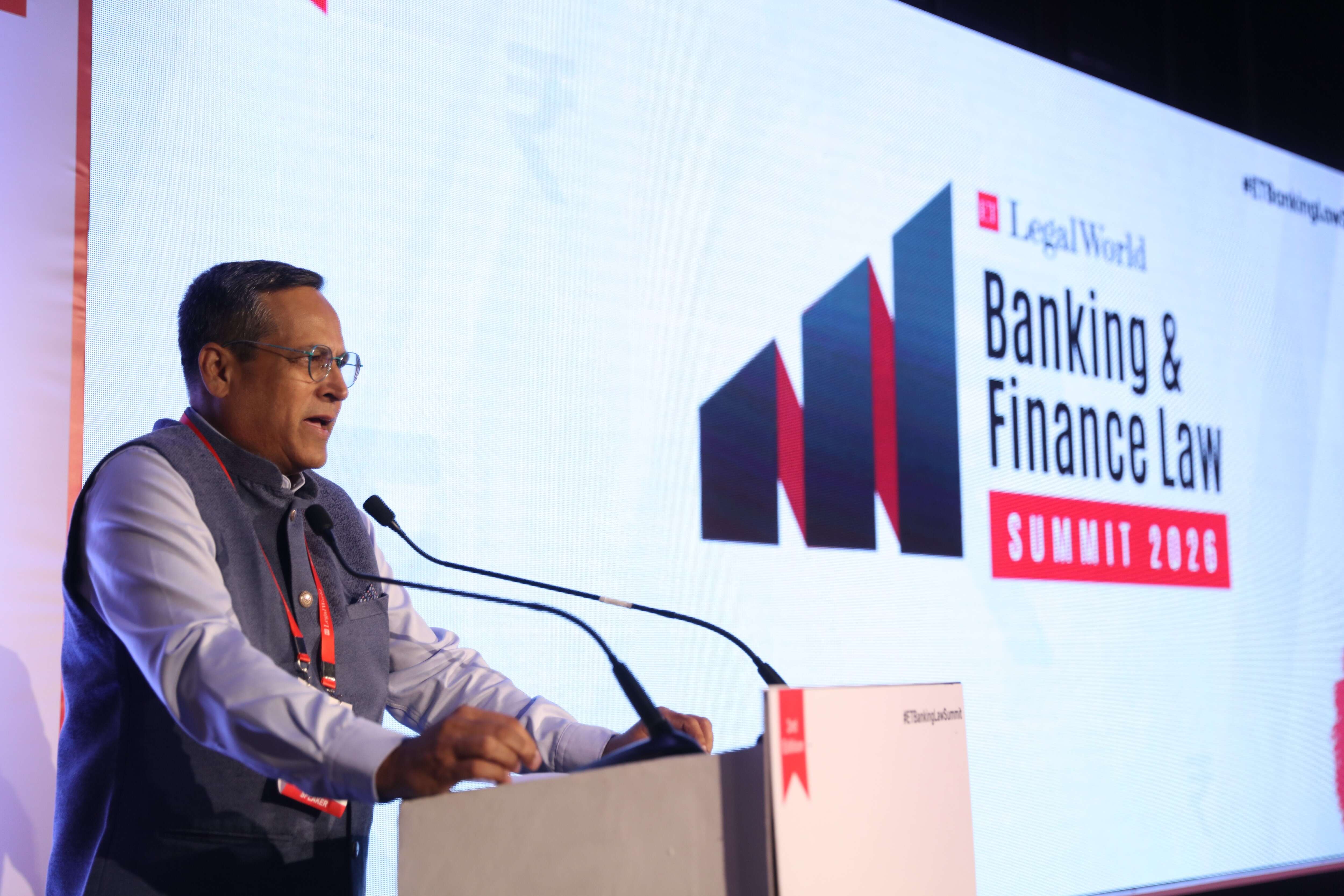
Delivering the Chairperson’s Address, Nilanjan Sinha, General Counsel, ICICI Bank, spoke on “Geopolitics and the Geometry of Global Trade”, highlighting how shifting geopolitical alliances, sanctions regimes and global trade realignments are fundamentally transforming banking law and financial regulation.
He observed that legal departments are increasingly required to advise on strategic business decisions involving supply chains, digital infrastructure, data governance and geopolitical risk, making them integral to enterprise resilience rather than merely compliance functions.
Sinha also stressed the importance of developing “exit architecture” for financial institutions, urging organisations to reduce dependence on foreign-controlled technology infrastructure and cloud services while strengthening operational resilience.
He noted that growing tensions between domestic data localisation requirements and overseas regulatory obligations have elevated data sovereignty into a critical boardroom issue for financial institutions operating across jurisdictions.

Another key highlight of the summit was a presentation by Yatri Dave Vitekar, Chief Vigilance Officer, SEBI, who underscored the expanding reach of the Prevention of Corruption Act (PCA) and its implications for banks, financial institutions and corporates.
She noted that the law is no longer confined to government offices, with judicial interpretation broadening the definition of a “public servant” to include entities handling public money or performing public duties.
Vitekar emphasised that institutions must view anti-corruption compliance as an enterprise-wide governance responsibility, backed by robust preventive mechanisms, transparent policies, monitoring systems and a strong culture of ethical conduct.
She cautioned that integrity failures and weak internal controls can expose organisations to significant criminal and regulatory consequences, making ethical governance the first line of defence.
The summit featured a series of panel discussions examining the preparedness of banks and financial institutions for continuous regulatory supervision, the impact of artificial intelligence on capital flows and financial markets, and the increasing convergence of oversight by the Reserve Bank of India, Securities and Exchange Board of India and other enforcement agencies.
A major focus of the discussions was the rise of AI-enabled financial crime and cyber risk. Speakers explored how artificial intelligence is reshaping fraud detection, anti-money laundering compliance, digital investigations and financial crime prevention, while simultaneously creating new challenges through synthetic identities, deepfakes and increasingly sophisticated cyberattacks.
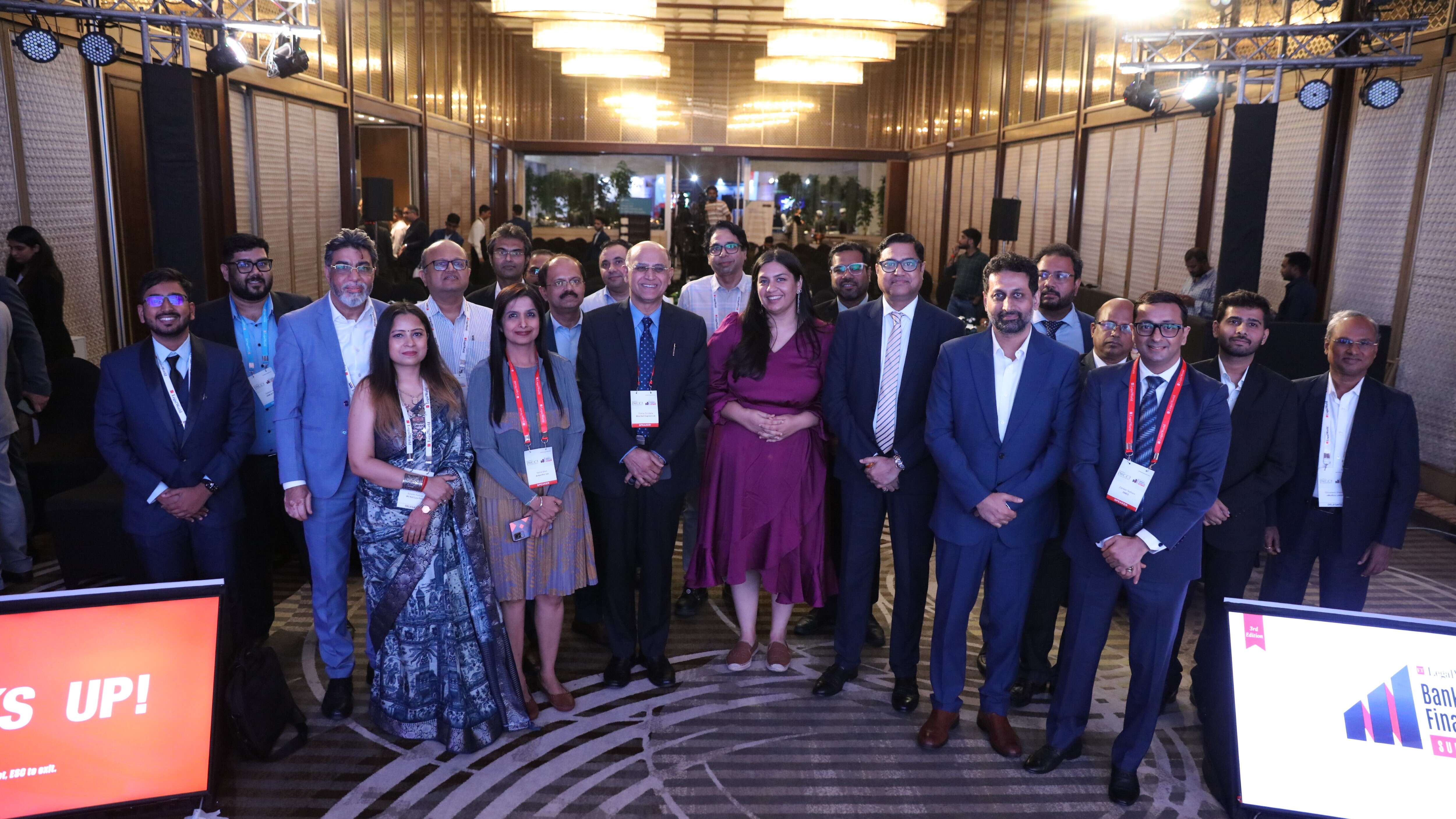
The summit also explored India’s changing debt resolution ecosystem, with discussions on the alignment of banks, asset reconstruction companies and alternative investment funds, sector-specific insolvency reforms, cross-border insolvency and asset tracing, and the growing role of online dispute resolution in accelerating recoveries and reducing litigation.
The discussions concluded with a consensus that the future of banking and finance law will be shaped by institutions’ ability to balance innovation with accountability. As AI, digital finance and geopolitical developments continue to redefine the operating environment, participants called for agile legal frameworks, stronger governance practices and closer collaboration between legal, compliance, risk and technology functions to build resilient financial institutions.