
Walking through the streets of Hyderabad in May feels increasingly like standing directly behind the exhaust of a giant air conditioning unit. The air outside the gates of Kasu Brahmananda Reddy (KBR) National Park this summer carried a distinct, heavy heat. For residents tracking local weather stations, the numbers in neighborhoods like Jubilee Hills and Serilingampally consistently breached 42°C. On June 5, on occasion of World Environment Day, the people gathered despite the heat. One could argue they gathered because of it—each tree in our urban spaces is an act of resistance against climate change and rising temperatures. They staged a mock funeral for the mature neem, mahogany, and banyan trees currently targeted by municipal bulldozers.
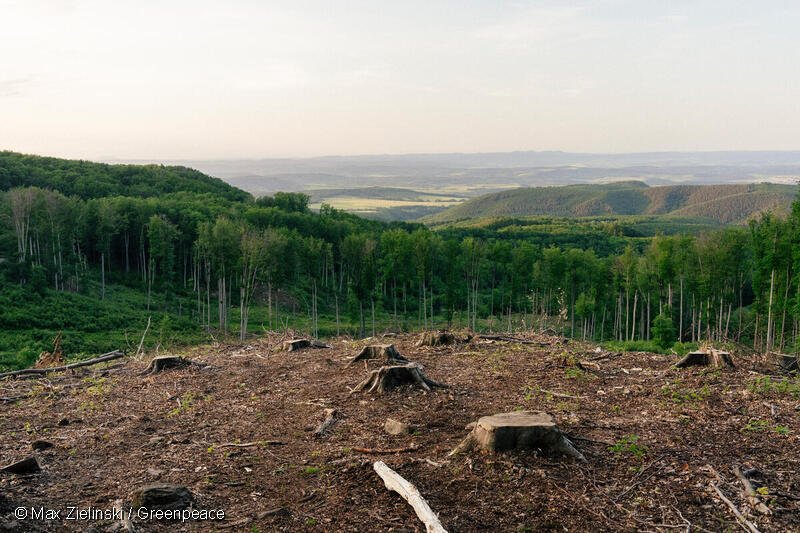
At the center of this dispute is the Hyderabad City Innovative and Transformative Infrastructure (H-CITI) project, a Rs 2,654 crore municipal plan to encircle the 390 acre urban forest with seven flyovers and seven underpasses. To clear the path for this network of asphalt, the Greater Hyderabad Municipal Corporation (GHMC) cleared the felling and heavy pruning of nearly 2,000 trees.

When residents and environmental coalitions took to the streets to question the scale of the destruction, police responded by detaining volunteers and filing FIRs. Citizens asking for basic transparency were bundled into police vans. While the Supreme Court recently issued an interim stay on the felling, the legal battle exposes a deeper structural issue: the park’s protective Eco-Sensitive Zone (ESZ), meant to act as a 25 to 35 meter ecological shock absorber, was quietly shrunk to just 3 meters in some stretches to avoid the financial costs of land acquisition. In response, local grassroots networks have launched a coordinated public campaign demanding a mandatory 1km eco-sensitive buffer zone around the perimeter of KBR Park to permanently shield its roots from infrastructure encroachment.
This multi-partisan political consensus exposes the true driver behind urban ecological destruction: it is not a blind love for concrete, but the financialization of our shared commons. Under a model of speculative urban planning, an intact natural ecosystem is viewed as economically dead space because its benefits – clean air, shade, and groundwater recharge – cannot be invoiced, privatized, or routed through an infrastructure tender.
Concrete is simply the transaction format. To extract liquid financial value from public land, the state must first enclose it, clear it, and convert it into a hard asset. The multi-crore H-CITI flyover network or the cutting of coal lines through ancient tribal forests are not just bad design choices; they are mechanisms engineered to transfer public wealth into the hands of private developers and construction cartels. It is a system that treats the living world as an obstacle to short-term capital accumulation, forcing the working class to pay the permanent ecological debt. Political parties routinely march alongside environmentalists when in the opposition, using local heritage as a stick to beat the incumbent government. Once in power, the same politicians sign the clearance files, allocate the tenders, and deploy the heavy machinery.
We Stand With Hyderabad: A Call to Protect the City’s Living Commons
We stand in complete solidarity with the residents, youth groups, and environmental coalitions of Hyderabad who are fiercely defending KBR National Park.
The use of state machinery to detain peaceful volunteers and file FIRs against citizens exercising their democratic right to protect their environment is unacceptable. A city that criminalizes the defense of its own trees is a city misaligned with its own future.
The fight for KBR Park is not a localized suburban dispute. It is a critical struggle for climate justice and urban survival. We call upon the Government of Telangana to immediately halt all infrastructure plans that threaten the eco-sensitive zone of KBR Park, dismantle top-down planning models that ignore public mandates, and recognize urban green spaces as non-negotiable public health infrastructure.
Our defenses cannot be negotiated away for a few meters of asphalt. We support the collective call on the Ministry of Environment, Forest and Climate Change (MoEFCC) to throw out the shrunken, compromised boundaries and enforce a strict ecological buffer zone around the park. To amplify this demand and join the resistance against the felling, citizens are actively signing the public petition to protect KBR’s borders. To the people of Hyderabad on the front lines: your fight is our fight.
By stripping away mature tree cover to widen roads, urban planning departments remove the only physical shield protecting everyday street users from intense solar radiation. Recent urban heat data mapping conducted in Hyderabad confirms this stark divide. Concrete-dense zones like HITEC City register severe heat exposure, turning informal settlements into localized thermal traps, while neighborhoods adjacent to intact green cover and natural lakes remain measurably cooler.
This design choice fuels the Urban Heat Island (UHI) effect, where concrete, tar, and glass trap solar radiation all day and leak it back into the environment at night. Instead of investing in double-decker flyovers that induce more vehicular traffic, a climate-resilient city shifts its budget toward expanding electric bus fleets, prioritizing pedestrian safety, and protecting natural commons.
But the current blueprint for development, holding our cities’ environment hostage is not written in stone. The current resistance to the destruction of KBR Park draws its strength from a deep history of local defiance. The memory of the Kancha Gachibowli case still echoes loudly across the city. When corporate real estate interests and state machinery moved to gobble up those vital green pastures, it was sustained, uncompromising people power, a movement fueled by students that forced a halt to the machinery. When the community refused to back down, the Supreme Court intervened, drawing a legal line in the sand against state-sanctioned environmental destruction.
The lesson from Gachibowli is clear: the legal stays we see today are not acts of administrative benevolence. They are concessions won through the grit of citizens who refuse to let their city be paved over for private profit.
The erosion of these natural buffers extends to Hyderabad’s historical hydrology. Encroaching on interconnected lake systems and blasting away ancient Deccan rock formations for real estate has disrupted natural drainage lines. The result is a repeating cycle of groundwater depletion during the dry months, followed by sudden, severe urban flooding the moment the monsoon hits.
Defending spaces like KBR National Park is central to achieving broader climate goals. Local environmental protection cannot be separated from global climate targets. If urban centers are to remain habitable, planning must pivot away from the interests of real estate and car-centric infrastructure, and move toward protecting the shared natural systems that keep our cities alive.
Reclaiming the Streets: From Defending Trees to Reimagining Hyderabad
This defensive battle for KBR Park is where the pushback begins, but the ultimate goal is to completely flip the script on urban design. This is where our ongoing national City Rising initiative comes in. Across cities like Bengaluru, Delhi, and Mysuru, we are working alongside local communities to shift away from car-centric compromise and move toward cities built for people, clean air, easy movement, and public shade.
To bring this momentum directly to the people where we are open up a creative, collective space for residents: The Citizen Imaginarium. An Imaginarium is what happens when neighborhood dreaming steps out of the room and walks onto the street. Through collaborative storytelling, visual mapping, and shared local memories, these workshops bring students, working-class commuters, and residents together to look past current concrete constraints. Instead of simply listing complaints about traffic and heat, participants will design concrete, human-first solutions, from low-carbon neighborhood layouts to accessible public transit connections that respect our natural green lungs.
Every idea, story, and alternative design mapped out during these Imaginariums will be systematically documented and pinned to The Living Map of People’s Cities. This interactive platform acts as a shared, crowd-sourced vision for our urban futures. Every pin is a declaration of what our streets could look like if everyday citizens, rather than construction cartels, had a say in how public funds are spent.
References/ Research:
- “Police Detain Volunteers Protesting Tree Felling near Hyderabad’s KBR National Park,” The Hindu, May 13, 2026
- “Felling of Trees near KBR: Several Activists Detained,” Deccan Chronicle, May 13, 2026
- “Save KBR Protests Intensify over Tree Cutting near National Park,” The Hindu, June 2, 2026
- “Hyderabad’s Save KBR Campaign and the Anger against the Telangana Government,” The News Minute, June 6, 2026

