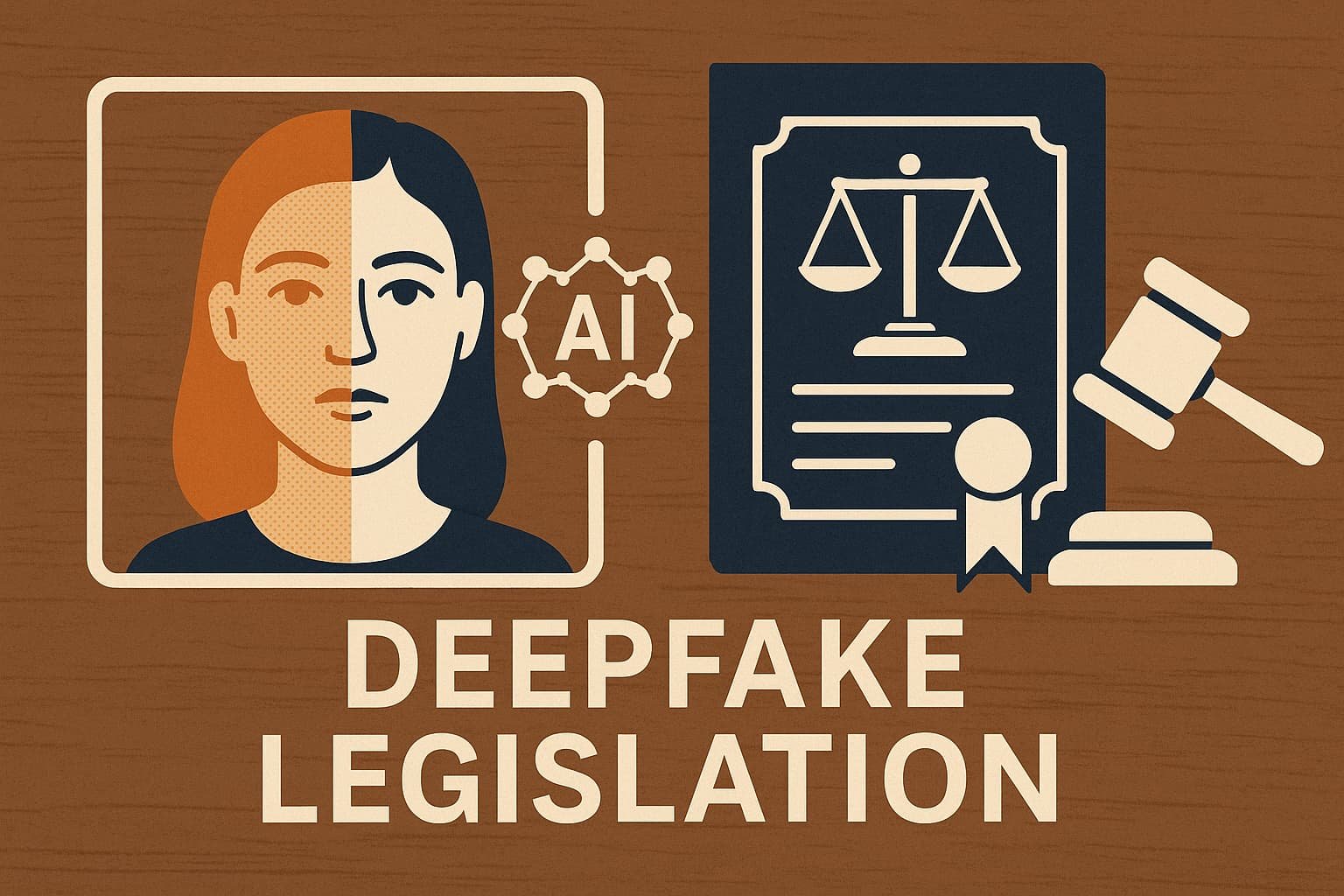

Introduction:
In a World where seeing is no longer believing, India is facing a new digital menace: Ai- Generated deepfakes. These hyper-real images, videos or audios fades up the reality and manipulate the citizens to believe the misinformation and it undermines the trust in the justice system itself. They can make a person seem to say or do something that they never did, While this technology has some positive applications in entertainment, education, and filmmaking also, but its misuse has become a growing concern as it is a threat to the individual’s rights and the justice system. India, is one of the largest digital economies, which has witnessed a rapid rise in AI-generated content. The increasing misuses of deepfake technology has raised an important legal question: Is Indian law prepared to solve the challenges posed by Deepfakes?

Meaning Of Deepfakes:
The term “deepfake” consists of two words “deep learning” and “fake.”
What are Deepfakes?
Deepfakes are those synthetic media that are generated or modified by Artificial Intelligence. These can be either images, audios, or videos that can imitate real people, making it look-like they did something but in actual they never did it. These are so realistic that they can mimic anyone’s voice which in-turn blurs the line between the fiction and the actual reality.
How are these deepfakes made?
Deepfakes are made by using Artificial Intelligence Systems trained on large datasets of images, videos or audio recordings. These systems learn to copy human features such as faces, voices and movements, which in-turn generates the hyper realistic synthetic media.
Why are deepfakes a threat?
Deepfakes only create fake realities and erodes the mechanism on which the society’s trust is build upon. In addition, it spreads manipulated content that can reinforce societal biases and stereotypes, which triggers gender-based violence, or ethnicity, religion, or political divisions. These risks can be further spread among the low digital literacy countries.
Impact on the Justice System:
Deepfakes are videos, images, and recordings generated or manipulated by AI technology. This technique is causing an increasing threat to the judicial process since it could be utilized to fabricate evidence, manipulate information, and falsely accuse other people. First of all, deepfake technology might lead to wrongful convictions or allegations made based on the fabricated video or voice recordings. It makes the investigation process of crimes more complicated due to the need of verification of evidence and the high cost associated with the process. Another issue is related to the liar’s dividend, according to which people might ignore valid information and perceive it as a deepfake. To protect the judicial process from deepfakes, the government needs to improve its digital forensics, adopt specific laws regarding deepfakes, train judges, lawyers, and prosecutors in how to deal with evidence, and educate society about the problem. However, even legal and ethical considerations are posed by the justice system when dealing with deepfakes. Currently, laws concerning forgery, defamation, impersonation, cybercrime may be relevant; nevertheless, there are no particular rules concerning AI-generated media. Consequently, there are loopholes in the prosecution process. Additionally, the fast development of AI technologies does not allow the implementation of new legislative changes. It is essential to adopt specialized deepfake laws, enhance digital forensics infrastructure, develop AI solutions to detect deepfakes, educate judges and law enforcement officials about deepfakes and raise the awareness of people about fake media among others in order to confront those challenges. In addition, international cooperation is necessary since deepfakes can spread across borders via the Internet. In summary, deepfakes are changing the nature of digital evidence. If there is a lack of laws, technologies, and readiness of judges, deepfakes can disrupt the justice process. Thus, it is crucial to adopt laws and improve forensic techniques.
Indian Legal Framework:
Currently, there is no separate law in India which governs deepfake technologies. But, different laws can be enforced as per the usage of deepfake technology. IT Act, 2000 is one of the laws governing cybercrimes in India. Under this act, section 66C covers the crime of identity theft, and section 66D covers any fraud or cheating by personating through any computer resource. In case the use of deepfakes involves impersonation through computer, then both these sections could be applied. Moreover, sections 67 and 67A cover publication or transmission of any obscene or sexually explicit matter in an electronic medium. In addition, the Bharatiya Nyaya Sanhita (BNS), 2023 contains remedies in cases where the deepfakes are considered as offences under cheating, forgery, defamation, criminal intimidation, and creation of false electronic records. It is notable that the BNS is silent on deepfakes but can be used subject to circumstances of each case.The Right to Privacy under the Indian Constitution, which was recognized by the Supreme Court in Justice K. S. Puttaswamy v.s Union of India case, ensures the constitutional right of individuals against unauthorized use of their face, voice, and identity. Finally, the Bharatiya Sakshya Adhiniyam, 2023 controls the process of admissibility of the electronic evidence. As deepfakes are able to falsify the digital records, the verification of authenticity of deepfakes by forensic experts becomes necessary in court. Despite the presence of above mentioned laws providing some legal protection, the absence of comprehensive law regulating AI-created deepfakes needs to be mentioned.
Legal Challenges And Loopholes:
Even with the laws on the books, India faces difficulties in dealing with deepfakes. The first one is that there is no specific law dealing with deepfakes created using artificial intelligence. Such laws were passed before the rise of artificial intelligence; hence, they don’t cover everything related to digital manipulation in modern days. Moreover, it is difficult to trace who creates these deepfakes because they usually create fake profiles, use virtual private networks or servers located outside the country. To investigate deepfake cases, investigators need some level of knowledge of digital forensics, which might not be available everywhere.
Recommendations:
In order to deal with the ever-increasing menace of deepfakes, there is a need for India to pass specific legislation that defines the offenses related to deepfakes and prescribes suitable punishment for the same. The enforcement agencies as well as courts must have advanced AI-based forensic tools at their disposal. The social media sites have to implement a strict policy regarding the content uploaded on their platform and take necessary action against the deepfake content. Awareness campaigns should be conducted to inform people regarding fake content and cyber crimes. Moreover, cooperation among all stakeholders is vital for the responsible development of innovations.
Conclusion:
The problem of deepfakes has posed a major threat to the Indian legal system since it creates ambiguity between reality and deception. Although there are some laws which provide some kind of protection, they are not enough to counter the problems caused due to artificial intelligence. It is high time that India makes legislation on this issue.

