
It was 1989, and the days were humid and stuffy, just as now. My colleague and I were discussing the future of the Ram Mandir Movement with the main priest of Ayodhya Ram Mandir, Mahant Lal Das. Das felt the movement’s direction and approach weren’t right. He didn’t deem it appropriate to demolish the Babri Masjid or to transfer it. Incidentally, after meeting him, we had to go to Karsevakpuram in Ayodhya to meet Acharya Giriraj Kishore. At the site, we were astounded to see a huge pile of bricks “brought from every corner of India” to build a “grand temple”. The Vishwa Hindu Parishad and the entire Sangh Parivar were “moving mountains” to realise their ambitions.
Upon meeting Kishore, I bluntly asked how he could indulge in “demolition and construction”, ignoring the sentiments of 12-14% of the country’s population. Kishore remained unruffled. He said the temple wasn’t an ordinary one; Lord Ram’s temple will usher in “Ramrajya” in the country. We kept probing for long, but not once did Kishore lose his cool.

Also Read: The rise of Champat Rai: From chemistry lecturer to Ram Mandir power centre
Today, amid the controversy over the embezzlement of the Ram Temple donations, I am reminded of Das and Kishore. Both had similar depth of devotion and faith, but very different approaches. Today, after 37 years, I realise they both ended up as failures. Das couldn’t prevent the Masjid demolition. In 1992, he was removed from the Ram Temple administration by the Kalyan Singh government over allegations of mismanagement. The year after, he was murdered. Kishore died in 2014. Had he been alive, his vision of Ramrajya would have been shattered by what has happened in the Ram Temple Trust.
India, in the late 1980s and 1990s, was an ideological battleground. Karsevaks were trying to reach Ayodhya. Then Uttar Pradesh chief minister Mulayam Singh Yadav was determined to not to let “a sparrow sneak into Ayodhya.” The police tried to stop the karsevaks, which led to confrontations. In many places, Sangh workers and locals would stand with the karsevaks. The police used force on occasions and curfews and strict movement restrictions were imposed in several places.
The Sangh Parivar appealed to homemakers to go to the terrace in the evening and beat plates to inspire people. At times, entire neighbourhoods would erupt into devotional songs. Before 1980, “Jai Shri Ram” wasn’t used as a popular greeting. Instead, people would say “Ram Ram” or “Siyaram.” In the Braj region, “Radhe Radhe” was the greeting of choice. But change was knocking at society’s door. Mulayam, VP Singh and Chandrashekhar’s efforts proved ineffective.
In November 1990, police firing killed 17 karsevaks and injured more than 100. For the movement, this was the turning point. Mulayam Singh was decimated in the following assembly elections and the BJP government led by Kalyan Singh rode to power in Lucknow. On May 21, 1991, Rajiv Gandhi was assassinated in Sriperumbudur, and PV Narasimha Rao became Prime Minister (PM). Rao was one of the most experienced politicians of his era and yet how did he fail to gauge Kalyan Singh’s motives?
Many conspiracy theories have done the rounds, there was supporting evidence for none. Similar unsubstantiated conspiracy theories arose after Das’s killing.
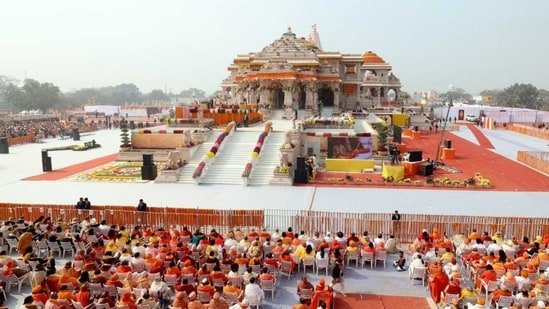
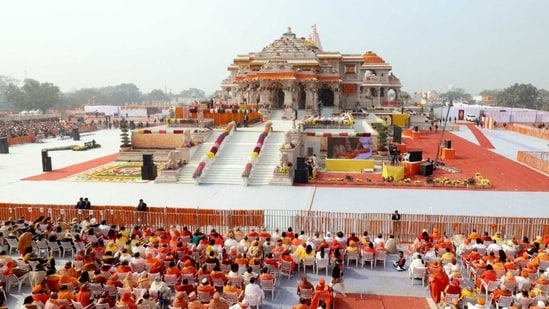
After the demolition of the Babri Masjid, the RSS changed its strategy. Once a government supporting their ideology came to power, there was no need for belligerence. So, a legal route to build the Ram Temple on the disputed site was preferred. On November 9, 2019, the Supreme Court cleared the path for the construction of the Temple. It was inaugurated on January 22, 2024. Without doubt, it changed the face of Ayodhya. Everyday, thousands of devotees poured in cash donations. Why did the success of the movement have to get tainted in the end with the ignominy of embezzlement?
Also Read: Ram Mandir and a complicated history
In a recent C-Voter survey, 86% of the respondents said the allegations of theft from the Ram Mandir donations were very serious. Surprisingly, not only Opposition parties but also 53.7% of the supporters of the National Democratic Alliance government insist that their trust and faith has been shaken by the incident. People trust PM Narendra Modi and UP chief minister Yogi Adityanath to act swiftly and impartially. They believe they won’t be disappointed. But long delays can evaporate people’s trust. It’s an issue of faith. It’s the faith that propelled Ram devotees for centuries to struggle to rebuild the temple. Strict action against the perpetrators and a transparent system for the future is the only way to restore their shaken trust.
Shashi Shekhar is editor-in-chief, Hindustan. The views expressed are personal

