

Mohammed Rafi, Sahir Ludhianvi and Ravi’s unforgettable song from Yash Chopra’s 1965 classic Waqt reminds us that neither happiness nor sorrow, success nor failure, power nor position lasts forever—because ultimately, time changes everything
By Sonu Tyagi
Founder, Go Spiritual & Approach Entertainment
There are some songs that entertain us, some that touch our emotions, and then there are rare songs that make us stop and think about life itself. “Waqt Se Din Aur Raat” from the 1965 film Waqt belongs to this rare category. More than six decades after it was created, the song remains astonishingly relevant because the truth it expresses has not changed: nothing in life is permanent, and time is more powerful than everything we believe we possess.


The song was sung by the legendary Mohammed Rafi, written by one of Indian cinema’s greatest poets, Sahir Ludhianvi, and composed by Ravi. Waqt was directed by Yash Chopra and produced by B. R. Chopra. Its celebrated ensemble included Balraj Sahni, Sunil Dutt, Raaj Kumar, Shashi Kapoor, Sadhana, Sharmila Tagore and Achala Sachdev. The title song itself is picturised around Balraj Sahni and Achala Sachdev.
The greatness of Waqt Se Din Aur Raat lies in how perfectly its philosophy connects with the film. Waqt tells the story of a prosperous family whose comfortable world is suddenly destroyed by circumstances beyond its control. A family that appears secure is separated, and individual lives take completely different directions. In that sense, time is not merely part of the story—time is almost the central character of the film.
Sahir Ludhianvi captures this philosophy in remarkably simple words. Day and night, yesterday and today, happiness and sorrow, prosperity and hardship—all exist under the authority of time. The song tells us that even the splendour surrounding us is temporary. Today may offer us a bed of flowers; tomorrow may bring a crown of thorns. This is not pessimism. It is an invitation to understand reality.
In today’s world, this message is perhaps more important than ever. We live in a culture fascinated by success, wealth, fame, followers, power, designations and social status. When things are going well, human beings can easily begin believing that the good time will continue forever. Success can slowly become ego. Money can become arrogance. Position can create an illusion of permanence. Fame can make us believe that applause will never stop.
But time does not recognise our ego.
A successful businessman can face a financial crisis. A powerful person can lose authority. A celebrity can suddenly find public attention moving elsewhere. A professional at the peak of a career can encounter an unexpected setback. A healthy person can face illness. A relationship we considered permanent can change. And someone struggling today may become extraordinarily successful tomorrow.
This is why the philosophy of Waqt Se Din Aur Raat works in both directions. If your time is good, remain humble. If your time is difficult, remain hopeful.
That, for me, is one of the song’s greatest spiritual messages.
When we are successful, spirituality reminds us that success is not a licence for arrogance. Wealth, fame, position and power are circumstances; they are not our true identity. We should enjoy the blessings that life gives us, but we should also remember that circumstances can change. Humility during success is therefore not weakness—it is wisdom.
Similarly, when we are suffering, we should remember that suffering is also not permanent. A person going through financial difficulty may feel that life will never improve. Someone experiencing loneliness may believe happiness has disappeared forever. A person facing professional failure may think there is no future. But the same time that brings difficult circumstances also has the power to change them.
Bad times should not destroy our hope, just as good times should not create our arrogance.
Mohammed Rafi’s voice gives this philosophy extraordinary emotional depth. He does not merely sing about time; his voice seems to carry an awareness of human vulnerability. Ravi’s composition gives Sahir’s words the space they deserve. There is seriousness in the music because the subject itself is serious. Yet the song never becomes hopeless. It asks us to recognise the power of time rather than surrender to it. The credits for Rafi, Sahir and Ravi are also confirmed in the film’s soundtrack records.
Sahir Ludhianvi’s writing goes even deeper when he reminds us that even governments and societies stand vulnerable before time. Human history proves this repeatedly. Empires considered invincible disappeared. Powerful rulers became chapters in history books. Civilisations rose and declined. Fortunes were created and lost. Generations arrived and departed. Yet every generation, while living through its own moment, was tempted to believe that its present reality would last forever.
It never does.
There is also a profound spiritual idea hidden within this understanding: impermanence can teach us how to live better. Once we accept that everything around us changes, our priorities begin to change as well. We may become less obsessed with possessions and more interested in relationships. We may become less interested in proving ourselves superior to others and more interested in becoming better human beings. We may forgive more easily because we understand how short life is. We may become more compassionate because we realise that everybody is travelling through changing circumstances.
The message is especially relevant for people experiencing success. When life gives you prosperity, respect and influence, use them positively. Help somebody. Support someone struggling. Treat people with dignity. Do not humiliate someone simply because your position is stronger today. The person standing below you today may stand above you tomorrow, because time has no permanent favourites.
And if you are passing through difficult circumstances, do not assume that today’s pain is your permanent destiny. Continue working, learning and believing. Night becomes day, seasons change and circumstances evolve. Sometimes what appears to be the end of one chapter becomes the beginning of another.
For me, therefore, Waqt Se Din Aur Raat is much more than an old Hindi film song. It is a spiritual lesson expressed through cinema. It teaches acceptance without helplessness, humility without weakness and hope without illusion. It asks us to respect time, because time can give and time can take away.
The world has transformed enormously since Waqt was released in 1965, but Sahir Ludhianvi’s philosophy remains unchanged. Technology may change, societies may change and lifestyles may change, but the fundamental reality of human existence remains the same.
Nothing is permanent.
So when your time is good, be grateful rather than arrogant. When your time is difficult, be patient rather than hopeless. When you have power, use it compassionately. When somebody else is suffering, do not mock their circumstances. And above everything else, remember that success, failure, happiness and sorrow are all visitors in the journey of life.
Because ultimately, time changes everything—and understanding that truth can change us.
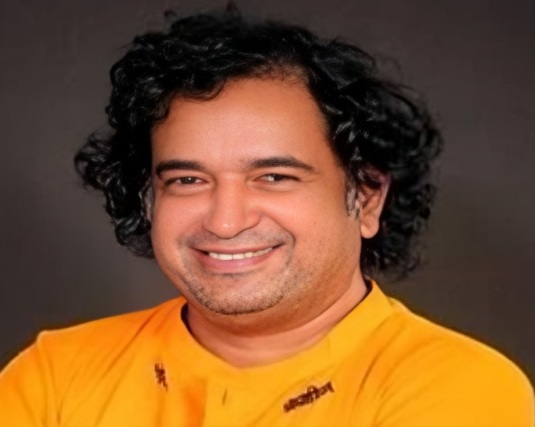
Sonu Tyagi is an award-winning writer, director and producer and the Founder of Go Spiritual and Approach Entertainment Group. With more than two decades of experience across media, entertainment, films and communications, Tyagi has been associated with creative, communications and social initiatives while increasingly focusing on spirituality, humanity and wellness. Through Go Spiritual, he works to promote spiritual awareness, mental health and wellness, philanthropy and social causes, compassion, vegetarianism, non-violence, animal kindness, Ayurveda and holistic living, spiritual tourism, media and events. Go Spiritual News Magazine & App is the organization’s media initiative focusing on spirituality, wellness, positive living and issues connected with humanity and conscious living.
Go Spiritual Organization: www.gospiritualindia.org | Go Spiritual News Magazine & App: www.gospiritualindia.in
The post ‘Waqt Se Din Aur Raat’: Stay Humble in Good Times, Stay Hopeful in Bad Times — A Timeless Spiritual Lesson for Life first appeared on Go Spiritual News Magazine & App .
Spiritual, go spiritual, go spiritual tv, spiritual apps, spiritual apps media pr agency, spiritual communications, spiritual community, spiritual content, spiritual events agencies new delhi, spiritual events management companies, spiritual films, spiritual influencer, spiritual influencers in india, spiritual influencers in mumbai, spiritual journalists, spiritual journalists in india, spiritual magazines, spiritual magazines in india, spiritual marketing, spiritual marketing agencies in india, spiritual marketing agencies in mumbai, spiritual marketing agency, spiritual media news, spiritual media pr agencies, spiritual mind, spiritual motivation, spiritual news, spiritual news media, spiritual news media companies in india, spiritual pr, spiritual pr agencies in india, spiritual pr agencies in new delhi, spiritual public relations, spiritual public relations agencies, spiritual public relations agency, spiritual speakers, spiritual tv, spiritual tv news, spiritual wellness, spiritual wellness agencies, spiritual wellness brands in india, spiritual wellness brands in mumbai, waqt, waqt film, waqt se din aur raat Go Spiritual News Magazine & App

